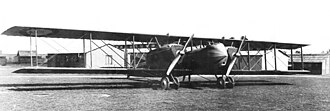
Caudron R.11: The French Twin-Engine Escort Fighter of World War I
The Caudron R.11, also known by its contemporary designation Caudron R.XI, was a French three-seat, twin-engine biplane developed during the First World War to protect friendly aircraft operating over dangerous battlefields. Designed at a time when aerial warfare was expanding beyond reconnaissance and isolated dogfights, the R.11 represented an ambitious attempt to combine the endurance and carrying capacity of a large aircraft with the defensive firepower needed to escort vulnerable bombers and reconnaissance machines. Manufactured by the Caudron company, the aircraft emerged from the experience gained with earlier twin-engine designs, particularly the Caudron R.4, but incorporated a revised fuselage, improved tail arrangement, and liquid-cooled Hispano-Suiza engines. Its most distinctive feature was its three-person crew, which generally consisted of a pilot and two gunners, allowing the aircraft to defend itself against attacks from different directions while accompanying other aircraft on long missions. Approximately 370 examples were completed, and the type entered operational service in 1918, during the final phase of the war.
The R.11 is particularly interesting because it occupied a transitional position in the history of military aviation. At the beginning of the First World War, aircraft were used primarily for observation, and the earliest aerial encounters often involved pilots exchanging pistol fire or attempting improvised attacks. As the conflict progressed, dedicated fighters, bombers, and reconnaissance aircraft became increasingly specialised, creating new operational problems. Bombers and observation aircraft needed protection during their missions, but conventional single-seat fighters often lacked the endurance and crew capacity required to escort them over longer distances. The Caudron R.11 was developed to address this problem through a combination of two engines, a large biplane airframe, multiple defensive machine guns, and room for three aircrew members. It was not a small, agile dogfighter in the conventional sense; instead, it was conceived as a heavily armed escort aircraft capable of accompanying friendly formations and resisting attacks by enemy fighters.
Although the R.11 arrived too late to influence the entire course of the war, it became one of France’s notable heavy escort aircraft and continued to serve for several years after the Armistice. Its operational history illustrates both the possibilities and the limitations of multi-seat combat aircraft during an era when engine performance, airframe design, and air combat tactics were developing at extraordinary speed. The aircraft also offers a useful perspective on the broader evolution of aerial warfare: military planners were no longer asking only how an aircraft could observe the enemy or attack a ground target, but also how it could protect other aircraft and help an entire formation complete its mission. In that respect, the Caudron R.11 represents an early and important experiment in the development of dedicated bomber escort aviation.
Historical Background and Development
The Caudron Company and Its Military Aircraft
The Caudron company was established by French aviation pioneers René and Gaston Caudron and became an important contributor to the development of early European aircraft. Before the First World War, the company built aircraft for training, demonstrations, and other aviation activities, gradually gaining experience in lightweight structures and practical airframe design. The outbreak of war created an urgent demand for military aircraft, encouraging manufacturers such as Caudron to adapt existing designs and develop new machines for reconnaissance, observation, bombing, and combat. During this period, aircraft construction was still a relatively young industrial discipline, and manufacturers had to work with limited aerodynamic data, developing engine technology, and production methods that had not yet reached the standardisation of later decades. Successful designs often emerged through a process of testing, modification, and operational feedback rather than from a fully mature engineering system.
Caudron’s twin-engine aircraft were particularly relevant to the demands of military aviation because they offered a larger platform for carrying crews and equipment than many single-engine machines. The Caudron R.4, an earlier twin-engine reconnaissance and bomber design, provided an important foundation for the later R.11. Experience with the R.4 revealed both the advantages of a large aircraft with multiple crew positions and the difficulties associated with making such a machine sufficiently fast, reliable, and well armed to survive in hostile airspace. The R.11 retained the general concept of a twin-engine biplane but adopted a more streamlined forward fuselage, a revised wing-bracing arrangement, and a substantially enlarged tail assembly. These changes reflected an effort to improve the aircraft’s suitability for combat rather than simply reproducing an existing reconnaissance design.
The Requirement for a Long-Range Escort Aircraft
The development of the Caudron R.11 was closely linked to the French military’s growing concern about protecting aircraft operating over enemy territory. Bombers and reconnaissance machines were vulnerable because they often flew predictable routes, carried additional equipment or weapons, and could not always evade faster enemy fighters. A bomber formation might successfully reach its target but still suffer heavy losses on the return journey, while reconnaissance aircraft needed to remain near important positions long enough to observe enemy activity. The French aviation service therefore sought an aircraft that could accompany these formations and provide sustained defensive firepower during missions. This requirement called for a different design philosophy from that of a lightweight single-seat fighter: the escort aircraft needed enough power to carry several crew members and multiple guns, sufficient endurance to remain with the formation, and an airframe large enough to accommodate the necessary equipment.
The idea of a heavily armed escort aircraft was ambitious because the characteristics that made an aircraft effective as a gun platform could also make it less agile than a smaller fighter. Additional crew members, ammunition, fuel, and weapons increased weight, while the twin-engine installation added mechanical complexity and drag. Designers therefore had to balance firepower and endurance against speed, climb performance, and manoeuvrability. The Caudron R.11 addressed this challenge by using two powerful Hispano-Suiza engines and a large biplane wing structure, giving it the capacity to carry three crew members and a substantial defensive armament. Its role was not simply to chase enemy fighters; it was to create a defensive zone around friendly aircraft, forcing attackers to approach a target protected by several machine guns and a crew capable of watching different directions.
Design and First Flight
The R.11 was designed under the direction of Paul Deville and developed from the Caudron R.4 family. The aircraft’s development took place in 1917, with the first production examples completed toward the end of that year. The first unit to receive the type, Escadrille R.46, was equipped in February 1918, although the aircraft’s operational introduction and the delivery of serviceable examples took place gradually. The French military reportedly ordered as many as 1,000 aircraft, but only about 370 were completed before the end of the war brought an abrupt change in procurement requirements. Production involved Caudron and other manufacturers, including Régy Frères and Gremont, reflecting the efforts made to expand output under wartime conditions.
The timing of the R.11’s introduction was significant. By 1918, the Western Front had become a highly contested aerial environment in which aircraft were expected to perform specialised tasks and cooperate with larger military formations. Fighter aircraft were faster and more capable than those of the war’s opening years, while bomber and reconnaissance missions increasingly depended on coordination between aircraft, ground units, and command structures. The R.11 was therefore developed for an operational environment much more sophisticated than the one that existed in 1914. Its three-person crew and heavy defensive armament reflected the belief that a larger aircraft could protect itself and other aircraft through sustained firepower, rather than relying solely on speed or evasive manoeuvres to escape attack.
Design and Structural Features
A Large Biplane Built for Combat
The Caudron R.11 was a substantial aircraft by the standards of its time, with a wingspan of approximately 17.92 metres and a length of around 11.22 metres. Its biplane configuration provided a large lifting surface capable of supporting the weight of two engines, three crew members, fuel, ammunition, and defensive equipment. The upper and lower wings were connected by struts and external bracing, a familiar construction method among First World War aircraft designers. Although the biplane arrangement created additional aerodynamic drag compared with later monoplane designs, it offered a practical means of achieving the required lift and structural strength without relying on heavy materials or advanced manufacturing techniques that were not yet widely available. For an aircraft expected to remain airborne while escorting other machines, this balance between lift, payload, and structural practicality was essential.
The R.11’s size was closely connected to its intended role. A conventional single-seat fighter was designed primarily around one pilot, a relatively compact airframe, and the ability to change direction rapidly during combat. The Caudron, by contrast, needed to accommodate a pilot and two gunners, along with multiple machine guns and sufficient ammunition for an extended escort mission. The larger airframe also had to carry the fuel needed to remain with friendly formations rather than return to base after only a short period. This created a different set of engineering priorities. Instead of pursuing maximum agility at any cost, the designers needed to create a stable platform that could carry its crew and weapons while maintaining adequate speed and endurance. The R.11’s structure therefore reflected a specialised approach to air combat, one based on defensive firepower and formation protection rather than the individual manoeuvring contests associated with single-seat fighters.
Fuselage and Crew Stations
One of the R.11’s most important improvements over the Caudron R.4 was its more streamlined fuselage and revised tail structure. The aircraft had a pointed forward section and a more integrated body, while the enlarged tail surfaces contributed to stability and control. The twin engines were installed in streamlined nacelles positioned above the lower wing, with frontal radiators used to cool the liquid-cooled engines. This arrangement differed from the air-cooled Renault engines associated with the earlier R.4. The use of liquid-cooled powerplants gave the R.11 a different engine installation and influenced the shape and maintenance requirements of the nacelles. The overall design was still unmistakably a First World War biplane, with exposed struts, bracing wires, fixed landing gear, and fabric-covered wings, but it incorporated a number of refinements intended to make it more suitable for demanding combat duties.
The three crew stations were arranged to support the aircraft’s defensive role. The pilot occupied the central cockpit, while gunners were positioned forward and behind the pilot. This arrangement gave the crew opportunities to observe and engage threats from different directions, although the precise effectiveness of each gun depended on its mounting, field of fire, and the relative position of an attacking aircraft. The open cockpits left the crew exposed to cold, wind, vibration, and enemy fire, making operational flying physically demanding. Communication between crew members was also important because the pilot needed to concentrate on flying the aircraft while the gunners watched the surrounding sky and coordinated their responses. In the absence of modern radio headsets and integrated targeting systems, much of this work depended on visual signals, voice communication where practical, and established crew procedures.
Landing Gear and Construction Materials
The Caudron R.11 used fixed landing gear, a standard feature of aircraft from the period. The undercarriage needed to support a relatively heavy machine during takeoff and landing on airfields that could be uneven, muddy, or damaged by weather and military activity. Its simple fixed arrangement avoided the weight and mechanical complexity of a retractable system, which would have been difficult to justify on an aircraft whose primary purpose was escort rather than high-speed interception. The landing gear was part of a broader design philosophy that favoured structures which could be manufactured and maintained using the resources available to wartime aviation workshops.
Wood, fabric, metal fittings, and external bracing formed the basis of the aircraft’s construction. Wooden structural elements were useful because they were comparatively light and could be shaped by established woodworking methods, while fabric covering reduced weight over the wing surfaces. Metal components were used where necessary to transfer loads, connect structural members, and support mechanical systems. These materials required careful inspection and regular maintenance. Fabric could tear, wooden members could weaken, and bracing wires needed correct tension to preserve the geometry of the wings. The engines, radiators, propellers, and fuel systems added further maintenance demands, meaning that the aircraft’s reliability depended as much on the work of ground crews as on its original engineering. Such considerations were especially important for an escort aircraft, since a mechanical failure could leave the rest of a protected formation without the support it expected.
Engines and Flight Performance
Hispano-Suiza V8 Engines
The Caudron R.11 was powered by two liquid-cooled Hispano-Suiza eight-cylinder V-type engines. Early prototype specifications are associated with the Hispano-Suiza 8Ba rated at approximately 200 horsepower per engine, while the principal production version, the R.XI C.3, is commonly listed with two Hispano-Suiza 8Bda engines producing approximately 215 horsepower each. Some descriptions also refer to later engine installations with slightly different ratings. The distinction is important because prototype and production aircraft did not necessarily have identical powerplants, and technical references sometimes combine information from different configurations. For a representative production aircraft, the combined rated power was approximately 430 horsepower, giving the large biplane the power needed to carry three crew members and a substantial defensive armament.
The Hispano-Suiza engine family was an important part of early twentieth-century aviation history. Unlike the rotary engines fitted to many contemporary fighters, the R.11’s liquid-cooled V8 engines used a conventional arrangement of cylinders and a cooling system involving radiators and coolant circulation. Liquid cooling allowed the engine to be enclosed in a more streamlined installation, although the radiator and associated plumbing added their own weight and maintenance requirements. Engine reliability was crucial because the R.11 depended on its twin powerplants to sustain flight while carrying a relatively heavy load. Two engines provided a useful increase in total power compared with a single-engine aircraft of similar construction, but they did not make the machine immune to engine failure. Loss of one engine could significantly affect climb, speed, and control, particularly when the aircraft was heavily loaded or operating at altitude.
The twin-engine arrangement was particularly appropriate to the R.11’s intended escort role because its designers had to balance performance against endurance and payload. The aircraft needed enough power to remain with friendly bombers, carry defensive weapons, and respond to changes in the formation’s speed or direction. At the same time, it could not sacrifice all of its fuel capacity in pursuit of speed. The use of Hispano-Suiza engines reflected the broader technical progress of wartime aviation, as more powerful and refined engine designs enabled manufacturers to build larger, more specialised aircraft than had been practical during the early stages of the conflict.
Maximum Speed, Ceiling, and Endurance
The production Caudron R.11 is commonly credited with a maximum speed of approximately 183 kilometres per hour at an altitude of around 2,000 metres. Some references give a higher figure of approximately 190 or 191 kilometres per hour, often associated with a prototype or a different test configuration. Its service ceiling is generally reported at about 5,950 metres, and published endurance figures are around three hours. These values made the R.11 a reasonably capable aircraft for a machine of its size and armament, although comparisons with single-seat fighters must take account of the different jobs those aircraft were expected to perform. A small fighter might achieve greater agility, while the R.11 carried a larger crew and several machine guns intended to provide defensive coverage over a longer mission.
Performance in actual service depended on far more than the manufacturer’s or test pilot’s headline figures. The weight of ammunition, the amount of fuel carried, the condition of the engines, the weather, and the altitude of the mission all affected speed and climb. The R.11’s size and crew complement also meant that a fully equipped operational aircraft behaved differently from a lightly loaded prototype. Its ability to reach a particular altitude was important, but so was the time required to climb there, since escort formations needed to coordinate their departure and arrival with the aircraft they were protecting. In combat, the ability to remain close to a bomber formation could be more valuable than a small advantage in maximum speed. Conversely, if enemy fighters attacked from above or at high speed, the R.11’s comparatively large airframe could make it difficult to follow rapid manoeuvres.
The aircraft’s endurance was a particularly important consideration. Escort missions required an aircraft to reach the point where protection was needed, remain with the formation during its task, and return safely to base. Fuel reserves had to cover the entire journey, including possible diversions or delays caused by weather and combat. An aircraft with excellent speed but inadequate endurance would be poorly suited to this task, while a machine that could remain airborne but could not keep pace with the bombers would offer limited protection. The Caudron R.11’s combination of two engines, a relatively large wing, and space for fuel and equipment reflected an attempt to find a workable balance between these competing requirements.
Armament and Defensive Capabilities
Five Lewis Machine Guns
The Caudron R.11’s most distinctive combat feature was its defensive armament. Production specifications commonly list five 7.7 mm Lewis machine guns, mounted on flexible installations intended to provide coverage across different sectors around the aircraft. Descriptions of the standard arrangement generally identify two guns in the forward gunner’s position, two in the rear gunner’s position, and an additional gun arranged to fire downward and rearward. Exact details could differ between descriptions and aircraft configurations, but the central principle was consistent: the R.11 carried multiple defensive weapons operated by crew members who could watch for enemy aircraft while the pilot concentrated on flying.
The Lewis gun was widely used by Allied air services during the First World War. It was an air-cooled machine gun with a distinctive top-mounted ammunition pan, and its relatively manageable weight made it suitable for flexible aircraft installations. Unlike a fixed forward-firing gun synchronised to fire through a propeller, a flexible machine gun could be aimed by a gunner across a limited arc. This gave a multi-crew aircraft the ability to engage threats approaching from directions that a fixed forward-firing weapon could not cover. However, flexible guns were not effortless to use. Gunners needed to track fast-moving targets, estimate their movement, manage ammunition, and compensate for the relative motion of their own aircraft. Their effectiveness depended on visibility, training, firing position, and the amount of time available to bring the guns to bear.
The R.11 as a Flying Gun Platform
The aircraft’s defensive layout was intended to make attacks against an escorted formation more dangerous for enemy fighters. A hostile pilot approaching a bomber protected by an R.11 could potentially face machine-gun fire from several directions, particularly if the escort crew maintained good visual awareness and the aircraft flew in a suitable position relative to the formation. The large airframe gave the gunners room to operate, while the three-person crew distributed the tasks of flying, observing, and fighting. In this sense, the R.11 functioned as a mobile defensive platform rather than a conventional fighter whose success depended mainly on turning tightly and obtaining a firing position behind an opponent.
Nevertheless, the number of machine guns did not guarantee immunity from attack. Flexible guns had restricted fields of fire, and enemy pilots could exploit blind spots, approach from advantageous angles, or attack at a speed that left little time for a gunner to respond. A large aircraft also presented a relatively substantial target, and its manoeuvrability was limited compared with smaller fighters. The R.11 therefore depended on tactical coordination as much as on its weapons. Its crew needed to maintain awareness, the pilot had to position the aircraft effectively, and the escort formation had to remain organised. The design was an attempt to make the bomber escort mission safer, not a claim that a heavy three-seat aircraft could replace all other fighter types.
Bomb-Carrying Capability
Although the Caudron R.11 became best known as an escort fighter, it was also associated with reconnaissance and bombing requirements during its development. Published specifications commonly list a bomb load of approximately 120 kilograms, although the actual fit could depend on the variant and operational purpose. The aircraft’s limited payload in comparison with dedicated bombers helps explain why its primary value ultimately lay in protecting other aircraft rather than delivering a large quantity of explosives itself. The early concept of a multi-role aircraft was attractive because a single airframe could theoretically undertake several missions, but the demands of carrying bombs, fuel, crew, and defensive weapons quickly imposed practical limits.
This development illustrates a wider pattern in First World War aircraft design. Many early military aircraft were assigned overlapping roles because the technology and organisational structure of air forces were still evolving. As experience accumulated, military planners increasingly recognised the benefits of specialised aircraft designed around particular missions. The Caudron R.11 was a good example of this transition: while its design history involved reconnaissance and bombing, its operational value became most closely associated with bomber escort and protection.
Operational Service During World War I
Introduction to French Squadrons
The first French squadron to receive the Caudron R.11 was equipped in February 1918, and the aircraft gradually entered additional units during the final months of the war. Sources identify several operational escadrilles, including R.46, R.239, R.240, R.241, R.242, and R.246. The exact sequence of unit re-equipment varied, but the overall pattern shows that the R.11 was deployed as part of a wider effort to provide protection for French bomber formations. Production had begun in 1917, yet manufacturing and delivery delays meant that the type did not become available in large operational numbers until 1918. By the time the Armistice was signed in November of that year, approximately 370 aircraft had been completed, well below the original order for around 1,000 machines.
The gap between the number ordered and the number delivered illustrates the difficulties of wartime aircraft production. Building an aircraft required not only a factory capable of assembling the airframe but also a reliable supply of engines, instruments, weapons, radiators, and other components. If one part of the supply chain slowed down, completed airframes could be delayed or left awaiting equipment. Engine production was particularly important because the R.11 required two suitable powerplants for every aircraft. Manufacturing delays could therefore have a disproportionate effect on the number of machines available for service. By the time production gathered momentum, the military situation and the design of newer aircraft were already changing, while the Armistice brought an abrupt end to the urgent wartime demand.
Escorting French Bombers
The R.11’s most important operational role was protecting French bomber formations, including aircraft such as the Breguet 14. These bombers were used for a variety of missions, and their crews faced the risk of interception by enemy fighters while travelling to and from their targets. An escort aircraft needed to remain close enough to provide support without obstructing the formation or consuming fuel so rapidly that it could not complete the mission. The Caudron R.11’s relatively substantial endurance and multiple defensive guns made it a suitable candidate for this task, particularly when operating as part of an organised formation rather than as an independent aircraft.
Escort duty required discipline and coordination. The pilot had to maintain a useful position relative to the aircraft being protected, while the gunners needed to scan the surrounding airspace and respond to threats without losing awareness of the formation. Enemy fighters might approach from above, behind, or from an oblique angle, and the escort crew had to identify a threat quickly enough to bring their weapons to bear. If the escort aircraft moved too far from the bombers while pursuing an attacker, it could leave the formation exposed to another attack. If it remained too close, its field of fire or ability to manoeuvre might be restricted. The R.11’s role therefore depended on a balance between individual combat action and the collective purpose of the formation.
Combat Effectiveness and Limitations
The Caudron R.11 acquired a reputation as a capable escort aircraft during the closing months of the war. French units used it to protect bomber formations and undertake related combat duties, and some specialist accounts credit R.11-equipped squadrons with aerial victories. Such records need to be interpreted carefully because wartime victory claims, confirmed losses, and unit-level totals are not always directly comparable across sources. Nevertheless, the aircraft’s operational use demonstrates that the French military saw value in a heavily armed escort machine capable of carrying several gunners and accompanying larger aircraft. The R.11 was not merely an experiment confined to a test field; it entered combat service and became part of the operational organisation of French aviation during 1918.
Its limitations were equally important. A three-seat twin-engine biplane was inherently more complicated and heavier than a single-seat fighter. Its large wings and multiple crew positions supported its defensive role, but the aircraft could not match the agility of the smallest fighters in a close manoeuvring engagement. It also depended on the reliable operation of two engines and required more maintenance resources than a simpler machine. The R.11’s success was therefore linked to the way it was used: as an escort for friendly aircraft, where defensive firepower and formation coordination could offset some of the disadvantages of its size. It was less suited to a role that demanded the same rapid acceleration, turning ability, and individual pursuit tactics expected of a specialised single-seat fighter.
Production and International Evaluation
Manufacturing and the Armistice
Approximately 370 Caudron R.11 aircraft were produced, despite an original French military order of roughly 1,000 examples. Caudron was not the only manufacturer involved in production; Régy Frères and Gremont also contributed to the programme. The relatively low number completed reflected the practical difficulties of producing a complex twin-engine aircraft during wartime, together with the late arrival of the type in operational service. The Armistice in November 1918 removed the immediate requirement for continued large-scale wartime production, and orders were curtailed before the original target could be reached. The aircraft’s production history is consequently a useful case study in how military procurement, engine availability, factory capacity, and the timing of a conflict could determine the final scale of an aircraft programme.
Production figures can vary between sources depending on whether they refer to aircraft ordered, completed, accepted by the military, or delivered to operational units. For the R.11, the figure of approximately 370 completed aircraft is the most commonly cited total. This should not be confused with the larger number originally requested by the French Army, nor with the number available in combat units at any one moment. Some completed aircraft would have been undergoing maintenance, awaiting delivery, used for training or evaluation, or otherwise unavailable for frontline operations. Understanding this distinction helps explain why a substantial order did not necessarily translate into an equally large operational force.
British and American Evaluation
Although the Caudron R.11 was primarily associated with French service, a small number of aircraft were also evaluated by foreign military organisations. Sources report that the Royal Air Force received two examples for assessment, while the American Expeditionary Force received two for evaluation and had two others detached to American units. These limited transfers reflected the international interest in new aircraft designs during the final phase of the First World War. Allied air services regularly examined foreign aircraft to understand their performance, construction, weapons arrangements, and potential usefulness for their own requirements.
The R.11’s value to foreign evaluators lay in its unusual combination of three crew members, twin engines, and multiple flexible machine guns. It offered a practical example of the heavy escort concept and allowed observers to assess whether a large aircraft could protect bomber formations more effectively than conventional fighters alone. However, evaluation did not automatically lead to adoption. An aircraft might demonstrate useful characteristics yet still fail to fit the receiving service’s maintenance system, production plans, tactical doctrine, or preferred engine supply. The R.11’s limited foreign evaluation therefore illustrates the international exchange of aviation knowledge during the war without suggesting that it became a standard aircraft outside France.
Variants and Experimental Developments
Caudron R.XI C.3
The principal production version of the aircraft is commonly designated the Caudron R.XI C.3, with the suffix indicating its three-seat combat role. This version used two Hispano-Suiza 8Bda engines rated at approximately 215 horsepower each and was armed with five flexible Lewis machine guns. It formed the core of the R.11 programme and was the version most closely associated with bomber escort operations in 1918. The production aircraft retained the general airframe dimensions of the design while incorporating the equipment and engine installation required for military service.
The R.XI C.3 embodied the compromise at the heart of the escort-fighter concept. It needed sufficient power and endurance to accompany bombers, a stable platform for several machine guns, and enough crew capacity to observe and engage threats. At the same time, it had to remain manageable in flight and practical to maintain under operational conditions. Its design was not perfect, but it provided the French military with a dedicated solution to a specific tactical requirement at a time when air forces were still learning how best to protect larger aircraft.
Caudron R.XII
The Caudron R.XII was a proposed development of the R.11 that sought to improve performance through the installation of more powerful Hispano-Suiza 8Fb engines, commonly rated at approximately 300 horsepower each. Greater engine power offered the prospect of better speed, climb, and ability to carry a useful load, potentially improving the aircraft’s effectiveness as an escort and combat platform. Sources differ on some details of the R.XII’s configuration, including whether its wing area was increased and how extensive the structural modifications were. The variant was tested after the war’s final phase, but it did not enter series production.
The R.XII illustrates how the R.11 design could be developed in response to concerns about performance. A more powerful engine might appear to offer a straightforward improvement, but additional power also brought engineering challenges involving cooling, weight, propeller performance, and the ability of the airframe to make effective use of the extra output. The aircraft’s overall drag and weight still influenced how much practical benefit could be gained. By the time the R.XII was being evaluated, the Armistice had reduced the urgency of the original wartime requirement, and the military had more opportunity to reassess what it needed from future aircraft. Consequently, the R.XII remained a developmental branch rather than becoming a major production successor.
Caudron R.XIV and the Cannon-Armed Concept
The Caudron R.XIV was a more unusual experimental development associated with the R.11 family. It was designed to investigate the use of a heavier weapon, including a 37 mm Hotchkiss cannon, while retaining the standard complement of five Lewis machine guns. To accommodate the heavier armament, the aircraft received modifications that included enlarged wing area and a different engine installation based on the more powerful Hispano-Suiza 8Fb engines. Only one example is generally reported, and the project did not develop into a production aircraft.
The R.XIV reflects the experimentation that characterised military aviation near the end of the First World War. Aircraft designers and military planners were investigating ways to increase the destructive power of aircraft, including weapons capable of attacking targets that were difficult to damage with rifle-calibre machine guns. A cannon could deliver a heavier projectile, but it also created challenges involving recoil, ammunition capacity, aiming, and the structural loads imposed on the aircraft. Installing a larger weapon in an airframe originally designed for flexible machine guns required careful consideration of weight distribution and handling. The R.XIV was therefore significant as an experiment in heavier aircraft armament, even though it did not become a widely used combat type.
The Caudron R.11 After the First World War
Continued Service and Retirement
The Caudron R.11 did not disappear immediately after the Armistice. The type remained in French service for several years, with commonly cited retirement dates extending to July 1922. This continued use reflected the practical reality that military aviation inventories did not change overnight when a war ended. Aircraft already in service could remain useful for training, evaluation, or secondary duties, especially while armed forces adjusted their budgets and reorganised their equipment after demobilisation. The R.11’s postwar career was far less prominent than its wartime escort role, but it demonstrates that the aircraft retained some value beyond the emergency conditions for which it had originally been developed.
The years after 1918 were a period of significant change in aviation. Military budgets were reduced, wartime production programmes were cancelled, and air forces began assessing which technologies were worth preserving for future use. The R.11’s relatively large airframe, multi-crew layout, and complex twin-engine installation had been justified by the urgent requirement to protect bomber formations. In peacetime, the benefits of such a specialised machine had to be weighed against operating costs and the availability of newer designs. Its eventual retirement was part of a broader transition from improvised wartime solutions toward a more deliberate approach to military aircraft procurement and development.
Historical Significance
The historical importance of the Caudron R.11 lies in its role as one of the notable French attempts to create a dedicated heavy escort fighter during the First World War. It demonstrated that military aviation was becoming more sophisticated, with aircraft designed not only to attack targets or gather information but also to protect other aircraft as part of coordinated formations. Its three-person crew and five-gun defensive arrangement were direct responses to the risks faced by bombers and reconnaissance aircraft over enemy territory. The R.11 also highlighted the trade-offs inherent in that approach: greater firepower and crew capacity came with increased weight, complexity, and reduced agility compared with smaller fighters.
Its development and operational history also show how quickly aircraft requirements changed during the war. The R.11 was ordered in large numbers but entered service late, and its more powerful successors arrived too late to benefit from the original wartime demand. Yet the design was not an isolated dead end. It formed part of the wider experimentation through which military aviation learned about escort tactics, multi-crew combat aircraft, defensive armament, and the limits of heavy biplanes in an environment dominated by rapidly improving fighters. For aviation historians, the R.11 remains an instructive example of the ingenuity and compromise that shaped early air combat.
Technical Specifications of the Caudron R.11
The following table summarises commonly cited specifications for the production Caudron R.XI C.3. Historical references do not always agree on every figure, especially maximum speed, engine ratings, and range. The values below should therefore be treated as representative specifications rather than as measurements that applied identically to every aircraft.
| Specification | Caudron R.11 details |
|---|---|
| Official designation | Caudron R.XI C.3 |
| Common name | Caudron R.11 |
| Country of origin | France |
| Manufacturer | Société des avions Caudron, with production assistance from other firms |
| Designer | Paul Deville |
| Aircraft type | Three-seat heavy escort fighter / reconnaissance aircraft |
| First flight | 1917; exact date varies between references |
| Introduction to service | February 1918 |
| End of production | 1918 |
| Approximate number built | 370 |
| Primary operator | French military aviation service |
| Crew | 3: pilot and two gunners |
| Powerplant | 2 × Hispano-Suiza 8Bda liquid-cooled V8 engines |
| Engine power | Approximately 215 hp each |
| Combined rated power | Approximately 430 hp |
| Wing configuration | Biplane |
| Construction | Wooden structure, fabric-covered wings, metal fittings and external bracing |
| Wingspan, upper wing | Approximately 17.92 m |
| Wingspan, lower wing | Approximately 16.97 m |
| Length | Approximately 11.22 m |
| Height | Approximately 2.80 m |
| Wing area | Approximately 54.25 m² |
| Empty weight | Approximately 1,422 kg |
| Maximum takeoff weight | Approximately 2,165–2,167 kg |
| Maximum speed | Approximately 183 km/h at 2,000 m; higher figures appear in some prototype references |
| Service ceiling | Approximately 5,950 m |
| Endurance | Approximately 3 hours |
| Range | Approximately 600 km in some references; operational radius was shorter |
| Standard armament | 5 × 7.7 mm Lewis machine guns on flexible mounts |
| Bomb load | Approximately 120 kg in commonly cited specifications |
| Main operational role | Escorting friendly bombers |
| Additional roles | Reconnaissance, observation, limited bombing |
| Related aircraft | Caudron R.4, Caudron R.12, Caudron R.14 |
| Retirement from French service | Commonly reported as July 1922 |
Conclusion
The Caudron R.11 was a distinctive French military aircraft that reflected the changing demands of aerial warfare during the First World War. Developed from the Caudron R.4 family, it combined a large biplane airframe, two Hispano-Suiza engines, a three-person crew, and five flexible machine guns in an effort to protect vulnerable bomber formations. Its size and armament made it different from the more familiar single-seat fighters of the period, while its operational role anticipated the importance of coordinated escort tactics in military aviation. Although the aircraft entered service relatively late and only about 370 were completed, it became a notable part of French aviation during the final months of the conflict.
The R.11’s story is also a reminder that no aircraft design exists independently of the military requirements that shape it. Its defensive firepower and crew arrangement offered advantages during escort missions, but the associated weight and complexity limited its agility and created additional maintenance demands. The R.XII and R.XIV developments reveal the continued effort to improve performance and armament, even as the end of the war reduced the need for large-scale production. In the broader history of aviation, the Caudron R.11 stands as an example of the experimentation that transformed aircraft from relatively simple observation machines into specialised participants in organised aerial combat.
