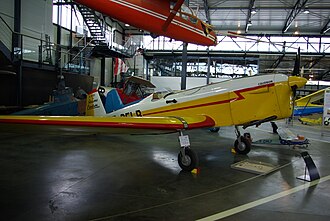
The Caudron C.600 Aiglon was one of the most interesting French light aircraft developed during the 1930s, a period when aviation was undergoing extraordinary technological and cultural changes. Designed as a two-seat sporting and touring aircraft, the Aiglon combined elegant aerodynamic lines, lightweight construction, and practical performance in a relatively economical package. It represented the growing popularity of private aviation in France, when flying was becoming an increasingly attractive activity for enthusiasts, wealthy individuals, flying clubs, and adventurous pilots who wanted to travel over considerable distances without depending on conventional transportation. Although the Aiglon was not a military aircraft in its original conception, its performance, reliability, and adaptability eventually allowed it to serve in military liaison roles and find operators in several countries.
Developed by the French manufacturer Caudron-Renault under the direction of the renowned aircraft designer Marcel Riffard, the C.600 Aiglon made its first flight in March 1935. Its name, meaning “Eaglet” in French, reflected the aircraft’s relatively small dimensions and sporting character. The design featured a low-wing cantilever monoplane configuration, two tandem open cockpits, a fixed tailwheel landing gear, and a wooden airframe with fabric-covered control surfaces. Its appearance was particularly attractive, with clean lines and carefully shaped aerodynamic surfaces that reflected the engineering philosophy associated with Riffard’s earlier high-performance aircraft.
The standard production version was powered by a Renault 4Pgi Bengali Junior four-cylinder inverted air-cooled engine producing approximately 100 horsepower. This relatively modest powerplant was sufficient to propel the lightweight aircraft to a maximum speed of approximately 220 km/h, with a cruising speed of around 190 km/h. The Aiglon also offered a useful range of approximately 700 kilometers, making it suitable for regional journeys and recreational long-distance flights. These characteristics helped establish its popularity among private owners and flying clubs, particularly in France, where the expansion of civilian aviation created a growing market for practical two-seat aircraft.
The Caudron C.600 became particularly interesting because of the variety of activities associated with the aircraft family. Special long-distance versions, designated C.610, were developed with increased fuel capacity, and one of these aircraft became famous for its Paris-to-Saigon flight in December 1935. The Aiglon also attracted several notable women aviators, who used the aircraft for long-distance journeys and record-breaking attempts during the 1930s. Its subsequent military use during the Second World War further demonstrated the versatility of the original design.
With approximately 203 aircraft produced across the Aiglon family, the Caudron C.600 became a significant member of the French light aviation industry. Its story is not simply that of a sporting aircraft but also of an era when private flying, international aviation records, and technological experimentation were transforming the relationship between people and air transportation.
Historical Background and Development
The French Aviation Industry During the 1930s
The development of the Caudron C.600 Aiglon took place during a particularly dynamic period in French aviation history. Following the First World War, France possessed one of the most advanced aircraft manufacturing industries in Europe. Numerous companies were involved in the development of military aircraft, commercial transports, training machines, and private touring aircraft. The experience gained during the war had accelerated improvements in aerodynamics, engine technology, structural engineering, and manufacturing methods, while the growing interest in civilian flying encouraged manufacturers to develop smaller and more economical machines.
By the beginning of the 1930s, aviation was no longer regarded exclusively as a military or experimental activity. Private flying was attracting increasing attention, and flying clubs were becoming important centers for pilot training and recreational aviation. Wealthier individuals were beginning to recognize the advantages of owning an aircraft for personal transportation, while manufacturers saw opportunities in the growing market for touring and sporting machines. These aircraft did not need the large engines or complex systems associated with commercial airliners. Instead, they needed to be economical, relatively easy to maintain, and capable of carrying one or two people over useful distances.
French aircraft manufacturers responded by producing a wide range of light aircraft with different configurations and performance characteristics. Some were designed primarily for training, while others emphasized touring comfort, speed, or long-distance capability. The development of the Aiglon reflected this trend toward practical sporting aircraft that combined attractive styling with useful performance.
The period was also characterized by intense competition between European manufacturers. German, British, Italian, and French companies were developing increasingly sophisticated touring aircraft, and aerodynamic refinement was becoming an important selling point. The Aiglon entered this competitive environment as a modern French design that emphasized efficiency, simplicity, and sporting performance.
Caudron and Its Merger with Renault
The history of the Aiglon is closely connected with the development of the Caudron company and its association with Renault. Caudron had been one of the historic names in French aviation since the pioneering years of powered flight. Founded by brothers Gaston and René Caudron, the company developed numerous aircraft designs and gained considerable experience in producing training, sporting, and high-performance machines.
The company became particularly well known for its aerodynamic experiments and racing aircraft. These projects provided valuable engineering knowledge that could be applied to civilian touring designs. By the early 1930s, Caudron was undergoing organizational changes, and its association with Renault helped create new opportunities for aircraft and engine development.
The merger brought together Caudron’s aircraft manufacturing experience and Renault’s industrial and engine manufacturing capabilities. It also provided a new framework for the development of modern civilian aircraft. At the end of 1933, Marcel Riffard assumed leadership of the design department of the newly amalgamated organization.
This change was particularly important because Riffard was already recognized for his work on fast and aerodynamically refined aircraft. His engineering philosophy emphasized reducing drag, optimizing the relationship between engine power and aircraft weight, and creating streamlined structures. These principles became clearly visible in the design of the Aiglon.
Marcel Riffard: The Designer Behind the Aiglon
Marcel Riffard was one of the most influential French aircraft designers of the interwar period. His work was characterized by an interest in aerodynamic efficiency and the careful integration of aircraft components. Rather than relying exclusively on increasingly powerful engines, he understood that improvements in airframe design could produce substantial gains in speed and efficiency.
His experience with racing aircraft provided a valuable foundation for the development of the Aiglon. Racing machines demanded careful attention to every detail affecting aerodynamic resistance, and many of the principles developed through these projects could be transferred to civilian aircraft. The challenge was to apply these ideas without sacrificing the practical characteristics required by a touring machine.
The Aiglon therefore combined a relatively simple construction with a clean aerodynamic shape. Its low-wing configuration, streamlined fuselage, and carefully designed tail surfaces created an aircraft that looked modern for its time. At the same time, the open tandem cockpits and fixed landing gear helped keep the aircraft relatively straightforward to manufacture and operate.
Riffard’s contribution was particularly significant because the Aiglon was not intended to be an experimental racing aircraft. It needed to remain accessible to private pilots and flying clubs while offering enough performance to make it attractive in a competitive civilian market.
Development of the Caudron C.600 Aiglon
Origins of the Project
The Caudron C.600 Aiglon was conceived as a two-seat sporting and touring aircraft capable of combining useful speed with relatively economical operation. Its design reflected the growing popularity of private aviation and the demand for machines that could serve both recreational and transportation purposes.
The first of two prototypes made its maiden flight in March 1935 from Issy-les-Moulineaux, near Paris. This location was an important center of French aviation activity and provided a suitable environment for the development and testing of new aircraft.
The prototypes allowed the manufacturer to evaluate the aircraft’s aerodynamic characteristics, handling qualities, and general performance. The design was based on a low-wing cantilever monoplane arrangement, meaning that the wings were attached directly to the fuselage without external supporting struts. This arrangement helped create a clean aerodynamic profile and gave the aircraft a distinctive appearance.
The two open cockpits were arranged in tandem, with the occupants sitting one behind the other. This configuration was common among sporting and training aircraft because it reduced frontal area while allowing the instructor or passenger to sit close to the pilot.
The Aiglon’s development was successful, and the aircraft entered production during the middle of the 1930s. It quickly attracted attention from private owners and flying clubs, particularly in France.
Production and Commercial Success
The standard C.600 became the principal production version of the Aiglon family. It was equipped with the Renault 4Pgi Bengali Junior engine and accounted for 178 aircraft.
The aircraft’s commercial appeal came from its combination of performance, attractive design, and relatively straightforward construction. Its two-seat configuration made it suitable for private touring, recreational flying, and some training activities, while its range provided sufficient flexibility for longer journeys.
The Aiglon was particularly popular among French private pilots, including several women aviators who used it for ambitious long-distance flights. Its international appeal also resulted in exports to other countries, including Spain, Argentina, and Japan.
The production history of the Aiglon extended beyond the standard C.600. Caudron developed several specialized variants with different engines and operational characteristics. When these variants are included, the total production of the family reached approximately 203 aircraft.
This production figure illustrates that the Aiglon achieved meaningful commercial success for a specialized two-seat sporting aircraft of the period.
Design and Construction
Low-Wing Cantilever Monoplane Configuration
One of the most distinctive characteristics of the Caudron C.600 Aiglon was its low-wing cantilever monoplane configuration. Unlike high-wing aircraft, which place the wings above the fuselage, the Aiglon had its wings attached to the lower section of the fuselage. The cantilever arrangement meant that the wings did not require external supporting struts, resulting in a cleaner aerodynamic profile and a more elegant overall appearance.
This configuration was particularly appropriate for an aircraft designed to achieve relatively high speeds with a modest engine. By reducing unnecessary aerodynamic resistance, the designers could obtain better performance without increasing engine power or introducing complicated mechanical systems. The low-wing arrangement also contributed to the aircraft’s distinctive proportions, giving it the appearance of a sophisticated sporting machine rather than a conventional basic trainer.
The wings were designed to provide sufficient lift while maintaining good aerodynamic efficiency. They incorporated wide-span trailing-edge flaps, which helped improve low-speed handling and made the aircraft more manageable during takeoff and landing. These features were important because the Aiglon needed to operate from relatively modest airfields and serve pilots with different levels of experience.
The aircraft’s overall design demonstrated Marcel Riffard’s preference for clean aerodynamic solutions. Its wings, fuselage, and tail surfaces were carefully integrated to create a machine that looked both practical and refined.
Wooden Airframe and Structural Design
The Caudron C.600 was constructed almost entirely from wood, reflecting a common approach among European light aircraft manufacturers during the 1930s. Wooden construction offered several advantages, including relatively low structural weight, good stiffness, and the possibility of manufacturing components without the expensive metalworking facilities required for an all-metal aircraft.
The main structural elements of the fuselage and wings were wooden, while fabric was used to cover certain control surfaces, including the rudder and elevators. This combination provided a useful balance between structural strength, weight, and manufacturing cost.
The wooden wing structure was designed to withstand the aerodynamic loads encountered during normal flight and maneuvering. Its smooth external surfaces also helped reduce drag. The fuselage was similarly shaped to maintain a streamlined profile while accommodating the two tandem cockpits.
Although wooden construction required careful protection against moisture and deterioration, it remained a practical choice for light aircraft during this period. It also allowed manufacturers to produce relatively lightweight sporting aircraft without the cost and complexity of more advanced metal structures.
Tandem Open Cockpits
The Aiglon featured two open cockpits arranged in tandem, with the pilot and passenger sitting one behind the other. This arrangement was particularly common among sporting aircraft because it reduced the aircraft’s frontal area compared with a side-by-side cabin.
The open cockpits gave the aircraft a distinctive appearance and provided occupants with an unobstructed experience of flying. Although this arrangement offered less protection from weather conditions than an enclosed cabin, it was attractive to sporting pilots who valued visibility and the traditional character of open-air aviation.
The cockpit arrangement also made the aircraft suitable for instructional activities. An instructor and student could occupy separate cockpits, allowing the aircraft to serve certain flying-club and training requirements in addition to recreational touring.
Some Aiglon examples were subsequently fitted with continuous glazed canopies covering the cockpits. These modifications improved weather protection and comfort, making the aircraft more suitable for longer journeys and operations in less favorable conditions.
Landing Gear and Ground Handling
The Caudron C.600 employed fixed conventional landing gear with a tailwheel. The main landing gear units incorporated oleo-pneumatic shock-absorbing struts, helping reduce the effects of landing impacts and uneven airfield surfaces.
The main wheels were fitted with aerodynamic fairings, which reduced the drag associated with exposed landing gear components. Differential braking also contributed to ground maneuverability and allowed pilots to control the aircraft more effectively while taxiing.
The fixed landing gear was mechanically simpler than a retractable arrangement, reducing maintenance requirements and avoiding the additional weight of a retraction mechanism. This was consistent with the aircraft’s intended role as an economical sporting and touring machine.
Although the fixed undercarriage created some aerodynamic resistance, the Aiglon’s streamlined airframe compensated sufficiently to provide respectable performance.
Engine and Propulsion System
Renault 4Pgi Bengali Junior Engine
The standard Caudron C.600 Aiglon was powered by the Renault 4Pgi Bengali Junior, a four-cylinder, inverted, air-cooled inline piston engine producing approximately 100 horsepower.
Renault’s Bengali engine family was widely associated with French light aviation during the interwar period. These engines were designed to provide dependable power for aircraft that did not require large or particularly complex propulsion systems.
The inverted configuration placed the cylinder heads below the crankshaft, helping create a relatively compact engine installation. This arrangement also offered useful visibility characteristics because it reduced the height of the engine installation in front of the pilot.
Air cooling eliminated the need for a liquid-cooling system, including a radiator and associated plumbing. This helped simplify the installation and reduced the number of components requiring maintenance.
The engine drove a two-bladed fixed-pitch propeller, providing a straightforward propulsion system appropriate for a sporting aircraft of the period.
Engine Performance and Efficiency
The approximately 100-horsepower Renault engine provided sufficient power for the lightweight Aiglon to achieve a maximum speed of approximately 220 km/h. Its reported cruising speed of around 190 km/h was particularly useful for regional transportation and recreational long-distance flying.
The engine was not especially powerful by the standards of larger aircraft, but the Aiglon did not require a substantial powerplant. Its relatively low empty weight and aerodynamic design allowed it to make effective use of the available power.
The combination of a modest engine and efficient airframe was an important selling point. Private owners and flying clubs needed aircraft that could provide enjoyable performance without the expense associated with larger engines.
The Renault 4Pgi Bengali Junior therefore represented a suitable compromise between power, weight, and operating economy.
Performance and Flight Characteristics
Maximum Speed and Cruising Speed
The Caudron C.600 Aiglon offered impressive performance for a two-seat sporting aircraft of the middle 1930s. Its maximum speed was approximately 220 km/h, while its cruising speed was around 190 km/h.
These figures reflected the advantages of its lightweight wooden construction and aerodynamic configuration. The cantilever wing design reduced external drag, while the streamlined fuselage helped the aircraft maintain good performance without requiring a particularly powerful engine.
The Aiglon was not intended to compete directly with specialized racing aircraft, but its speed made it attractive to pilots who wanted a sporting aircraft capable of covering considerable distances.
Its performance was especially useful for touring flights between cities and for participating in aviation competitions. It provided a combination of speed and practicality that distinguished it from many simpler recreational aircraft.
Range and Endurance
The standard C.600 had a published range of approximately 700 kilometers, making it suitable for regional touring and relatively long journeys.
Its fuel capacity was approximately 100 liters, distributed between two tanks located in the center section of the wing. This arrangement allowed the aircraft to carry sufficient fuel for useful flight endurance while maintaining a relatively compact fuselage.
The Aiglon’s range was particularly important because it enabled pilots to undertake journeys beyond the immediate area surrounding their home airfields. At a time when aviation infrastructure was still developing, the ability to cover several hundred kilometers in a single flight was a valuable characteristic.
The special C.610 version took this capability considerably further by incorporating additional fuel capacity for long-distance record attempts.
Service Ceiling and Climbing Capability
The published service ceiling of the standard C.600 was approximately 4,000 meters. This altitude capability was appropriate for a light sporting aircraft operating primarily on regional routes.
Its climbing performance depended on aircraft weight, weather conditions, and engine output. With a relatively modest 100-horsepower engine, the Aiglon relied on its low weight and aerodynamic characteristics to achieve useful performance.
The aircraft was designed for normal touring and sporting operations rather than high-altitude flying. Its service ceiling was therefore sufficient for the majority of its intended activities.
Handling and Stability
The Aiglon’s low-wing configuration, carefully designed control surfaces, and relatively lightweight construction contributed to its sporting character. The aircraft was intended to provide responsive handling while remaining manageable for pilots familiar with conventional light aircraft.
Its tandem cockpits also contributed to its narrow frontal profile, although the open configuration meant that occupants were exposed to wind and weather during flight.
The wide-span trailing-edge flaps were useful for improving low-speed flight characteristics. They helped provide additional lift during takeoff and landing, allowing the aircraft to operate from a variety of suitable airfields.
Overall, the Aiglon represented a balanced sporting design, combining aerodynamic refinement with practical flying characteristics.
The Special Long-Distance Caudron C.610 Aiglon
Development of the Long-Range Version
One of the most fascinating developments of the Aiglon family was the C.610, a specialized single-seat version created for long-distance flying.
The standard C.600 was already capable of covering approximately 700 kilometers, but ambitious aviation records required greater endurance. During the 1930s, long-distance flights attracted considerable public interest, and aircraft manufacturers were eager to demonstrate the performance and reliability of their designs.
Caudron responded by producing two specially modified C.610 aircraft. The most important modification involved increasing the available fuel capacity, allowing the aircraft to remain airborne for considerably longer periods.
The C.610 retained the general aerodynamic characteristics of the original Aiglon but was adapted for the specific requirements of long-distance flight. Its single-seat arrangement also reflected the fact that these aircraft were intended primarily for individual record attempts rather than ordinary touring.
André Japy’s Paris-to-Saigon Flight
The C.610 became famous through an ambitious flight undertaken by French aviator André Japy in December 1935.
Japy departed from Paris on 12 December 1935, attempting to reach Saigon in French Indochina using the specially modified Caudron aircraft. The journey was an important demonstration of the potential of light touring aircraft for long-distance international travel.
The flight was completed between 12 and 16 December, with an average speed of approximately 128 km/h. This was a remarkable achievement considering the aircraft’s relatively modest engine power and the navigational and meteorological difficulties associated with international flying during the 1930s.
The journey demonstrated that a small sporting aircraft could undertake a demanding intercontinental route when equipped with sufficient fuel capacity and flown by an experienced pilot.
It also strengthened the reputation of the Aiglon family as an efficient and capable aircraft design.
The Paris-to-Saigon flight remains one of the most interesting events associated with the Caudron Aiglon and illustrates the adventurous spirit that characterized aviation during the interwar period.
The Caudron Aiglon and Women in Aviation
A Popular Aircraft Among French Women Aviators
One particularly interesting aspect of the Aiglon’s history was its popularity among French women pilots.
During the 1930s, women were increasingly participating in aviation competitions, record attempts, and long-distance flights. Although they often faced considerable social and institutional barriers, several female aviators became internationally recognized through their achievements.
The Aiglon offered an attractive platform for these activities because it combined useful speed, reasonable endurance, and manageable operating characteristics.
Its sporting configuration made it suitable for cross-country flying, while its performance allowed experienced pilots to undertake ambitious journeys.
Several French women aviators used the aircraft for important flights and record attempts, helping establish its reputation beyond the conventional private aviation market.
Distance Records by Dupeyron and Lion
Among the women associated with the Aiglon were Madame Dupeyron and Madame Lion, who used the aircraft to establish women’s straight-line distance records in 1937 and 1938.
Their achievements demonstrated the growing role of women in international aviation and highlighted the suitability of the Aiglon for demanding long-distance operations.
Such flights required considerable preparation, careful navigation, and the ability to manage fuel consumption and changing weather conditions.
These record attempts were important not only because of the distances involved but also because they helped demonstrate that women pilots could successfully undertake the same demanding aviation activities as their male counterparts.
Suzanne Kohn’s France-to-Madagascar Journey
Another notable aviator associated with the Aiglon was Suzanne Kohn, who flew an aircraft of the type from France to Madagascar in 1939.
This journey was particularly impressive because it involved a long international route across regions with varying geographical and meteorological conditions.
Long-distance flying during this period required substantial planning. Pilots needed to identify suitable refueling locations, consider weather conditions, and prepare for the possibility of mechanical problems far from major aviation facilities.
Kohn’s journey illustrated the practical capabilities of the Aiglon and contributed to its reputation as a capable touring aircraft.
It also forms part of the broader history of pioneering women aviators who helped transform aviation during the 1930s.
Production Variants of the Caudron Aiglon
The Aiglon was developed into several versions, allowing Caudron to adapt the original design to different customer requirements and operating conditions.
Caudron C.600 Aiglon
The C.600 was the standard production version and the most numerous member of the family. It was powered by the approximately 100-horsepower Renault 4Pgi Bengali Junior engine.
A total of 178 examples were produced. The aircraft was primarily intended for private touring, sporting aviation, and flying-club activities.
Its two-seat tandem arrangement, low-wing configuration, and relatively good performance made it an attractive choice for private owners.
Caudron C.600G Aiglon
The C.600G was a modified version equipped with a de Havilland Gipsy Major engine.
This alternative powerplant reflected the flexibility of the original airframe and provided an option for operators who preferred a British engine installation.
Five examples of this version were produced.
Caudron C.601 Aiglon Senior
The C.601 Aiglon Senior was an improved development of the standard aircraft.
It was equipped with the more powerful Renault 4Pei engine, producing approximately 140 horsepower. This provided additional power compared with the original C.600 and improved the aircraft’s performance characteristics.
A total of 18 examples were manufactured.
The C.601 is particularly interesting because one example was exported to Japan for evaluation by the Imperial Japanese Navy Air Service. The aircraft was subsequently identified under the designation KXC1.
Caudron C.610 Aiglon
The C.610 was a specialized single-seat long-distance version with increased fuel capacity.
Only two examples were constructed. Their principal purpose was to undertake demanding long-range flights and demonstrate the endurance of the Aiglon design.
The Paris-to-Saigon flight by André Japy in December 1935 became the most famous achievement associated with this version.
Caudron KXC1
The KXC1 designation was associated with a C.601 exported to Japan for evaluation by the Imperial Japanese Navy Air Service.
This export demonstrated the international interest attracted by the Aiglon family. Although the aircraft was not adopted as a major Japanese production type, its evaluation illustrated the attention paid to European sporting and touring aircraft during the 1930s.
Military Service During the Second World War
Requisition by the French Government
Although the Caudron C.600 was developed as a civilian sporting aircraft, the outbreak of the Second World War changed its operational circumstances.
When France entered the conflict in September 1939, the government required additional aircraft for numerous supporting duties. Military organizations needed machines for transportation, communication, liaison, and training, in addition to their frontline combat aircraft.
Many civilian aircraft were therefore requisitioned or placed under government control.
The Aiglon was among the types used by the French military. Its speed, relatively straightforward construction, and two-seat configuration made it useful for liaison activities.
Although it lacked the equipment and performance required for combat operations, it could transport military personnel, carry documents, and undertake short-distance communication flights.
Liaison Operations
Liaison aircraft played an important role in military organizations before and during the Second World War.
Radio communication was not always available or sufficiently reliable for every operational requirement, and the rapid transportation of personnel and written information remained essential.
The Aiglon’s ability to cover distances relatively quickly made it suitable for these activities.
Its sporting origins were not a disadvantage in this role. The aircraft had already been designed for practical touring, meaning that it possessed many of the characteristics required for light military transportation.
Its military service demonstrated how civilian aircraft could contribute to armed forces without requiring major structural redesign.
International Military Operators
The Aiglon family also reached several foreign countries. Its operators included Argentina, Guatemala, Hungary, Japan, Romania, and Spain, although the nature and extent of service differed between countries.
Six examples were operated by the Royal Hungarian Air Force between 1943 and 1945.
The Spanish Republican air services also used Aiglons, including aircraft associated with pilot training activities at El Carmolí.
Guatemala operated examples through its air force, while the Japanese evaluation of the C.601 demonstrated the interest generated by the aircraft beyond Europe.
These international connections provide an interesting picture of the distribution of French light aircraft during the interwar period and the changing requirements of aviation during the Second World War.
The Aiglon in the International Civil Aviation Market
Exports to Other Countries
The Caudron Aiglon was not exclusively a French aircraft in terms of its operational history. Several examples were exported to foreign customers, demonstrating that its design appealed to pilots and aviation organizations outside France.
Spain received a significant number of examples, while Argentina also acquired aircraft from the production series. Individual aircraft reached other countries through direct export or subsequent transfers.
The Aiglon’s international appeal was understandable. It combined respectable speed with a relatively simple construction and an attractive sporting appearance.
For flying clubs and private owners, these characteristics represented a useful combination. The aircraft was sufficiently advanced to provide an enjoyable flying experience but did not require the infrastructure associated with larger commercial aircraft.
Its export history also demonstrated the growing international market for European light aircraft during the 1930s.
The Role of Flying Clubs
Flying clubs were among the most important customers for the Aiglon.
These organizations needed aircraft suitable for recreational flights, pilot development, and sporting activities. A two-seat aircraft was particularly useful because it could accommodate an instructor and student or a pilot and passenger.
The Aiglon’s tandem cockpit configuration was appropriate for these activities, while its relatively economical engine made it attractive for organizations that needed to control operating costs.
The aircraft also provided opportunities for more experienced pilots to undertake longer journeys and participate in aviation competitions.
This combination of instructional and sporting potential helped the Aiglon establish a lasting presence in the French civilian aviation community.
Preservation and Historical Importance
Surviving Examples
The Caudron C.600 Aiglon is now a relatively rare aircraft, although several examples and historical records have survived.
One particularly interesting aircraft is a C.601 Aiglon Senior preserved at the Musée Régional de l’Air at Angers-Marcé in France.
This aircraft helps illustrate the development of the Aiglon family and the modifications introduced in the more powerful Senior version.
Preservation is especially important for wooden aircraft because their structural components require careful maintenance. Moisture, temperature changes, and deterioration of fabric coverings can create significant challenges for museums and restoration organizations.
The survival of an original aircraft provides historians with valuable information about construction methods, cockpit arrangements, and the engineering decisions made during the 1930s.
Restoration and Historical Research
Restoration projects involving the Aiglon require specialist knowledge of traditional wooden aircraft construction.
The wings, fuselage, and structural joints need to be examined carefully, while the original engine installation and control systems must be understood before any restoration work can be completed.
Historical documentation is equally important. Aircraft registers, manufacturer records, photographs, and surviving technical drawings help researchers identify individual airframes and reconstruct their operational histories.
The Aiglon’s international history makes this research particularly interesting because individual aircraft frequently changed registrations and operators during their service lives.
The preservation of surviving examples therefore contributes not only to the history of Caudron but also to the broader understanding of French civilian aviation.
Why the Caudron C.600 Aiglon Remains an Important Aircraft
The Caudron C.600 Aiglon deserves recognition as one of the more interesting sporting and touring aircraft developed in France during the 1930s.
Its significance comes from several characteristics. First, it represented the aerodynamic philosophy of Marcel Riffard, who sought to combine clean aircraft design with efficient use of engine power. The Aiglon demonstrated that a relatively small engine could deliver useful performance when installed in a carefully designed airframe.
Second, the aircraft became an important part of the development of private aviation in France. Its popularity among flying clubs and individual owners reflected the growing interest in recreational and personal flying during the interwar period.
Third, the long-distance C.610 version demonstrated the endurance potential of the design. André Japy’s Paris-to-Saigon journey was an impressive achievement that helped establish the Aiglon family as a capable platform for international flights.
The aircraft’s association with women aviators is another important part of its historical significance. The record attempts and long-distance journeys undertaken by Dupeyron, Lion, and Suzanne Kohn helped demonstrate the growing participation of women in aviation.
Finally, the Aiglon’s military service illustrates the versatility of civilian aircraft during the Second World War. Although it was not designed for combat, its performance and practical configuration allowed it to contribute to liaison activities.
Conclusion
The Caudron C.600 Aiglon was an elegant and capable French sporting aircraft that reflected the rapid progress of civilian aviation during the 1930s. Designed by Marcel Riffard, it combined a low-wing cantilever monoplane configuration, wooden construction, tandem open cockpits, and a Renault Bengali Junior engine to create a lightweight aircraft with impressive performance for its category.
Its maximum speed of approximately 220 km/h and range of around 700 kilometers made it suitable for recreational flying, private transportation, and long-distance touring. The development of specialized variants, particularly the C.601 and C.610, further demonstrated the flexibility of the original design.
The Aiglon became especially memorable through André Japy’s Paris-to-Saigon flight and its association with several pioneering women aviators. These achievements helped establish its reputation as a reliable aircraft capable of undertaking demanding journeys.
Its subsequent use by flying clubs, private owners, and military organizations in several countries extended its influence beyond France. Although production remained modest compared with major military aircraft programs, the Aiglon achieved an important position within the history of European light aviation.
Today, the Caudron C.600 Aiglon remains a fascinating example of the golden age of French aviation. Its combination of elegant styling, practical engineering, and remarkable historical associations makes it worthy of continued attention from aviation historians, collectors, and enthusiasts.
Technical Specifications of the Caudron C.600 Aiglon
The following table summarizes the principal technical characteristics of the standard production C.600 version. Figures should not be confused with those of the more powerful C.601 or the long-range C.610.
| Specification | Caudron C.600 Aiglon |
|---|---|
| Manufacturer | Caudron-Renault |
| Country of origin | France |
| Aircraft category | Light sporting and touring aircraft |
| Designer | Marcel Riffard |
| First flight | March 1935 |
| Introduction | 1935 |
| Crew | 1 pilot |
| Passenger capacity | 1 passenger |
| Total seating capacity | 2 |
| Engine | Renault 4Pgi Bengali Junior |
| Engine configuration | Four-cylinder, inverted, air-cooled inline piston engine |
| Engine power | Approximately 100 hp (75 kW) |
| Number of engines | 1 |
| Propeller | Two-bladed, fixed-pitch |
| Wingspan | 11.38 m |
| Length | 7.64 m |
| Height | 2.89 m |
| Wing area | 14.51 m² |
| Empty weight | 560 kg |
| Maximum loaded weight | 880 kg |
| Fuel capacity | Approximately 100 litres |
| Maximum speed | 220 km/h |
| Cruising speed | 190 km/h |
| Range | 700 km |
| Service ceiling | 4,000 m |
| Wing configuration | Low-wing cantilever monoplane |
| Landing gear | Fixed conventional tailwheel |
| Construction | Primarily wooden, with fabric-covered control surfaces |
| Cockpit arrangement | Two tandem open cockpits |
| Primary roles | Private touring, sporting aviation, flying-club operations |
| Total Aiglon family production | Approximately 203 aircraft |
| Standard C.600 production | 178 aircraft |
Technical note: The specifications above refer to the standard C.600. Different figures apply to the C.600G, C.601 Aiglon Senior, and C.610 long-range versions. Historical references may also differ slightly in their published measurements and performance figures.
