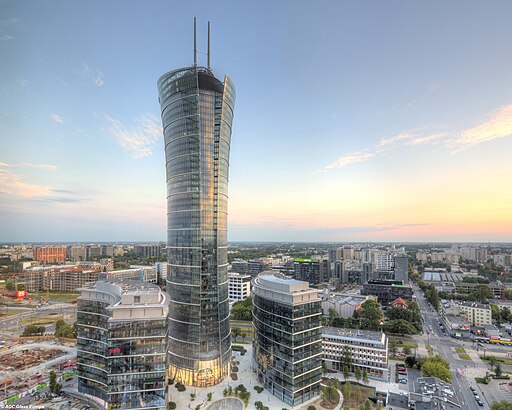
Warsaw Spire
Warsaw Spire: Touching the Sky and Shaping Warsaw’s Future
In the heart of Poland‘s capital, Warsaw Spire stands as a testament to the city’s economic resurgence and architectural innovation. This iconic skyscraper, with its sleek design and towering presence, has become a symbol of Warsaw’s dynamic transformation into a modern, vibrant metropolis. As Warsaw Spire graces the skyline, it tells a story of resilience, progress, and the city’s commitment to redefining its identity.
Rising Above the Horizon:
Completed in 2016, Warsaw Spire pierces the Warsaw skyline with its three interconnected towers, each distinct yet seamlessly integrated into a singular, breathtaking structure. The skyscraper was designed by the renowned Jaspers-Eyers Architects, a firm that sought to create a modern masterpiece that would both capture the spirit of the city and contribute to its urban renaissance.
Architectural Marvel:
The architectural brilliance of Warsaw Spire lies in its contemporary design and attention to detail. The exterior of the towers is adorned with a glass facade, creating a sleek and reflective surface that mirrors the city and sky. The towers, standing at varying heights, add a sense of dynamism to the skyline while maintaining a cohesive and visually striking profile.
The strategic placement of Warsaw Spire within the Wola district, Warsaw’s growing business hub, contributes to the city’s economic development. The skyscraper’s design also incorporates sustainable features, aligning with global trends toward environmentally responsible architecture.
Functionality and Purpose:
Warsaw Spire is not merely a visual spectacle; it serves as a dynamic hub for business, commerce, and culture. The towers house a mix of office spaces, retail areas, and amenities, providing a comprehensive and modern environment for professionals and visitors alike. The incorporation of green spaces and communal areas within the complex fosters a sense of community and collaboration.
The tower’s location in the Wola district, coupled with its state-of-the-art facilities, has turned it into a magnet for businesses seeking a prime address in Warsaw. Warsaw Spire has thus become a symbol of the city’s economic growth and its emergence as a key player in the European business landscape.
Cultural Impact:
Beyond its economic significance, Warsaw Spire has become a cultural landmark in the city. The skyscraper stands as a symbol of Warsaw’s resilience and ability to reinvent itself. Its towering presence in the Wola district contributes to the district’s identity as a modern, cosmopolitan area, reflecting Warsaw’s embrace of innovation and progress.
Conclusion:
Warsaw Spire stands tall as an architectural marvel, reflecting Warsaw’s journey from a city marked by historical challenges to one that proudly embraces its future. As the skyscraper continues to shape the skyline and contribute to the city’s economic and cultural landscape, Warsaw Spire remains a beacon of Warsaw’s determination to reach new heights while honoring its past. In the evolving story of Warsaw, Warsaw Spire stands as a chapter that celebrates the city’s triumph over adversity and its ascent into a bright and promising future.
