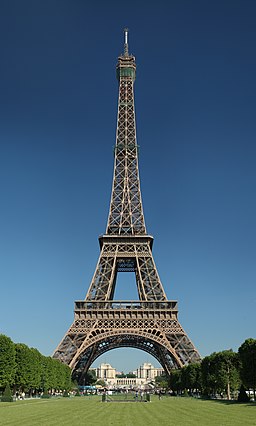
Eiffel Tower
The Eiffel Tower, a symbol of both Paris and France, is an architectural marvel that stands as a testament to human ingenuity and creativity. Soaring to a height of 324 meters (1,063 feet), it dominates the Parisian skyline and has become one of the most recognized structures in the world. Gustave Eiffel, along with his construction company, designed the tower for the Exposition Universelle held in Paris in 1889, commemorating the centennial celebration of the French Revolution. Its distinctive lattice structure, made up of approximately 18,038 iron parts and held together by over 2.5 million rivets, was not only groundbreaking for its time but also an embodiment of the industrial age’s progress.
Beyond its structural significance, the Eiffel Tower serves as a major cultural and tourist attraction, drawing millions of visitors annually. Its three observation decks offer breathtaking panoramic views of Paris, providing a unique perspective of landmarks such as the Louvre, Notre-Dame Cathedral, and the River Seine. Visitors can ascend to these decks using elevators or, for the more adventurous, by climbing the stairs. Each level houses exhibits and spaces that showcase the tower’s history, engineering, and its role as a symbol of French national pride.
Since its completion in 1889, the Eiffel Tower has remained an enduring emblem of architectural brilliance, hosting countless cultural events, celebrations, and light displays. It stands not just as a steel giant but as a timeless representation of France’s rich history, cultural heritage, and its continued influence on global art, fashion, and architecture. The Eiffel Tower’s graceful silhouette against the Parisian sky remains an ever-evolving tribute to the intersection of art, engineering, and the enduring spirit of France.
Eiffel Tower parameters
The Eiffel Tower, located in Paris, France, is one of the most iconic landmarks in the world. Here are some key parameters and details about the Eiffel Tower:
- Height: The Eiffel Tower stands at a height of 324 meters (1,063 feet). When it was completed in 1889, it was the tallest man-made structure in the world, a title it held for several decades.
- Construction Material: The tower is primarily constructed from iron. Approximately 18,038 individual iron parts were assembled using over 2.5 million rivets.
- Weight: The Eiffel Tower weighs around 10,100 metric tons.
- Construction Period: Construction of the Eiffel Tower began in 1887 and was completed in 1889. It was designed by Gustave Eiffel and his construction company for the Exposition Universelle (World’s Fair) held in Paris to celebrate the 100th anniversary of the French Revolution.
- Design: The tower has a lattice structure with three levels, including observation decks on the second and third levels. The design reflects the architectural style of the time and was innovative for its era.
- Elevators and Stairs: The Eiffel Tower has elevators that transport visitors to the second and third levels. Additionally, there are stairs that people can use to climb to the first and second levels.
- Visitors: The Eiffel Tower attracts millions of visitors each year, making it one of the most visited paid monuments globally.
.jpg)