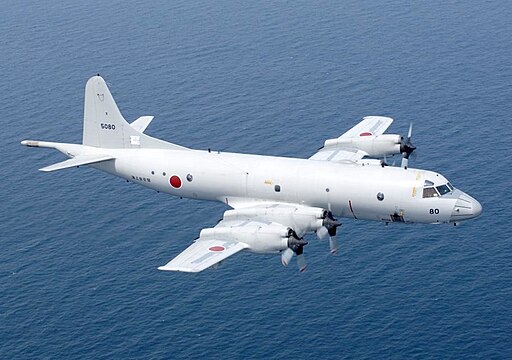
Lockheed P-3 Orion
The Lockheed P-3 Orion stands as one of the most enduring and versatile maritime patrol aircraft in the world, serving in various roles for over half a century. Originally developed by Lockheed Corporation in the 1960s, the P-3 Orion was designed to conduct long-range maritime patrol, anti-submarine warfare (ASW), and intelligence, surveillance, and reconnaissance (ISR) missions. Its robust design, endurance, and sophisticated sensor suite have made it a vital asset for navies across the globe, supporting operations ranging from anti-piracy patrols to search and rescue missions.
With its distinctive fuselage, high-wing configuration, and four turboprop engines, the P-3 Orion boasts exceptional endurance and range, enabling it to cover vast expanses of ocean in search of surface vessels and submarines. Equipped with advanced radar systems, magnetic anomaly detectors (MAD), and acoustic sensors, the Orion is capable of detecting and tracking even the most elusive underwater threats. Its versatility extends beyond maritime patrol, as it can also be configured for search and rescue missions, environmental monitoring, and even aerial firefighting, showcasing its adaptability to a wide range of operational requirements.
Over the years, the P-3 Orion has undergone numerous upgrades and modernization efforts to enhance its capabilities and extend its service life. These upgrades have included improvements to its avionics, sensor suites, and mission systems, as well as structural enhancements to address fatigue and corrosion issues. Despite its age, the P-3 Orion continues to serve as a vital asset for maritime surveillance and security, providing navies with the critical intelligence and situational awareness needed to safeguard their maritime interests in an ever-changing global environment.
Armament Lockheed P-3 Orion
The armament of the Lockheed P-3 Orion, a maritime patrol aircraft, typically includes a variety of weapons and ordnance suitable for anti-submarine warfare (ASW) and maritime interdiction missions. While specific configurations may vary depending on mission requirements, the P-3 Orion is typically equipped with:
- Torpedoes: The P-3 Orion can carry lightweight torpedoes, such as the Mk 46 torpedo, for engaging and neutralizing submerged submarines. These torpedoes are typically launched from underwing pylons or bomb bays.
- Depth Charges: Depth charges are another common weapon used by the P-3 Orion for ASW missions. These anti-submarine weapons are dropped from the aircraft and detonate at a predetermined depth, creating a powerful underwater shockwave to damage or destroy submarines.
- Sonobuoys: Sonobuoys are expendable acoustic sensors deployed from the aircraft to detect and track submerged submarines. The P-3 Orion typically carries a large number of sonobuoys, which are dropped into the water and transmit acoustic signals back to the aircraft for analysis.
- Harpoon Missiles: In some configurations, the P-3 Orion may be equipped with anti-ship missiles, such as the Harpoon missile, for engaging surface targets. These missiles provide the aircraft with a stand-off capability to strike hostile surface vessels at extended ranges.
- Electronic Countermeasures (ECM): The P-3 Orion may also be equipped with electronic countermeasures (ECM) systems to disrupt or jam enemy radar and communication systems, enhancing its survivability in hostile environments.
Overall, the armament of the Lockheed P-3 Orion is tailored to its role as a maritime patrol aircraft, providing it with the capability to detect, track, and neutralize submarine and surface threats in maritime environments.
Dimensions of the Lockheed P-3 Orion
The Lockheed P-3 Orion, a maritime patrol aircraft, has the following dimensions:
- Length: Approximately 35.6 meters (116 feet 10 inches).
- Wingspan: Approximately 30.4 meters (99 feet 10 inches).
- Height: Approximately 10.3 meters (33 feet 8 inches).
These dimensions provide the P-3 Orion with the necessary size and wingspan to accommodate its payload of sensors, mission equipment, and armament, while also allowing it to operate effectively in maritime environments.
.jpg)