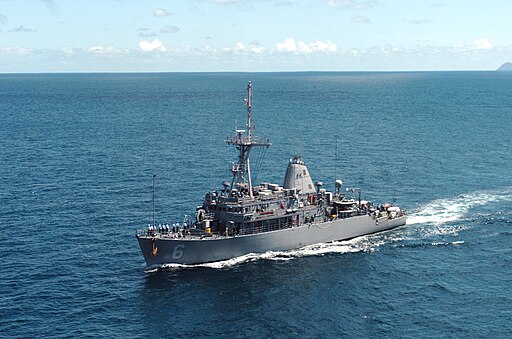
USS Devastator (MCM-6)
USS Devastator (MCM-6): A Guardian of Maritime Safety
The USS Devastator (MCM-6) is an Avenger-class mine countermeasures ship in the United States Navy, purpose-built to detect and neutralize underwater threats. Designed to safeguard maritime routes and ensure the safety of naval and commercial vessels, the Devastator plays a critical role in maintaining freedom of navigation and supporting military operations in mine-contested waters.
This article examines the design, operational history, capabilities, and strategic importance of the USS Devastator, shedding light on its role in the ever-evolving landscape of naval warfare.
Design and Construction
The Avenger-class represents a specialized fleet of ships built to address the growing threat posed by naval mines. These mines, often inexpensive and easy to deploy, are capable of crippling fleets and disrupting trade routes. The USS Devastator and its sister ships were designed to counter these challenges.
Specifications
- Class and Type: Avenger-class mine countermeasures ship.
- Displacement: 1,312 tons (fully loaded).
- Length: 224 feet.
- Beam: 39 feet.
- Draft: 12 feet.
- Propulsion: Four Isotta Fraschini ID-36 diesel engines driving two shafts, producing a top speed of 14 knots.
- Crew: Approximately 80 personnel, including officers and enlisted sailors.
Construction
The USS Devastator was constructed by Peterson Builders, Inc., a shipyard in Sturgeon Bay, Wisconsin, renowned for building specialized vessels. The ship’s keel was laid down on October 9, 1987, and it was launched on June 11, 1988. It was formally commissioned into the Navy on October 6, 1990.
One defining characteristic of the Avenger class is the use of a fiberglass-sheathed, wooden hull, which minimizes the ship’s magnetic signature. This feature allows the Devastator to operate safely in mine-laden waters, as magnetic mines are less likely to detect its presence.
Capabilities and Equipment
The USS Devastator is equipped with a range of advanced technologies for mine detection, classification, and disposal. Its mission profile emphasizes precision and safety, allowing it to perform critical operations in high-risk environments.
Mine Countermeasures (MCM) Systems
- Sonar Systems: The Devastator is equipped with high-frequency sonar systems designed to detect and classify underwater mines. These systems provide detailed imaging of the seabed, enabling accurate identification of threats.
- Mine Neutralization Vehicles (MNVs): Remotely operated vehicles (ROVs) are deployed to neutralize mines safely. These vehicles are controlled from the ship and equipped with cameras, manipulators, and explosive charges to destroy mines at a distance.
- Mechanical Sweep Systems: The ship can deploy cables and specialized equipment to sever mine moorings, allowing floating mines to rise to the surface for neutralization.
Navigation and Communication
The USS Devastator is equipped with advanced navigation systems, including radar and GPS, to ensure precise operations in challenging environments. Communication systems enable coordination with other ships and naval units during joint operations.
Armament
While the primary mission of the Devastator is mine countermeasures, it is lightly armed for self-defense. Its weaponry includes:
- Two .50 caliber machine guns for protection against small boats and air threats.
Operational Role
The USS Devastator is a specialized asset designed to:
- Ensure Safe Passage: Clearing mines from strategic waterways and harbors to facilitate the movement of naval and commercial vessels.
- Support Amphibious Operations: Removing underwater mines to create safe landing zones for Marine Corps and other amphibious forces.
- Contribute to Multinational Efforts: Collaborating with allied navies in joint mine countermeasures exercises and operations.
- Protect Critical Infrastructure: Safeguarding ports, offshore installations, and shipping lanes from mine threats.
Operational History
Since its commissioning, the USS Devastator has played a vital role in various mine countermeasures operations, exercises, and missions worldwide.
Early Deployments
In its early years, the Devastator focused on training exercises and readiness operations. It participated in mine-clearing drills and collaborated with allied navies to refine tactics and techniques for countering the evolving threat of naval mines.
21st Century Operations
The USS Devastator has been actively deployed to regions of strategic importance, particularly in the Middle East. The ship is homeported in Bahrain as part of the U.S. Navy’s Fifth Fleet. This location allows the Devastator to operate in the Persian Gulf, a region critical to global energy trade and frequently targeted by mine warfare threats.
Its presence in the region underscores its role in:
- Protecting shipping lanes like the Strait of Hormuz, through which a significant percentage of the world’s oil supply passes.
- Conducting mine-clearing operations in support of coalition forces during times of conflict.
Exercises and Collaboration
The USS Devastator regularly participates in multinational exercises such as IMCMEX (International Mine Countermeasures Exercise). These drills bring together navies from around the world to practice mine-clearing operations and demonstrate the collective commitment to maritime security.
Strategic Importance
Naval mines remain a potent weapon in modern warfare. They are inexpensive, easy to deploy, and capable of causing significant disruption to military and commercial operations. The USS Devastator and its sister ships serve as essential tools in countering this threat.
Challenges Addressed by Mine Countermeasures
- Economic Impact: Mines can block major shipping lanes, disrupting global trade and economies.
- Operational Hindrance: Mines can delay or prevent the deployment of naval forces in contested areas.
- Safety Risks: Mines pose a direct threat to sailors and civilian mariners.
By ensuring safe passage through mine-contested waters, the USS Devastator enhances the Navy’s ability to project power, sustain operations, and protect global commerce.
The Avenger-Class Legacy
The Avenger-class mine countermeasures ships, including the USS Devastator, have served as the backbone of the Navy’s mine warfare fleet since the 1990s. With advancements in unmanned systems and the introduction of new platforms like the Littoral Combat Ship (LCS) equipped with mine countermeasures packages, the Avenger class is gradually being supplemented by newer technologies.
However, the USS Devastator continues to demonstrate its value through its proven capabilities, particularly in regions where mines remain a significant concern.
Conclusion
The USS Devastator (MCM-6) is a critical asset in the U.S. Navy’s effort to counter the persistent threat of naval mines. Its advanced technology, specialized design, and skilled crew enable it to operate in some of the most hazardous maritime environments, ensuring the safety of vital waterways and supporting the Navy’s global mission.
As a testament to the Navy’s commitment to innovation and adaptability, the Devastator remains a key player in safeguarding freedom of navigation and upholding international maritime security. In an era of growing naval competition, its role is more vital than ever.
