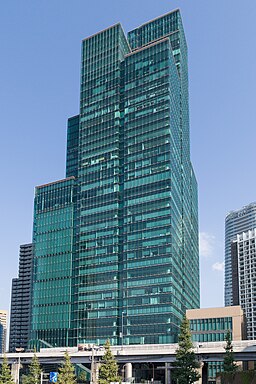
Izumi Garden Tower
Izumi Garden Tower: A Vertical City in the Heart of Roppongi
Rising above the cosmopolitan district of Roppongi in Tokyo, Izumi Garden Tower stands as a sophisticated fusion of modern architecture, engineering innovation, and urban utility. Designed as a multi-purpose high-rise, the tower integrates commercial, residential, and leisure functions within a seamless vertical complex. Since its completion in 2002, it has been recognized as a model for urban mega-structures that promote work-life integration and high-efficiency land use.
In this comprehensive overview, we delve into the technical specifications, engineering features, and architectural innovations that make Izumi Garden Tower a quintessential example of a modern “vertical city.”
Project Overview
- Name: Izumi Garden Tower
- Location: Roppongi 1-Chome, Minato-ku, Tokyo, Japan
- Completion Date: 2002
- Owner / Developer: Sumitomo Realty & Development Co., Ltd.
- Architect: Nihon Sekkei, Inc.
- Main Contractor: Taisei Corporation
- Building Type: Mixed-use (Office, Residential, Hotel, Retail)
- Total Site Area: ~14,000 m²
- Total Floor Area: ~197,700 m²
- Height: 201 meters (660 ft)
- Floors: 45 above ground, 5 below
- Construction Type: Steel-reinforced concrete (SRC) + steel structure
- Seismic Design Code: Post-1995 Japanese Building Standard Law (Shin-Taishin)
Structural Design and Engineering
The structural design of Izumi Garden Tower represents a hybrid engineering solution tailored to the high seismic demands of Tokyo while accommodating complex mixed-use functions.
Structural System
- Type: Composite steel and SRC frame with central core shear walls
- Vertical Load Distribution: Reinforced concrete columns with steel beam connections for upper commercial floors
- Lateral Load Resistance: Reinforced concrete shear walls at the core and moment-resisting frames at the perimeter
- Foundation: Deep pile foundation system using bored cast-in-place piles
- Typical Pile Dimensions: Diameter ~1.5 meters, depth ~45–50 meters
- Seismic Damping Devices: Tuned mass dampers and oil dampers installed to mitigate seismic sway and wind-induced vibrations
The design employs a dual-resistance system for enhanced lateral performance, combining the rigidity of the central core with the elasticity of the steel frame, a strategy well-suited for Japan’s high-risk seismic environment.
Façade and Envelope Engineering
Izumi Garden Tower features a sleek curtain wall system optimized for energy efficiency and visual transparency.
- Material Composition: Double-glazed, low-E glass curtain wall with aluminum mullions
- Thermal Insulation Performance:
- U-value: ~1.7 W/m²·K
- Solar Heat Gain Coefficient (SHGC): ~0.30
- Visible Light Transmittance (VLT): ~60%
- Acoustic Insulation: Laminated glass with interlayers providing a sound transmission class (STC) rating of ~40
- Exterior Finish: Reflective metallic coating integrated with ceramic frit pattern for solar control and aesthetic uniformity
The building envelope not only ensures climate responsiveness but also enhances daylighting and panoramic views from virtually every floor.
Building Layout and Functional Zoning
The tower is vertically divided into distinct functional zones:
Floor Breakdown
| Floor Range | Function |
|---|---|
| B5 to B1 | Parking, mechanical, storage |
| 1F to 3F | Retail, restaurants, lobby |
| 4F to 5F | Conference facilities |
| 6F to 36F | Office spaces |
| 37F to 39F | Serviced apartments |
| 40F to 45F | Izumi Garden Residence (luxury residential) |
Vertical Transportation
- Elevators:
- 31 passenger elevators
- High-speed shuttle elevators (up to 360 m/min) for express access to sky lobby
- Freight elevators and service lifts for logistics
- Escalators: Primarily in podium retail zones
- Access Control: RFID-enabled security turnstiles at key entry points
Each zone is equipped with independent HVAC systems and mechanical shafts, minimizing interference between uses and allowing maintenance without cross-functional disruption.
Environmental and Building Services Systems
Izumi Garden Tower integrates several energy-saving technologies and building automation systems, aligning with Tokyo’s sustainable development policies.
HVAC Systems
- Type: Central chilled water system with Variable Air Volume (VAV) distribution
- Cooling Towers: Located on the roof with heat exchange systems
- Controls: Building Management System (BMS) with real-time monitoring of air quality, temperature, and occupancy
- Backup Systems: Redundant chillers and power supply for mission-critical tenants
Lighting and Energy
- Interior Lighting: LED retrofitting (completed in 2017) with motion and daylight sensors
- Exterior Lighting: Programmable façade lighting used for seasonal events
- Energy Performance:
- ~25% reduction in energy consumption after retrofits
- Building meets Tokyo’s Green Building Program benchmarks
Water Management
- Rainwater Harvesting: Used for landscape irrigation and HVAC cooling
- Greywater Recycling: Integrated into lavatory systems
- Fixture Efficiency: Dual-flush toilets and low-flow taps across residential and office units
Safety, Fire, and Emergency Systems
Given its mixed-use nature and high occupancy, Izumi Garden Tower is equipped with a full suite of advanced safety and emergency features:
- Fire Protection:
- Sprinkler systems in all rooms and public areas
- Smoke detectors and aspirating detection system
- Fireproof partitioning between vertical zones
- Evacuation Systems:
- Pressurized stairwells
- Designated refuge floors (every 10 levels)
- Emergency communication panels linked to Tokyo Fire Department
- Seismic Emergency Protocols:
- Automatic elevator shutdown and parking
- Seismic sensors linked to early warning network
- Generator-powered lighting and ventilation systems for up to 72 hours
Architectural Aesthetics and Urban Integration
The exterior design emphasizes a seamless integration with Roppongi’s upscale character, using vertical aluminum fins and a glazed surface to soften the visual mass of the tower.
- Podium Design: A 3-story podium connects with the Roppongi-itchome Station (Tokyo Metro Namboku Line) via a covered plaza and underground concourse
- Landscaping: Public green spaces and a rooftop garden enhance urban ecology and reduce the heat island effect
- Public Art: Commissioned works from Japanese artists installed in the lobby and garden spaces
The overall aesthetic combines Japanese minimalism with a corporate international style, creating a space that is elegant, functional, and quietly imposing.
Technology and Smart Building Integration
Izumi Garden Tower was an early adopter of smart building technologies:
- Data Infrastructure:
- Fiber-optic backbone installed during construction
- Data centers with UPS and climate-controlled server rooms
- Access Control:
- Touchless entry points using biometric and RFID card authentication
- Tenant Customization:
- Modular office fit-outs with raised floors for easy cabling
- Smart thermostats and localized lighting controls for energy efficiency
The smart systems are maintained by a dedicated facilities management team operating a 24/7 control room.
Conclusion
Izumi Garden Tower is not just a skyscraper; it’s a vertical ecosystem that reflects the evolving urban realities of Tokyo—dense population, limited land, and a demand for multifunctional infrastructure. With its state-of-the-art structural engineering, meticulous energy strategy, and integrated design philosophy, the tower exemplifies what a sustainable and resilient urban megastructure can look like.
