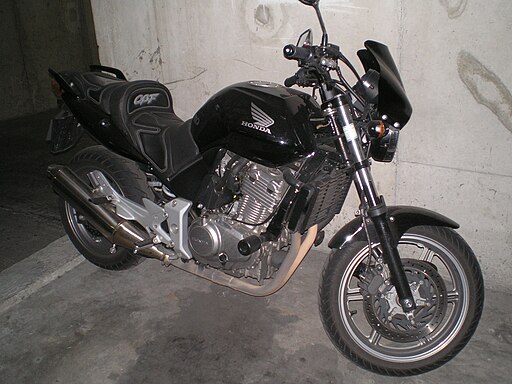
Honda CBF500
The Honda CBF500 emerged in the mid-2000s as a practical, user-friendly middleweight motorcycle. Designed to blend everyday usability with enough performance for spirited weekend rides, it quickly gained favor among commuters, newer riders, and seasoned enthusiasts alike. Its combination of a smooth parallel-twin engine, straightforward ergonomics, and modest maintenance requirements set it apart in a crowded segment. The CBF500 balances light weight with manageable power, making it suitable for both city streets and open highways.
Design and Ergonomics
Styling and Bodywork
Honda gave the CBF500 clean, uncluttered lines that emphasize function over flash. A half-fairing with an integrated wind deflector softens wind blast at speed, while smooth transitions between the fuel tank and seat create a cohesive silhouette. Minimal side panels conceal mechanical components without disrupting airflow. Subtle color accents on the fairing and contrasting wheel rims reinforce its modern yet approachable aesthetic.
Rider Position and Comfort
A seat height of 785 mm keeps the rider’s center of gravity low, promoting confidence at stops and in slow traffic. Wide handlebars and a slightly leaned-forward posture strike a balance between sportiness and all-day comfort. Foam density in the seat offers support for hours of cruising without pressure points. Footpeg placement allows a natural leg bend, aiding rider control during both relaxed commuting and firmer cornering.
Engine and Powertrain
Engine Architecture
At its heart, the CBF500 houses a 499 cc liquid-cooled parallel-twin with dual overhead camshafts and four valves per cylinder. A 73 × 59 mm bore and stroke configuration yields a naturally balanced layout, minimizing vibration while preserving a compact engine footprint. A compression ratio of 10.5 : 1 optimizes efficiency and detonation resistance, allowing for predictable throttle response across the rev range.
Fuel Delivery and Ignition
Honda’s PGM-FI electronic fuel injection system meters fuel with precision, delivering smooth power delivery from idle to redline. A ride-by-wire throttle ensures instant responsiveness while aiding emissions control. Digital ignition timing adjusts dynamically to engine load and temperature, promoting clean combustion and reliable cold starts. Average fuel consumption hovers around 4 L/100 km, translating to a practical range of over 400 km on its 18 L tank.
Transmission and Final Drive
A six-speed gearbox provides close ratio shifts for spirited acceleration in the lower gears and relaxed cruising at highway speeds. An assist-style wet multi-plate clutch lightens lever pull without compromising feedback. Power is routed to the rear wheel via a durable roller chain, with precise alignment maintained by the robust steel swingarm.
Chassis and Suspension
Frame and Geometry
The CBF500 employs a high-tensile steel double-cradle frame that strikes an ideal blend of rigidity and controlled flex. A 1 455 mm wheelbase and a 27° rake deliver stable handling at speed while remaining nimble in urban environments. Ground clearance of 140 mm allows confident lean angles without scraping pegs. Engine placement within the frame lowers the center of gravity, enhancing overall balance.
Front Suspension
A 41 mm telescopic fork offers 120 mm of travel to absorb potholes and curbs. Hydraulic damping is tuned for everyday versatility—firm enough to maintain composure under braking yet compliant enough for uneven pavement. Fork gaiters protect the stanchions from debris, extending seal life and preserving smooth action.
Rear Suspension
A centrally mounted monoshock with seven-step preload adjustment provides 120 mm of rear wheel travel. Riders can tailor spring preload for solo touring or two-up riding, maintaining optimal sag and handling. Damping characteristics keep the rear wheel planted during hard acceleration and corner exits.
Brakes and Wheels
Front stopping power comes from a 296 mm floating disc gripped by a two-piston caliper, offering progressive bite and excellent fade resistance. The rear employs a single 220 mm disc with a single-piston caliper for controlled deceleration. Standard 17-inch cast alloy wheels wear 120/70-17 rubber up front and 160/60-17 at the rear, marrying vintage sizing with modern tire compounds for predictable grip.
Electronics and Safety Features
Honda equipped the CBF500 with essential rider aids while avoiding unnecessary complexity. An easy-to-read analog tachometer sits alongside a digital speedometer, fuel gauge, and trip computers. A self-cancelling turn signal relay and LED tail lights enhance visibility. Though ABS was not standard across all markets, some variants offered it as an option, delivering added braking confidence in wet conditions.
Dimensions, Weight, and Capacity
The CBF500 spans 2 159 mm in length, 768 mm in width, and 1 108 mm in height. Its curb weight hovers around 183 kg, striking a light footprint for a 500 cc twin. With an 18 L fuel tank, riders can expect a range exceeding 400 km between fill-ups. A seat height of 785 mm and a kerb weight under 190 kg make low-speed maneuvering and parking straightforward, even in tight urban settings.
Technical Parameters
| Parameter | Specification |
|---|---|
| Engine Type | 499 cc liquid-cooled parallel twin |
| Valvetrain | DOHC, 4 valves per cylinder |
| Bore × Stroke | 73 mm × 59 mm |
| Compression Ratio | 10.5 : 1 |
| Fuel System | PGM-FI electronic injection |
| Ignition | Fully transistorized CDI |
| Transmission | 6-speed, wet multi-plate clutch |
| Final Drive | Chain |
| Frame | High-tensile steel double cradle |
| Front Suspension | 41 mm telescopic fork, 120 mm travel |
| Rear Suspension | Monoshock, spring preload adjustable |
| Front Brake | 296 mm disc, 2-piston caliper |
| Rear Brake | 220 mm disc, single-piston caliper |
| Front Tire | 120/70-17 |
| Rear Tire | 160/60-17 |
| Wheelbase | 1 455 mm |
| Rake/Trail | 27° / 104 mm |
| Seat Height | 785 mm |
| Ground Clearance | 140 mm |
| Curb Weight | 183 kg |
| Fuel Capacity | 18 L |
| Fuel Consumption | ~4 L/100 km |
| Top Speed | ~180 km/h |
Riding Experience and Legacy
The Honda CBF500 stands out for its accessible power delivery and intuitive handling. Its torquey twin rewards smooth throttle control, making traffic weaving and overtakes equally confidence-inspiring. The balanced chassis and forgiving suspension encourage riders to explore twisty roads, while its ergonomic neutrality ensures comfort on longer journeys. Though production ended in the late 2000s, the CBF500’s blend of reliability, economy, and ease of use has kept it in high demand on the used market, where it continues to serve as a trusted companion for daily commutes and weekend escapes.
