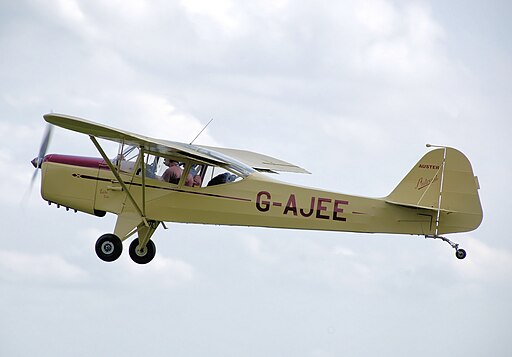
The Auster Autocrat: Britain’s Post-War Civil Utility Aircraft
The Auster Autocrat was one of the most significant light aircraft to emerge in Britain in the aftermath of the Second World War. Produced by the Auster Aircraft Company, the Autocrat became one of the first widely available civil utility aircraft in the United Kingdom during the late 1940s. Its affordability, simplicity, and rugged design made it popular with flying clubs, private owners, and operators across the Commonwealth.
Built on wartime experience gained with military liaison and observation aircraft, the Autocrat offered a civilian counterpart that could be adapted for touring, training, and general aviation roles. It helped to revitalize private flying in the UK at a time when the aviation industry was transitioning from military to peacetime production.
Development Background
The Autocrat originated from the Auster J/1 project, which was developed shortly after the war to repurpose military expertise into a civilian light aircraft. The aircraft’s design was heavily influenced by the wartime Taylorcraft Auster, which had been used by the Royal Air Force for artillery spotting and liaison duties.
The J/1 Autocrat was introduced in 1946 and quickly gained popularity because it was relatively inexpensive to operate and maintain. Hundreds were produced, making it one of the most successful British light aircraft of its era.
Design Characteristics
The Auster Autocrat was a high-wing monoplane with fixed tailwheel landing gear. Its layout reflected both simplicity and ruggedness, ideal for private flying as well as operations from grass strips and improvised airfields.
The airframe was primarily built from steel tubing with wooden wings, all covered in fabric. This construction method kept costs low while allowing for easy repair.
The cabin featured side-by-side seating for a pilot and passenger, with a third seat occasionally fitted in the rear. Large windows and a high wing ensured good visibility, a trait inherited from the aircraft’s military predecessors.
Power was provided by the Blackburn Cirrus Minor II, a reliable four-cylinder inline engine that gave the aircraft sufficient performance for touring and training, while remaining economical.
Operational Use
The Autocrat was widely used in Britain and exported across the Commonwealth, including Australia, New Zealand, India, and South Africa. Many flying clubs adopted it as their primary trainer and touring aircraft.
Its robust design allowed it to handle less-than-ideal airstrips, making it popular with private owners in rural and remote areas. Some aircraft were later modified for specialized purposes such as agricultural work, air-taxi services, and even glider towing.
By the 1950s, the Autocrat had established itself as a cornerstone of post-war British civil aviation, helping to make flying more accessible to civilians. Many aircraft remained in service for decades, and surviving examples are still flown today by enthusiasts and in vintage aircraft collections.
Technical Specifications of the Auster Autocrat (J/1)
-
Role: Civil utility and touring aircraft
-
Crew: 1 (pilot)
-
Capacity: 2 passengers (side-by-side seating with optional third seat)
Dimensions
-
Length: 22 ft 7 in (6.88 m)
-
Wingspan: 36 ft 0 in (11.0 m)
-
Height: 7 ft 10 in (2.39 m)
-
Wing area: ~174 sq ft (16.2 m²)
Weights
-
Empty weight: ~1,150 lb (522 kg)
-
Maximum takeoff weight (MTOW): ~1,850 lb (839 kg)
Powerplant
-
1 × Blackburn Cirrus Minor II, four-cylinder inverted inline piston engine
-
Power output: 100 hp (75 kW)
-
Propeller: Fixed-pitch wooden propeller
Performance
-
Maximum speed: ~116 mph (187 km/h, 101 knots)
-
Cruise speed: ~100 mph (160 km/h, 87 knots)
-
Stall speed: ~45 mph (72 km/h, 39 knots)
-
Range: ~320 miles (515 km)
-
Service ceiling: ~12,000 ft (3,660 m)
-
Rate of climb: ~600 ft/min (3.0 m/s)
Other Features
-
Fixed tailwheel undercarriage
-
Fabric-covered steel tube and wooden construction
-
Good short-field performance suitable for grass or unprepared strips
Legacy
The Auster Autocrat holds a special place in British aviation history as the aircraft that helped reintroduce private flying in the post-war years. It combined affordability with rugged practicality, making it accessible to a wide range of pilots and operators.
Its design also laid the foundation for a series of later Auster civil aircraft, including the J/1B Aiglet, J/5 Adventurer, and agricultural variants. Though overshadowed by modern light aircraft in later decades, the Autocrat remains a celebrated example of post-war ingenuity.
Today, surviving aircraft continue to be flown by vintage aircraft enthusiasts, preserving the legacy of a machine that helped restart Britain’s passion for civilian flying.
