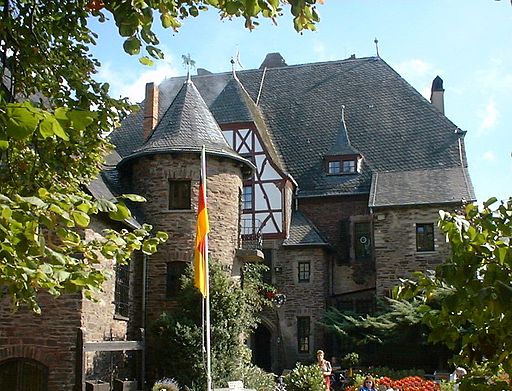
Burg Arras is a picturesque medieval castle located above the Moselle River near the town of Alf in Rhineland-Palatinate, Germany. Perched high on a rocky hill, the castle commands stunning views over the surrounding vineyards and the winding river valley. With its origins tracing back nearly a millennium, Burg Arras embodies the romantic charm and turbulent history of the Middle Ages. Today, it stands as both a historical monument and a welcoming guesthouse, attracting travelers who wish to experience the atmosphere of an authentic medieval fortress.
Early History and Origins
The history of Burg Arras stretches back to the 11th century, when it was constructed as part of the extensive network of fortifications along the Moselle Valley. This area, rich in trade routes and fertile lands, was of immense strategic importance during the medieval period. The castle was originally built by local lords under the suzerainty of regional rulers who sought to protect their territories and maintain control over river commerce.
Over the centuries, Burg Arras became closely associated with various noble families who shaped its architecture and political role. The castle was often caught in the power struggles that characterized the Rhineland during the Middle Ages, changing hands multiple times due to inheritance disputes, wars, and shifting alliances. Despite these upheavals, it remained a stronghold of regional influence and a symbol of feudal power.
Architectural Features
Burg Arras showcases a blend of Romanesque and later Gothic architectural styles, reflecting its long history of construction and renovation. The heart of the castle is its tall keep, a robust tower that once served both defensive and residential functions. Surrounding the keep are thick curtain walls, battlements, and a series of smaller towers that provided lookout points and protection from siege.
One of the castle’s defining features is its harmonious integration with the rocky terrain. Built directly onto the cliffs, Burg Arras seems almost to grow out of the landscape, creating a seamless unity between architecture and nature. Inside, stone corridors, vaulted halls, and wooden beams evoke the atmosphere of the Middle Ages, while modern restoration has carefully preserved historical authenticity. The castle courtyard, surrounded by medieval walls, offers a peaceful retreat with panoramic views of the Moselle Valley.
The Castle Through the Ages
Throughout its existence, Burg Arras has witnessed numerous historical events that mirror the broader story of the Rhineland. During the late Middle Ages, the castle served as a noble residence and administrative center, overseeing surrounding lands and collecting tolls from river traffic. Its strategic position made it a valuable military outpost during regional conflicts, including feuds between rival lords and later wars involving foreign powers.
In the 17th and 18th centuries, as warfare evolved and political stability increased, the castle’s defensive importance declined. Like many medieval fortresses, Burg Arras faced periods of neglect and partial ruin. However, it escaped complete destruction, which befell many other castles in the region during the wars of the early modern era.
Restoration and Modern Revival
By the 19th century, the romantic movement in Europe reignited public interest in medieval architecture and heritage. Burg Arras, with its dramatic location and historical depth, became a focus of restoration efforts. Over the course of the 20th century, careful reconstruction preserved much of its original character while adapting parts of the structure for modern use.
Today, Burg Arras is privately owned but open to visitors. It functions as a guesthouse and small hotel, offering travelers the rare opportunity to stay within genuine medieval walls. Restoration efforts have ensured that the balance between historical authenticity and contemporary comfort is maintained, making it a living monument to the past rather than a static museum.
Burg Arras and the Moselle Region
The castle’s setting above the Moselle River is one of its greatest charms. The surrounding landscape is dotted with vineyards producing some of Germany’s finest wines, particularly Riesling. This connection between Burg Arras and the viticultural traditions of the Moselle Valley adds another layer to its cultural importance. Visitors can explore nearby villages, sample local wines, and enjoy hiking trails that pass through forests and terraced hillsides before ascending to the castle.
The proximity of Burg Arras to the town of Alf and nearby attractions such as Cochem and Zell makes it a convenient stop on any Moselle Valley itinerary. The area combines history, natural beauty, and culinary delight, with the castle serving as an iconic centerpiece of this enchanting region.
Visitor Experience
Visiting Burg Arras offers a journey into both history and nature. Guests can walk through the ancient gatehouse, explore the inner courtyard, and climb to vantage points that overlook the river and valley below. The castle also houses a small museum where artifacts, documents, and exhibits illustrate its history and the medieval life of its former inhabitants.
For those who stay overnight, the experience is especially memorable. Rooms are furnished in a style that echoes the medieval ambiance, yet they include modern comforts. Candlelit dinners, traditional German cuisine, and the quiet serenity of the castle at night create an unforgettable atmosphere that blends past and present.
Cultural Significance
Burg Arras is more than a historical monument; it represents continuity between the medieval world and modern times. Its survival through centuries of political turmoil and natural decay is a testament to the care and dedication of those who have maintained it. As part of Germany’s rich tapestry of castles, Burg Arras embodies the spirit of resilience, romance, and cultural pride that defines the Rhineland.
In addition, the castle serves as a symbol of sustainable preservation. By functioning as both a tourist destination and a private residence, it demonstrates how historical heritage can coexist with modern life, ensuring its ongoing relevance for future generations.
Conclusion
Burg Arras stands as one of the most captivating examples of medieval heritage along the Moselle River. From its origins as a feudal fortress to its modern role as a lovingly restored guesthouse, the castle continues to enchant all who visit. Its architecture, panoramic setting, and deep connection to regional history make it a living monument to the enduring legacy of the Middle Ages. Exploring Burg Arras is not only a journey into the past but also a reminder of how history, landscape, and culture intertwine to create something timeless and profoundly beautiful.
