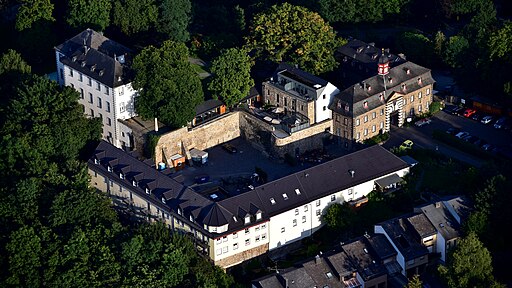
Schloss Burgbrohl is a historic castle located in the picturesque town of Burgbrohl in Rhineland-Palatinate, Germany. Situated near the scenic Ahr Valley and surrounded by lush forests and rolling hills, the castle has served as a noble residence and administrative center for centuries. Its elegant architecture, strategic location, and rich history make it a notable landmark in the region. Today, Schloss Burgbrohl is admired for its architectural beauty and its role in preserving the cultural heritage of the area.
Early History and Origins
The origins of Schloss Burgbrohl date back to the Middle Ages, although the site likely hosted earlier fortifications due to its strategic hilltop location. The castle was initially built to protect the surrounding lands, oversee trade routes, and serve as a residence for the local nobility. Its elevated position provided natural defenses and offered commanding views of the surrounding countryside, including the Ahr River Valley.
Throughout its early history, Schloss Burgbrohl was closely tied to the development of the town of Burgbrohl. The castle not only offered protection to the local population but also became a center for governance, commerce, and social life. Over time, it became a symbol of noble authority and regional influence.
Architectural Features
Schloss Burgbrohl combines elements of medieval fortification with later residential and decorative enhancements. Its main structure consists of a central keep or residential tower, surrounded by defensive walls and smaller towers that provided security and surveillance. The castle’s architecture reflects the evolution from a military fortress to a more comfortable noble residence.
During the Renaissance and Baroque periods, Schloss Burgbrohl underwent renovations that introduced larger windows, elegant facades, and refined interior spaces. The castle courtyard, gardens, and ancillary buildings illustrate the shift from purely defensive architecture to an emphasis on aesthetics and comfort. Today, the castle showcases a blend of sturdy medieval construction with the grace and sophistication of later architectural styles.
The Noble Families of Burgbrohl
Schloss Burgbrohl was historically associated with several noble families who played important roles in regional politics and society. These families managed local lands, administered justice, and maintained trade and communication with neighboring territories. Their influence extended beyond the castle walls, contributing to the development of Burgbrohl and the surrounding region.
The castle served as both a private residence and a seat of authority. Members of these noble families often hosted officials, travelers, and dignitaries, reinforcing their social and political status. Their patronage also extended to religious institutions, public works, and cultural endeavors in the area.
Schloss Burgbrohl Through the Centuries
Over the centuries, Schloss Burgbrohl has witnessed numerous historical events and changes in ownership. During periods of regional conflict, the castle functioned as a fortified stronghold, protecting its inhabitants and the town below. Its location made it strategically significant, particularly in controlling access to the Ahr Valley and surrounding trade routes.
With the decline of feudal warfare and the rise of centralized governance, the castle’s role shifted from military defense to residence and administrative hub. Renovations and expansions during the 17th and 18th centuries reflected changing architectural tastes and the desire for greater comfort and elegance. Despite these changes, Schloss Burgbrohl retained its historic character and continued to serve as a focal point of regional heritage.
Restoration and Preservation
In the modern era, Schloss Burgbrohl has benefited from careful preservation and restoration efforts. These projects have focused on maintaining the structural integrity of the castle, restoring historical architectural elements, and making the site accessible for educational and cultural purposes. Preservation has ensured that Schloss Burgbrohl remains an important historical and architectural landmark for future generations.
The castle today offers visitors a chance to explore its grounds, admire its architectural features, and learn about the history of the region. Informational signage and guided tours provide context about the castle’s origins, architectural evolution, and the lives of its noble inhabitants.
Tourism and Visitor Experience
Visitors to Schloss Burgbrohl can enjoy a variety of experiences, from exploring the castle’s fortified walls and towers to strolling through its courtyard and gardens. The castle’s elevated location provides panoramic views of the Ahr Valley and surrounding Eifel hills, making it a popular destination for photography and sightseeing.
The town of Burgbrohl complements the castle visit, with traditional German architecture, local restaurants, and cultural events that celebrate the area’s heritage. Seasonal festivals and historical reenactments occasionally take place at Schloss Burgbrohl, offering visitors an immersive experience of the region’s history and traditions.
Cultural and Historical Significance
Schloss Burgbrohl is more than a historic building; it is a symbol of the region’s medieval and early modern heritage. The castle illustrates the evolution of noble residences from fortified strongholds to elegant estates. Its preservation contributes to understanding the social, political, and architectural history of Rhineland-Palatinate.
The castle also serves as a cultural landmark, fostering a sense of local identity and pride. By maintaining Schloss Burgbrohl, the community preserves a tangible connection to the past, allowing visitors and residents alike to engage with centuries of history and architectural achievement.
Conclusion
Schloss Burgbrohl stands as a testament to the enduring legacy of medieval fortifications and noble residences in Germany. From its origins as a defensive stronghold to its modern role as a preserved cultural landmark, the castle offers insight into the architectural, social, and political history of the region. Its combination of historical significance, scenic location, and architectural beauty makes Schloss Burgbrohl a must-visit destination for anyone exploring the Eifel region or the rich heritage of Rhineland-Palatinate.
