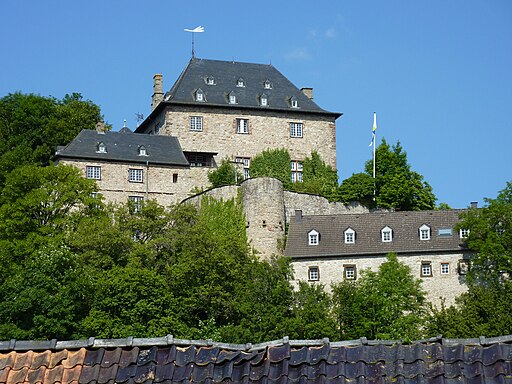
Burg Blankenheim is a historic castle located in the town of Blankenheim, in the Eifel region of North Rhine-Westphalia, Germany. Perched atop a rocky hill, the castle dominates the surrounding landscape and offers sweeping views of the Ahr River valley. With a history spanning nearly a thousand years, Burg Blankenheim is a remarkable example of medieval fortification that later evolved into a noble residence. Its rich history, striking architecture, and scenic surroundings make it a significant cultural landmark and a popular destination for visitors exploring the Eifel region.
Early History and Origins
The origins of Burg Blankenheim trace back to the 12th century, when it was established by the noble lords of Blankenheim. The castle was initially built as a defensive fortress to protect the surrounding lands and to assert control over the strategic routes through the Eifel hills. Its elevated location provided a natural advantage, allowing defenders to monitor movement in the valleys and deter potential invaders.
Burg Blankenheim quickly became the seat of power for the Blankenheim family, who were influential in the region’s politics, trade, and administration. The castle not only served as a military stronghold but also as a residence for the nobility, reflecting the dual nature of medieval castles as centers of defense and governance.
Architectural Features
Burg Blankenheim displays a combination of medieval military architecture and later residential enhancements. The central keep, a tall stone tower, is the focal point of the castle and once served as the last line of defense during attacks. Thick curtain walls, battlements, and corner towers provided additional protection and allowed defenders to monitor the surrounding area effectively.
Over the centuries, Burg Blankenheim underwent architectural modifications that reflected changing styles and the needs of its inhabitants. Larger windows, decorative stonework, and expanded living quarters were added, transforming the fortress into a more comfortable noble residence while maintaining its defensive integrity. The castle also includes a chapel, courtyards, and outer walls that contribute to its imposing yet elegant appearance.
The Lords of Blankenheim
The Blankenheim family was among the most prominent noble families in the Eifel region. They held political authority over the surrounding lands, managed trade and taxation, and played a key role in regional military conflicts. Their influence extended beyond the castle walls, shaping the development of the town of Blankenheim and surrounding villages.
The family also contributed to cultural and religious life in the region, funding churches, monasteries, and public works. Their residence at Burg Blankenheim served as a symbol of power, wealth, and social prestige, reflecting the broader role of nobility in medieval German society.
Burg Blankenheim Through the Centuries
Burg Blankenheim has witnessed centuries of political and military change. During the Middle Ages, it served as a strategic fortress in regional conflicts, including feuds between local lords and interventions by larger territorial powers. Its position on a rocky hill made it difficult to conquer, allowing it to withstand sieges and attacks.
In later centuries, as military technology evolved and the threat of invasion decreased, the castle’s role shifted from defense to residence and administrative center. Like many medieval castles, Burg Blankenheim experienced periods of decline, particularly during times of war or political instability, but its core structures remained intact.
Restoration and Preservation
In the modern era, Burg Blankenheim has undergone careful restoration to preserve its historical and architectural significance. Efforts have focused on stabilizing the stone walls, repairing damaged towers, and maintaining the castle’s distinctive medieval features. Restoration has allowed visitors to experience the castle much as it would have appeared in its prime, while also ensuring its preservation for future generations.
Today, Burg Blankenheim is a cultural landmark that attracts history enthusiasts, architecture lovers, and tourists exploring the Eifel region. Its well-maintained structures and scenic location make it an ideal destination for those seeking both education and leisure.
Tourism and Visitor Experience
Visitors to Burg Blankenheim can explore its main keep, defensive walls, courtyards, and historic chapel. Informative signage and guided tours provide insights into the castle’s history, architecture, and the lives of its former inhabitants. From the castle’s vantage points, visitors can enjoy panoramic views of the Eifel hills, forests, and the Ahr River valley below.
The surrounding town of Blankenheim adds to the visitor experience, with narrow streets, traditional architecture, and local shops and restaurants. Seasonal events, medieval festivals, and cultural programs held at the castle offer additional opportunities for immersive exploration of the region’s heritage.
Cultural Significance
Burg Blankenheim is more than a historic building; it is a symbol of the Eifel region’s medieval heritage and the enduring legacy of noble families. Its architecture, history, and role in regional politics provide valuable insight into the feudal system and the development of local communities. The castle also contributes to regional identity, serving as a point of pride for the town of Blankenheim and the surrounding area.
In addition, Burg Blankenheim represents the continuity of cultural preservation in Germany. By maintaining and restoring the castle, local authorities and private stakeholders ensure that future generations can connect with the past and appreciate the historical landscape of the Eifel region.
Conclusion
Burg Blankenheim stands as a remarkable testament to medieval fortification, noble life, and regional history. From its origins as a defensive stronghold to its modern status as a cultural landmark, the castle has endured centuries of change while maintaining its historical and architectural integrity. Its scenic location, rich heritage, and well-preserved structures make it an essential destination for anyone exploring the Eifel region. Visiting Burg Blankenheim offers a journey into the past, a chance to appreciate medieval architecture, and a connection to the enduring legacy of one of Germany’s most historic castles.
