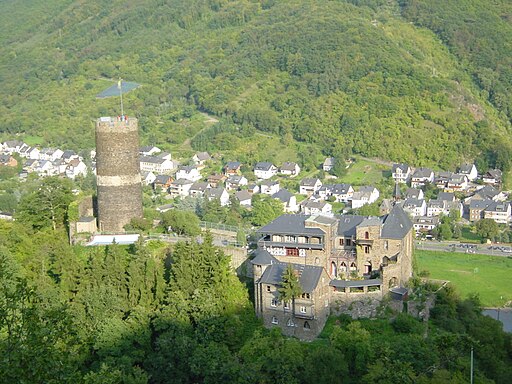
Burg Bischofstein is a striking medieval castle located near the town of Kestert in Rhineland-Palatinate, Germany. Perched on a hill overlooking the Rhine River, the castle commands breathtaking views of the surrounding valley and the meandering river below. With origins dating back to the 13th century, Burg Bischofstein is a remarkable example of Gothic and medieval architecture that has stood the test of time. Its strategic location, historical significance, and well-preserved structures make it a captivating destination for history enthusiasts, architecture lovers, and travelers exploring the Rhine Valley.
Early History and Origins
The origins of Burg Bischofstein can be traced to the early 1200s when it was constructed to serve as a fortified stronghold along the Rhine River. The castle was commissioned by the bishops and local nobility to protect important trade routes and assert authority over the surrounding lands. Its hilltop location provided a natural defensive advantage, allowing its occupants to monitor and control river traffic, which was vital for commerce and security in the region.
During the Middle Ages, Burg Bischofstein became a center of regional power and administration. It housed noble families, military personnel, and officials responsible for managing the surrounding territories. The castle’s role extended beyond defense, serving as a residence and a symbol of authority in the Rhine Valley.
Architectural Features
Burg Bischofstein exhibits a combination of Gothic military architecture and later residential enhancements. Its central keep is a tall stone tower that once functioned as both a lookout and the main living quarters. Surrounding the keep are thick curtain walls, fortified gatehouses, and defensive towers designed to withstand sieges and attacks.
The castle’s architecture demonstrates a balance between functionality and aesthetic appeal. Narrow arrow slits and battlements reflect its defensive purpose, while the residential quarters, courtyards, and interior spaces were designed for comfort and status. Over the centuries, Burg Bischofstein has been modified and restored, preserving its medieval character while incorporating features that enhance its residential and symbolic presence.
Role in Regional History
Burg Bischofstein played a significant role in the politics and military affairs of the Rhine Valley. Its location made it a strategic point of control over trade, travel, and territorial boundaries. The castle was involved in regional conflicts, often serving as a defensive bastion during feuds between local lords or as a protective refuge for nearby villages during periods of unrest.
The castle also functioned as a center of governance, where noble families exercised authority, collected taxes, and administered justice. Its presence influenced the development of surrounding communities, contributing to the growth of nearby towns and the security of vital trade routes along the Rhine.
Decline and Restoration
Like many medieval castles, Burg Bischofstein experienced periods of decline, particularly as military technology evolved and regional conflicts diminished. The introduction of artillery and changing strategies in warfare reduced the necessity of fortified hilltop castles, leading to partial abandonment or neglect.
In modern times, restoration efforts have preserved Burg Bischofstein as a historical monument. Structural stabilization, repair of walls and towers, and careful maintenance have ensured that the castle remains an enduring symbol of the region’s heritage. Restoration has balanced the preservation of medieval features with adaptations that allow safe access for visitors and cultural events.
Tourism and Visitor Experience
Today, Burg Bischofstein is a destination for travelers seeking history, architecture, and scenic views. Visitors can explore the castle’s keep, courtyards, and remaining defensive walls while taking in panoramic vistas of the Rhine River and the surrounding hills. Informational displays and guided tours provide context about the castle’s origins, architectural features, and historical significance.
The surrounding region offers additional attractions, including hiking trails, vineyards, and charming towns along the Rhine. Visitors can combine a trip to Burg Bischofstein with exploration of the Rhine Valley, enjoying both natural beauty and cultural heritage. Seasonal events and guided historical tours enhance the visitor experience, providing immersive insight into medieval life and castle architecture.
Cultural and Historical Significance
Burg Bischofstein is more than a medieval fortress; it is a symbol of the Rhine Valley’s history and cultural identity. Its architecture reflects the strategic and residential needs of the nobility, while its preservation demonstrates the value placed on heritage and history in Germany. The castle provides insight into feudal society, regional governance, and the evolution of military and residential architecture over the centuries.
The castle’s significance extends beyond its walls. As part of the Rhine Valley’s network of historic castles, it contributes to the cultural and historical narrative of the region, connecting visitors with the medieval past and the ongoing legacy of German architecture and nobility.
Conclusion
Burg Bischofstein stands as a remarkable testament to the enduring legacy of medieval fortresses along the Rhine River. From its origins as a defensive stronghold to its modern status as a preserved historical monument, the castle embodies centuries of regional history, architectural evolution, and noble life. Its commanding location, rich heritage, and scenic surroundings make Burg Bischofstein a must-visit destination for anyone exploring the Rhine Valley or seeking to experience Germany’s medieval past.
