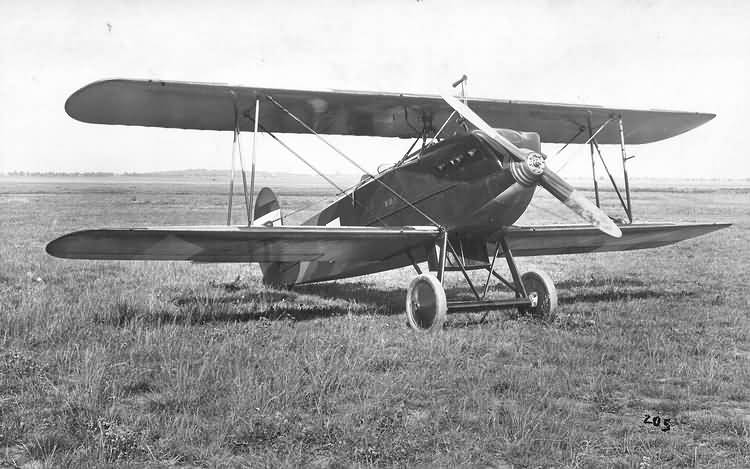
The Avia BH-21 was a Czechoslovak single-seat fighter aircraft developed in the early 1920s. Designed by Pavel Beneš and Miroslav Hajn for the Avia company, it represented a significant advancement in European fighter design during the interwar period. Its combination of agility, structural strength, and robust powerplant made it one of the most respected biplanes of its time, both domestically and abroad. The BH-21 served as the backbone of the Czechoslovak Air Force for much of the 1920s and was also exported to several countries, solidifying Avia’s reputation as a capable aircraft manufacturer.
Development History
The Avia BH-21 was developed as an improved version of the earlier Avia BH-1 and BH-3 prototypes. These early models had already demonstrated the designers’ preference for clean aerodynamic lines and innovative construction techniques. The Czechoslovak Ministry of Defense required a modern, fast, and maneuverable fighter to replace its aging fleet of post–World War I aircraft such as the SPAD S.VII and Nieuport 29.
Work on the BH-21 began in 1924, and the prototype made its maiden flight in 1925. The aircraft immediately impressed test pilots with its responsive handling, strong climb rate, and reliable Hispano-Suiza powerplant. Following successful evaluations, the BH-21 entered mass production in 1925, with continuous improvements being made over subsequent years.
Design and Construction
The Avia BH-21 was a single-bay biplane with a conventional layout. Its design emphasized strength, lightness, and aerodynamic efficiency—hallmarks of Beneš and Hajn’s engineering philosophy.
Fuselage
The fuselage was of welded steel-tube construction, a modern approach compared to the wooden fuselages of earlier fighters. It was covered with fabric, except for the forward section, which used aluminum panels for added durability and ease of maintenance. The cockpit was open and located near the aircraft’s center of gravity, providing the pilot with excellent upward and lateral visibility.
Wings
The biplane wings were of wooden construction with two spars and a fabric covering. The upper wing featured slight dihedral and was connected to the fuselage by cabane struts. The lower wing was attached directly to the fuselage, resulting in a compact and strong structure. Ailerons were fitted to both upper and lower wings to improve roll control, a relatively advanced feature for the period.
Undercarriage
The fixed tailskid undercarriage consisted of simple, robust V-struts connected by a cross-axle, equipped with shock cords for absorbing landing impacts. The design was optimized for operation from grass airfields, which were typical of the 1920s.
Powerplant and Performance
The BH-21 was powered by the Hispano-Suiza 8Fb V8 water-cooled engine, a proven powerplant widely used in European fighters. This engine produced around 300 horsepower, providing the aircraft with an impressive balance of power and reliability.
Technical Parameters:
-
Engine: Hispano-Suiza 8Fb V8, 300 hp (224 kW)
-
Propeller: Two-bladed wooden fixed-pitch propeller
-
Maximum Speed: Approximately 245 km/h (152 mph) at sea level
-
Cruising Speed: Around 210 km/h (130 mph)
-
Range: Approximately 450 km (280 mi)
-
Service Ceiling: 8,000 m (26,250 ft)
-
Rate of Climb: 9.5 m/s (1,870 ft/min)
-
Empty Weight: 950 kg (2,094 lb)
-
Maximum Takeoff Weight: 1,340 kg (2,954 lb)
-
Wingspan: 9.70 m (31 ft 10 in)
-
Length: 7.05 m (23 ft 2 in)
-
Height: 2.85 m (9 ft 4 in)
-
Wing Area: 24.5 m² (263.7 sq ft)
Armament
The standard armament of the Avia BH-21 consisted of two synchronized 7.7 mm (0.303 in) Vickers machine guns mounted on the fuselage. These guns were synchronized to fire through the propeller arc using the proven Czechoslovak synchronization system. The ammunition load was approximately 500 rounds per gun. The weaponry provided a balanced mix of firepower and reliability suitable for air combat during the mid-1920s.
Flight Characteristics
Pilots who flew the BH-21 praised it for its exceptional maneuverability and stability. The aircraft was responsive to control inputs, offering a good blend of agility and smooth handling. Its high climb rate and strong acceleration made it competitive against other fighters of the same era. The steel-tube fuselage construction contributed to durability, allowing the aircraft to withstand high g-forces during aerobatic maneuvers.
However, the BH-21’s biplane design inherently limited its top speed compared to emerging monoplane fighters by the late 1920s. Despite this, it remained an effective air superiority aircraft during its operational lifetime.
Variants
Several variants of the BH-21 were developed:
-
BH-21A: The initial production model powered by the Hispano-Suiza 8Fb engine.
-
BH-21B: Improved variant with aerodynamic refinements and strengthened structure.
-
BH-21J: A two-seat trainer derivative used for pilot instruction.
-
Avia BH-22: A dedicated trainer version with reduced armament and lighter equipment.
The BH-21 also served as a testbed for different engines and modifications, influencing later Avia designs such as the BH-23 and BH-33.
Operational Service
The Avia BH-21 entered service with the Czechoslovak Air Force in 1925 and quickly became its primary frontline fighter. It equipped several squadrons and served as a key component of Czechoslovakia’s growing air defense capability. The aircraft’s strong performance led to export orders from Belgium and other European nations, where it was built under license by SABCA (Société Anonyme Belge de Constructions Aéronautiques).
In Belgian service, the BH-21 (locally designated as SABCA S-21) participated in military exercises and flight demonstrations, earning a reputation for reliability. The aircraft was also evaluated by several foreign air forces, contributing to Avia’s expanding international recognition.
Legacy and Influence
The Avia BH-21 played an important transitional role in European aviation history. It bridged the gap between the wood-and-fabric biplanes of World War I and the more advanced all-metal fighters that appeared later in the 1930s. Its robust steel-tube fuselage construction influenced subsequent Czechoslovak designs, including the Avia BH-33 and the highly successful Avia B-534.
The BH-21’s export success helped establish Czechoslovakia as a competitive aircraft-producing nation during the interwar years. Although it was retired by the early 1930s, the type remained in use as a trainer and aerobatic aircraft for several years.
Conclusion
The Avia BH-21 was an exemplary product of Czechoslovak aviation engineering in the 1920s. Combining innovative structural techniques with proven aerodynamics and reliable power, it set a high standard for fighter design in Central Europe. While it was eventually overshadowed by newer monoplane designs, its influence persisted in the development of later Avia aircraft. The BH-21 stands today as a testament to the technical skill and ambition of Czechoslovakia’s early aircraft industry—a true symbol of interwar aviation excellence.
