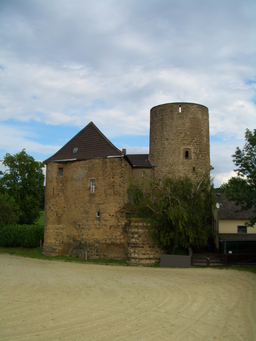
Burg Münchhausen is a lesser-known yet captivating castle site associated with the noble family that inspired the legendary character Baron Münchhausen, famous for his fantastical tales and exaggerated adventures. While not as grand or extensively preserved as some of Germany’s major fortresses, Burg Münchhausen holds deep cultural significance. It reflects the medieval origins of a family whose name later became inseparable from literature, humor, and imagination. The castle’s ruins and history paint a vivid picture of rural nobility, regional governance, and the evolution of storytelling traditions.
Origins of the Münchhausen Family
The Münchhausen family emerged in the Middle Ages as a prominent Lower Saxon noble house. Their name was derived from their ancestral seat, a fortified estate that came to be known as Burg Münchhausen. The family owned several properties, but this early castle represented the core of their lineage and territorial influence.
Members of the family served as knights, estate managers, and local administrators throughout the Holy Roman Empire. Their reputation combined military service, landownership, and participation in the evolving political landscape of northern Germany. Over the centuries, various branches of the family spread across Lower Saxony and Westphalia.
Architectural Development of the Castle
Though the exact details of Burg Münchhausen’s earliest construction remain partly shrouded in medieval obscurity, surviving records and archaeological findings point to a typical regional form:
-
A fortified manor layout, common among minor nobility
-
Stone foundations topped with timber or half-timber superstructures
-
A defensive moat, fed by nearby water sources
-
An enclosed courtyard, used for agricultural storage and domestic work
-
A small tower or fortified hall, serving as both residence and defensive refuge
The castle was not designed to withstand prolonged sieges like larger feudal strongholds; instead, it provided security against regional conflicts, bandit raids, and rival noble factions.
Life in and Around the Castle
Daily activities at Burg Münchhausen would have centered on estate management, agriculture, and local governance. The surrounding lands supported:
-
Farming operations, including grain, livestock, and vegetable production
-
Forestry, a critical source of construction material and fuel
-
Hunting grounds, essential both for food and recreation
-
Small tenant settlements, where peasants lived and worked under the castle’s jurisdiction
The castle itself housed family members, servants, and occasionally clerics or visiting nobles. Daily routines included managing rents and taxes, overseeing farming operations, handling disputes, and participating in regional councils.
The Connection to the Legendary Baron
The castle’s cultural fame arises primarily from its association with Hieronymus Karl Friedrich von Münchhausen (1720–1797), the historical figure whose embellished stories inspired the literary character known worldwide as the “Baron of Lies.” Although the famed storyteller lived centuries after the earliest phases of Burg Münchhausen, the family’s ancestral seat formed an important part of his heritage.
The baron’s humorous and improbable anecdotes—riding cannonballs, pulling himself from a swamp by his own hair, and traveling to the moon—reflect a lineage steeped in both noble tradition and rural folklore. Burg Münchhausen thus occupies a unique cultural space: part historical site, part literary legend.
Decline and Changing Ownership
As centuries passed, the original castle gradually lost its importance. Shifts in political structures, agricultural modernization, and the concentration of noble holdings led to the decline of many small fortifications across northern Germany.
Burg Münchhausen experienced:
-
Gradual abandonment, as the family relocated to more modern residences
-
Structural decay, particularly in timber components
-
Repurposing of materials, common in rural communities where old stone and wood were reused for new construction
-
Land redistribution, resulting in fragmented ownership
By the early modern era, the castle had transitioned from a functioning noble seat into a partially ruined landmark surrounded by farmland.
Archaeological Findings and Historical Scholarship
Interest in the Münchhausen family and their estates grew with the popularity of the Baron Münchhausen stories. Researchers, local historians, and archaeologists have documented the remains of the castle and connected them to contemporary records.
Studies have uncovered:
-
Foundations of the main residence, revealing dimensions and construction techniques
-
Fragments of pottery and medieval metalwork, suggesting household activities
-
Traces of the moat and defensive earthworks, confirming the site’s fortified character
-
Written records, which outline family structures and property boundaries
These findings contribute to a deeper understanding of how minor noble estates functioned in medieval Germany.
Burg Münchhausen in the Modern Landscape
Today, Burg Münchhausen is recognized more for its cultural and genealogical importance than for monumental architecture. What remains of the site varies depending on the specific branch of the family estate being considered, but typically includes:
-
Traces of foundations
-
Landscaped contours marking former defensive works
-
Interpretive signs or local historical markers, installed by regional historical societies
-
Nearby manor houses, built on or near the castle’s former grounds
Visitors often come not only for historical interest but also because of the castle’s association with the imaginative world of the Münchhausen tales.
Cultural Legacy and Tourism
The legend of Baron Münchhausen has had a profound impact on the region. While the castle itself is modest, the cultural environment it fostered continues to thrive.
Local traditions include:
-
Storytelling events, celebrating the baron’s humorous legacy
-
Festivals, featuring theatrical performances, costumes, and reenactments
-
Educational programs, linking the historical noble family with literary interpretations
-
Walking trails, guiding visitors through the historic landscape surrounding the castle site
The interplay of fact and fiction attracts literature enthusiasts, history lovers, and tourists seeking a connection to Germany’s rich storytelling tradition.
Symbolism and Legacy
Burg Münchhausen remains a symbol of both medieval heritage and imaginative creativity. Its physical remnants evoke the realities of life for rural nobility, while its name conjures fantastical tales that have entertained readers for centuries. Few historical sites blend authenticity and legend so seamlessly.
The castle stands as a reminder that the landscapes of the past are not just defined by stone walls, but also by the stories that grow out of them—stories that transcend time, evolve, and inspire.
Conclusion
Though not as imposing as some of Germany’s famed fortresses, Burg Münchhausen occupies a meaningful place in cultural history. Its origins as a medieval noble estate, its connection to one of literature’s most iconic characters, and its survival through centuries of change give it a unique and enduring legacy. Burg Münchhausen invites visitors and scholars alike to explore the intersection of history, architecture, family lineage, and storytelling—a testament to how even modest castles can shape the world of imagination.
