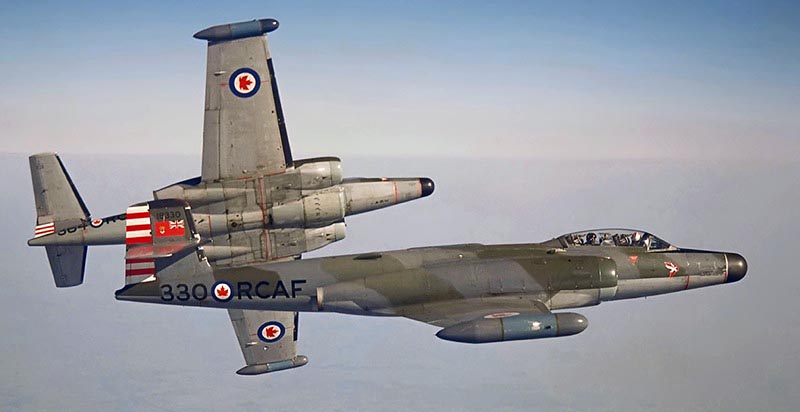
The Avro Canada CF-100 Canuck was a remarkable achievement in postwar military aviation and remains one of the most significant aircraft ever designed and built in Canada. Conceived as a dedicated all-weather interceptor, the CF-100 was designed to defend vast northern airspace under some of the most demanding climatic and operational conditions in the world. Its robust construction, advanced radar systems, and twin-engine reliability made it a cornerstone of North American air defense during the early Cold War.
Strategic Context and Program Origins
The CF-100 emerged from the late 1940s realization that Canada required an indigenous interceptor capable of operating independently from foreign supply chains while addressing unique national defense needs. The strategic threat environment was defined by the possibility of long-range bomber attacks over the Arctic, requiring an aircraft that could operate effectively at night, in poor weather, and at extreme latitudes. Existing fighters lacked the endurance, avionics, and environmental resilience to fulfill this role.
Avro Canada, building on wartime manufacturing experience, was tasked with creating a completely new aircraft rather than adapting an existing design. This decision allowed engineers to focus on mission-specific requirements, including long-range interception, heavy radar integration, and crew survivability in cold climates. The prototype first flew in January 1950, marking Canada’s entry into the elite group of nations capable of producing advanced jet combat aircraft.
Airframe Design and Structural Characteristics
The CF-100 featured a straight-wing configuration with mid-mounted wings optimized for stability and control rather than supersonic speed. This design choice reflected the aircraft’s primary mission as a radar-guided interceptor rather than a high-speed dogfighter. The wing structure was thick and robust, allowing internal fuel storage and accommodating the stresses of flight in turbulent weather conditions.
The fuselage was large and cylindrical, providing ample space for radar equipment, avionics, and a two-person crew. Structural strength was a defining characteristic, with heavy-duty landing gear designed for operation from austere or icy airfields. The aircraft’s overall construction emphasized durability and ease of maintenance, essential for continuous readiness in remote northern bases.
Powerplant and Propulsion System
Power was provided by two turbojet engines mounted in nacelles along the fuselage sides. Early production aircraft used Avro Orenda engines, which were among the most powerful and reliable jet engines of their era. Each engine produced approximately 6,500 pounds of thrust, giving the CF-100 strong acceleration and excellent performance at altitude.
The twin-engine configuration enhanced safety during long-range patrols over sparsely populated areas, where engine failure could otherwise be catastrophic. Engine placement simplified maintenance access and reduced the risk of foreign object damage during ground operations. Although not designed for supersonic flight, the propulsion system delivered consistent and dependable performance across a wide range of operating conditions.
Performance Parameters
The CF-100 achieved a maximum speed of approximately 650 mph at altitude, placing it firmly in the high-subsonic category. Its service ceiling exceeded 45,000 feet, allowing it to intercept high-flying bomber threats. The aircraft’s rate of climb was competitive for its class, enabling rapid response to radar-detected incursions.
Operational range was approximately 2,000 miles with external fuel tanks, providing the endurance needed to patrol vast regions of Canadian airspace. While its straight-wing design limited top-end speed compared to later swept-wing fighters, it offered excellent handling stability and predictable flight characteristics, which were critical for all-weather interception missions.
Avionics and Radar Integration
One of the CF-100’s most advanced features was its integrated avionics suite, centered around a powerful onboard radar system. The radar allowed the aircraft to detect and track targets in darkness, cloud cover, and adverse weather, making it one of the earliest true all-weather interceptors in service. The two-seat cockpit layout reflected the complexity of these systems, with a dedicated radar operator seated behind the pilot.
Fire-control systems were linked directly to the radar, enabling accurate weapon employment without visual contact with the target. Navigation aids included radio and radar-based systems that supported long-range operations over featureless terrain. Continuous upgrades to avionics throughout the aircraft’s service life ensured it remained effective as threat environments evolved.
Armament and Weapons Systems
The CF-100 was heavily armed for its intended interception role. Early variants were equipped with eight forward-firing machine guns mounted in the nose, providing substantial firepower against bomber-sized targets. Later versions replaced or supplemented these guns with unguided air-to-air rockets, significantly increasing lethality in head-on interception scenarios.
Wing-mounted pylons allowed the carriage of external fuel tanks and additional weapons, enhancing mission flexibility. While the CF-100 did not carry guided missiles during its early service, its weapons suite was well matched to the bomber interception tactics of the time, emphasizing volume of fire and radar-guided attack runs.
Crew Environment and Systems Management
The two-person crew arrangement was a defining aspect of the CF-100’s operational effectiveness. The pilot focused on aircraft control and tactical maneuvering, while the radar operator managed detection, tracking, and weapons systems. This division of labor reduced workload and improved situational awareness during complex interception missions.
The cockpit was pressurized and heated, providing a relatively comfortable environment for operations at high altitude and in extreme cold. Systems redundancy and straightforward instrumentation enhanced reliability and reduced pilot fatigue during long patrols and alert scrambles.
Operational Service and Deployment
The CF-100 entered service with the Royal Canadian Air Force in the early 1950s and quickly became the backbone of Canada’s air defense network. It operated from numerous bases across Canada and also served with NATO forces in Europe, demonstrating its adaptability to different operational theaters.
Throughout its service life, the CF-100 maintained high availability rates and earned a reputation for ruggedness and dependability. It played a critical role in continental defense during the formative years of the Cold War, bridging the gap between early jet fighters and more advanced supersonic interceptors.
Evolution and Variants
Multiple variants of the CF-100 were produced, each incorporating improvements in engines, avionics, and weapons. Later models featured more powerful Orenda engines, enhanced radar systems, and revised wingtip designs to improve stability and performance. These incremental upgrades extended the aircraft’s operational relevance well into the 1960s.
The flexibility of the original design allowed the CF-100 to be adapted for secondary roles, including training and electronic warfare support. This versatility underscored the soundness of its engineering and the foresight of its designers.
Legacy and Historical Significance
The Avro Canada CF-100 Canuck occupies a unique place in aviation history as the only domestically designed and produced Canadian jet fighter to enter full operational service. It demonstrated that Canada possessed the technical expertise and industrial capacity to develop advanced combat aircraft tailored to national requirements.
From a technical perspective, the CF-100 exemplified the balance between performance, reliability, and systems integration that defined early Cold War interceptor design. Historically, it safeguarded North American airspace during a critical period of geopolitical tension, leaving a lasting legacy as a symbol of Canadian aerospace achievement and strategic independence.
