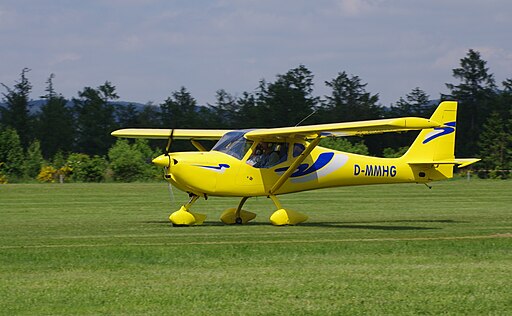
The B&F Fk9 is a German-designed ultralight and light sport aircraft celebrated for its versatile performance, robust engineering, and user-friendly handling characteristics. Conceived by designers Otto and Peter Funk in the late 1980s, the Fk9 first flew in 1989 and has since evolved through multiple marks and variants, earning its place as a cornerstone in the light aviation community across four continents. Initially constructed with a steel tube fuselage and fabric-covered wings, the design maturely transitioned to advanced composite construction in later models, combining strength, lower weight, and enhanced aerodynamics. The Fk9’s high-wing configuration offers excellent visibility, stable flight characteristics, and easy access to both cockpit and baggage areas, making it suitable for flight training, touring, glider towing, and everyday recreational flying. The aircraft’s design emphasizes a balance between structural simplicity and modern functionality, ensuring reliability for pilots of diverse experience levels.
Airframe and Structural Characteristics
The Fk9’s airframe integrates a composite fuselage with a rigid tubular steel cabin frame that enhances occupant safety and structural integrity. The high wing is braced with faired struts to the lower fuselage, maintaining a lightweight yet resilient structure. Early versions employed fabric covering on composite wings, but subsequent iterations introduced all-carbon composite wings, offering improved strength-to-weight ratios and refined aerodynamic qualities. The high-wing design and parallel chord planform provide stable lift characteristics and predictable stalling behavior, which are particularly beneficial for pilot training and low-speed maneuvering. The landing gear configuration is fixed and reliable, with pilots able to choose between tricycle (nose wheel) or conventional taildragger gear depending on intended use or pilot preference, increasing the aircraft’s operational flexibility for different runway surfaces.
Dimensions and Weight Parameters
The physical proportions of the Fk9 are optimized for performance, cockpit comfort, and ground handling. The typical wingspan measures 9.14 meters, providing a broad lifting surface that ensures stable cruise and climb performance. The length of the aircraft is approximately 6.0–6.2 meters, and the height ranges around 2.3–2.4 meters in the tricycle configuration, dimensions that support a spacious cabin without compromising aerodynamic efficiency. Depending on the variant and equipment level, the empty weight usually falls in the 310–360 kg range, which allows it to meet various ultralight and light sport aircraft regulatory categories in different countries. Maximum takeoff weight (MTOW) values also vary by certification and configuration, typically ranging from 540 kg up to 600 kg with some national registrations, enabling a useful load generous enough for occupants, fuel, and baggage for extended flights.
Powerplant and Propulsion
The Fk9 is predominantly powered by engines from the Rotax 912 series, which are widely respected in light aviation for a combination of reliability, fuel efficiency, and global support infrastructure. Typical configurations include the Rotax 912 UL with 80 hp and the Rotax 912 ULS with 100 hp, and some modern builds even support the Rotax 912 iS fuel-injected variant, enhancing fuel economy and smooth throttle response. These engines drive lightweight composite or carbon-fiber propellers, typically with three blades and fixed pitch, chosen for their excellent thrust characteristics in the speed range common to light sport operations. This propulsion package ensures adequate power for short field operations, efficient cruising, and safe climb gradients even when flying in training or touring roles.
Performance and Flight Characteristics
Performance of the Fk9 underscores its versatility. With a properly selected engine and propeller, the aircraft can exhibit a cruise speed in the 170–190 km/h range at typical power settings, while the never exceed speed (Vne) is commonly around 230 km/h, establishing a wide safe operating envelope. The stall speed sits low, typically in the 64–73 km/h range, granting forgiving low-speed handling and short-field capabilities. Climb performance varies with engine choice and weight but can reach up to 1500 feet per minute under favorable conditions, giving the Fk9 confident ascent rates for most common flying profiles. Its aerodynamic design, including optional winglets, improves fuel efficiency, reduces induced drag, and enhances handling near stall speeds—an important trait for safe and smooth training or cross-country flying. (FK Aircraft)
Fuel, Range, and Endurance
Fuel capacity on the Fk9 is configurable to suit different missions. Standard installations often include a 60-liter fuselage tank, with optional wing tanks increasing total capacity up to around 110 liters for long-distance flying. This flexibility allows pilots to tailor fuel load for local flying, extended touring, or flight school routines. Combined with efficient powerplants, the increased capacity can provide a range exceeding 1,000 km on longer flights, making the Fk9 not only a capable trainer but also a competent traveler capable of linking region to region without frequent refueling.
Cockpit, Systems, and Avionics
The cockpit of the Fk9 is designed with both comfort and functionality in mind. It features roomy seating for two in side-by-side configuration and a cabin width of approximately 1.20 meters, allowing both pilots and passengers ample space for longer flights. Wide doors facilitate easy access, and ergonomic seating can be adjusted to accommodate pilots of varying sizes. Modern variants offer advanced avionics choices, from traditional analog gauges to optional glass cockpit systems, including GPS navigation, EFIS displays, autopilot interfaces, and transponders. Electrical systems commonly manage flap actuation, fuel monitoring, and warning systems, while hydraulic disc brakes on tricycle gear versions enhance ground handling and stopping power.
Operational Roles and Versatility
The Fk9’s design adaptability makes it suitable for a wide range of roles beyond basic flight training. Its aerodynamic efficiency and reliable performance also lend themselves to glider towing, club aircraft duties, and sport touring, where pilots fly longer distances with luggage and occupants. Options such as different landing gear configurations, digital avionics suites, and auxiliary safety equipment like airframe parachute systems extend its appeal to both recreational pilots and more mission-oriented aviators. The robust flight envelope and a combination of performance, comfort, and ease of maintenance underpin its enduring popularity in general aviation circles.
