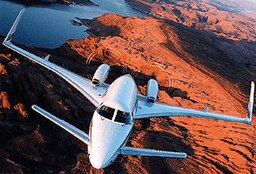
Beechcraft Starship – Revolutionary Composite Business Aircraft Ahead of Its Time
The Beechcraft Starship remains one of the most unconventional and technologically ambitious aircraft ever developed for the business aviation market. Introduced during the late twentieth century, the aircraft was designed to redefine executive turboprop travel through advanced aerodynamics, extensive composite construction, and a futuristic configuration rarely seen in civil aviation.
Unlike traditional turboprop aircraft that follow conventional design principles, the Starship employed a forward canard wing, pusher propeller engines, and a highly advanced composite airframe. These elements were intended to increase efficiency, safety, and structural durability while delivering higher cruise speeds and improved passenger comfort. Although only a limited number of aircraft were produced, the Starship has achieved legendary status among aviation enthusiasts due to its radical engineering and distinctive appearance.
The aircraft was developed by Beechcraft, with major design contributions from aerospace innovator Burt Rutan and his company Scaled Composites. Together, they created a groundbreaking aircraft that pushed the limits of what was technologically possible in the business aviation sector during the 1980s.
This comprehensive article explores the development, engineering, aerodynamics, propulsion system, avionics, operational performance, and legacy of the Beechcraft Starship. It provides a detailed technical overview intended for aviation professionals, engineers, and enthusiasts seeking an in-depth understanding of this remarkable aircraft.
Origins and Concept Development
The development of the Beechcraft Starship began in the late 1970s when Beechcraft sought to design a next-generation aircraft capable of surpassing the performance of the successful Beechcraft King Air family. Engineers envisioned a high-performance business turboprop that would fly faster, offer greater passenger comfort, and incorporate innovative materials and aerodynamic concepts.
In 1979 the company launched a research program known internally as Project PD-330. The goal was to create a modern successor to the King Air series using advanced technologies that had not yet been widely applied to civilian aircraft. Early design studies explored multiple aerodynamic configurations before engineers ultimately selected the radical canard configuration that would define the Starship.
To refine the concept, Beechcraft partnered with the aerospace firm Scaled Composites. The company’s founder, Burt Rutan, was already famous for designing unconventional aircraft with exceptional aerodynamic efficiency. Rutan’s experience with composite structures and experimental aircraft made him an ideal collaborator for the project.
An 85-percent-scale proof-of-concept aircraft was built and first flown in 1983. This prototype demonstrated the viability of the canard configuration and provided valuable aerodynamic data for the development of the full-scale production model.
The full-scale Starship prototype eventually performed its first flight on February 15, 1986, marking the beginning of a new era in business aviation design.
Revolutionary Aircraft Configuration
One of the most distinctive aspects of the Beechcraft Starship is its unconventional aerodynamic configuration. Unlike traditional aircraft, which place the horizontal stabilizer behind the main wing, the Starship features a canard layout in which a small forward wing provides additional lift and pitch control.
The canard design offers several aerodynamic advantages. Because the forward wing stalls before the main wing, the aircraft becomes extremely resistant to traditional aerodynamic stalls. This design characteristic significantly enhances flight safety, as the aircraft naturally lowers its nose before the main wing loses lift.
Another unusual feature is the pusher engine configuration. Instead of placing the propellers at the front of the wings, the Starship mounts its engines behind the wings with propellers pushing the aircraft forward. This arrangement improves aerodynamic efficiency and reduces cabin noise by placing the propellers farther from the passenger compartment.
Additionally, the aircraft incorporates large wingtip vertical stabilizers known as tipsails, which replace a conventional vertical tail. These structures enhance directional stability while reducing aerodynamic drag.
Together, these design elements create a distinctive aircraft silhouette that is instantly recognizable among aviation enthusiasts.
Composite Airframe and Structural Engineering
Perhaps the most revolutionary element of the Beechcraft Starship is its extensive use of composite materials. The aircraft was one of the first civilian aircraft to feature a carbon fiber reinforced polymer (CFRP) airframe.
Traditional aircraft structures rely heavily on aluminum alloys. However, composite materials offer several advantages, including:
- High strength-to-weight ratio
- Resistance to corrosion and fatigue
- Improved aerodynamic shaping possibilities
- Reduced structural maintenance requirements
The Starship utilized carbon fiber, Kevlar, and fiberglass composites throughout much of its structure. At the time of certification, it was the first pressurized business aircraft constructed primarily from composite materials.
Although the composite structure was theoretically lighter than aluminum, the production aircraft ended up heavier than expected due to additional structural reinforcements required during certification.
Nevertheless, the composite airframe provided exceptional durability and resistance to environmental damage, setting a precedent for future composite aircraft such as modern airliners and business jets.
Wing Design and Aerodynamic Performance
The main wing of the Starship is mounted mid-fuselage and features a moderately swept profile optimized for high-speed turboprop flight. The wing works in conjunction with the forward canard to produce lift and maintain stable flight characteristics.
The canard wing is designed with variable geometry to counteract the pitch changes that occur during flap deployment. When the main wing flaps extend for takeoff or landing, the canard adjusts its aerodynamic characteristics to maintain balanced flight.
Large winglets integrated into the vertical tipsails help reduce wingtip vortices and improve overall aerodynamic efficiency.
These design features allow the Starship to maintain efficient flight performance while reducing drag and improving stability.
Propulsion System and Engine Configuration
The Beechcraft Starship is powered by two Pratt & Whitney Canada PT6A‑67A engines, each producing approximately 1,200 shaft horsepower.
The PT6 engine family is widely regarded as one of the most reliable turboprop engines ever developed. Its reverse-flow design allows efficient airflow through the compressor and turbine stages while maintaining a compact overall engine size.
Each engine drives a five-bladed pusher propeller mounted behind the wing. This configuration offers several benefits:
- Reduced aerodynamic interference with the wing
- Lower cabin vibration and noise levels
- Improved visibility from the cockpit
The engines provide sufficient power for the aircraft to achieve cruise speeds exceeding 300 knots while maintaining efficient fuel consumption.
Advanced Avionics and Flight Deck Technology
The Starship introduced an advanced avionics suite that was highly innovative for its time. The cockpit utilized a glass cockpit configuration, replacing traditional analog instruments with electronic displays.
The avionics system included the Collins EFIS-86 electronic flight instrument system, which provided pilots with digital flight data displays and integrated navigation information.
Key avionics components include:
- Electronic flight instrument displays
- Digital autopilot systems
- Integrated navigation systems
- Weather radar
- Flight management computers
These systems significantly improved pilot situational awareness and reduced cockpit workload.
Cabin Design and Passenger Experience
The cabin of the Beechcraft Starship was designed to provide a luxurious and comfortable environment for business travelers. The pressurized fuselage allows the aircraft to operate at high altitudes while maintaining a comfortable cabin atmosphere.
Typical cabin configurations accommodate six to eight passengers depending on interior layout.
The cabin features:
- Executive seating arrangements
- Fold-out work tables
- Advanced climate control systems
- Sound-insulated interior panels
Because the engines are mounted behind the wings, cabin noise levels are significantly lower than in many traditional turboprop aircraft.
Flight Performance and Operational Capabilities
The Starship offers impressive performance characteristics for a turboprop business aircraft. Its powerful engines and aerodynamic efficiency enable it to operate effectively across a wide range of missions.
The aircraft’s maximum speed reaches approximately 335 knots, while its typical cruise speed is around 307 knots.
With a service ceiling of about 41,000 feet, the aircraft can fly above most weather systems and commercial air traffic.
Its maximum range exceeds 1,700 miles, making it capable of long regional flights without refueling.
The aircraft also features a respectable climb rate of approximately 2,700 feet per minute, enabling rapid ascent to cruising altitude.
Production and Commercial Challenges
Despite its groundbreaking design, the Beechcraft Starship faced several commercial challenges. Development delays and complex certification requirements significantly increased program costs.
The aircraft entered production in 1988, but the global aviation market experienced an economic downturn during the early 1990s. This recession reduced demand for expensive business aircraft.
Additionally, many potential buyers were hesitant to adopt such a radical design, especially one built largely from composite materials, which were relatively new in civil aviation at the time.
Only 53 production aircraft were ultimately built before production ended in the mid-1990s.
Operational History and Current Status
Although the Starship never achieved large-scale commercial success, the aircraft developed a loyal following among private owners and aviation enthusiasts.
Many aircraft were eventually retired or purchased back by the manufacturer due to maintenance complexities and limited fleet support. Today, only a small number remain airworthy, while others are preserved in aviation museums or used for research purposes. (Aeroclass.org)
The Starship is widely regarded as one of the most futuristic aircraft designs ever to reach production.
Legacy and Influence on Modern Aviation
The Beechcraft Starship played an important role in demonstrating the viability of advanced composite materials in aircraft construction. Today, composite structures are widely used in modern aircraft such as the Boeing 787 Dreamliner and the Airbus A350.
The aircraft also influenced future business aviation designs that incorporate advanced aerodynamics and composite materials.
Although its commercial success was limited, the Starship remains a symbol of innovation and engineering ambition in aviation history.
Technical Specifications – Beechcraft Starship
| Parameter | Specification |
|---|---|
| Aircraft Type | Twin-engine turboprop business aircraft |
| Manufacturer | Beechcraft |
| Crew | 1–2 pilots |
| Passenger Capacity | 6–8 passengers |
| Length | 14.05 m |
| Wingspan | 16.6 m |
| Height | 3.94 m |
| Wing Area | 26.1 m² |
| Empty Weight | ~4,590 kg |
| Maximum Takeoff Weight | 6,760 kg |
| Powerplant | 2 × Pratt & Whitney Canada PT6A-67A turboprop |
| Engine Power | 1,200 shp each |
| Propellers | 5-blade pusher propellers |
| Maximum Speed | 335 knots (620 km/h) |
| Cruise Speed | 307 knots (568 km/h) |
| Range | ~2,800 km |
| Service Ceiling | 41,000 ft (12,500 m) |
| Rate of Climb | ~2,748 ft/min |
| Fuel Capacity | ~565 US gallons |
