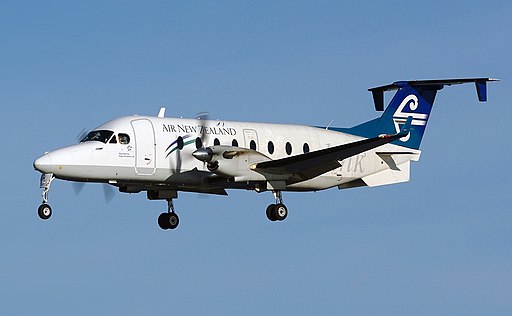
Beechcraft 1900 – A Detailed Technical Overview of a Proven Regional Turboprop Aircraft
The Beechcraft 1900 is one of the most successful small regional airliners ever built. Designed for short-haul operations and small airport accessibility, this twin-engine turboprop became a backbone aircraft for commuter airlines around the world. Known for its reliability, robust structure, and excellent short-field performance, the aircraft played a crucial role in connecting smaller cities with major aviation hubs.
Developed by Beechcraft, the aircraft was engineered to meet the increasing demand for efficient regional transport during the late twentieth century. The design focuses on durability, operational efficiency, and the ability to operate in demanding environments, including short runways, remote regions, and high-frequency flight schedules.
With more than 690 aircraft produced and decades of successful operation, the Beechcraft 1900 has earned a strong reputation among airlines, cargo operators, charter companies, and government organizations. Even today, many aircraft remain in service due to their robust design and dependable performance.
This comprehensive article explores the history, engineering design, propulsion systems, avionics architecture, performance characteristics, and operational roles of the Beechcraft 1900, providing an in-depth technical perspective suitable for aviation enthusiasts, students, and professionals.
Origins and Development of the Beechcraft 1900
The development of the Beechcraft 1900 can be traced back to the earlier Beechcraft Super King Air, which served as the foundation for the aircraft’s design. Engineers at Beechcraft recognized that the King Air platform offered a strong structural basis for a larger regional commuter aircraft. By extending the fuselage and adapting the systems for airline use, the company created an aircraft capable of carrying nearly twice the number of passengers compared with traditional business turboprops.
The prototype Beechcraft 1900 completed its maiden flight in 1982, marking the beginning of a new chapter for small regional aviation. Certification followed shortly thereafter, allowing the aircraft to enter commercial service with commuter airlines in North America. Early models were designed primarily for short-range routes, connecting smaller regional airports with larger transportation hubs.
As regional airline networks expanded during the 1980s and 1990s, demand for small turboprop aircraft increased significantly. The Beechcraft 1900 was particularly attractive because it combined the operational economics of a turboprop with the passenger capacity required by airline operators.
To keep pace with industry requirements, Beechcraft introduced improved variants featuring enhanced avionics, greater passenger comfort, and increased payload capacity. The most notable of these was the Beechcraft 1900D, which incorporated a stand-up cabin, a major improvement over the earlier design.
Production continued until 2002, with nearly seven hundred aircraft manufactured. Even after production ended, the aircraft remained widely used due to its reliability and relatively low operating costs.
Aircraft Classification and Market Position
The Beechcraft 1900 belongs to the regional turboprop airliner category, a class of aircraft designed for short-distance passenger transport. Aircraft in this category typically operate routes between 200 and 600 kilometers, providing essential connections between small communities and larger transportation hubs.
Unlike larger regional jets, turboprop aircraft offer lower fuel consumption and better performance at shorter runways. This makes them particularly useful in regions where airport infrastructure may be limited.
The Beechcraft 1900 typically carries 19 passengers, which is the maximum capacity allowed under certain aviation regulations without requiring a flight attendant. This regulatory advantage significantly reduced operating costs for regional airlines, making the aircraft especially attractive for high-frequency commuter routes.
In addition to passenger transport, the aircraft has also been widely used for cargo operations, air ambulance services, and government missions.
Structural Design and Airframe Architecture
The airframe of the Beechcraft 1900 is based on a conventional yet highly robust structural design. Engineers prioritized durability and ease of maintenance, recognizing that commuter aircraft must withstand intensive daily flight schedules.
The aircraft features a low-wing monoplane configuration, with the wings mounted on the lower section of the fuselage. This design improves aerodynamic efficiency and allows the landing gear to retract into the engine nacelles.
The fuselage itself is constructed primarily from aluminum alloy, providing a balance between strength and weight reduction. The elongated fuselage accommodates the larger passenger cabin while maintaining structural integrity during repeated pressurization cycles.
The wings incorporate a multi-spar structure designed to distribute aerodynamic loads efficiently. This configuration enhances the aircraft’s ability to operate safely under varying weather conditions and high operational cycles.
Another important structural characteristic is the aircraft’s pressurized cabin, which allows it to operate comfortably at higher cruising altitudes. Pressurization improves passenger comfort and enables the aircraft to fly above most weather disturbances.
Aerodynamic Configuration and Flight Stability
Aerodynamic efficiency plays a key role in the Beechcraft 1900’s performance. The aircraft’s wing design is optimized for turboprop operations, balancing lift generation with low drag at moderate cruise speeds.
The wings feature a moderate sweep angle and a high-aspect-ratio profile, which improves lift characteristics and fuel efficiency. Large flaps provide additional lift during takeoff and landing, enabling the aircraft to operate from relatively short runways.
At the rear of the aircraft, the vertical stabilizer and horizontal stabilizer form a traditional tail configuration that ensures stable flight characteristics. The tail surfaces are carefully sized to maintain directional stability even when operating in turbulent weather conditions.
The aircraft also incorporates aerodynamic fairings and carefully shaped engine nacelles to minimize drag and improve airflow over the wings.
These design features collectively contribute to the aircraft’s reliable handling characteristics and predictable flight performance.
Powerplant and Propulsion System
The Beechcraft 1900 is powered by two Pratt & Whitney Canada PT6A engines, one of the most widely used turboprop powerplants in aviation history.
Specifically, most versions of the aircraft use the PT6A-65B engine, which delivers approximately 1,100 shaft horsepower. This engine is known for its exceptional reliability, modular design, and strong power-to-weight ratio.
Each engine drives a four-blade constant-speed propeller, which converts engine power into thrust efficiently. The propellers are designed to operate effectively across a wide range of speeds and altitudes.
The engines are mounted on the wings within streamlined nacelles. This placement provides several advantages, including improved aerodynamic balance and simplified maintenance access.
One of the defining characteristics of the PT6 engine family is its reverse-flow turbine design, which enhances engine durability and reduces mechanical complexity. The modular construction also allows for easier maintenance and component replacement.
Together, the engines provide sufficient thrust to enable the aircraft to climb rapidly and maintain efficient cruise speeds while carrying a full passenger load.
Avionics and Flight Deck Technology
The cockpit of the Beechcraft 1900 was designed to meet the operational requirements of regional airlines. The aircraft is operated by two pilots, ensuring safe and efficient flight management.
Early versions of the aircraft featured analog instrumentation typical of the 1980s aviation industry. However, later models introduced more advanced avionics systems, including electronic flight instrument displays.
Modernized aircraft may include digital avionics suites with features such as:
- Electronic flight instrument systems (EFIS)
- Weather radar systems
- Global positioning navigation
- Traffic collision avoidance systems
- Flight management computers
These systems significantly improve situational awareness and reduce pilot workload, particularly during instrument flight conditions.
Cabin Design and Passenger Comfort
The cabin layout of the Beechcraft 1900 reflects its role as a commuter aircraft. Passenger seating is arranged in a single-aisle configuration, with seats typically arranged in a 1+1 layout on each side of the aisle.
One of the most significant improvements came with the introduction of the Beechcraft 1900D variant, which features a stand-up cabin. This redesign raised the cabin ceiling, allowing passengers to stand upright while moving through the aisle.
This improvement enhanced passenger comfort and made the aircraft more competitive with other regional airliners.
Additional cabin features typically include:
- Overhead luggage compartments
- Environmental control systems
- Pressurized cabin atmosphere
- Noise insulation materials
Despite its relatively small size, the aircraft provides a comfortable environment for short-duration flights.
Operational Performance and Flight Capabilities
The Beechcraft 1900 is designed for efficiency and reliability during short-distance operations. Its turboprop engines provide excellent fuel economy compared with jet aircraft operating similar routes.
The aircraft typically cruises at speeds around 280 knots, which is sufficient for regional airline operations.
Its maximum range exceeds 1,400 kilometers, depending on payload and flight conditions. This allows the aircraft to connect cities within a large regional network without requiring intermediate stops.
Another key advantage is the aircraft’s short takeoff and landing capability. This enables it to operate from smaller airports that may not be suitable for larger aircraft.
The aircraft can climb to a service ceiling of approximately 25,000 feet, allowing it to avoid weather disturbances while maintaining efficient cruise performance.
Global Operators and Operational Roles
Throughout its operational history, the Beechcraft 1900 has served airlines on every inhabited continent. Many regional carriers relied on the aircraft to connect remote communities with major transportation hubs.
The aircraft has also been used in several specialized roles, including:
- Cargo transport operations
- Medical evacuation missions
- Government surveillance flights
- Corporate shuttle services
- Military support operations
Cargo operators particularly value the aircraft for its ability to be converted quickly between passenger and freight configurations.
Legacy and Continuing Service
Even though production ended in the early 2000s, the Beechcraft 1900 remains an important aircraft in regional aviation. Many operators continue to use the aircraft due to its proven reliability and manageable operating costs.
Maintenance support remains available through specialized aviation service providers, ensuring that existing aircraft can remain operational for years to come.
In many parts of the world, the Beechcraft 1900 continues to serve communities that rely on small regional airports, demonstrating the long-lasting value of its design.
Technical Specifications – Beechcraft 1900
| Parameter | Specification |
|---|---|
| Aircraft Type | Regional Turboprop Airliner |
| Manufacturer | Beechcraft |
| Crew | 2 pilots |
| Passenger Capacity | 19 passengers |
| Length | 17.63 m |
| Wingspan | 17.65 m |
| Height | 4.72 m |
| Wing Area | 28.9 m² |
| Empty Weight | ~4,600 kg |
| Maximum Takeoff Weight | 7,764 kg |
| Engines | 2 × Pratt & Whitney Canada PT6A-65B |
| Engine Power | 1,100 shp each |
| Propellers | 4-blade constant-speed |
| Cruise Speed | ~280 knots (520 km/h) |
| Maximum Speed | ~518 km/h |
| Range | ~1,400 km |
| Service Ceiling | 25,000 ft (7,620 m) |
| Rate of Climb | ~3,000 ft/min |
| Takeoff Distance | ~1,200 m |
| Landing Distance | ~1,100 m |
_JP6920497.jpg)