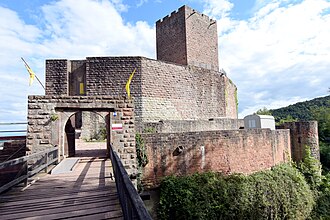
Burg Landeck: A Timeless Sentinel Above the Palatinate
There are places in Europe where history doesn’t merely sit behind glass cases or rest quietly in books—it breathes, lingers, and whispers through stone walls, forest paths, and sweeping hilltops. One such place is Burg Landeck, a castle ruin perched high above the vineyards and dense woodlands of the German Palatinate. At first glance, it may appear as just another medieval relic, one among many scattered across Germany’s castle-rich landscapes. But spend time here—walk its worn stairways, sit along its ramparts, or simply gaze across the Rhine Valley—and you’ll quickly realize that Burg Landeck offers something deeper: a profound sense of continuity between past and present.
This is not just a story of stones and battlements. It is a story of power, ambition, decay, renewal, and the enduring human fascination with places that once stood at the center of regional life. In this long-form exploration, we’ll journey through the origins, architecture, legends, cultural relevance, and modern-day charm of Burg Landeck, uncovering why it continues to captivate travelers and historians alike.
The Setting: Where Forest Meets Vineyards
A Strategic Hilltop Location
Burg Landeck rises above the small village of Klingenmünster in the southern part of Rhineland-Palatinate, a region known for its rolling hills, wine production, and dense forests. The castle sits at an elevation that offers commanding views over the Rhine plain, making it immediately clear why this location was chosen centuries ago.
From its vantage point, one can observe the gentle patchwork of vineyards that define the Palatinate landscape, as well as the distant outline of the Black Forest on particularly clear days. The castle’s surroundings are part of the Palatinate Forest, one of the largest contiguous forest areas in Germany, providing a natural defensive barrier in medieval times and a serene escape for visitors today.
A Place Between Worlds
What makes Burg Landeck especially intriguing is its position at the crossroads of cultural and geographic influences. Historically, this region has been shaped by Roman presence, medieval German principalities, and later French influence. The castle, therefore, does not merely represent a single era—it stands as a witness to centuries of shifting borders and identities.
Origins and Early History
The Birth of a Fortress
The construction of Burg Landeck dates back to the 12th century, a time when castles were not just residences but symbols of authority and instruments of control. It was built under the auspices of the Holy Roman Empire, during a period when regional lords sought to consolidate power and protect their territories.
Although precise records of its founding are scarce, historians generally agree that the castle was established by local noble families with ties to imperial authority. Its strategic location allowed it to monitor trade routes and exert influence over the surrounding lands.
Expansion and Influence
Over the following centuries, Burg Landeck grew in both size and importance. It became part of a network of fortifications that dotted the region, each playing a role in maintaining stability—or, at times, enforcing dominance.
The castle saw periods of expansion, with additional defensive walls, towers, and residential quarters being added as its role evolved. It was not merely a military stronghold; it also served as an administrative center where decisions affecting the local population were made.
Architecture: Stones That Tell Stories
Defensive Design
Like many medieval castles, Burg Landeck was built with defense as a primary concern. Its thick stone walls, narrow windows, and elevated position made it difficult for attackers to breach. The approach to the castle is steep and winding, forcing any would-be invaders into a vulnerable position.
The central keep, or Bergfried, remains one of the most striking features of the ruin. Even in its partially restored state, it conveys a sense of strength and permanence. From the top, visitors can appreciate the full extent of the castle’s strategic placement.
Living Spaces and Daily Life
While much of Burg Landeck’s structure was dedicated to defense, it also included living quarters, storage rooms, and communal spaces. Archaeological findings suggest that the castle was once a bustling hub of activity, with servants, soldiers, and nobles all contributing to its daily rhythm.
The remnants of fireplaces, staircases, and room divisions offer glimpses into what life might have been like within these walls. It’s easy to imagine the flicker of torchlight, the echo of footsteps on stone floors, and the murmur of conversations carried through narrow corridors.
Turbulent Times: War and Destruction
Conflicts and Changing Control
The history of Burg Landeck is marked by periods of conflict, reflecting the broader instability of medieval and early modern Europe. Control of the castle changed hands multiple times, often as a result of regional disputes or larger political struggles.
Its strategic importance made it a target during wars, and it did not always escape unscathed. Like many castles in the region, it faced sieges and occupations that left lasting marks on its structure.
The Thirty Years’ War
One of the most devastating periods in the castle’s history came during the Thirty Years’ War, a conflict that ravaged much of Central Europe. Although detailed records of Burg Landeck’s role in the war are limited, it is widely believed that the castle suffered significant damage during this time.
The war’s aftermath left many castles abandoned or in ruins, and Burg Landeck was no exception. Its military relevance diminished, and it gradually fell into disrepair.
From Ruin to Romantic Landmark
Rediscovery in the 19th Century
By the 18th century, Burg Landeck had largely lost its functional role, becoming a relic of a bygone era. However, the rise of Romanticism in the 19th century brought renewed interest in medieval ruins.
Artists, writers, and travelers began to see castles like Burg Landeck not as decaying structures but as symbols of a mysterious and poetic past. This shift in perception played a crucial role in preserving the site.
Early Restoration Efforts
Efforts to stabilize and restore parts of the castle began in the late 19th and early 20th centuries. These initiatives aimed not to fully reconstruct the castle but to preserve its existing structure and make it accessible to visitors.
Today, the balance between ruin and restoration is one of Burg Landeck’s defining characteristics. It allows visitors to experience the authenticity of the site while ensuring its safety and longevity.
Legends and Local Lore
Echoes of the Past
No medieval castle would be complete without its share of legends, and Burg Landeck is no exception. While not as widely known as some of Germany’s more famous castles, it has its own collection of local stories passed down through generations.
Some tales speak of hidden treasures buried within the castle grounds, while others hint at ghostly figures seen wandering the ruins at dusk. Whether these stories are rooted in truth or imagination, they add an extra layer of intrigue to the site.
The Power of Imagination
What makes these legends compelling is not necessarily their factual accuracy but the way they enrich the visitor experience. Standing in the quiet ruins, surrounded by forest and sky, it’s easy to let your imagination wander and envision the lives—and mysteries—that once filled this space.
A Modern-Day Destination
Hiking and Exploration
Today, Burg Landeck is a popular destination for hikers and nature enthusiasts. The trails leading to the castle wind through the Palatinate Forest, offering a journey that is as rewarding as the destination itself.
The combination of natural beauty and historical significance makes it an ideal spot for those looking to escape the bustle of modern life. Whether you arrive on foot or by car, the sense of arrival is unmistakable.
Cultural Events and Gatherings
In recent years, Burg Landeck has also become a venue for cultural events, including concerts, festivals, and historical reenactments. These events bring new life to the ancient walls, creating a dynamic connection between past and present.
Visitors can experience music echoing through the courtyard or watch performers recreate scenes from medieval life, adding a vibrant dimension to the site.
The View: A Reward Like No Other
Panoramic Beauty
One of the most memorable aspects of visiting Burg Landeck is the view. From the castle’s elevated position, the landscape unfolds in all directions, offering a panorama that changes with the seasons.
In spring and summer, the vineyards are lush and green. In autumn, they transform into a tapestry of gold and red. Even in winter, the stark beauty of the surrounding forest has its own quiet charm.
A Moment of Reflection
Standing at the edge of the castle walls, looking out over the valley, it’s hard not to feel a sense of perspective. The centuries that have passed, the lives that have come and gone, and the enduring presence of the castle itself all converge in this moment.
Practical Tips for Visitors
Getting There
Burg Landeck is easily accessible from nearby towns and cities in the region. The village of Klingenmünster serves as a convenient starting point, with parking and well-marked paths leading up to the castle.
Best Time to Visit
While the castle is open year-round, the best time to visit depends on your preferences. Spring and autumn offer mild weather and stunning scenery, while summer brings a lively atmosphere with events and activities.
What to Bring
Comfortable walking shoes are essential, especially if you plan to hike to the castle. Bringing water, a camera, and perhaps a picnic can enhance your experience.
Why Burg Landeck Matters
A Connection to History
Burg Landeck is more than just a tourist attraction—it is a tangible link to the past. It reminds us of a time when castles were centers of power, when landscapes were shaped by necessity as much as beauty.
Preserving Heritage
The continued preservation of Burg Landeck reflects a broader commitment to protecting cultural heritage. It ensures that future generations can experience and learn from this remarkable site.
Final Thoughts: The Enduring Allure of Burg Landeck
There is something profoundly moving about places like Burg Landeck. They stand as silent witnesses to history, their stones bearing the marks of time yet refusing to fade into obscurity.
Visiting the castle is not just about seeing a historical site—it’s about experiencing a sense of continuity, of standing in a place where past and present coexist. It’s about feeling the weight of history while appreciating the beauty of the moment.
