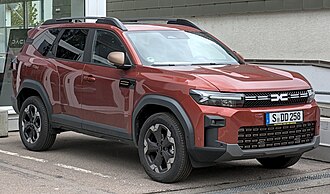
Dacia Bigster – A Comprehensive Technical Deep Dive
The automotive industry has long been dominated by a clear segmentation hierarchy, where compact SUVs and mid-size family vehicles command the highest demand across Europe. Into this highly competitive arena steps the Dacia Bigster—a model that represents not just another addition to the lineup of Dacia, but a fundamental shift in brand philosophy. Historically associated with affordability and minimalism, Dacia now aims to balance cost-efficiency with increased size, technology, and versatility.
The Bigster is positioned as a C-segment SUV, meaning it competes directly with models such as the Peugeot 3008 and Jeep Compass, yet it does so with a radically different value proposition. Instead of emphasizing premium materials or high-end refinement, the Bigster focuses on practical engineering, modular architecture, and efficient powertrains.
This article explores the Bigster in depth—from its platform and design philosophy to drivetrain configurations and performance metrics—culminating in a detailed technical specification table.
Platform and Engineering Architecture
CMF-B Platform: Modular Efficiency at Its Core
At the heart of the Dacia Bigster lies the CMF-B platform, developed by the Renault Group. This modular architecture is shared across multiple vehicles within the group, including the Dacia Duster and Renault Clio.
The CMF-B platform is engineered to support a wide range of powertrains, including:
- Internal combustion engines (ICE)
- Mild hybrid systems
- Full hybrid configurations
- Alternative fuels such as LPG
This flexibility is crucial for Dacia’s strategy, as it allows the Bigster to remain compliant with evolving European emissions standards while keeping production costs low.
Structural Rigidity and Weight Optimization
Despite its increased size, the Bigster maintains a relatively modest curb weight ranging from approximately 1350 to 1428 kg, depending on configuration. This is achieved through:
- Extensive use of high-strength steel
- Simplified structural design
- Reduced reliance on heavy luxury components
The result is a vehicle that balances structural integrity with fuel efficiency—a key requirement in modern SUV engineering.
Exterior Design and Dimensional Characteristics
A Larger, More Assertive Presence
The Bigster is the largest production vehicle ever built by Dacia, measuring approximately:
- Length: 4570 mm
- Width: 1813 mm
- Height: up to 1712 mm
- Wheelbase: 2704 mm
These dimensions place it squarely within the C-SUV category, offering increased cabin space and cargo capacity compared to smaller models like the Duster.
Ground Clearance and Off-Road Capability
With a ground clearance of approximately 219–220 mm, the Bigster is engineered for light off-road use. Combined with optional all-wheel-drive configurations, this makes it suitable for:
- Rural environments
- Gravel roads
- Mild off-road excursions
While not a hardcore off-roader, the Bigster’s geometry and drivetrain options provide sufficient capability for everyday adventure scenarios.
Interior Design and Practicality
Functional Minimalism Meets Modern Technology
Inside, the Bigster reflects Dacia’s evolving design language. The cabin prioritizes:
- Durability over luxury
- Simplicity over complexity
- Functionality over aesthetics
Despite this, the vehicle incorporates modern features such as:
- 10.1-inch infotainment touchscreen
- Digital driver display
- Smartphone connectivity (Apple CarPlay and Android Auto)
Cargo Capacity and Versatility
One of the Bigster’s strongest attributes is its practicality:
- Boot capacity: 464–626 liters
- Maximum cargo volume: up to ~1900 liters
This makes it highly suitable for:
- Family use
- Long-distance travel
- Outdoor activities
Powertrain Lineup and Engine Technology
Overview of Available Engines
The Dacia Bigster offers a diverse range of engines, reflecting the industry’s transition toward electrification:
1. 1.2 TCe Mild Hybrid Engines
- Power output: 130–140 HP
- Configuration: turbocharged 3-cylinder
- Fuel consumption: ~5.4–6.1 l/100 km
These engines provide a balance between performance and efficiency, particularly in urban and mixed driving conditions.
2. Hybrid 1.8 (Full Hybrid)
- Power: ~156 HP
- Acceleration (0–100 km/h): ~9.7 seconds
- Fuel consumption: ~4.6–4.7 l/100 km
This is the most efficient and technologically advanced option, ideal for drivers prioritizing fuel economy.
3. 1.5 dCi Diesel
- Power: 115 HP
- Torque: 260 Nm
- Fuel consumption: ~4.7 l/100 km (Auto Data)
The diesel variant is tailored for long-distance drivers and fleet use.
4. ECO-G LPG Variant
- Power: ~140 HP
- Dual-fuel system (petrol + LPG)
- Extended driving range
This configuration offers a cost-effective alternative in markets where LPG is widely available.
Transmission and Drivetrain Configurations
Manual and Automatic Options
Depending on the engine variant, the Bigster is available with:
- 6-speed manual transmission
- Automatic transmission (including hybrid-specific systems)
Front-Wheel Drive vs All-Wheel Drive
The drivetrain layout includes:
- Front-wheel drive (FWD) for efficiency
- All-wheel drive (AWD) for enhanced traction
AWD variants are particularly relevant for regions with challenging weather conditions or off-road requirements.
Performance Characteristics
Acceleration and Top Speed
Performance varies depending on the engine:
- 0–100 km/h: 9.7 to 11.2 seconds
- Top speed: approximately 180 km/h
While not designed as a performance SUV, the Bigster delivers adequate acceleration for everyday driving scenarios.
Driving Dynamics
The Bigster emphasizes comfort over sportiness:
- Soft suspension setup
- Noticeable body roll in corners
- Light steering feel
This tuning aligns with its role as a family-oriented vehicle.
Fuel Efficiency and Environmental Impact
Efficiency Across Powertrains
Fuel consumption figures highlight the Bigster’s efficiency:
- Hybrid: ~4.6 l/100 km
- Diesel: ~4.7 l/100 km
- Petrol mild hybrid: ~5.4–6.1 l/100 km
Emissions Standards
The vehicle complies with Euro 6e emissions regulations, ensuring reduced environmental impact and regulatory compliance across European markets.
Safety and Driver Assistance Systems
While not positioned as a premium vehicle, the Bigster includes essential safety technologies:
- Lane-keeping assistance
- Emergency braking
- Parking sensors and camera systems
The focus is on delivering necessary safety features without significantly increasing cost.
Market Positioning and Pricing Strategy
Affordable Entry into the C-SUV Segment
The Bigster is expected to start around €25,000–€30,000, making it one of the most affordable vehicles in its class.
This pricing strategy allows Dacia to:
- Attract budget-conscious families
- Compete with higher-priced rivals
- Expand into new market segments
Real-World Perception and User Feedback
Community discussions suggest that the Bigster is:
- Spacious but not significantly larger than the Duster
- Highly economical
- Practical for daily use
However, some users note:
- Lack of premium materials
- Limited engine variety
- Absence of a 7-seat configuration
Conclusion: Engineering Simplicity with Purpose
The Dacia Bigster represents a calculated move by Dacia to enter the highly competitive C-SUV segment without abandoning its core philosophy. It achieves this by combining:
- Modular engineering
- Efficient powertrains
- Practical design
Rather than attempting to rival premium SUVs directly, the Bigster redefines value in its category—offering space, efficiency, and versatility at a price point few competitors can match.
Technical Specifications Table – Dacia Bigster (2025)
| Parameter | Specification |
|---|---|
| Vehicle Class | C-segment SUV |
| Platform | CMF-B (Renault Group) |
| Body Type | 5-door SUV |
| Seating Capacity | 5 seats |
| Length | 4570 mm |
| Width | 1813 mm |
| Height | 1657–1712 mm |
| Wheelbase | 2704 mm |
| Ground Clearance | 219–220 mm |
| Curb Weight | 1350–1428 kg |
| Boot Capacity | 464–626 L |
| Max Cargo Volume | up to ~1948 L |
| Engine Options | Petrol, Diesel, Mild Hybrid, Full Hybrid, LPG |
| Power Output | 115–156 HP |
| Torque | 205–260 Nm |
| Transmission | Manual / Automatic |
| Drivetrain | FWD / AWD |
| 0–100 km/h | 9.7–11.2 s |
| Top Speed | ~180 km/h |
| Fuel Consumption | 4.6–6.1 l/100 km |
| Emissions Standard | Euro 6e |
