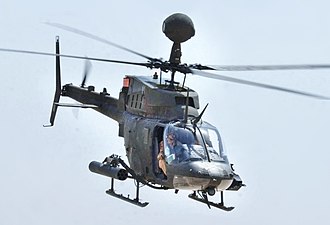
The Bell OH-58 Kiowa: A Comprehensive Exploration of a Legendary Reconnaissance Helicopter
The Bell OH-58 Kiowa stands as one of the most recognizable and enduring light observation helicopters ever developed for military use. Built upon a philosophy of agility, survivability, and mission adaptability, the Kiowa has served for decades as the aerial eyes of ground forces, evolving continuously to meet the demands of modern warfare. From its origins in the U.S. Army’s Light Observation Helicopter (LOH) program to its advanced armed reconnaissance variants, the Kiowa represents a remarkable blend of simplicity and technological refinement. This article provides an in-depth, blog-style exploration of the aircraft, examining its development, engineering, operational history, and technical specifications in detail.
Origins of the Kiowa Program
The Light Observation Helicopter (LOH) Requirement
In the early 1960s, the United States Army identified a need for a new generation of light helicopters capable of performing reconnaissance, liaison, and utility roles on the modern battlefield. The existing fleet, which included helicopters such as the Bell H-13 Sioux and the Hughes OH-6 Cayuse, was either becoming outdated or insufficient to meet evolving operational requirements, particularly in the context of increasingly complex conflicts such as the Vietnam War.
The LOH program sought an aircraft that was compact, highly maneuverable, and capable of operating in austere environments while providing excellent visibility for reconnaissance missions. Several manufacturers submitted proposals, including Bell Helicopter, Hughes, and Fairchild-Hiller. Although the Hughes OH-6 initially won the competition, Bell continued refining its design, leading to the eventual adoption of the Bell OH-58.
Development of the Bell 206A and Military Adaptation
The Kiowa is based on the Bell 206A JetRanger, a highly successful civilian helicopter. Bell adapted this platform for military use, incorporating modifications to meet the Army’s requirements. These included structural reinforcements, improved avionics, and mission-specific equipment.
In 1968, the U.S. Army selected the Bell design as the OH-58A Kiowa, marking the beginning of a long and distinguished service life. The name “Kiowa,” following Army tradition, was derived from a Native American tribe, reflecting a longstanding naming convention for U.S. Army helicopters.
Design Philosophy and Engineering Features
Compact Airframe and Aerodynamic Efficiency
The Bell OH-58 Kiowa was designed with a compact and lightweight airframe, enabling it to operate in confined spaces and challenging terrain. Its relatively small footprint made it ideal for forward deployment and operations from improvised landing zones.
The helicopter’s aerodynamic profile emphasizes efficiency, with a streamlined fuselage that reduces drag and enhances performance. The design allows for relatively high cruise speeds and fuel efficiency compared to other helicopters in its class, making it well-suited for extended reconnaissance missions.
Rotor System and Flight Characteristics
Like many Bell helicopters, the Kiowa employs a two-blade semi-rigid main rotor system. This configuration provides a balance between simplicity and performance, offering reliable operation and ease of maintenance. The rotor system contributes to the helicopter’s responsive handling and agility, which are critical for low-altitude reconnaissance missions.
The tail rotor provides anti-torque control and directional stability, enabling precise maneuvering even in challenging flight conditions. The Kiowa’s flight characteristics are often described as forgiving, making it accessible to pilots while still offering the performance needed for demanding missions.
Powerplant and Performance Capabilities
Engine Configuration
The Bell OH-58 Kiowa is powered by a single turboshaft engine, typically from the Allison (later Rolls-Royce) T63 series. This engine provides sufficient power for the helicopter’s lightweight design, enabling it to achieve impressive performance metrics.
The engine is mounted above the cabin, a configuration that improves safety in the event of a crash and facilitates maintenance access. Over the years, engine upgrades have enhanced the Kiowa’s power output and reliability, particularly in later variants such as the OH-58D.
Performance Metrics
The Kiowa’s performance capabilities are tailored to its reconnaissance role. It offers a respectable cruise speed, a service ceiling that allows operation in mountainous regions, and a range sufficient for extended missions without refueling.
The helicopter’s ability to hover and maneuver at low altitudes is particularly important for reconnaissance and surveillance tasks. Its agility allows it to navigate complex terrain and avoid detection, while its endurance ensures that it can remain on station for extended periods.
Evolution of the Kiowa: Variants and Upgrades
OH-58A and OH-58B
The initial production variants, the OH-58A and OH-58B, established the foundation for the Kiowa’s success. These helicopters were primarily used for observation and liaison roles, equipped with basic avionics and minimal armament.
OH-58C: Enhanced Performance
The OH-58C introduced improvements in engine power and avionics, enhancing the helicopter’s performance and operational capabilities. These upgrades allowed the Kiowa to operate more effectively in a wider range of environments.
OH-58D Kiowa Warrior
The most advanced and well-known variant is the OH-58D Kiowa Warrior. This version features significant upgrades, including a mast-mounted sight (MMS) system that allows the helicopter to observe targets from behind cover, reducing exposure to enemy fire.
The Kiowa Warrior is equipped with advanced avionics, including thermal imaging, laser rangefinding, and target designation systems. It can also carry a variety of weapons, including machine guns, rockets, and guided missiles, transforming it into a formidable armed reconnaissance platform.
Mission Roles and Operational Use
Reconnaissance and Surveillance
The primary role of the Bell OH-58 Kiowa is reconnaissance. The helicopter serves as the “eyes and ears” of ground forces, providing real-time intelligence on enemy positions, terrain, and movement.
Its ability to operate at low altitudes and remain concealed makes it particularly effective in this role. The mast-mounted sight system in later variants further enhances its reconnaissance capabilities by allowing observation without exposing the entire aircraft.
Armed Reconnaissance and Close Support
With the introduction of the Kiowa Warrior, the helicopter gained the ability to engage targets directly. This dual role of reconnaissance and attack makes it a versatile asset on the battlefield.
The Kiowa often operates in coordination with other aircraft, such as the Boeing AH-64 Apache, providing target designation and situational awareness while the Apache delivers heavy firepower.
Utility and Liaison Roles
In addition to its primary missions, the Kiowa has been used for utility and liaison tasks, including personnel transport, command and control, and medical evacuation in limited circumstances.
Combat History and Global Deployment
Vietnam War and Early Operations
Although the Kiowa entered service toward the end of the Vietnam War, it played a role in replacing earlier observation helicopters. Its performance and reliability quickly earned it a reputation as a capable reconnaissance platform.
Post-Cold War Conflicts
The Kiowa has seen extensive use in various conflicts, including operations in the Middle East and the Balkans. Its adaptability and effectiveness in reconnaissance and armed support roles have made it a valuable asset in modern warfare.
Operations in Iraq and Afghanistan
During the conflicts in Iraq and Afghanistan, the Kiowa Warrior proved its worth in counterinsurgency operations. Its ability to provide close air support, conduct surveillance, and operate in urban environments made it indispensable to ground forces.
Avionics and Modernization
Advanced Sensor Systems
The OH-58D introduced advanced sensor systems that significantly enhanced the helicopter’s capabilities. These include thermal imaging cameras, laser designators, and night vision compatibility, allowing for effective operation in all weather conditions and at any time of day.
Communication and Navigation
Modernized Kiowa helicopters are equipped with sophisticated communication and navigation systems, enabling seamless integration with other military assets. These systems allow for real-time data sharing and coordination, which are critical in modern network-centric warfare.
Maintenance, Reliability, and Operational Considerations
Ease of Maintenance
One of the key advantages of the Bell OH-58 Kiowa is its relatively simple design, which facilitates maintenance and reduces operational costs. The helicopter’s components are designed for accessibility, allowing for quick repairs and minimal downtime.
Durability and Survivability
The Kiowa is built to withstand the rigors of military operations, with a robust airframe and systems designed for reliability. While not heavily armored, its small size and agility contribute to its survivability by reducing its visibility and making it a difficult target.
Legacy and Influence
Impact on Helicopter Design
The Bell OH-58 Kiowa has had a lasting impact on helicopter design, particularly in the مجال of light reconnaissance aircraft. Its combination of simplicity, adaptability, and effectiveness has influenced subsequent generations of helicopters.
Retirement and Replacement
In recent years, the U.S. Army has retired the Kiowa from active service, replacing it with newer platforms and unmanned systems. However, the helicopter’s legacy continues, and it remains in use with several international operators.
Technical Specifications Table
Below is a detailed table summarizing the technical parameters of the Bell OH-58 Kiowa (representative of the OH-58D Kiowa Warrior variant):
| Specification | Bell OH-58 Kiowa (OH-58D) |
|---|---|
| Manufacturer | Bell Helicopter |
| Type | Light reconnaissance helicopter |
| Crew | 2 (pilot and observer) |
| Length (overall) | ~12.9 m |
| Rotor Diameter | ~10.7 m |
| Height | ~3.0 m |
| Empty Weight | ~1,600 kg |
| Maximum Takeoff Weight | ~2,500 kg |
| Powerplant | 1 × Rolls-Royce T703 engine |
| Engine Power | ~650 shp |
| Maximum Speed | ~120 knots |
| Cruise Speed | ~110 knots |
| Range | ~260 nautical miles |
| Service Ceiling | ~15,000 ft |
| Rate of Climb | ~1,500 ft/min |
| Armament | Machine guns, rockets, missiles |
| Avionics | MMS, thermal imaging, laser designator |
| Landing Gear | Skid-type |
| Rotor System | Two-blade semi-rigid |
Final Reflections
The Bell OH-58 Kiowa represents a remarkable chapter in the history of military aviation. Its evolution from a simple observation helicopter to a sophisticated armed reconnaissance platform highlights the adaptability and ingenuity of its designers. Even as newer technologies emerge, the Kiowa’s legacy endures as a testament to the enduring value of well-engineered, mission-focused aircraft.
.jpg)