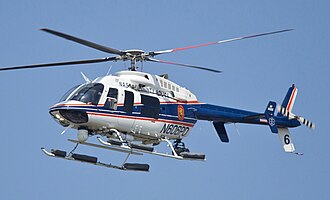
The Bell 407: Engineering Precision and Versatility in a Modern Light Helicopter
The Bell 407 represents a significant milestone in the evolution of light turbine helicopters, combining proven design heritage with modern engineering advancements to create a rotorcraft that excels in performance, reliability, and versatility. Developed by Bell Helicopter, the Bell 407 builds upon decades of experience in rotorcraft design, particularly drawing lineage from the highly successful Bell 206 series. However, the 407 is far more than an incremental improvement; it is a comprehensive redesign that incorporates a four-blade rotor system, a more powerful engine, advanced avionics, and a refined cabin structure. This article explores the Bell 407 in extensive detail, examining its origins, engineering innovations, operational roles, and technical characteristics, culminating in a comprehensive specification table.
Origins and Development of the Bell 407
From the Bell 206 Legacy to a New Generation
To understand the Bell 407, one must first appreciate the legacy of the Bell 206 JetRanger, one of the most widely used helicopters in history. The Bell 206 established a reputation for reliability, simplicity, and cost-effectiveness, making it a favorite among civilian operators, law enforcement agencies, and training institutions. However, by the late 1980s and early 1990s, the aviation market began demanding greater performance, improved passenger comfort, and more advanced systems.
Bell recognized that incremental upgrades to the 206 platform would not be sufficient to meet these evolving expectations. Instead, the company embarked on the development of a new helicopter that would retain the strengths of the JetRanger while addressing its limitations. The result was the Bell 407 program, officially launched in the early 1990s.
First Flight and Certification
The prototype Bell 407 first took to the skies in 1995, marking the beginning of a rigorous testing and certification process. The aircraft demonstrated impressive performance improvements over its predecessor, particularly in terms of speed, payload capacity, and ride quality. Certification was achieved in 1996, allowing the helicopter to enter commercial service shortly thereafter.
From the outset, the Bell 407 was designed to meet a wide range of operational requirements, from corporate transport to emergency medical services and utility work. Its adaptability would become one of its defining characteristics.
Design Philosophy and Structural Innovations
A Redesigned Airframe
Although the Bell 407 shares some visual similarities with the Bell 206, its airframe is substantially redesigned. The fuselage is wider, providing increased cabin space and improved ergonomics for passengers and crew. The structure incorporates modern materials and manufacturing techniques, enhancing durability while reducing weight.
The helicopter features a sleek, aerodynamic profile that minimizes drag and contributes to its higher cruise speeds. The integration of design elements such as the engine cowling, tail boom, and landing skids reflects a careful balance between functionality and aesthetics.
The Four-Blade Rotor System
One of the most significant advancements in the Bell 407 is its four-blade composite main rotor system. This represents a departure from the two-blade systems used in earlier Bell helicopters. The four-blade configuration offers several advantages, including reduced vibration, improved lift efficiency, and quieter operation.
The rotor blades are constructed from advanced composite materials, which provide strength, flexibility, and resistance to fatigue. This design not only enhances performance but also reduces maintenance requirements, contributing to lower operating costs over the life of the aircraft.
Tail Rotor and Stability Enhancements
The tail rotor system is optimized for efficiency and control, providing precise anti-torque capabilities. The overall stability of the Bell 407 is further enhanced by its aerodynamic design and control systems, allowing for smooth and predictable handling across a wide range of flight conditions.
Powerplant and Performance Capabilities
Rolls-Royce Turboshaft Engine
At the heart of the Bell 407 is a powerful turboshaft engine, typically the Rolls-Royce (Allison) 250-C47B. This engine delivers significantly more power than those used in earlier light helicopters, enabling the Bell 407 to achieve superior performance in terms of speed, climb rate, and payload capacity.
The engine is equipped with a Full Authority Digital Engine Control (FADEC) system, which optimizes performance and simplifies pilot workload by automatically managing engine parameters. This technology enhances both safety and efficiency, particularly during demanding flight operations.
Performance Metrics and Capabilities
The Bell 407 is known for its impressive performance characteristics. It can achieve cruise speeds exceeding 130 knots, making it one of the faster helicopters in its class. Its range allows for extended missions without the need for frequent refueling, while its service ceiling enables operations in high-altitude environments.
The helicopter’s hover performance is particularly noteworthy, allowing it to operate effectively in confined areas and challenging conditions such as hot-and-high environments. These capabilities make the Bell 407 a versatile platform for a wide range of missions.
Cabin Design and Passenger Experience
Spacious and Configurable Interior
The cabin of the Bell 407 is designed with both functionality and comfort in mind. It can accommodate up to seven occupants, including the pilot, with flexible seating configurations that allow operators to tailor the interior to specific mission requirements.
For corporate transport, the cabin can be outfitted with high-end materials, ergonomic seating, and advanced communication systems. In utility or emergency medical configurations, the interior can be adapted to carry equipment, stretchers, or cargo.
Visibility and Accessibility
Large windows provide excellent visibility for both passengers and the pilot, enhancing situational awareness and the overall flight experience. The wide cabin doors facilitate easy entry and exit, which is particularly important for medical evacuation and law enforcement operations.
Avionics and Technological Advancements
Modern Glass Cockpit
The Bell 407 is equipped with advanced avionics systems, including optional glass cockpit configurations that feature digital displays and integrated flight management systems. These systems provide pilots with real-time information on navigation, weather, and aircraft performance.
The integration of modern avionics enhances safety and reduces pilot workload, allowing for more efficient and precise operation. Features such as GPS navigation, autopilot systems, and terrain awareness further contribute to the helicopter’s capabilities.
Safety Systems
Safety is a key consideration in the design of the Bell 407. The helicopter incorporates multiple redundant systems and advanced monitoring technologies to ensure reliable operation. The FADEC system, for example, helps prevent engine overspeed and other critical issues.
Additionally, the aircraft is designed to meet stringent certification standards, ensuring its suitability for a wide range of operational environments.
Operational Roles and Applications
Emergency Medical Services (EMS)
The Bell 407 is widely used in emergency medical services due to its speed, reliability, and spacious cabin. It can be equipped with medical equipment and configured to transport patients quickly and safely, making it a vital asset in life-saving missions.
Law Enforcement and Public Safety
Law enforcement agencies utilize the Bell 407 for surveillance, patrol, and search-and-rescue operations. Its agility and advanced avionics make it well-suited for these demanding roles.
Corporate and VIP Transport
In the corporate sector, the Bell 407 is valued for its comfort, performance, and prestige. It provides a convenient and efficient means of transportation for executives and VIPs, particularly in urban environments.
Utility and Offshore Operations
The helicopter is also employed in utility roles, including aerial surveying, firefighting, and offshore transport. Its ability to carry external loads and operate in challenging conditions makes it a versatile workhorse.
Variants and Continued Development
Bell 407GX and 407GXi
Over time, Bell has introduced updated variants of the 407, such as the Bell 407GX and the Bell 407GXi. These versions feature enhanced avionics, improved performance, and additional safety features.
The 407GXi, for example, includes advanced digital displays and connectivity options, reflecting the ongoing evolution of helicopter technology.
Maintenance, Reliability, and Cost Considerations
Ease of Maintenance
The Bell 407 is designed for ease of maintenance, with accessible components and simplified systems. This reduces downtime and ensures high availability for operators.
Operating Costs
While offering advanced capabilities, the Bell 407 is also relatively cost-effective to operate compared to larger twin-engine helicopters. Its fuel efficiency and reliability contribute to lower overall operating expenses.
Legacy and Influence in Modern Aviation
The Bell 407 has established itself as one of the most successful helicopters in its class, continuing the legacy of the Bell 206 while introducing significant advancements in design and performance. Its influence can be seen in subsequent helicopter designs, particularly in the emphasis on comfort, efficiency, and versatility.
Technical Specifications Table
Below is a comprehensive table outlining the technical parameters of the Bell 407:
| Specification | Bell 407 (Typical Values) |
|---|---|
| Manufacturer | Bell Helicopter |
| Type | Light utility helicopter |
| Crew | 1 pilot |
| Passenger Capacity | Up to 6 passengers |
| Length (overall) | ~12.7 m |
| Rotor Diameter | ~10.7 m |
| Height | ~3.3 m |
| Empty Weight | ~1,200 kg |
| Maximum Takeoff Weight | ~2,270 kg |
| Powerplant | 1 × Rolls-Royce 250-C47B |
| Engine Power | ~813 shp |
| Maximum Cruise Speed | ~130–140 knots |
| Range | ~330 nautical miles |
| Service Ceiling | ~20,000 ft |
| Rate of Climb | ~2,000 ft/min |
| Landing Gear | Skid-type |
| Rotor System | Four-blade composite |
| Avionics | Glass cockpit (optional) |
Final Thoughts
The Bell 407 exemplifies the evolution of light helicopter design, combining proven engineering principles with modern innovations to create a highly capable and versatile aircraft. Its continued success in a wide range of roles underscores its adaptability and enduring appeal. Whether used for emergency response, corporate transport, or utility operations, the Bell 407 remains a benchmark in its class, reflecting the enduring legacy of Bell Helicopter’s commitment to excellence in aviation.
