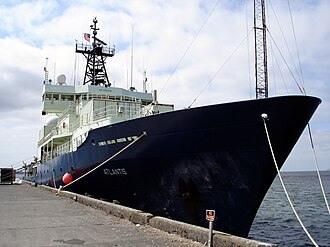
RV Atlantis (AGOR-25): The Deep-Sea Workhorse of Modern Ocean Science
The oceans remain one of the least understood environments on Earth, covering more than 70% of the planet yet still holding vast mysteries in their depths. Unlocking those mysteries requires not only brilliant scientists and advanced instruments, but also highly specialized platforms capable of operating in some of the most hostile environments imaginable. Among these platforms, the research vessel RV Atlantis (AGOR-25) stands as one of the most capable and influential ships ever built for ocean science.
Operated by the Woods Hole Oceanographic Institution and owned by the U.S. Navy, Atlantis is far more than just a ship—it is a floating laboratory, a deep-sea exploration hub, and a logistical backbone for some of the most groundbreaking scientific discoveries of the modern era. From hydrothermal vent exploration to deep-sea geology and biological research, Atlantis has served as the staging ground for missions that have reshaped our understanding of the ocean floor.
This article explores the vessel in extraordinary detail—its origins, design, propulsion, onboard systems, scientific capabilities, operational philosophy, and enduring legacy—before concluding with a comprehensive table of technical specifications.
Origins of a Modern Oceanographic Platform
The Evolution of Research Vessels
To understand Atlantis, one must first appreciate the evolution of oceanographic ships. Early research vessels were often converted fishing boats or repurposed naval craft, lacking the stability, instrumentation, and flexibility required for modern science. As oceanography matured into a multidisciplinary field—combining physics, chemistry, biology, and geology—the need for purpose-built research vessels became undeniable.
Atlantis represents a culmination of that evolution. Built as part of the Thomas G. Thompson-class, it was designed from the outset to support a wide variety of scientific missions while maintaining exceptional stability and precision at sea.
Construction and Commissioning
Atlantis was constructed by Halter Marine Inc. in Gulfport, Mississippi, with its keel laid in August 1994 and its launch following in February 1996. The vessel entered service in 1998 under the U.S. Navy, which owns the ship but leases it for operation by WHOI as part of the University-National Oceanographic Laboratory System.
From the beginning, Atlantis was designed not just as a general-purpose research vessel but as a dedicated support platform for deep submergence operations, particularly the legendary submersible DSV Alvin.
Design Philosophy: Versatility and Precision
A Multi-Disciplinary Platform
Unlike specialized ships designed for a single mission, Atlantis was conceived as a multi-role research vessel capable of supporting diverse scientific operations. This includes:
- Physical oceanography
- Marine geology
- Marine biology
- Deep-sea exploration
- Acoustic mapping
Its design reflects a balance between flexibility and specialization, enabling it to adapt to different missions without sacrificing performance.
Stability and Seakeeping
One of the most critical requirements for any research vessel is stability. Scientific operations often require deploying sensitive instruments over the side or through the stern, sometimes at great depths. Even minor ship motion can compromise data quality or endanger equipment.
Atlantis features a hull optimized for seakeeping, combined with advanced propulsion systems that allow precise maneuvering and station-keeping. This ensures that the ship can operate effectively even in challenging ocean conditions.
Dimensions and Structural Characteristics
Hull and Layout
Atlantis measures approximately 273 feet (83.2 meters) in length, with a beam of 52.5 feet (16 meters) and a draft of about 19 feet (5.8 meters). These dimensions place it firmly in the mid-size category of research vessels, offering a balance between ocean-going endurance and operational flexibility.
The ship has a gross tonnage of approximately 3,180 tons and is designed to accommodate a mix of crew, scientists, and technical personnel.
Internal Layout
The vessel includes:
- Over 3,500 square feet of laboratory space
- Dedicated control rooms for submersible operations
- Equipment storage areas
- Living quarters for extended missions
This layout ensures that Atlantis can function as a self-contained research facility during long deployments.
Propulsion and Power Systems
Diesel-Electric Architecture
Atlantis employs a diesel-electric propulsion system, a configuration commonly used in advanced research vessels due to its flexibility and efficiency. The ship is powered by multiple diesel generators—three rated at 1,500 kW and three at 715 kW—that supply electricity to propulsion motors and onboard systems.
This setup allows:
- Smooth speed control
- Reduced mechanical vibration
- Efficient power distribution
Azimuth Thrusters and Maneuverability
The ship uses azimuthing stern thrusters, each delivering approximately 3,000 horsepower, along with a bow thruster rated at 1,180 SHP.
This configuration provides exceptional maneuverability, enabling the vessel to maintain precise positioning during operations such as:
- Submersible deployment
- Cable handling
- Seafloor mapping
Performance Metrics
Atlantis has a cruising speed of about 11 knots and an impressive range of approximately 17,280 nautical miles. With an endurance of up to 60 days, it is capable of extended missions far from port.
Scientific Capabilities: A Floating Laboratory
Laboratory Facilities
The ship’s laboratory spaces are modular and can be configured for different types of research. This flexibility allows scientists to bring specialized equipment and tailor the ship’s capabilities to their mission.
Laboratories include:
- Wet labs for biological samples
- Dry labs for data analysis
- Electronics labs for instrumentation
Deck Equipment and Handling Systems
Atlantis is equipped with advanced deck machinery, including:
- High-capacity winches capable of handling up to 30,000 feet of cable
- Heavy-duty cranes with lifting capacities of up to 42,000 pounds
- A midships hydro boom for deploying instruments
These systems enable the deployment and retrieval of scientific instruments, submersibles, and sampling equipment.
Portable Laboratory Vans
The vessel can accommodate at least six 20-foot portable laboratory vans, allowing researchers to bring fully equipped, mission-specific labs onboard.
Deep Submergence Operations
Supporting Alvin and Beyond
Perhaps the most defining feature of Atlantis is its role as the host vessel for the deep-submergence vehicle Alvin. This submersible has been instrumental in some of the most important discoveries in ocean science, including hydrothermal vents and deep-sea ecosystems.
Atlantis provides:
- Launch and recovery systems
- Maintenance facilities
- Operational support
Integrated Subsea Systems
In addition to Alvin, Atlantis supports a range of subsea technologies, including:
- Remotely operated vehicles (ROVs)
- Towed sensor arrays
- Autonomous underwater vehicles (AUVs)
This makes it a central platform for deep-sea exploration.
Navigation and Survey Systems
Sonar and Mapping
Atlantis is equipped with advanced sonar systems, including the SeaBeam 2100/12 multibeam sonar, which allows detailed mapping of the ocean floor.
These systems are essential for:
- Geological studies
- Habitat mapping
- Route planning for submersibles
Precision Navigation
The ship’s navigation systems integrate satellite positioning, acoustic tracking, and onboard sensors to provide precise location data. This is critical for coordinating complex operations involving subsea vehicles.
Crew and Operational Life
Crew Composition
Atlantis typically carries:
- 22 civilian mariners
- 24 scientists
- 12 submersible specialists
- Additional technical staff
This multidisciplinary team allows the ship to conduct complex missions requiring coordination across multiple fields.
Life at Sea
Life aboard Atlantis is demanding but rewarding. Missions often last weeks or months, requiring crew members to work long hours in challenging conditions. Despite this, the ship provides comfortable accommodations and modern facilities to support extended deployments.
Missions and Achievements
Scientific Contributions
Atlantis has been involved in numerous groundbreaking missions, contributing to our understanding of:
- Plate tectonics
- Deep-sea ecosystems
- Ocean circulation
- Climate change
Rescue Operations
In addition to scientific work, Atlantis has demonstrated its versatility by participating in rescue operations, such as assisting in the rescue of a fishing vessel crew off the U.S. East Coast in 2022.
Modernization and Future Role
Midlife Refit
In 2021, Atlantis underwent a major midlife refit, ensuring that it remains capable of supporting cutting-edge research for years to come.
Continuing Relevance
As ocean science becomes increasingly important for understanding climate change and resource management, vessels like Atlantis will remain indispensable.
Sister Ships and Class Context
Atlantis is part of a family of research vessels that includes:
- RV Thomas G. Thompson
- RV Roger Revelle
- NOAAS Ronald H. Brown
These ships share a common design but are operated by different institutions. (Wikipedia)
Technical Specifications Table
| Parameter | Specification |
|---|---|
| Ship Name | RV Atlantis (AGOR-25) |
| Type | Oceanographic Research Vessel |
| Class | Thomas G. Thompson-class |
| Owner | U.S. Navy |
| Operator | Woods Hole Oceanographic Institution |
| Builder | Halter Marine Inc., Gulfport, Mississippi |
| Laid Down | August 1994 |
| Launched | February 1996 |
| Commissioned | February 1998 |
| Length | 273.2 ft (83.2 m) |
| Beam | 52.5 ft (16 m) |
| Draft | 19 ft (5.8 m) |
| Displacement / Tonnage | ~3,180 GT |
| Propulsion | Diesel-electric, azimuthing thrusters |
| Power Plant | 3 × 1500 kW + 3 × 715 kW generators |
| Speed | 11 knots |
| Range | 17,280 nautical miles |
| Endurance | 60 days |
| Crew | ~22 mariners + ~24 scientists + support staff |
| Boats | 2 rigid-hull inflatable boats |
| Fuel Capacity | ~267,540 gallons |
| Laboratory Space | ~3,517 sq ft |
| Deck Equipment | Winches, cranes (42,000 lbs), hydro boom |
| Subsea Support | DSV Alvin, ROVs, AUVs |
| Sonar System | SeaBeam 2100/12 multibeam |
| Special Features | Deep submergence support, modular labs |
| Status | Active |
Final Thoughts
The RV Atlantis (AGOR-25) is more than just a research vessel—it is a cornerstone of modern ocean science. Combining advanced engineering with unparalleled scientific capability, it has enabled discoveries that have fundamentally changed our understanding of the Earth.
In an era where the oceans play a critical role in climate, biodiversity, and global systems, ships like Atlantis are not just tools of exploration—they are essential instruments for the future of humanity.
