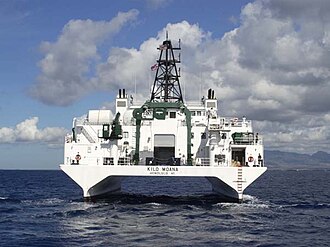
RV Kilo Moana (AGOR-26): A Revolutionary SWATH Research Vessel Redefining Ocean Science
The world’s oceans are vast, dynamic, and often unforgiving, yet they hold the keys to understanding climate systems, marine ecosystems, geological processes, and even the origins of life. Exploring them requires more than just curiosity—it demands vessels engineered to withstand the harshest conditions while providing stable platforms for precise scientific work. Among such ships, RV Kilo Moana stands out as one of the most innovative oceanographic platforms ever constructed.
Operated by the University of Hawaiʻi and owned by the U.S. Navy, RV Kilo Moana is not just another research vessel—it is a technological experiment realized at full scale. Its unique Small Waterplane Area Twin Hull (SWATH) design sets it apart from conventional monohull ships, offering unprecedented stability and performance in rough seas. This makes it particularly suited for high-precision oceanographic work in the challenging conditions of the Pacific.
In this extensive blog-style article, we will explore the vessel’s origins, revolutionary design, propulsion systems, scientific capabilities, operational philosophy, and long-term significance, before concluding with a detailed table of technical specifications.
Origins and Strategic Vision
The Need for a New Kind of Research Vessel
By the late 20th century, oceanographic research had evolved into a highly technical and multidisciplinary field. Scientists required increasingly precise measurements of ocean currents, atmospheric interactions, and seafloor features. However, traditional research vessels faced a persistent limitation: motion.
Wave-induced pitch and roll could disrupt sensitive instruments, compromise data quality, and limit operational windows. This challenge led naval architects to explore alternative hull designs capable of minimizing motion at sea.
Birth of the SWATH Concept
The SWATH (Small Waterplane Area Twin Hull) concept was developed to address exactly this issue. By reducing the surface area of the hull at the waterline and placing buoyant structures below the surface, SWATH vessels dramatically reduce the effects of waves.
RV Kilo Moana represents one of the most advanced implementations of this concept, combining SWATH stability with the functional requirements of a modern research vessel.
Construction and Commissioning
RV Kilo Moana was built by Atlantic Marine, Inc. in Jacksonville, Florida. The vessel was launched in 2001 and delivered to the U.S. Navy in 2002, entering service shortly thereafter.
It is operated by the University of Hawaiʻi as part of the University-National Oceanographic Laboratory System, supporting a wide range of scientific missions across the Pacific Ocean.
Hull Design: The SWATH Advantage
Understanding SWATH Architecture
Unlike conventional ships, which rely on a single large hull, RV Kilo Moana uses two submerged hulls connected to the main platform by narrow struts. This design reduces the ship’s interaction with surface waves.
The result is extraordinary stability, even in rough seas.
Benefits for Scientific Operations
The SWATH design offers several critical advantages:
- Reduced pitch and roll
- Improved station-keeping
- Enhanced comfort for crew and scientists
- Increased operational windows in adverse weather
For oceanographic research, these benefits translate directly into better data quality and safer operations.
Trade-offs and Engineering Challenges
While SWATH vessels offer superior stability, they also present challenges:
- Increased structural complexity
- Higher construction costs
- Greater sensitivity to weight distribution
Despite these challenges, the benefits for scientific work make the design highly attractive.
Dimensions and Structural Characteristics
Overall Size and Layout
RV Kilo Moana measures approximately 186 feet (56.7 meters) in length, with a beam of 88 feet (26.8 meters). Its draft is about 12 feet (3.7 meters), though the submerged hulls extend deeper.
This wide beam contributes to the vessel’s stability and provides ample deck space for scientific operations.
Deck and Laboratory Space
The ship offers extensive deck space for equipment deployment, along with:
- Approximately 2,000 square feet of laboratory space
- Dedicated areas for instrument storage
- Modular lab configurations
This layout allows the vessel to support a wide range of research activities.
Propulsion and Power Systems
Diesel-Electric Configuration
RV Kilo Moana employs a diesel-electric propulsion system, providing flexibility and efficiency. Diesel generators produce electricity that powers propulsion motors and onboard systems.
This configuration reduces vibration and allows precise control of speed and positioning.
Azimuth Thrusters
The vessel is equipped with azimuthing thrusters, which can rotate to provide thrust in any direction. This enables:
- Exceptional maneuverability
- Precise station-keeping
- Dynamic positioning capabilities
Performance Characteristics
RV Kilo Moana has a cruising speed of approximately 10–12 knots and a range of about 5,000 nautical miles. Its endurance allows for extended missions without frequent resupply.
Scientific Capabilities
Laboratory Facilities
The vessel’s laboratories are designed to support multiple disciplines, including:
- Oceanography
- Marine biology
- Chemistry
- Geophysics
The labs are equipped with modern instrumentation and can be reconfigured as needed.
Deck Equipment
RV Kilo Moana features a range of deck equipment, including:
- Winches for deep-sea operations
- Cranes for heavy equipment handling
- A-frame structures for deploying instruments
These systems enable the deployment of sensors, sampling devices, and subsea vehicles.
Subsea Systems Support
The ship can support:
- Remotely operated vehicles (ROVs)
- Autonomous underwater vehicles (AUVs)
- Towed sensor arrays
This makes it a versatile platform for deep-sea exploration.
Navigation and Survey Systems
Advanced Sonar Systems
RV Kilo Moana is equipped with multibeam sonar systems for mapping the seafloor. These systems provide high-resolution data essential for geological and biological studies.
Precision Navigation
The vessel integrates GPS, acoustic positioning, and onboard sensors to achieve precise navigation and station-keeping.
Operational Role
Pacific Ocean Focus
Based in Hawaiʻi, RV Kilo Moana primarily operates in the Pacific Ocean, supporting research in one of the most diverse and dynamic marine environments on Earth.
Multidisciplinary Missions
The vessel supports a wide range of missions, including:
- Climate research
- Marine ecosystem studies
- Seafloor mapping
- Atmospheric-ocean interactions
Crew and Life Onboard
Crew Composition
The ship typically carries:
- Civilian mariners
- Scientists
- Technical staff
Living Conditions
Despite its relatively compact size, RV Kilo Moana provides comfortable accommodations, including:
- Sleeping quarters
- Dining facilities
- Workspaces
Engineering Significance
A Testbed for Innovation
RV Kilo Moana serves as a testbed for advanced marine technologies, particularly SWATH design principles.
Influence on Future Vessels
The success of Kilo Moana has influenced the design of other research vessels and specialized ships.
Challenges and Limitations
Operational Constraints
While highly stable, SWATH vessels can be more complex to operate and maintain.
Cost Considerations
The advanced design and systems result in higher costs compared to traditional vessels.
Legacy and Future Outlook
Continued Relevance
As ocean science becomes increasingly important, vessels like RV Kilo Moana will remain essential.
Future Developments
Advances in automation and sensor technology may further enhance the capabilities of SWATH vessels.
Technical Specifications Table
| Parameter | Specification |
|---|---|
| Ship Name | RV Kilo Moana (AGOR-26) |
| Type | Oceanographic Research Vessel |
| Hull Type | SWATH (Small Waterplane Area Twin Hull) |
| Owner | U.S. Navy |
| Operator | University of Hawaiʻi |
| Builder | Atlantic Marine, Inc. |
| Year Delivered | 2002 |
| Length | 186 ft (56.7 m) |
| Beam | 88 ft (26.8 m) |
| Draft | 12 ft (3.7 m) |
| Displacement | ~2,000 tons |
| Propulsion | Diesel-electric |
| Thrusters | Azimuthing propulsion units |
| Speed | 10–12 knots |
| Range | ~5,000 nautical miles |
| Endurance | Several weeks |
| Crew | ~15–20 crew + scientists |
| Laboratory Space | ~2,000 sq ft |
| Deck Equipment | Winches, cranes, A-frame |
| Subsea Support | ROVs, AUVs |
| Sonar Systems | Multibeam sonar |
| Special Features | SWATH stability, dynamic positioning |
| Status | Active |
Final Thoughts
RV Kilo Moana (AGOR-26) is a remarkable example of how innovative engineering can transform scientific capability. Its SWATH design provides a level of stability that opens new possibilities for ocean research, enabling scientists to work more effectively in challenging conditions.
