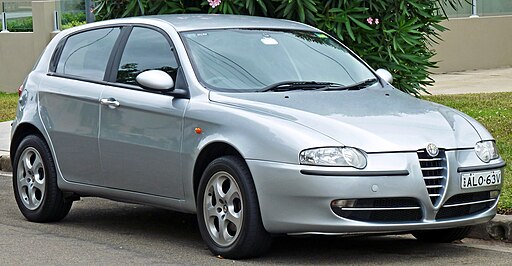
The Alfa Romeo 147 remains a highly regarded choice in the used car market, combining Italian design flair with engaging driving dynamics and a practical hatchback format. Produced between 2000 and 2010, the Alfa Romeo 147 was a key model for the brand in the compact segment, bridging the gap between style-conscious buyers and those seeking a spirited driving experience. This article explores the technical specifications and key considerations of the Alfa Romeo 147 as a used car.
Design and Dimensions
The Alfa Romeo 147 features a distinctive and sporty design, characterized by the brand’s iconic front grille, swept-back headlights, and clean, flowing lines. Its compact dimensions make it well-suited to urban driving while maintaining a presence that stands out in traffic.
The car measures approximately 4,210 mm in length, 1,720 mm in width, and 1,420 mm in height, with a wheelbase of around 2,510 mm. These dimensions contribute to a compact but roomy interior and provide good maneuverability. The five-door hatchback layout enhances practicality, making the Alfa Romeo 147 a convenient option for daily use and small families.
The curb weight typically ranges from 1,100 kg to 1,300 kg depending on engine and trim, which allows the car to retain a nimble feel without compromising stability.
Engine Range and Performance
One of the strengths of the Alfa Romeo 147 is the variety of engine options available, catering to different driving preferences and fuel economy needs.
-
Petrol Engines: The petrol range starts with the 1.6-liter Twin Spark engine producing approximately 120 horsepower, providing a balance of performance and efficiency. The 2.0-liter Twin Spark, delivering around 150 horsepower, is a popular choice for drivers seeking enhanced responsiveness and a sportier feel. For enthusiasts, the 3.2-liter V6 engine available in the GTA version offers a significantly higher output of around 250 horsepower, delivering exhilarating acceleration and a thrilling driving experience.
-
Diesel Engines: The 147 also offers diesel powertrains, including the 1.9-liter JTD turbocharged diesel with power outputs varying between 115 and 140 horsepower. These engines offer excellent fuel economy and torque, making them suitable for longer journeys and economical commuting.
Transmission options typically include a 5-speed manual, with a 6-speed manual available on higher-performance models like the GTA. Additionally, some variants come with a 6-speed Selespeed automated manual gearbox, blending manual control with convenience.
Chassis, Suspension, and Handling
The Alfa Romeo 147 is praised for its sharp and responsive handling, achieved through a carefully engineered chassis setup. The front suspension utilizes MacPherson struts with coil springs, while the rear employs a multi-link setup, which is relatively sophisticated for a compact hatchback. This configuration allows the 147 to maintain composure during spirited driving while providing comfort on uneven surfaces.
Steering is direct and offers excellent feedback, contributing to the car’s reputation as one of the most engaging drivers in its class. The combination of precise steering, balanced weight distribution, and a relatively low curb weight results in a vehicle that feels agile and communicative.
Interior and Equipment
Inside, the Alfa Romeo 147 provides a driver-focused cockpit with a distinctive Italian style. The materials used in the cabin vary by trim but generally include quality plastics, leather options on higher trims, and sporty details such as aluminum pedals and distinctive seat designs.
The 147’s interior offers comfortable seating for four adults, with reasonable rear passenger space and a practical boot capacity of about 305 liters, expandable by folding the rear seats. The dashboard features clear instrumentation and ergonomically placed controls, although some early models have been noted for minor reliability issues with electrical components.
Standard features across the range often include air conditioning, power windows, central locking, and a CD player. Higher trims or later models offer additional amenities such as climate control, leather upholstery, and advanced audio systems.
Reliability and Maintenance Considerations
As a used car, the Alfa Romeo 147 has a reputation for being engaging yet requiring attentive maintenance. The Twin Spark petrol engines are generally robust but require regular timing belt changes every 60,000 to 100,000 kilometers to avoid engine damage. The diesel JTD engines are durable and economical but may need specific care regarding the turbo and fuel injection systems.
Electrical issues, particularly with the Selespeed gearbox and dashboard electronics, have been reported, so prospective buyers should seek a full service history and possibly a pre-purchase inspection by a mechanic familiar with Alfa Romeo vehicles.
Suspension components and bushings can wear over time, impacting the sharp handling for which the car is known. Replacement parts remain widely available due to the car’s popularity, making maintenance manageable but not necessarily inexpensive.
Buying Tips for a Used Alfa Romeo 147
When considering the Alfa Romeo 147 as a used purchase, it’s important to assess the overall condition of the vehicle thoroughly. Look out for common wear points such as suspension noise, timing belt replacement records, and the functionality of electronic systems.
The Alfa Romeo 147 offers excellent value for those seeking a compact car with character, distinctive styling, and rewarding driving dynamics. It appeals particularly to drivers who enjoy engaging behind-the-wheel experiences rather than just basic transportation.
_Selespeed_Twin_Spark_5-door_hatchback_(2010-11-28).jpg)