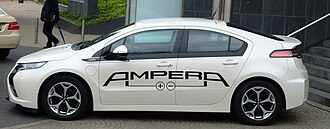
Opel Ampera as a Used Car: Is This Extended-Range Electric Car Worth Buying?
The Opel Ampera is one of the most interesting and technologically unusual vehicles to appear on the European used-car market. Introduced in 2011 and sold primarily between 2012 and 2015, it was developed at a time when electric mobility was still in its early stages and many drivers were concerned about the limited driving range of battery-powered vehicles. Opel addressed this problem with an innovative solution: instead of creating a conventional hybrid or a fully electric vehicle, the manufacturer developed an extended-range electric car that used an electric motor as its primary means of propulsion and a petrol engine to generate additional electricity when the battery charge became insufficient.
This approach made the Ampera considerably different from conventional petrol and diesel cars, but also from popular hybrids such as the Toyota Prius. The Ampera was designed to provide an electric driving experience for everyday journeys while retaining the ability to travel much longer distances without depending entirely on public charging infrastructure. For drivers who could charge the vehicle at home or at work, this offered an attractive combination of quiet operation, electric acceleration and the flexibility of a petrol-powered range extender.
Today, the Opel Ampera is an unusual but potentially very interesting used-car purchase. Its original technology remains impressive, its electric motor provides smooth and immediate acceleration, and its petrol range extender makes longer journeys considerably easier than in many early electric vehicles. Furthermore, the Ampera was relatively well equipped for its time, offering a comfortable interior, modern-looking digital displays and a distinctive exterior design that still looks different from most conventional hatchbacks.
However, buying an Opel Ampera requires more consideration than purchasing an ordinary used family car. The vehicle combines a high-voltage battery, electric drive unit, sophisticated power electronics, charging equipment and a petrol engine with its own cooling, lubrication and maintenance requirements. Although this technology can be durable, diagnosing and repairing certain faults requires specialist knowledge and appropriate diagnostic equipment. Battery condition, charging functionality, hybrid-system operation and the availability of qualified repair workshops are therefore essential considerations.
The Ampera is also frequently confused with the Opel Ampera-e, but these are two fundamentally different vehicles. The original Ampera is an extended-range plug-in electric vehicle with a 1.4-litre petrol range extender, while the later Ampera-e is a fully electric car without a petrol engine. This article focuses specifically on the original Opel Ampera produced during the 2011–2015 period.
In this comprehensive buying guide, we will examine the Opel Ampera’s history, electric drivetrain, battery technology, petrol range extender, reliability, common problems, maintenance costs, practical advantages and disadvantages, and the most important things to check before buying one. We will also include a detailed technical specification table to help prospective owners understand what makes this unusual Opel different from conventional used cars.
History of the Opel Ampera
The Opel Ampera was developed as part of General Motors’ ambitious electric mobility programme. Its technical relative is the Chevrolet Volt, which was introduced in the United States and shared much of its underlying engineering with the European Opel model. Although the two cars are closely related mechanically, Opel gave the Ampera its own exterior styling, European-market positioning and interior presentation.
The vehicle was first presented to the public as a concept car in 2009, attracting considerable attention because of its unusual approach to electric propulsion. Production followed in 2011, and European customers began receiving the first vehicles around 2012. At the time, the Ampera represented an important technological step because it demonstrated that an electric car did not necessarily need to rely exclusively on its battery for long-distance travel.
The main idea behind the project was to make electric driving practical for a much wider group of motorists. Conventional battery-electric vehicles were still limited by relatively short driving ranges, while ordinary hybrids used their combustion engines much more directly as part of the propulsion system. The Ampera attempted to combine the advantages of both concepts by making electric propulsion the central element of the driving experience and using a petrol engine as a range-extending energy source.
The model was not particularly successful in terms of sales volume, partly because its original purchase price was relatively high and electric mobility infrastructure was still developing. Nevertheless, it received considerable recognition from automotive journalists and technology enthusiasts. Its sophisticated drivetrain, generous equipment and innovative concept helped establish the Ampera as one of the more interesting early electric vehicles available in Europe.
Production of the original Ampera ended in 2015. Its technological successor in Opel’s electric vehicle range was the Ampera-e, introduced later as a fully electric model. The original Ampera therefore occupies a distinctive place in automotive history as an early attempt to make electric mobility suitable for drivers who regularly needed to travel longer distances.
What Makes the Opel Ampera Different from a Conventional Hybrid?
The most important thing to understand before purchasing an Opel Ampera is how its drivetrain works. Although it is often described as a plug-in hybrid, its operating principle is different from that of many conventional hybrid vehicles. Opel called the system E-REV, meaning Extended-Range Electric Vehicle.
In an ordinary petrol-electric hybrid, the combustion engine usually provides a substantial part of the propulsion power, with the electric motor assisting during acceleration or low-speed driving. A conventional plug-in hybrid works in a similar way but generally offers a larger battery and a longer electric-only driving range.
The Opel Ampera takes a different approach. Its electric drive unit is responsible for providing the vehicle’s propulsion, while the petrol engine primarily operates as a generator to supply electrical energy when the battery’s usable charge becomes low. Depending on operating conditions, the sophisticated multi-mode transmission can also mechanically couple the engine into the drivetrain to improve efficiency, particularly at higher speeds.
This means that the driver experiences the car primarily as an electric vehicle. Acceleration is smooth, power delivery is immediate and there are no conventional gear changes in the way drivers experience them in an ordinary manual or automatic petrol car.
The petrol engine does not simply take over in the same manner as in a traditional hybrid when the battery becomes depleted. Instead, the vehicle continues using electric propulsion, with the petrol engine providing the energy needed to maintain operation and extend the driving range.
For used-car buyers, this technology offers an important advantage: the Ampera can cover everyday journeys using electricity while retaining the flexibility of a petrol-powered generator for longer trips. However, it also means that the vehicle’s mechanical and electronic systems are more complex than those of a conventional petrol hatchback.
Electric Motor and Battery: The Heart of the Opel Ampera
The electric propulsion system is the defining feature of the Opel Ampera. It uses a permanent-magnet electric motor that delivers approximately 150 PS and 370 Nm of torque. This provides strong initial acceleration and gives the car a much more responsive character than many conventional vehicles with similar dimensions.
One of the main advantages of electric propulsion is that maximum torque is available almost immediately. The driver does not need to wait for a turbocharger to build pressure or for a conventional automatic transmission to select a lower gear. As a result, the Ampera feels particularly smooth and responsive in urban traffic.
The original battery has a nominal capacity of approximately 16 kWh and uses lithium-ion technology. A sophisticated battery management system controls charging, discharging and thermal conditions to protect the cells and maintain safe operation. The battery is installed in a distinctive T-shaped arrangement beneath the central section of the vehicle, which influences the interior layout and explains why the Ampera has only four seats.
The battery is actively thermally managed, meaning that its temperature is controlled rather than relying exclusively on passive cooling. This is important because battery temperature has a significant influence on performance, charging behaviour and long-term durability.
For a used-car buyer, the battery is arguably the most important component to investigate. The nominal capacity alone does not tell the complete story because the available usable energy is lower than the total physical battery capacity. Furthermore, battery ageing depends on operating conditions, temperature exposure, charging habits, mileage and the overall condition of the battery management system.
A properly maintained Ampera can remain useful even after many years, but buyers should never assume that the battery is healthy simply because the vehicle can still be driven.
Electric Driving Range
When new, the Opel Ampera was advertised with an electric driving range of approximately 40–80 kilometres under favourable conditions, depending on driving style, temperature, road conditions and equipment. In real-world use, many owners experienced an electric range somewhere around 40–60 kilometres, although individual results can vary considerably.
Cold weather can reduce the available range because the battery operates less efficiently and the cabin heating system requires additional energy. High motorway speeds, aggressive acceleration, steep gradients and the use of climate control can also reduce the distance available from a full charge.
During warmer months and in urban or suburban driving, the Ampera can be considerably more economical. Drivers who travel relatively short distances and charge regularly may complete much of their everyday driving without using significant quantities of petrol.
This is one of the strongest reasons to consider the vehicle today. Even though its electric range is modest compared with modern battery-electric cars, it can still be sufficient for commuting, shopping and local journeys.
Battery Life and Degradation
Battery degradation is one of the most important concerns when buying any older electric or plug-in hybrid vehicle. The Ampera is now an ageing model, and its original battery packs have been in service for more than a decade in many examples.
The good news is that General Motors designed the battery management system to avoid using the entire nominal battery capacity. This provides a protective buffer intended to reduce excessive charging and discharging stress. The active thermal management system also helps control battery temperatures.
However, this does not mean that every Ampera battery will remain in perfect condition indefinitely. Individual battery packs can age differently, and faults in battery modules, sensors, cooling systems or electronic control units can affect performance.
A buyer should request a professional high-voltage battery assessment rather than relying only on the estimated electric range displayed on the dashboard. The inspection should ideally include available battery capacity, cell voltage balance, fault codes, temperature readings and the operation of the battery cooling system.
It is also important to distinguish between normal capacity degradation and an electronic fault. A reduced electric range does not automatically mean that the battery needs replacing. Weather conditions, tyre pressure, driving style and climate-control usage can all influence the displayed range.
For an older Ampera, a documented battery-health report is one of the most valuable pieces of information a seller can provide.
Charging the Opel Ampera: What Should Used-Car Buyers Know?
The ability to recharge the battery from an external power source is one of the most important features of the Opel Ampera. Unlike a conventional hybrid, which normally recharges its battery through the combustion engine and regenerative braking, the Ampera is designed to be plugged into an electrical outlet. This allows the owner to use inexpensive electricity for everyday journeys and reduce petrol consumption considerably.
The vehicle was supplied with charging equipment that allowed it to be connected to a domestic electrical supply. Charging times depend on the available electrical power, battery temperature and charging conditions, but a full charge from a suitable domestic supply typically takes approximately six hours. This makes overnight charging particularly convenient for owners who have access to private parking.
For someone considering a used Ampera, it is essential to test the complete charging system before purchasing the vehicle. Check the charging socket, locking mechanism, charging cable and onboard charger. The car should recognise the connection correctly, begin charging without error messages and display believable charging information.
Charging at Home
Home charging is probably the most convenient way to use the Ampera. An owner who travels approximately 30–50 kilometres per day can often complete most journeys using electricity alone, provided that the vehicle is charged regularly.
The actual financial savings depend on electricity prices, petrol prices, driving habits and the condition of the battery. Nevertheless, the Ampera can be considerably cheaper to operate than a conventional petrol vehicle when most journeys are completed in electric mode.
It is also worth remembering that the car does not need to be fully discharged before charging. Partial charging is perfectly normal for lithium-ion batteries, and the battery management system is designed to regulate the charging process.
Public Charging
The Ampera can also use compatible public AC charging facilities, although its charging capability is relatively modest compared with modern electric vehicles. It does not offer the high-power DC fast-charging capability found in newer battery-electric cars.
For this reason, public charging is best considered a supplementary option rather than the main charging method. Owners who have access to a home charging point will generally have a much more convenient experience.
Before buying, check the exact charging connector, cable compatibility and operation of the onboard charger. Also make sure that the supplied charging cable is included, as replacing original equipment can add unnecessary expense.
Petrol Range Extender: The 1.4-Litre Engine
Although the electric motor is responsible for the Ampera’s driving character, the petrol engine remains an important part of the vehicle. It is a 1.4-litre naturally aspirated four-cylinder ECOTEC unit with approximately 86 PS, designed primarily to operate as an electricity generator.
The petrol engine works together with an electrical generator and the sophisticated transmission system to provide energy when the battery’s usable charge is low. Depending on operating conditions, the powertrain can also use a mechanical connection between the combustion engine and the drive wheels to improve efficiency.
The important point is that the Ampera does not behave like a conventional hybrid in which the petrol engine simply becomes the main source of propulsion when the battery is empty. Electric propulsion remains central to the driving experience.
The 1.4-litre engine is relatively conventional compared with modern high-performance petrol engines. It has no turbocharger, and its primary role is to provide consistent energy rather than deliver sporty acceleration.
However, buyers should not ignore its maintenance requirements. The engine still needs regular oil changes, coolant checks, spark plugs and other scheduled servicing. Even if it is used less frequently than the engine in a conventional petrol car, ageing seals, hoses, electrical connections and cooling components can still deteriorate.
Petrol Consumption in Real-World Driving
The Ampera’s fuel consumption is highly dependent on how frequently it is charged. This is an important distinction when comparing its official fuel-consumption figures with those of conventional petrol or hybrid vehicles.
When the battery is regularly charged and most journeys fall within the electric driving range, petrol consumption can be very low. Some owners may use very little petrol during ordinary commuting.
However, when the battery’s usable energy has been depleted and the vehicle relies more heavily on the petrol range extender, consumption increases. Driving at motorway speeds, travelling uphill and using strong acceleration can further increase fuel consumption.
The official weighted fuel-consumption figures published when the vehicle was new were extremely low because they assumed a particular combination of electric and petrol driving. These figures should not be treated as a realistic estimate for a vehicle that is rarely charged.
For prospective buyers, it is more useful to evaluate two separate costs:
-
Electricity consumption when driving in electric mode.
-
Petrol consumption when operating with the range extender.
This gives a much more realistic understanding of the vehicle’s running costs.
Reliability: Is the Opel Ampera Reliable as a Used Car?
The Opel Ampera has an interesting reliability profile. On one hand, its electric drive system has fewer conventional mechanical wear components than a traditional combustion-engine drivetrain. There is no ordinary multi-speed manual gearbox, and the electric motor itself is relatively simple compared with a conventional petrol engine.
On the other hand, the vehicle uses sophisticated power electronics, a high-voltage battery, thermal management systems and a complex transmission. These components can be expensive to diagnose and repair, particularly when specialist knowledge is unavailable.
The underlying Chevrolet Volt platform was developed over several years, and the Ampera benefited from General Motors’ experience with the technology. Contemporary used-car reviews generally regarded its running gear as dependable, although early transmission-related issues and certain electrical faults were reported.
RAC Drive+2
For a used-car buyer, the most important consideration is not simply whether the Ampera has a good general reputation, but whether the individual vehicle has been properly maintained and whether its complex electrical systems are functioning correctly.
High-Voltage Battery and Battery Management Problems
The battery is the most expensive and important component to investigate. Although the Ampera was designed with a battery management system intended to protect the lithium-ion cells, the vehicle is now old enough that battery condition should be treated as a priority.
Potential problems include cell imbalance, sensor faults, battery-management errors and deterioration of individual battery modules. These problems may result in reduced electric range, warning messages or limitations in vehicle operation.
A particularly important component is the Battery Energy Control Module, commonly referred to as the BECM in the wider Volt/Ampera technical family. Faults in the battery management electronics can be difficult to diagnose and may require specialist equipment.
A buyer should insist on a diagnostic inspection capable of reading the vehicle’s hybrid and high-voltage systems. A basic generic OBD reader is not sufficient for a complete evaluation.
Battery Cooling System
The Ampera uses active thermal management to maintain appropriate battery temperatures. This system is important for battery longevity and reliable operation.
The cooling circuit includes components such as pumps, hoses, sensors and associated electronic controls. A failure can cause warning messages or problems with battery temperature regulation.
During inspection, check for coolant leaks and confirm that the cooling system operates correctly. A specialist should also inspect relevant fault codes and temperature readings.
Never attempt to open or repair high-voltage battery components without the appropriate training and equipment. These systems can retain dangerous electrical energy even when the vehicle is switched off.
Transmission and Electric Drive Unit
The Ampera’s transmission is a sophisticated multi-mode unit rather than a conventional automatic gearbox. It combines electric drive components and mechanical elements to provide efficient operation under different driving conditions.
Some early vehicles have been associated with transmission solenoid problems. These can affect drivetrain operation and may result in warning messages or unusual behaviour.
During the test drive, acceleration should be smooth and predictable. Pay attention to unusual noises, vibrations, hesitation and warning messages when the petrol engine starts or stops.
Because the transmission is technically complex, any suspicious behaviour should be investigated by a workshop with experience of the Chevrolet Volt or Opel Ampera platform.
Central Display and Electrical Equipment
The Ampera’s interior is dominated by digital displays and touch-sensitive controls. These systems provide information about battery charge, electric range, energy consumption and the operation of the range extender.
The central display and infotainment equipment should be checked carefully. Reports of display failures and other electronic faults exist, and replacement components can be expensive.
Test all screens, buttons, steering-wheel controls, audio equipment, navigation functions and climate-control settings. Also check that the vehicle correctly displays charging information and energy-flow graphics.
Other electrical components worth checking include the electric windows, central locking, parking sensors, reversing camera and lighting systems.
Suspension and Rear Shock Absorbers
Although the Ampera is a technologically advanced vehicle, its suspension is based on relatively conventional automotive engineering. As with any older car, suspension components can wear over time.
Rear shock absorbers have been identified as an area worth checking on used examples. Worn dampers can reduce stability, increase body movement and create uncomfortable driving characteristics.
Also inspect suspension bushings, ball joints, wheel bearings and steering components. The Ampera is relatively heavy because of its battery system, so suspension and tyre condition deserve particular attention.
12-Volt Battery Problems
An often-overlooked aspect of the Ampera is its conventional 12-volt auxiliary battery. Although the vehicle uses a high-voltage battery for propulsion, the low-voltage system is essential for operating electronic control units, locking systems and vehicle start-up procedures.
A weak or failing 12-volt battery can cause unexpected warning messages, starting problems and electronic malfunctions.
If the vehicle displays several seemingly unrelated electrical errors, the condition of the auxiliary battery should be checked before assuming that expensive high-voltage components have failed.
Maintenance Costs and Spare Parts Availability
The maintenance requirements of the Opel Ampera are different from those of a conventional petrol or diesel car. Because electric propulsion is used for a substantial part of the driving, certain mechanical components experience less wear.
For example, regenerative braking helps reduce the need for conventional friction braking, although the brake discs and pads still require regular inspection. The electric drive unit also does not require the same type of routine servicing as a conventional combustion engine.
However, the Ampera is not maintenance-free. Its petrol engine requires scheduled servicing, the cooling systems must remain in good condition, and the high-voltage battery and associated electronics need professional inspection.
One of the biggest challenges is the availability of specialists. Not every independent garage has the equipment or training needed to diagnose and repair the Ampera’s high-voltage system. Before purchasing one, it is sensible to identify a workshop that has experience with this model or its Chevrolet Volt relative.
Parts availability is also worth investigating. Some mechanical components are shared with other General Motors vehicles, while certain hybrid-system parts are specific to the Ampera and Volt platform. Original electronic modules, battery components and body-specific parts may be more difficult or expensive to obtain.
What Does Regular Maintenance Include?
A sensible maintenance programme should include:
-
Regular servicing of the 1.4-litre petrol engine.
-
Inspection of engine oil, coolant and other fluid levels.
-
Checking the high-voltage battery and its cooling system.
-
Inspection of the charging socket and charging cable.
-
Testing the 12-volt auxiliary battery.
-
Checking the brakes, suspension and tyres.
-
Inspecting the transmission and drivetrain.
-
Checking electronic systems for stored fault codes.
-
Confirming that all applicable manufacturer recalls have been completed.
Buyers should request invoices and maintenance records rather than relying only on the presence of service stamps. Documentation showing that specialist inspections have been carried out is particularly valuable.
Driving Experience: How Does the Opel Ampera Drive?
The Opel Ampera offers a very different driving experience from most conventional used cars. Its electric motor provides smooth and immediate acceleration, while the absence of conventional gear changes makes driving in urban traffic particularly comfortable.
When starting from a standstill, the car moves away quietly and responds immediately to accelerator inputs. The 370 Nm of electric-motor torque provides strong initial acceleration, making the Ampera feel more powerful than its relatively modest petrol engine might suggest.
The powertrain is also remarkably refined. In electric mode, the cabin is quiet, and the vehicle produces very little mechanical noise. When the petrol engine starts, it becomes audible, but it generally operates without the constant connection between engine speed and road speed that drivers associate with a conventional petrol car.
The suspension provides a comfortable ride, although the Ampera’s substantial weight is noticeable when changing direction quickly. It is not designed to be a sporty hatchback, and its handling characteristics prioritise stability and comfort rather than aggressive cornering.
On motorways, the car feels relatively composed and comfortable. The range extender removes much of the range anxiety associated with early electric vehicles, making longer journeys more practical.
However, the Ampera’s maximum speed is approximately 161 km/h, and its acceleration is not particularly impressive by modern electric-car standards. It is better understood as a comfortable and efficient everyday vehicle than as a performance car.
For drivers who appreciate smooth electric propulsion and quiet urban operation, the Ampera can still provide a surprisingly modern driving experience.
Interior, Comfort and Practicality
The Opel Ampera has a distinctive interior that reflects its technological ambitions. Rather than using a traditional instrument cluster, Opel equipped the vehicle with digital displays that provide information about energy consumption, battery charge, driving range and powertrain operation.
The centre console features touch-sensitive controls, which were considered modern when the vehicle was introduced. However, the interface can take some time to get used to, and the design does not necessarily feel as intuitive as the physical controls found in more conventional cars.
The front seats provide good comfort for everyday driving, and the cabin feels relatively spacious for a vehicle of this type. Equipment levels were generally generous, with features such as automatic climate control, heated seats, navigation, parking assistance and a reversing camera available depending on specification.
One unusual characteristic is the four-seat layout. The battery’s T-shaped arrangement occupies the central rear section of the cabin, meaning that the Ampera has two individual rear seats rather than a conventional three-person bench.
This is an important limitation for families who regularly need to transport five people.
Boot Space
The Opel Ampera offers approximately 310 litres of luggage capacity in its standard configuration. This is a reasonable figure for an electrically assisted vehicle of its generation, although it is not particularly generous for a car of its external dimensions.
The rear seats can be folded to increase loading capacity, providing considerably more room for larger objects. Depending on the measurement method, the maximum available space is approximately 1,005 litres.
The wide rear tailgate makes loading relatively convenient, while the hatchback body provides more flexibility than a conventional saloon.
For couples, small households and commuters, the available space should be sufficient. Families who regularly transport bulky luggage or several passengers may find the four-seat configuration restrictive.
Fuel Consumption and Running Costs
The Opel Ampera can be very economical, but its real-world running costs depend heavily on charging habits. This is particularly important because its official fuel-consumption figures were calculated using a combination of electric and petrol driving.
When the battery is fully charged, the vehicle can travel a substantial distance without using petrol. For drivers who cover relatively short daily journeys, this can significantly reduce fuel expenses.
However, if the battery is rarely charged, the petrol range extender will operate more frequently and the vehicle will lose much of its financial advantage over a conventional petrol car.
Electricity consumption depends on temperature, driving speed, tyre pressure and climate-control usage. In cold weather, cabin heating can have a noticeable effect on the available electric range.
Petrol consumption also depends on driving conditions. Continuous high-speed motorway driving generally requires more energy than slower urban or suburban journeys.
Is the Opel Ampera Cheaper to Run Than a Petrol Car?
It can be, particularly when the owner has access to affordable home electricity. The ability to complete ordinary commuting using electricity can make the Ampera substantially cheaper to operate than a conventional petrol vehicle.
However, the purchase price, insurance, servicing and possible specialist repairs must also be considered. A used Ampera with a faulty battery cooling system or malfunctioning charging equipment could quickly eliminate any savings achieved through lower energy costs.
The most sensible approach is to calculate the expected annual mileage, the percentage of journeys that can be completed electrically and the local prices of electricity and petrol.
For someone who can charge every evening and travels relatively short distances, the Ampera can be an excellent economical choice. For someone who regularly drives long motorway journeys and rarely charges the battery, a conventional petrol or diesel vehicle may be more appropriate.
Opel Ampera Compared with the Chevrolet Volt
The Opel Ampera and Chevrolet Volt are closely related vehicles developed using the same underlying General Motors extended-range electric technology. They share their basic drivetrain concept, battery architecture and much of their mechanical engineering.
The main differences are found in exterior styling, interior presentation, equipment and market-specific specifications. The Opel Ampera was designed for European buyers, while the Chevrolet Volt was primarily developed for the North American market.
Because of their technical relationship, knowledge and some replacement components can overlap between the two vehicles. This can be useful when searching for specialist workshops and technical information.
However, buyers should not assume that every component is interchangeable. Differences in equipment, electronics, connectors, software and market specifications mean that part compatibility should always be confirmed using the vehicle identification number.
The Chevrolet Volt can also be an interesting alternative for buyers who are comfortable importing a vehicle, although registration, lighting, charging compatibility and parts availability should be investigated carefully.
Opel Ampera vs. Toyota Prius Plug-in Hybrid
The Toyota Prius Plug-in Hybrid is one of the most natural alternatives to the Opel Ampera. Both vehicles were developed to reduce fuel consumption and make electric driving more accessible, but their engineering approaches are different.
The Prius Plug-in Hybrid uses a conventional hybrid architecture with a petrol engine and electric motors working together. Its combustion engine plays a more direct role in propulsion than the Ampera’s range extender.
The Ampera, on the other hand, is designed around electric propulsion and provides a driving experience that feels closer to an electric vehicle. Its electric motor delivers immediate torque, and the petrol engine primarily supplies additional electrical energy.
The Toyota may be more practical for some buyers because of its seating configuration and established hybrid reputation. The Ampera is more interesting for those who want a predominantly electric driving experience but still need the flexibility of petrol-powered range extension.
The condition and service history of individual examples should be more important than choosing one model based purely on its general reputation.
Opel Ampera vs. Nissan Leaf
The Nissan Leaf is another interesting alternative. Unlike the Ampera, the Leaf is a fully electric vehicle and does not have a petrol engine or range extender.
This makes the Leaf’s mechanical layout simpler in certain respects, but its usable range depends entirely on battery capacity and access to charging infrastructure.
The Ampera offers greater flexibility for long journeys because it can use petrol when necessary. The Leaf may be a better choice for drivers who can charge regularly and rarely travel beyond the available electric range.
Battery condition is important for both vehicles, although their battery-management and thermal-management systems differ. Prospective buyers should therefore compare individual battery-health reports rather than relying exclusively on the advertised driving range.
What to Check Before Buying a Used Opel Ampera
Buying a used Opel Ampera requires a more specialised inspection than buying an ordinary petrol hatchback. The vehicle contains several interconnected systems, and problems in one area can sometimes create warning messages or unusual behaviour elsewhere.
The first step is to examine the service history and ownership documentation. Confirm the vehicle identification number, mileage, maintenance records and any available battery-related documentation.
The second step is to test the charging system. Ideally, the seller should allow the vehicle to be connected to a compatible charging point so that the complete process can be observed.
The third step is to arrange a professional high-voltage system inspection. This should include the battery, power electronics, cooling systems and hybrid control modules.
The petrol engine should also be inspected. Check cold starting, oil condition, coolant level, unusual noises and evidence of leaks. Even though the engine does not always operate, it remains an important part of the vehicle.
Finally, test the vehicle on the road. Acceleration should be smooth, the range extender should start and operate normally when required, and no warning messages should appear.
Used Opel Ampera Pre-Purchase Checklist
| Component | What to inspect |
|---|---|
| High-voltage battery | Battery health, capacity and cell balance |
| Battery management | Diagnostic faults and control-module operation |
| Battery cooling | Pumps, hoses, coolant and temperature regulation |
| Electric motor | Smooth operation and unusual noises |
| Power electronics | Warning messages and diagnostic faults |
| Charging socket | Physical condition and correct operation |
| Onboard charger | Successful charging without interruptions |
| Charging cable | Correct equipment and undamaged connectors |
| Petrol engine | Cold starting, oil leaks and abnormal noises |
| Generator system | Correct operation of the range extender |
| Transmission | Smooth operation and absence of abnormal noises |
| 12-volt battery | Voltage, age and general condition |
| Suspension | Rear shock absorbers, bushings and joints |
| Brakes | Disc corrosion, pad wear and caliper operation |
| Displays | Functionality of both screens and controls |
| Air conditioning | Heating, cooling and climate-control operation |
| Bodywork | Accident repairs, corrosion and paint condition |
| Interior | Seat condition, equipment and electrical functions |
| Documentation | Service history, recalls and previous repairs |
Importance of a Specialist Inspection
A standard pre-purchase inspection is useful, but it is not sufficient on its own for an Ampera. The vehicle’s high-voltage systems require specialist diagnostic equipment, and many faults cannot be identified through a simple visual examination.
Ideally, the inspection should be performed by a workshop experienced with the Ampera or Chevrolet Volt. The specialist should be able to access the relevant hybrid control modules, evaluate battery data and identify stored or historical fault codes.
This is especially important when purchasing an inexpensive example. A low asking price may reflect hidden battery or electronic problems rather than simply the age or mileage of the vehicle.
A professional inspection can therefore save considerable money and help buyers avoid purchasing a car that requires major repairs shortly after the sale.
Is the Opel Ampera Suitable for Everyday Driving?
The Opel Ampera can be an excellent everyday vehicle for the right type of owner. Its compact hatchback body, comfortable front seats and smooth electric propulsion make it particularly suitable for commuting and urban journeys.
The ability to recharge at home is one of its greatest advantages. Owners who travel predictable daily distances can use electricity for much of their normal driving while retaining the petrol range extender for unexpected longer journeys.
The vehicle is also relatively comfortable on motorways, and its quiet operation makes longer journeys less tiring than in some smaller conventional cars.
However, there are several disadvantages. The four-seat layout makes it less suitable for larger families, the boot is not particularly large and the infotainment system is now technologically dated.
The availability of specialist repairs is another important consideration. Drivers who live far from a workshop familiar with the Ampera may find ownership more complicated if a high-voltage or electronic fault develops.
The vehicle is therefore best suited to someone who understands plug-in technology, has access to home charging and is willing to maintain an older, technologically sophisticated car.
Is the Opel Ampera a Good First Car?
The Ampera can be attractive to new drivers because of its smooth acceleration, automatic-style driving experience and relatively quiet operation. However, it is not necessarily the most sensible first car for everyone.
Its relatively high weight and sophisticated technology make it more complicated than a basic small petrol hatchback. Insurance costs may also be higher than expected, depending on the driver’s age and location.
Furthermore, a first-time owner may not have the experience or financial reserves required to deal with specialist hybrid-system repairs.
For someone who understands electric mobility, has access to home charging and can afford specialist servicing, the Ampera can be an enjoyable first car. However, buyers looking for the simplest and cheapest possible ownership experience may be better served by a conventional small petrol vehicle.
Advantages and Disadvantages of Buying a Used Opel Ampera
Before deciding whether the Ampera is the right vehicle, it is useful to summarise its main strengths and weaknesses.
Main Advantages
-
Electric driving experience: Smooth acceleration, immediate torque and quiet operation make the vehicle particularly comfortable in urban environments.
-
Petrol range extender: The 1.4-litre engine provides additional driving range without requiring the vehicle to depend entirely on public charging infrastructure.
-
Potentially low running costs: Regular home charging can significantly reduce petrol consumption.
-
Advanced technology: The Ampera introduced sophisticated electric propulsion and battery management to the European market relatively early.
-
Comfortable interior: The cabin offers good front-seat comfort and generous equipment for its age.
-
Good motorway usability: Unlike many early electric vehicles, the Ampera can undertake longer journeys without relying exclusively on battery range.
-
Distinctive design: Its exterior styling and digital interior still make it stand out from conventional hatchbacks.
Main Disadvantages
-
Complex drivetrain: The combination of electric and petrol systems requires specialist maintenance and diagnosis.
-
Potential battery repair costs: High-voltage battery or control-system problems can be expensive.
-
Limited electric range: Its original battery technology cannot compete with modern long-range electric vehicles.
-
Only four seats: The battery layout prevents the use of a conventional five-seat configuration.
-
Limited charging speed: Charging is relatively slow compared with modern electric vehicles.
-
Restricted specialist network: Not every garage is qualified to work on the high-voltage systems.
-
Ageing electronic equipment: Displays, charging components and other electronic systems may require attention.
-
Smallish luggage compartment: The 310-litre boot is adequate but not particularly generous for a vehicle of this size.
Is the Opel Ampera a Good Investment as a Used Car?
The Opel Ampera is not generally purchased as a collector car or an investment vehicle. Its main attraction is its unusual technology and its ability to provide relatively affordable electric driving.
Nevertheless, it has an interesting position in automotive history. It represents an important transitional period between conventional hybrid vehicles and modern battery-electric cars, and its extended-range concept was particularly innovative when introduced.
Well-maintained examples with healthy batteries, complete service histories and functioning charging equipment are likely to remain more desirable than neglected vehicles with uncertain technical condition.
However, buyers should not expect automatic appreciation in value. Battery ageing, specialist repair costs and changing electric-vehicle technology may influence future demand.
The best reason to buy an Ampera is therefore its practical usefulness and distinctive driving experience rather than the expectation of making money from ownership.
Which Opel Ampera Should You Buy?
Because the original Ampera was produced over a relatively short period and its mechanical specification remained broadly consistent, choosing the best example is less about selecting a particular engine version and more about evaluating the vehicle’s condition.
Later production examples can be attractive because some early production issues were addressed during the model’s life. However, a properly maintained early vehicle can still be a better purchase than a neglected later example.
When comparing two cars, prioritise battery health, charging functionality, maintenance documentation and the condition of the hybrid system. Mileage is important, but it should not be the only factor.
A vehicle that has covered more kilometres with regular servicing and healthy battery diagnostics may be preferable to a low-mileage example that has been stored for long periods without proper maintenance.
It is also worth checking whether the vehicle has received all applicable manufacturer updates and recall work. The exact requirements should be verified using the VIN through an authorised service centre.
My recommendation is to purchase an Ampera only after a specialist inspection and battery assessment. The technology can be very durable, but the cost of an undiagnosed problem can be significant.
Technical Specifications of the Opel Ampera
The following tables summarise the principal technical characteristics of the original Opel Ampera. Figures are based on European-market specifications and may vary slightly according to model year, equipment and measurement method.
Opel Ampera – Engine and Electric Drive Specifications
| Specification | Technical data |
|---|---|
| Model | Opel Ampera E-REV |
| Production period | 2011–2015 |
| Vehicle type | Extended-range electric vehicle |
| Electric motor | Permanent-magnet synchronous motor |
| Maximum electric motor power | 111 kW (150 PS) |
| Maximum electric motor torque | 370 Nm |
| Battery technology | Lithium-ion |
| Nominal battery capacity | 16 kWh |
| Battery arrangement | T-shaped |
| Number of battery cells | 288 |
| Battery cooling | Active liquid thermal management |
| Petrol engine | 1.4 ECOTEC |
| Petrol engine displacement | 1,398 cc |
| Engine configuration | 4-cylinder inline |
| Petrol engine power | 63 kW (86 PS) |
| Petrol engine torque | Approximately 130 Nm |
| Petrol engine aspiration | Naturally aspirated |
| Transmission | Multi-mode automatic transaxle |
| Drivetrain | Front-wheel drive |
| Fuel type | Electricity and petrol |
Opel Ampera – Performance and Efficiency
| Specification | Technical data |
|---|---|
| Maximum system/electric drive power | 150 PS |
| Maximum electric motor torque | 370 Nm |
| 0–100 km/h acceleration | Approximately 9.0 seconds |
| Maximum speed | 161 km/h |
| Official electric driving range | Approximately 40–80 km |
| Typical real-world electric range | Approximately 40–60 km |
| Combined extended driving range | More than 500 km, depending on conditions |
| Nominal battery capacity | 16 kWh |
| Official weighted fuel consumption | Approximately 1.2–1.6 l/100 km, depending on homologation |
| Official electricity consumption | Approximately 13.5–16 kWh/100 km, depending on test cycle |
| Fuel tank capacity | 35 litres |
| Charging time | Approximately 6 hours on a suitable domestic supply |
Opel Ampera – Dimensions and Practicality
| Specification | Technical data |
|---|---|
| Body style | 5-door hatchback |
| Length | 4,498 mm |
| Width without mirrors | 1,787 mm |
| Width with mirrors | 2,126 mm |
| Height | 1,439 mm |
| Wheelbase | 2,685 mm |
| Kerb weight | Approximately 1,732–1,735 kg |
| Seating capacity | 4 |
| Boot capacity | Approximately 310 litres |
| Boot capacity with rear seats folded | Up to approximately 1,005 litres |
| Fuel tank | 35 litres |
| Front suspension | Independent |
| Rear suspension | Independent |
| Brakes | Disc brakes front and rear |
| Drivetrain layout | Front-engine, front-wheel drive |
Technical note: The original Ampera’s battery has a nominal capacity of approximately 16 kWh, not the full amount of energy available for everyday driving. Electric range, fuel consumption and charging time vary with temperature, driving style, equipment and electricity supply. Official weighted fuel-consumption figures should not be compared directly with real-world petrol-only consumption.
Final Verdict: Should You Buy a Used Opel Ampera?
The Opel Ampera is an unusual used car that offers something genuinely different from conventional petrol, diesel and hybrid vehicles. Its extended-range electric technology was ahead of its time, and even today it provides an appealing combination of quiet electric driving, strong initial acceleration and the flexibility of a petrol-powered range extender.
For drivers who can charge regularly at home, the Ampera can be particularly economical. Everyday commuting and local journeys can often be completed using electricity alone, while the petrol engine removes much of the range anxiety associated with early electric vehicles.
Its biggest advantage is also its main potential weakness: the sophisticated drivetrain. The combination of a high-voltage battery, electric motor, power electronics, generator and petrol engine makes the car technically complex. Although many examples have proved durable, repairs can be expensive when specialised components fail.
The four-seat layout, relatively small boot and limited charging speed are additional compromises that buyers should consider. The vehicle is also now old enough that the condition of its battery and electronic systems is more important than its original factory specifications.
My recommendation is to consider the Opel Ampera if you have access to home charging, mainly drive predictable daily distances and can find a specialist workshop capable of maintaining the vehicle. A healthy battery, fully functioning charging system and documented maintenance history should be essential purchasing requirements.
I would avoid buying the cheapest available example without a professional inspection. A low purchase price can quickly become meaningless if the car requires expensive battery, power-electronics or transmission repairs.
Ultimately, the Opel Ampera can be a very interesting and economical used vehicle for the right owner. It is not the simplest car to maintain, nor is it the most practical family hatchback, but its electric driving characteristics and extended range make it a distinctive alternative to conventional used cars. A carefully selected example can still provide a comfortable, efficient and surprisingly modern driving experience.
