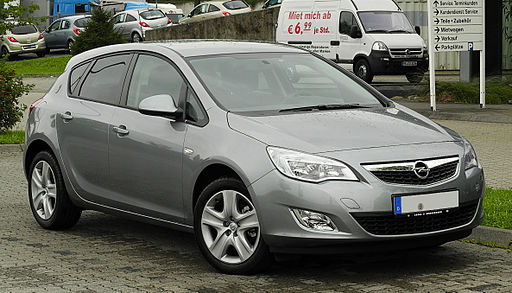
Opel Astra as a Used Car: Which Generation Is Worth Buying, What to Watch Out For and Which Engine to Choose?
The Opel Astra has been one of the most recognisable compact cars on European roads for decades. It has built its reputation on practical dimensions, a comfortable ride, a wide choice of engines and relatively affordable purchase and maintenance costs. Unlike some rivals that focus primarily on sporty driving or premium interior quality, the Astra has traditionally aimed to be a sensible all-rounder: a car suitable for commuting, family use, longer journeys and everyday errands. This broad appeal is one of the reasons why it remains a popular choice on the used-car market.
However, buying a used Opel Astra is not as simple as choosing the newest car within your budget. The model has evolved through several generations, and the differences between them can be considerable. Some versions are relatively straightforward to maintain, while others feature more complex turbocharged engines, diesel emissions systems, electronic equipment and transmissions that require careful inspection. Even within the same generation, the choice of engine can have a major impact on reliability and running costs. A well-maintained Astra can be an excellent used car, but a neglected example with an unsuitable engine or a history of short journeys can quickly become expensive.
This guide looks at the Opel Astra from the perspective of a second-hand buyer. It explains the differences between the generations, discusses petrol and diesel engines, highlights common faults, examines running costs and provides a practical checklist for inspecting a car before purchase. The aim is not simply to identify the best-looking or newest Astra, but to help you find a version that makes sense for your driving habits and budget.
A brief history of the Opel Astra
The Opel Astra replaced the Kadett in 1991 and became the manufacturer’s main competitor in the European compact-car class. Since then, it has been offered in several body styles, including hatchback, saloon, estate and, in selected generations, convertible or coupé-like versions. Its competitors have included the Volkswagen Golf, Ford Focus, Renault Mégane, Peugeot 308, Škoda Octavia and Toyota Corolla.
The Astra has generally followed the development of the wider European car market. Earlier generations were relatively simple, with naturally aspirated petrol engines, conventional diesel units and limited electronic equipment. Later models introduced turbocharged direct-injection petrol engines, diesel particulate filters, more advanced safety systems, touchscreen infotainment and increasingly sophisticated driver assistance technology. These improvements made the Astra more comfortable and economical, but they also increased the importance of proper maintenance and a verifiable service history.
Opel Astra F – the first generation
Production: 1991–1998
The first Astra was designed as a modern replacement for the Kadett and was available in several body styles. Today, it is mainly of interest to enthusiasts and buyers looking for an inexpensive classic rather than as a dependable everyday family car. Its mechanical construction is comparatively simple, and many versions can be repaired without the specialist equipment required by newer vehicles. However, age is now the biggest problem. Rust, worn suspension components, tired interiors, electrical faults and a shortage of genuinely good examples are more important considerations than the original engine specifications.
An Astra F can still be an interesting purchase if it has been carefully preserved, but it is rarely the most rational choice for someone who needs trouble-free daily transport. A thorough inspection of the bodywork, underbody and structural areas is essential, because corrosion repairs can easily cost more than the car itself.
Opel Astra G – a more modern and durable compact car
Production: 1998–2004, with later production in selected markets
The second-generation Astra brought a more rounded design, improved safety and a more contemporary interior. It became a common sight across Europe and remains familiar to independent garages. Its engine range included naturally aspirated petrol units and several diesel options, including the widely used 1.7-litre and 2.0-litre diesel families.
The Astra G is now an old car, so condition matters much more than the badge on the boot. Corrosion, especially around the wheel arches, sills, underbody and suspension mounting areas, deserves close attention. Age-related deterioration of rubber components, cooling systems, electrical connections and interior fittings is also normal. A good example can be inexpensive to maintain, but buyers should not confuse mechanical simplicity with freedom from age-related repairs.
Opel Astra H – a popular choice on the used market
Production: 2004–2010, with some versions continuing beyond this period
The Astra H is one of the most recognisable generations and is still frequently found in the lower-priced used-car market. It was sold as a five-door hatchback, three-door GTC, estate and saloon in selected markets, with a broad selection of petrol and diesel engines. It offers a useful balance between traditional mechanical design and modern comfort, making it attractive to buyers who want an affordable car without the complexity of the newest models.
Its strengths include good road manners, a comfortable driving position, a wide choice of replacement parts and a large number of independent workshops familiar with the model. On the other hand, buyers should look carefully at electrical systems, the clutch and gearbox, the condition of the suspension and the history of diesel particulate filter and EGR-related repairs on relevant engines. The 1.6-litre petrol engine is often considered a sensible everyday choice, although the exact engine code and maintenance record still matter.
Opel Astra J – more comfort and technology
Production: 2009–2015
The Astra J was a substantial step forward in terms of design, cabin quality, equipment and perceived solidity. It has a more substantial appearance than the previous generation and offers a comfortable ride, particularly on longer journeys. The model was available as a hatchback, estate and saloon, with the sporty GTC and convertible versions adding further variety.
The main disadvantage is weight. The Astra J is relatively heavy for its class, and that can affect fuel consumption and performance, especially with the smaller engines. The 1.4 Turbo petrol engine provides a useful compromise between performance and everyday usability, while the 1.6 naturally aspirated petrol engine is mechanically less complicated but can feel underpowered. Diesel versions can be economical on long journeys, although the condition of the DPF, EGR system, turbocharger and dual-mass flywheel should be checked carefully.
Opel Astra K – lighter, more efficient and more modern
Production: 2015–2021
The Astra K represented a significant change in engineering philosophy. It was lighter than its predecessor, more efficient and equipped with more modern infotainment and driver-assistance features. The reduced weight improved the car’s agility and helped lower fuel consumption. The interior is also more contemporary, while the estate version offers useful family practicality.
The Astra K can be an attractive used purchase, but engine choice is particularly important. It introduced newer small-displacement turbocharged petrol engines and more modern diesel units. These can offer excellent efficiency, but they rely on correct oil specifications, regular servicing and a suitable driving pattern. Some versions also have more complex emissions equipment and electronic systems than older Astras. A complete service history and a diagnostic inspection are therefore especially valuable.
Opel Astra L – the newest generation
Introduced in 2021
The Astra L introduced a completely different design language and a more digital cabin. It was developed during Opel’s integration into the Stellantis group and shares its underlying platform and many components with related Peugeot and other Stellantis models. Depending on the market and model year, it has been offered with petrol, diesel, mild-hybrid and plug-in hybrid powertrains.
As a used car, the Astra L is still relatively new compared with earlier generations, so purchase prices and repair costs can be higher. It offers modern safety technology, contemporary infotainment and a more refined driving experience, but buyers should pay attention to software updates, the operation of electronic equipment and the service history of electrified versions. Plug-in hybrid models also require checks of the high-voltage system and charging equipment by a suitably qualified workshop.
Which Opel Astra generation is the best used-car choice?
There is no single answer for every buyer, because the ideal Astra depends on the available budget, annual mileage and expected use. Someone looking for a low-cost second car may prefer an Astra H with a simple petrol engine, while a family planning to cover long motorway distances may benefit from an Astra K diesel estate. A buyer who wants modern safety features and a more contemporary interior may find the Astra K or L more suitable.
For many used-car buyers, the Astra H and Astra J offer a reasonable compromise between purchase price, parts availability and everyday practicality. The Astra H is generally cheaper and mechanically more familiar to independent garages, but age is increasingly important. The Astra J feels more modern and comfortable, although its weight and equipment can make some repairs more expensive. The Astra K is often the most appealing option for buyers who can afford a newer vehicle and want better efficiency, but it should be assessed with particular care because of its newer engine and emissions technologies.
The Astra L is a different proposition. It is better suited to buyers with a larger budget who want a relatively recent car rather than the cheapest possible compact family vehicle. For this generation, warranty status, software history and the condition of hybrid components may be as important as the traditional mechanical inspection.
Petrol engines: which ones make the most sense?
Petrol Astras are often the most sensible choice for drivers who mainly travel short distances, commute in urban areas or cover moderate annual mileage. They do not have the same diesel particulate filter and long-distance operating requirements as many diesel versions, although modern direct-injection turbocharged petrol engines still have their own maintenance needs. The important distinction is between older naturally aspirated engines and newer turbocharged units.
1.4 and 1.6 naturally aspirated petrol engines
In older Astra generations, the naturally aspirated 1.4- and 1.6-litre petrol engines are attractive because of their relatively straightforward construction. They are not particularly powerful by modern standards, especially in heavier versions of the Astra, but they can be adequate for everyday driving. The 1.6-litre engine is usually the more comfortable choice if the car regularly carries passengers or luggage, while the 1.4-litre version may be sufficient for predominantly urban use.
Their main advantage is that they avoid some of the additional components associated with turbocharging. However, they still need regular oil changes, a healthy cooling system and timely replacement of the timing belt or chain components according to the specific engine design. Buyers should check for oil leaks, coolant loss, rough idling, ignition problems and evidence of neglected servicing. A naturally aspirated engine is not automatically reliable simply because it is less complicated.
1.4 Turbo petrol
The 1.4 Turbo became a popular choice in later Astra H, J and K models, depending on the exact engine family and market. It offers more useful torque than a naturally aspirated engine of similar capacity, making the car feel more responsive in everyday driving. It is particularly suitable for drivers who want a petrol car that can handle motorway journeys without constantly needing high engine speeds.
The additional performance comes with extra complexity. The turbocharger, boost-control system, intake plumbing and cooling arrangements all need to be in good condition. Depending on the exact version, buyers should also check for oil leaks, coolant leaks, ignition misfires and signs of poor-quality previous repairs. Correct oil specification and sensible service intervals are important. A car that has been driven hard from cold or serviced only when the dashboard demands it is less attractive than one with documented regular maintenance.
1.0 and 1.2 turbo petrol engines
The smaller turbocharged petrol engines found in newer Astras are designed to reduce fuel consumption while providing enough torque for normal driving. They can work well in a relatively light Astra K or in the newer Astra L, but the precise engine family and year of manufacture matter. Buyers should not assume that all engines with the same displacement share identical technical characteristics or known faults.
Some newer small petrol engines use timing-belt arrangements that require particular attention to the correct oil specification and maintenance schedule. The belt condition and any evidence of contamination should be checked according to the engine’s official servicing requirements. On other versions, different timing arrangements apply. This is why identifying the engine code and checking the manufacturer’s maintenance information is more useful than relying on general statements about a 1.2- or 1.0-litre engine.
1.6 Turbo petrol
The 1.6 Turbo provides stronger performance and is more suitable for drivers who want an Astra with a genuinely brisk response. It can make the car enjoyable on faster roads, but fuel consumption and maintenance costs are generally higher than with a modest naturally aspirated petrol engine. A pre-purchase inspection should include the turbocharger, cooling system, ignition components, clutch or automatic transmission and evidence of regular oil changes.
For buyers who prioritise low running costs, this engine is not necessarily the best choice. It makes more sense when performance is an important part of the purchase decision and the vehicle has a convincing maintenance history.
Diesel engines: economical, but not for everyone
Diesel Astras can be excellent long-distance cars. They generally offer strong low-speed torque, relaxed motorway cruising and good fuel economy when driven regularly over longer distances. This makes them attractive to people who cover high annual mileage, particularly on motorways and main roads. However, a used diesel can become an expensive choice if it has spent most of its life in stop-start traffic or on short journeys.
Modern diesel engines depend on several emissions-control systems. Depending on the engine and model year, these can include an exhaust gas recirculation valve, diesel particulate filter, oxidation catalyst, selective catalytic reduction system and associated sensors. These components are designed to reduce emissions, but they add potential repair costs as the car ages.
1.7 CDTI diesel
The 1.7 CDTI appeared in several Astra generations and has a long history in Opel’s compact models. It is often associated with good fuel economy and useful torque, making it a popular option among buyers who regularly travel outside towns. However, the exact version and maintenance record are important, as different generations and emissions specifications can have different components and service requirements.
When inspecting a 1.7 CDTI, pay attention to cold starting, smoke, uneven idle, turbocharger operation and the condition of the EGR and DPF systems where fitted. A diagnostic scan can reveal stored faults that are not visible during a short test drive. The clutch and dual-mass flywheel should also be assessed, particularly in higher-mileage examples.
1.9 CDTI diesel
The 1.9 CDTI is found mainly in the Astra H and is known for its strong torque and good motorway performance. It can be a pleasant engine in a compact car, particularly for drivers who frequently travel with passengers or luggage. However, it is not a low-risk purchase if maintenance has been neglected. Depending on the exact version, possible concerns include the EGR system, intake contamination, turbocharger, swirl-flap mechanism, clutch and dual-mass flywheel.
Timing-belt replacement is another important point. The buyer should confirm that the belt and associated components were replaced at the correct interval and that there is documentary evidence. A seller’s verbal assurance is not a substitute for an invoice or service record. If the history is unclear, it is sensible to budget for immediate replacement rather than assume the work has been completed.
1.6 CDTI diesel
The 1.6 CDTI became a common choice in later Astra J and K models. It is generally more modern and efficient than older diesel units and offers a useful balance between performance and fuel economy. However, its emissions systems and engine-management components make the condition of the individual vehicle especially important.
Some versions have been associated with timing-chain noise or wear concerns, so listen carefully during a cold start and investigate any rattling from the engine. Also check the DPF, EGR system, turbocharger, cooling system and clutch where applicable. A diesel that has completed regular long journeys with correct servicing may be a better purchase than a lower-mileage example used almost exclusively for short urban trips.
1.5 diesel engines in newer Astras
Newer Astra models use more modern diesel technology, including engines designed to meet stricter emissions regulations. These can deliver excellent fuel economy, but buyers need to consider the additional systems used to control exhaust emissions. Depending on the version, this may include AdBlue injection and more advanced particulate-filter management.
A modern diesel is best suited to regular longer-distance driving. If the car will mostly be used for short journeys, a petrol version is often the more sensible choice, even if its official fuel consumption is higher.
Common Opel Astra problems and faults
The Astra is not inherently an unreliable car, but its long production history means there is no single list of faults that applies to every generation. A problem found on an Astra H may be irrelevant to an Astra K, while a fault associated with one engine code may not affect another version with the same displacement. The following areas are worth checking because they can influence the cost of ownership.
Timing belt and timing chain
The timing system is one of the most important things to investigate before buying a used Astra. Some engines use a timing belt, while others use a chain, and service requirements differ considerably. A belt that has exceeded its replacement interval can fail and cause serious engine damage. A chain is not automatically maintenance-free either: wear, tensioner problems or inadequate lubrication can lead to noise and expensive repairs.
Ask for the engine code and check the official service schedule for that exact version. If a belt-driven engine has no convincing proof of replacement, treat the job as outstanding and include it in the purchase budget. If a chain-driven engine rattles during a cold start, have it examined before proceeding.
Turbocharger and boost system
Turbocharged petrol and diesel Astras can develop problems with the turbocharger or associated components as they age. Symptoms may include reduced power, excessive smoke, unusual whistling, oil consumption or an engine-management warning. However, not every loss of power means that the turbocharger itself has failed. Split hoses, boost-control faults, sensors and leaks can produce similar symptoms.
A proper diagnosis should identify the underlying cause rather than simply replacing expensive components. Check whether the vehicle accelerates smoothly under load and whether there are signs of oil leakage around the intake and turbocharger connections.
EGR valve and diesel particulate filter
Diesel versions may suffer from EGR and DPF problems, especially when used mainly for short journeys. The EGR valve can become contaminated with deposits, while a DPF may struggle to complete regeneration if the car is repeatedly switched off before the process finishes. Symptoms can include warning lights, reduced power, increased fuel consumption and frequent regeneration attempts.
A DPF fault should never be dismissed simply because the car drives normally during a brief test. A diagnostic scan can show soot loading, differential-pressure readings and stored fault codes, although the interpretation should be left to someone familiar with the specific engine. Avoid cars with emissions equipment that has been illegally removed or software-modified.
Clutch, dual-mass flywheel and gearbox
Manual Astras can develop clutch wear, particularly when used in heavy traffic or when regularly driven with a trailer. On diesel versions and some more powerful petrol models, the dual-mass flywheel can also become noisy or worn. Symptoms may include vibration at idle, rattling when the engine is switched off, judder when pulling away and unusual noises under load.
Automatic transmissions require equally careful checks. The Astra has used different automatic gearbox designs across its generations, so it is important to identify the exact transmission rather than assume that all automatics have the same characteristics. During a test drive, gear changes should be smooth and predictable, with no slipping, harsh engagement, warning messages or unexplained delays. Verify the maintenance requirements and service history for the specific gearbox.
Suspension and steering
Worn suspension components are common on older used cars, and the Astra is no exception. Listen for knocking over uneven surfaces and check for excessive movement, uneven tyre wear or poor directional stability. Common wear items can include anti-roll-bar links, bushes, shock absorbers, springs and wheel bearings.
The Astra should feel stable at speed and should not wander noticeably on a straight road. A car that pulls to one side may have a simple tyre or alignment problem, but it could also indicate worn suspension components or previous accident damage. A lift inspection is the best way to distinguish between these possibilities.
Electrical and electronic faults
Newer Astras contain more electronic equipment than their predecessors, including infotainment systems, parking sensors, climate-control modules, cameras and driver-assistance features. These systems improve convenience but can be expensive to diagnose if they malfunction. Older models can also develop issues with window regulators, central locking, instrument displays, wiring connections and various sensors.
Before buying, test every electrical function rather than assuming that small faults are unimportant. Check all windows, mirrors, locks, lights, air conditioning, heating, infotainment, parking sensors and dashboard warning indicators. On newer versions, confirm that the touchscreen, reversing camera and driver-assistance systems work correctly.
Cooling system and oil leaks
Coolant loss, overheating and oil leaks should always be investigated. A small leak can sometimes be relatively inexpensive to repair, but repeated coolant loss may indicate a more serious problem. Look for dried coolant residue, damaged hoses, signs of previous overheating and unexplained changes in the coolant level. Check the engine oil for an unusual appearance and look around the engine for leaks.
Do not rely solely on the temperature gauge during a short test drive. Ask for a cold start and allow the engine to reach normal operating temperature. If the cooling fan runs continuously, the temperature behaves unpredictably or the heater does not work properly, further diagnosis is advisable.
Opel Astra running costs
One of the Astra’s strongest arguments as a used car is that it is a mainstream European model with broad parts availability and a large independent repair network. Routine servicing is generally accessible, and many common wear items are available from multiple suppliers. Nevertheless, the real cost of ownership depends on the engine, gearbox, age, mileage and previous maintenance.
Petrol models are often the more economical choice for drivers who cover relatively few kilometres each year. They can use more fuel than comparable diesels on long journeys, but they avoid some of the additional emissions-system costs associated with diesel engines. A simple petrol Astra with a manual gearbox can be a sensible option for urban and mixed use.
Diesel models may offer lower fuel consumption, especially on motorways, but the financial advantage can disappear if the vehicle needs a DPF, EGR valve, turbocharger, injector or dual-mass flywheel repair. These costs are particularly important when considering an older diesel with high mileage. A buyer should calculate total ownership costs rather than focus exclusively on the fuel consumption displayed in the advertisement.
Insurance, tyres, brakes and suspension parts are generally in line with the compact-car class, although sportier trims and larger wheels can increase tyre costs. Newer models may also be more expensive to repair after accidents because of their sensors, cameras and electronic equipment. Before buying a particularly well-equipped Astra, it is worth checking the cost and availability of replacement components.
Practicality, comfort and driving experience
The Astra has traditionally been designed as a practical family car rather than a specialist performance model. Its compact exterior dimensions make it relatively easy to use in towns, while the cabin generally offers enough space for everyday family duties. Rear passenger room and boot capacity vary by generation and body style, so anyone who regularly carries adults or bulky luggage should inspect the exact version rather than assume that all Astras are equally spacious.
The hatchback is a versatile choice for general use, combining manageable dimensions with a useful boot opening. The estate is more suitable for families, tradespeople and anyone who regularly transports larger objects. Saloon versions offer a separate luggage compartment and may appeal to buyers who prefer a traditional three-box design, although they are less flexible when carrying bulky items.
Ride comfort is generally good, particularly in versions with standard-sized wheels and conventional suspension settings. Sportier trims may look more attractive, but larger wheels and lower-profile tyres can make the ride firmer and increase replacement costs. The Astra J is often appreciated for its solid, substantial feel, while the Astra K is lighter and more agile. The newest Astra L offers a more contemporary cabin and a greater emphasis on digital technology.
What to check before buying a used Opel Astra
A careful inspection is more valuable than choosing a particular trim level or relying on a seller’s claims about reliability. Start by checking the vehicle identification number, registration documents, service records and any available history report. Confirm that the mileage is consistent with inspection records, invoices and the condition of the interior. A worn steering wheel, heavily damaged driver’s seat and badly worn pedals may not prove that the mileage is incorrect, but they are reasons to investigate further.
The engine should ideally be inspected from cold. It should start without excessive cranking, settle into a stable idle and produce no unusual knocking, rattling or smoke. Look for oil and coolant leaks, check fluid levels and examine the exhaust. During the test drive, the car should accelerate smoothly, brake in a straight line and remain stable over uneven surfaces. The clutch should engage predictably, and the gearbox should operate without unusual noises or resistance.
A diagnostic scan is strongly recommended, particularly for newer petrol and diesel models. It can reveal stored faults that are not currently illuminating a warning light, as well as information about emissions systems and electronic modules. However, a scan is not a substitute for a mechanical inspection. Some problems do not generate fault codes, and stored codes may have been cleared shortly before the sale.
Finally, have the car inspected on a lift. This makes it possible to check corrosion, suspension components, brake pipes, exhaust condition, oil leaks and evidence of accident repairs. For a newer Astra with advanced safety equipment or a hybrid powertrain, use a workshop with the correct diagnostic equipment and qualifications. Spending money on an independent inspection before purchase is usually far cheaper than discovering a major fault afterwards.
Technical specifications of the Opel Astra
Because the Astra has been produced across several generations with many different engines and body styles, there is no single set of technical specifications that applies to every version. The following table uses the Opel Astra K five-door hatchback with the 1.4 Turbo petrol engine as a representative example. Figures can vary according to model year, transmission, trim and market.
| Specification | Opel Astra K 1.4 Turbo |
|---|---|
| Vehicle class | Compact family car |
| Generation | Astra K |
| Body style | Five-door hatchback |
| Engine | 1.4-litre turbocharged petrol |
| Engine displacement | 1,399 cm³ |
| Cylinder configuration | 4-cylinder inline |
| Fuel type | Petrol |
| Maximum power | Approximately 125–150 PS, depending on version |
| Maximum torque | Approximately 245 Nm, depending on version |
| Transmission | 6-speed manual or automatic, depending on version |
| Driven wheels | Front-wheel drive |
| Acceleration, 0–100 km/h | Approximately 8.5–10 seconds, depending on version |
| Maximum speed | Approximately 205–215 km/h, depending on version |
| Combined fuel consumption | Varies by engine output, gearbox and test cycle |
| Length | Approximately 4,370 mm |
| Width | Approximately 1,809 mm, excluding mirrors |
| Height | Approximately 1,485 mm |
| Wheelbase | Approximately 2,662 mm |
| Boot capacity | Approximately 370 litres |
| Seating capacity | 5 |
| Fuel tank capacity | Approximately 48 litres |
These are indicative specifications, not a substitute for the technical data of an individual vehicle. Always check the exact engine code, output, gearbox and equipment using the car’s VIN or registration documents.
Is the Opel Astra a good used car?
The Opel Astra can be an excellent used-car purchase, provided that the buyer chooses the right generation and engine and does not overlook the importance of maintenance history. Its main advantages are practical dimensions, comfortable driving characteristics, a broad choice of body styles, widely available replacement parts and a large network of independent repair workshops. It is also a model that can suit very different types of drivers, from someone looking for an inexpensive petrol hatchback to a family that needs a spacious estate for regular longer journeys.
For buyers who want a relatively simple and affordable car, a well-maintained Astra H or Astra J with a suitable petrol engine can be worth considering. Those who prefer more modern equipment, better efficiency and a more contemporary driving experience should look towards the Astra K. The Astra L is attractive for buyers with a larger budget who want a newer vehicle and are comfortable with more sophisticated electronic and powertrain systems.
The most important advice is to buy the condition of the car, not just its generation or engine badge. A carefully maintained Astra with higher mileage can be a much better purchase than a neglected example with an impressive-looking odometer reading. Check the timing system, gearbox, clutch, suspension, cooling system and electronics, and pay particular attention to the emissions equipment on diesel versions. A professional pre-purchase inspection is especially worthwhile if the car has a turbocharged engine, automatic transmission or hybrid powertrain.
Ultimately, the Opel Astra remains a sensible choice in the used compact-car market. It may not be the most exciting model in its class, but it offers a convincing combination of comfort, practicality and everyday usability. Choose the right version, verify its history and allow for age-related maintenance, and it can provide many more years of useful service.
