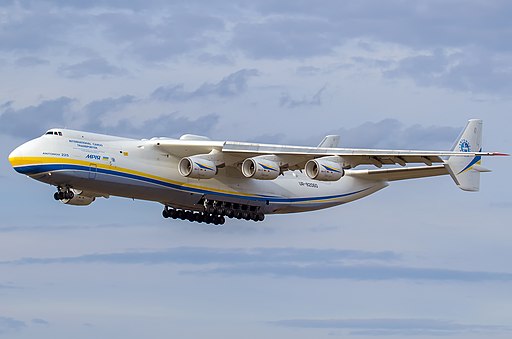
Antonov An-225 Mriya
The Antonov An-225 Mriya stands as the largest and heaviest airplane ever built. Conceived in the 1980s to carry the Soviet Buran space shuttle, its six-engine layout, massive wingspan, and unique cargo deck push the boundaries of aerospace engineering. Only one airframe ever flew, making each technical detail a testament to extreme design challenges and groundbreaking solutions. Today, the An-225 remains an icon of strategic airlift capability, capable of ferrying outsized loads that no other aircraft can match.
Design and Development
Origins and Purpose
The An-225 program launched in 1985 with a singular objective: transport the Buran orbiter piggyback on the back of a heavy transport. Engineers extended the fuselage of the An-124 Ruslan, added a twin-tail configuration, and reinforced landing gear to handle unprecedented weights. Development demanded new materials, bespoke manufacturing processes, and rigorous ground tests to verify structural integrity under both internal and external loads.
Airframe Structure
Primary load-bearing members use high-strength aluminum alloys combined with titanium reinforcements in highly stressed zones such as wing roots and cargo deck floor beams. The fuselage spans 84 meters in length with a circular cross-section 6.4 meters in diameter, allowing for both internal and external carriage of cargo. A twin-fin tail unit stabilizes the aircraft during high-angle-of-attack maneuvers and crosswind landings.
Aerodynamics and Flight Controls
A straight, high-aspect-ratio wing with a 32.8-meter half-span features double-slotted flaps and full-span leading-edge slats for optimized low-speed lift. The flight control system integrates hydro-mechanical actuators with a partial fly-by-wire interface for roll damping and autopilot functions. Wingtip fences reduce induced drag, while vortex generators along the upper wing surface delay flow separation during steep climbs.
Cargo Handling System
The An-225’s cargo deck measures 43.35 meters long by 6.4 meters wide, with a portside hinged nose that swings open 90 degrees for front loading. A hydraulic ramp at the rear permits simultaneous loading and unloading of oversized payloads. Electrically driven rollers and pallet locks secure standard 2.44 × 3.05 m platforms, while tie-down points every meter accommodate irregular shapes and machinery.
Technical Specifications
Dimensions and Masses
| Parameter | Value |
|---|---|
| Length | 84.00 m |
| Wingspan | 88.40 m |
| Height | 18.10 m |
| Wing Area | 905.0 m² |
| Fuselage Diameter | 6.40 m |
| Empty Operating Weight | 285,000 kg |
| Maximum Takeoff Weight | 640,000 kg |
| Maximum Fuel Capacity | 300,000 L |
Cargo Volume and Loading Options
| Parameter | Value |
|---|---|
| Internal Cargo Volume | 1,300 m³ |
| Maximum Internal Payload | 250,000 kg |
| External Payload (on fuselage) | 200,000 kg |
| Standard Pallet Tracks | 52 (2.44 × 3.05 m each) |
| Loading Ramp Angle | 12° |
Powerplant and Fuel Systems
| Parameter | Value |
|---|---|
| Engines | 6 × Progress D-18T turbofans |
| Thrust per Engine | 229.5 kN |
| Total Thrust | 1,377 kN |
| FADEC | Yes |
| Fuel Tanks | Integral wing and center wing |
| Auxiliary Power Unit (APU) | Tupolev-designed model |
Performance
| Parameter | Value |
|---|---|
| Maximum Cruise Speed | 850 km/h |
| Typical Cruise Speed | 800 km/h |
| Service Ceiling | 11,000 m |
| Range (Max Payload) | 4,500 km |
| Ferry Range (No Payload) | 15,400 km |
| Takeoff Distance (MTOW) | 3,500 m |
| Landing Distance | 2,400 m |
| Rate of Climb | 8 m/s |
Flight Deck and Avionics
The cockpit layout follows a multi-crew concept with two pilots and two flight engineers. Six primary CRT screens display engine parameters, navigation, and system status, supported by analog backups for redundancy. Dual inertial navigation systems integrate with Doppler radar and GPS, while weather radar, traffic collision avoidance, and ground-proximity warning systems ensure safe operations in dense airspace and challenging weather.
Operational Considerations
Maintenance and Support
Airframe inspections follow a strict 500-hour cycle, focusing on wing-to-fuselage joints, landing gear bogies, and control surface hinges. Engine borescope inspections occur every 1,000 hours, with full shop visits at 5,000 hours. A dedicated ground support equipment suite includes custom jacks, specialized tow bars, and mobile hydraulic power units to service each of the six engines simultaneously.
Runway and Infrastructure Requirements
Operation demands runways at least 3,500 meters long and 60 meters wide to accommodate the aircraft’s mass and wingspan. Taxiways require reinforced pavement rated for 45 tonnes per wheel, and apron parking areas must support a static load exceeding 640 000 kg. Dedicated hangar space with clear door openings of 90 m × 20 m is necessary for routine maintenance and inspections.
Conclusion
The Antonov An-225 Mriya remains a singular achievement in aeronautical design, blending colossal scale with refined engineering solutions. Its unmatched payload capacity, specialized cargo systems, and robust powerplant configuration continue to serve niche sectors requiring outsized transportation. Although only one example ever flew, its legacy endures as a symbol of peak strategic airlift capability.
.jpg)