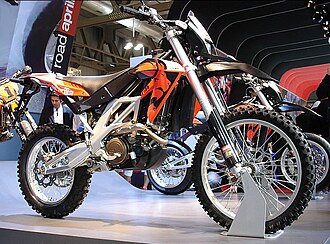
Aprilia RXV 450: The Italian V-Twin Enduro That Redefined Off-Road Performance
Discovering the Aprilia RXV 450
The Aprilia RXV 450 is one of the most unusual and technically interesting enduro motorcycles ever produced. Developed by the Italian manufacturer Aprilia, this lightweight off-road machine challenged traditional ideas about how a 450 cc enduro motorcycle should be designed, powered, and ridden. At a time when most manufacturers relied on conventional single-cylinder engines for their competition-oriented off-road motorcycles, Aprilia introduced an innovative compact V-twin powerplant that immediately distinguished the RXV 450 from its competitors. Combined with an aggressive chassis, modern suspension components, electronic fuel injection, and unmistakable Italian styling, the RXV 450 became a motorcycle that attracted considerable attention from both professional racers and enthusiastic off-road riders.
The RXV 450 was not simply an ordinary trail motorcycle with a competition-inspired appearance. It was developed with serious off-road performance in mind, drawing on Aprilia’s experience in motorcycle racing and its ambition to establish itself in demanding enduro competitions. Its engineering philosophy focused on reducing weight, improving power delivery, and creating a compact motorcycle capable of handling difficult terrain at high speeds. The result was a machine that offered a different riding experience from the traditional single-cylinder enduro motorcycles that dominated the 450 cc category.
One of the most fascinating aspects of the Aprilia RXV 450 is its engine configuration. The compact 77-degree V-twin engine represents an unconventional solution in a segment where simplicity and mechanical efficiency have traditionally been important priorities. This design gives the motorcycle a distinctive sound, power delivery, and mechanical personality. It also demonstrates Aprilia’s willingness to take engineering risks in pursuit of performance and innovation.
Today, the RXV 450 remains an interesting motorcycle for enduro enthusiasts, collectors, and riders who appreciate unusual engineering solutions. Although its maintenance requirements and specialized mechanical construction demand careful consideration, its place in the history of modern enduro motorcycles is difficult to overlook. It represents a period when manufacturers were willing to experiment with unconventional designs to achieve a competitive advantage and create motorcycles that stood apart from the crowd.
The History and Development of the Aprilia RXV 450
Aprilia’s Ambitions in Enduro Racing
Aprilia has a long history of involvement in competitive motorcycle racing, with experience extending across road racing, motocross-related disciplines, and off-road competitions. The company built its reputation through the development of motorcycles that combined distinctive Italian styling with advanced engineering and a strong sporting character. Its experience in competition provided an important foundation for the development of the RXV series, which was intended to bring innovative technology into the enduro category.
During the development of the RXV 450, Aprilia wanted to create something different from the conventional enduro motorcycles available on the market. The 450 cc category was becoming increasingly competitive, with manufacturers focusing on lightweight construction, responsive engines, advanced suspension, and improved handling. Most competing motorcycles used single-cylinder engines because they offered a relatively simple design, strong low-speed torque, and manageable maintenance requirements.
Aprilia decided to take a different direction. Rather than following the established formula, the company developed a compact V-twin engine that could provide strong performance while maintaining the dimensions required for a competitive off-road motorcycle. This was an ambitious project because the engineers had to address several challenges associated with packaging two cylinders into a motorcycle designed to operate in difficult terrain. Cooling, lubrication, weight distribution, engine protection, and overall chassis dimensions all required careful consideration.
The RXV 450 became part of a broader effort to establish Aprilia as a serious competitor in international off-road racing. Its development reflected the company’s belief that advanced engineering and unconventional solutions could create advantages over more traditional designs.
The Introduction of the RXV Model Range
The Aprilia RXV range was introduced alongside the supermoto-oriented SXV family. While the SXV motorcycles were designed primarily for asphalt circuits and supermoto riding, the RXV models were developed for off-road competition and enduro use. Both families shared the distinctive V-twin engine concept, but their chassis configurations, suspension settings, wheels, tyres, and overall equipment were adapted to their respective purposes.
The RXV 450 was designed to handle a wide variety of off-road conditions, including forest trails, rocky paths, muddy sections, steep climbs, and fast open terrain. Its relatively compact construction and lightweight philosophy were intended to make it competitive in situations where agility and precise control were essential. Unlike a recreational trail motorcycle designed mainly for comfort and versatility, the RXV 450 had a much stronger competition-oriented character.
The model also helped Aprilia demonstrate its engineering capabilities in a category traditionally dominated by established Japanese and European manufacturers. Its unconventional engine configuration generated considerable interest and gave the RXV a distinctive position within the enduro market.
Engine and Performance: The Heart of the Aprilia RXV 450
The Innovative 449 cc V-Twin Engine
The most recognizable technical feature of the Aprilia RXV 450 is its compact 77-degree V-twin engine. With a displacement of approximately 449 cc, this liquid-cooled four-stroke powerplant was developed specifically for the demands of high-performance off-road riding. Instead of using the traditional single-cylinder configuration found in most competing 450 cc enduro motorcycles, Aprilia designed an engine with two cylinders arranged in a narrow V configuration.
The engine uses four valves per cylinder, giving it a total of eight valves, and incorporates double overhead camshafts. This arrangement allows efficient gas exchange and supports the high engine speeds associated with competition-oriented performance. The compact design was particularly important because the engine needed to fit within a relatively narrow frame without compromising the motorcycle’s handling characteristics.
The V-twin configuration also provides a distinctive mechanical character. The engine produces a different sound and combustion rhythm from a traditional single-cylinder enduro motorcycle, giving the RXV 450 an unmistakable identity. Its power delivery feels different, and the additional cylinder contributes to the motorcycle’s unique personality.
Aprilia’s decision to use a twin-cylinder engine was not simply an attempt to make the RXV more unusual. It represented an engineering approach intended to combine high performance with compact dimensions and an effective distribution of mechanical components. Although the configuration introduced additional complexity, it demonstrated the manufacturer’s willingness to challenge established conventions.
Power Delivery and Acceleration
The RXV 450 was designed to deliver strong acceleration and responsive performance in demanding off-road conditions. Its engine characteristics make it particularly interesting for riders who enjoy a lively motorcycle capable of accelerating quickly out of corners and maintaining speed across fast sections of terrain.
Compared with a conventional 450 cc single-cylinder engine, the Aprilia’s V-twin offers a different balance of responsiveness, engine braking, and power delivery. This difference becomes particularly noticeable when riding through technical sections where throttle control and precise gear selection are important. The motorcycle rewards riders who understand how to use the engine effectively rather than relying exclusively on aggressive acceleration.
Published power figures vary according to model year, market specification, and engine configuration. The RXV 450 is commonly associated with output in the region of approximately 50–60 horsepower, although individual specifications should be verified against the relevant factory documentation. The motorcycle’s actual performance also depends heavily on maintenance condition, fuel-injection calibration, exhaust configuration, and any modifications made during its previous ownership.
The six-speed transmission provides a range of ratios suitable for different off-road conditions. Lower gears are useful for slow technical sections, steep climbs, and difficult obstacles, while the higher gears allow the motorcycle to maintain speed on faster trails and open terrain. Correct gearing is particularly important because off-road riding frequently involves changing traction conditions and rapid variations in engine load.
Electronic Fuel Injection and Engine Management
Another important feature of the Aprilia RXV 450 is its electronic fuel-injection system. At the time of its introduction, fuel injection was an increasingly important technology in high-performance motorcycles, offering more precise fuel delivery than traditional carburetors when properly calibrated.
Electronic injection helps the engine respond to different throttle positions and operating conditions, while the engine management system controls important aspects of combustion and ignition. This technology is particularly useful in off-road environments, where changes in altitude, temperature, engine load, and riding conditions can influence engine performance.
However, the electronic systems also introduce additional maintenance considerations. A malfunctioning sensor, damaged wiring connection, incorrectly configured ECU, or poorly adjusted fuel map can affect the way the motorcycle runs. Owners should therefore pay attention to the condition of the electrical system and ensure that any modifications to the intake or exhaust are supported by appropriate engine-management settings.
For a motorcycle as specialized as the RXV 450, having access to a technician familiar with Aprilia’s V-twin enduro platform can make a significant difference to the ownership experience.
Design and Exterior Appearance
Aggressive Italian Enduro Styling
The Aprilia RXV 450 has a design that immediately communicates its off-road intentions. Its bodywork is narrow, angular, and functional, with proportions developed around the requirements of competitive enduro riding. The front section features a high mudguard and compact headlight assembly on road-equipped versions, while the side panels and rear bodywork maintain a slim profile that allows the rider to move freely.
Aprilia’s design approach combines practical off-road functionality with distinctive Italian styling. The motorcycle does not rely on decorative elements to create a sporting appearance. Instead, its overall shape is determined by the engine, frame, suspension, fuel tank, and rider ergonomics. The exposed mechanical components and compact bodywork contribute to an appearance that is unmistakably competition-oriented.
The narrow construction is particularly important when riding in difficult terrain. Enduro riders regularly move their bodies forward, backward, and sideways to maintain traction and control. A motorcycle with excessive width or poorly positioned bodywork can make these movements more difficult, especially during slow technical sections.
The RXV 450’s design therefore reflects a combination of aesthetic choices and practical requirements. Its appearance remains distinctive even among modern off-road motorcycles, making it an interesting machine for enthusiasts who appreciate unconventional Italian engineering.
Ergonomics and Rider Position
The riding position of the Aprilia RXV 450 is designed to provide control and freedom of movement in demanding off-road conditions. The handlebars are relatively wide, giving the rider the leverage needed to steer through tight trails and maintain control when the front wheel encounters obstacles. The seat and fuel tank are shaped to allow movement between sitting and standing positions, while the footpegs provide a stable platform for aggressive riding.
Standing is an essential part of enduro riding because it allows the rider to use body weight to influence traction, balance, and suspension movement. The RXV 450’s ergonomics support this riding style by providing a relatively narrow central section and sufficient room for the rider to adjust position.
For experienced enduro riders, the layout can feel natural and responsive. However, those accustomed to road motorcycles may initially find the tall seat, narrow saddle, and firm suspension demanding. These characteristics are normal for a competition-oriented enduro motorcycle and should not be confused with the comfort expectations of an adventure or touring machine.
Chassis, Suspension, and Off-Road Handling
Frame Construction and Weight Distribution
The chassis is one of the most important elements of any enduro motorcycle because it determines how effectively the machine responds to changes in terrain, rider input, and engine power. Aprilia developed the RXV 450 around a compact frame intended to provide a balance between strength, stiffness, and low weight.
The V-twin engine presented an interesting challenge for chassis development. Because most motorcycles in this category use a single-cylinder engine, the engineers needed to ensure that the additional cylinder did not compromise the motorcycle’s dimensions or handling. The compact engine design helped Aprilia create a relatively narrow machine, while careful packaging supported the desired weight distribution.
A well-balanced enduro motorcycle should feel predictable when accelerating over uneven surfaces, braking before corners, and changing direction through technical sections. The RXV 450 was designed with these characteristics in mind. Its chassis allows the rider to reposition the motorcycle relatively quickly, while the suspension works to maintain contact between the tyres and the ground.
When purchasing an older example, however, the condition of the frame, steering bearings, swingarm, suspension mounting points, and wheel bearings should be inspected carefully. Off-road motorcycles frequently experience impacts, falls, and demanding operating conditions that can cause damage over time.
Front Suspension
The Aprilia RXV 450 uses an inverted front fork designed to absorb impacts and maintain steering control on uneven surfaces. The suspension system is particularly important in enduro riding because the front wheel regularly encounters rocks, roots, holes, braking bumps, and other obstacles.
The front fork needs to provide enough initial sensitivity to absorb smaller irregularities while maintaining sufficient support during harder impacts and aggressive braking. If the suspension is too soft, the motorcycle may dive excessively or become unstable. If it is too firm, the front wheel may struggle to maintain traction on rough terrain.
Suspension settings should always be considered in relation to the rider’s weight, riding ability, terrain, and intended use. A motorcycle that performs well on fast open trails may require different adjustments for slow technical enduro riding.
On older RXV 450 motorcycles, fork oil condition, seals, bushings, internal wear, and previous repairs should all be checked. A complete suspension service can make a substantial difference to the motorcycle’s handling and overall confidence.
Rear Suspension and Traction
The rear suspension uses a linkage-operated monoshock designed to control wheel movement and maintain traction under acceleration. In off-road riding, the rear wheel must remain in contact with the terrain as consistently as possible because traction is essential for climbing hills, accelerating out of corners, and overcoming obstacles.
The linkage system helps manage suspension movement through its travel, providing a balance between responsiveness and support. Correct adjustment is important because the rear suspension influences not only comfort but also steering behavior and the motorcycle’s overall balance.
Incorrect spring preload, worn linkage bearings, damaged seals, or deteriorated shock components can make the motorcycle feel unstable and unpredictable. Owners should inspect these components regularly, particularly if the machine has been used in muddy or wet conditions.
Braking System and Wheel Configuration
Front and Rear Brakes
The RXV 450 needs an effective braking system because off-road riding often involves sudden changes in speed and traction. The front brake provides most of the stopping power, while the rear brake helps control the motorcycle’s attitude and speed in technical sections.
The front brake is especially important when approaching corners or descending steep slopes. Experienced riders use progressive braking to control weight transfer and maintain stability without locking the front wheel. The rear brake is useful for managing speed at low velocities and making small adjustments to the motorcycle’s direction.
Brake condition should never be overlooked when buying a used RXV 450. Discs, pads, calipers, hydraulic hoses, master cylinders, and brake fluid should all be checked. Damage caused by falls or impacts can also affect brake components and mounting points.
Wheels and Off-Road Tyres
Unlike the 17-inch wheel configuration used on the supermoto-oriented SXV 450, the RXV 450 uses an off-road wheel arrangement designed to handle uneven terrain. The larger front wheel helps the motorcycle roll over obstacles, while the rear wheel provides the traction needed for acceleration and climbing.
Tyre choice has a significant influence on performance. Different tread patterns and rubber compounds are designed for different surfaces, including mud, sand, rocks, hard-packed trails, and mixed terrain. Correct tyre pressure is equally important because pressure affects grip, stability, impact resistance, and the likelihood of punctures.
Riders should select tyres according to their intended use rather than simply choosing the most aggressive-looking option. A tyre that works extremely well in soft mud may provide less predictable performance on hard-packed ground or wet rocks.
Riding Experience: What Is the Aprilia RXV 450 Like?
Handling on Technical Trails
The Aprilia RXV 450 is designed for riders who enjoy active off-road riding and want a motorcycle with a distinctive engine character. Its compact dimensions, narrow construction, and competition-oriented suspension make it particularly interesting on technical trails where agility and rider control are essential.
In tight forest sections, the motorcycle benefits from its relatively narrow profile and responsive handling. The rider can move around the machine, adjust body position, and use the handlebars to guide the front wheel through difficult obstacles. The engine’s twin-cylinder configuration also gives the RXV a different character from traditional single-cylinder enduro motorcycles.
Technical terrain places considerable demands on both the rider and the motorcycle. Slow-speed obstacles require accurate throttle control, clutch operation, and careful selection of the correct gear. The RXV 450 can be rewarding in these situations, but its specialized design means that riders need to understand its behavior and maintain the machine properly.
Performance on Fast Off-Road Sections
The RXV 450 is not limited to slow technical trails. Its engine and chassis were also developed to provide performance on faster off-road sections, where acceleration, stability, and suspension control become particularly important.
On open terrain, the motorcycle can use its power to maintain speed across longer sections and accelerate strongly out of corners. The suspension helps absorb irregularities, while the chassis is intended to provide predictable handling when the ground becomes rough.
At higher speeds, correct suspension adjustment and tyre selection become increasingly important. A poorly maintained motorcycle may feel unstable even if the engine produces strong power. For this reason, maintaining the suspension, steering components, wheels, and tyres is essential for riders who regularly use the RXV 450 in demanding conditions.
Is It Suitable for Beginners?
Although the RXV 450 can be an enjoyable motorcycle, it is not necessarily the best starting point for someone completely new to enduro riding. Its high-performance engine, competition-oriented suspension, relatively tall construction, and specialized maintenance requirements make it more suitable for riders who already have experience with off-road motorcycles.
Beginners may find a simpler and more forgiving single-cylinder enduro motorcycle easier to learn on. Such machines often offer more accessible maintenance, a familiar power delivery, and a wider availability of replacement parts.
An experienced rider, on the other hand, may appreciate the RXV 450 precisely because it offers something different. Its unusual V-twin engine, responsive handling, and distinctive engineering make it an interesting alternative to conventional enduro motorcycles.
Reliability and Common Maintenance Considerations
Understanding the Maintenance Requirements
The Aprilia RXV 450 is a specialized high-performance motorcycle, and maintenance is one of the most important subjects prospective owners should understand. Its compact V-twin engine contains more moving components than a conventional single-cylinder engine of similar displacement, and its competition-oriented design requires attention to service intervals and operating conditions.
It is important to recognize that reliability depends on more than the original engineering design. Maintenance quality, previous repairs, riding conditions, modifications, and storage practices all influence the condition of an individual motorcycle. An RXV 450 that has been serviced correctly and used responsibly may be a much better purchase than an apparently low-mileage example with an unknown history.
Owners should follow the factory service documentation for the appropriate model year and engine specification. Oil changes, valve inspections, air-filter cleaning, cooling-system checks, and regular inspections of the chassis and suspension should form part of a consistent maintenance routine.
Because the RXV 450 is now an older motorcycle, access to suitable replacement components and knowledgeable technicians should also be considered before purchasing one.
Engine Oil and Lubrication
Oil maintenance is essential for protecting the internal components of the RXV 450 engine. High-performance four-stroke engines operate under considerable mechanical and thermal stress, especially when used for competition or demanding off-road riding.
The RXV’s lubrication system should be maintained according to the official Aprilia service requirements. Owners should use the recommended oil specification, monitor oil condition, and avoid extending service intervals unnecessarily. Riding in dusty environments also increases the importance of maintaining a clean air filter because dirt entering the engine can accelerate internal wear.
Regular inspection for leaks, abnormal noises, and unusual oil contamination can help identify developing problems before they become serious. Keeping records of oil changes and engine maintenance is also valuable when evaluating the long-term condition of the motorcycle.
Valve Clearances and Engine Inspection
Valve clearance inspections are another important part of maintaining the RXV 450. Incorrect valve clearances can affect engine performance, starting behavior, and long-term mechanical reliability. The condition of the valve train should be checked according to the factory maintenance schedule.
When purchasing a used motorcycle, buyers should ask whether valve inspections have been completed and whether the results were recorded. Documentation of previous engine work is particularly valuable because it provides evidence that the motorcycle has received appropriate attention.
Potential warning signs include difficult starting, unstable idle, unusual mechanical noises, inconsistent power delivery, excessive smoke, and unexplained fluid loss. These symptoms do not automatically indicate a serious engine failure, but they should be investigated before the motorcycle is purchased.
Cooling System Maintenance
The liquid-cooling system plays a crucial role in maintaining the operating temperature of the compact V-twin engine. Off-road riding can create challenging thermal conditions because motorcycles may spend extended periods operating at low speeds, where airflow through the radiators is limited.
Radiators, hoses, clamps, coolant condition, and the cooling-system pressure components should be inspected regularly. Radiator damage is particularly important to check because off-road motorcycles can experience impacts from stones, branches, and falls.
Overheating should never be ignored. Repeated operation at excessive temperatures can place additional stress on engine components and may result in expensive repairs. Owners should also ensure that the cooling system is filled and maintained according to the manufacturer’s recommendations.
Electrical System and Fuel Injection
The electronic fuel-injection system is an important part of the RXV 450’s performance, but it also introduces potential maintenance challenges. Electrical connectors, wiring harnesses, sensors, ignition components, ECU settings, and the charging system should all be checked.
Older motorcycles may develop electrical problems due to corrosion, vibration, water exposure, and poorly installed aftermarket accessories. Damaged wiring or incorrect engine-management settings can cause difficult-to-diagnose running problems.
A specialist familiar with Aprilia’s RXV platform can be particularly helpful when diagnosing electronic faults. Buyers should be cautious about motorcycles with undocumented wiring modifications, unexplained warning symptoms, or a history of repeated starting problems.
Buying a Used Aprilia RXV 450
What to Check Before Purchasing
Finding a good used Aprilia RXV 450 requires patience and careful inspection. Because the motorcycle was designed for demanding off-road use, its condition should be evaluated mechanically rather than judged mainly by its external appearance.
The first step is to verify the motorcycle’s identity, frame and engine numbers, registration documents, ownership history, and road-homologation status where applicable. Buyers should establish whether the particular motorcycle is a road-legal version, a competition machine, or an example that has been modified during its lifetime.
The engine should ideally be inspected when cold. Starting behavior, idle stability, throttle response, exhaust smoke, fluid leaks, and unusual sounds can provide valuable information. A test ride, when safe and legally appropriate, should reveal whether the gearbox shifts correctly, the clutch operates smoothly, and the motorcycle responds consistently under acceleration.
The chassis and suspension also require close attention. Inspect the frame, swingarm, steering bearings, wheel bearings, fork seals, shock absorber, linkage bearings, radiators, rims, spokes, and brake components. Look for cracks, bends, signs of welding, damaged mounting points, and evidence of repeated crashes.
The Importance of Service History
Service history is especially important when buying an older high-performance enduro motorcycle. A seller who can provide invoices, maintenance records, and details of previous engine repairs offers a much stronger basis for evaluating the machine than someone who simply claims that it is in good condition.
Ask about oil changes, valve inspections, cooling-system maintenance, suspension servicing, fuel-injection work, and any previous engine rebuilds. If important information is missing, buyers should consider arranging a specialist inspection before agreeing on a price.
A motorcycle that has been used in competition is not automatically a bad purchase. Some competition motorcycles receive extremely careful maintenance because their owners understand the importance of mechanical condition. However, frequent racing and hard off-road use can also increase wear, so the quality of maintenance is more important than the motorcycle’s previous category of use.
Original Parts and Modifications
Many RXV 450 motorcycles have been modified over the years. Common changes may involve exhaust systems, ECU settings, gearing, suspension components, protection accessories, handlebars, and bodywork.
Some modifications can improve performance or make the motorcycle more practical for particular types of riding. However, poorly installed or undocumented changes can create reliability problems. An aftermarket exhaust, for example, should be compatible with the engine-management settings, while electrical modifications should be installed professionally.
Original parts can also be valuable, particularly for collectors or owners who want to preserve the motorcycle’s original specification. When possible, ask whether the seller still has the original components and whether the modifications are documented.
Aprilia RXV 450 vs Aprilia SXV 450
Two Motorcycles with a Shared Engineering Philosophy
The Aprilia RXV 450 and SXV 450 share the same basic engineering concept, including the distinctive V-twin engine architecture. However, they were developed for different riding environments and should not be viewed as interchangeable versions of the same motorcycle.
The RXV 450 is designed for enduro and off-road riding. It uses larger off-road wheels, knobby tyres, suspension settings intended for uneven terrain, and equipment appropriate for forest trails and technical routes. Its overall design prioritizes traction, ground clearance, obstacle absorption, and the ability to handle demanding surfaces.
The SXV 450, by contrast, is a dedicated supermoto motorcycle. Its 17-inch wheels, road-oriented tyres, braking configuration, and suspension settings are intended primarily for asphalt circuits and paved roads. It is designed to change direction quickly on hard surfaces and provide the braking performance required for aggressive supermoto riding.
Both motorcycles demonstrate Aprilia’s unusual approach to the 450 cc category, but their intended uses are clearly different. Riders who primarily enjoy forest trails and off-road competition should look toward the RXV, while those interested in asphalt performance and supermoto riding will find the SXV more appropriate.
Aprilia RXV 450 vs Traditional 450 cc Enduro Motorcycles
The Advantages of the V-Twin Configuration
The most obvious difference between the RXV 450 and conventional enduro motorcycles is the engine. Most competitors use a single-cylinder four-stroke engine because it offers a relatively straightforward design, strong torque characteristics, and a familiar maintenance routine.
Aprilia’s V-twin offers a different approach. Its two-cylinder layout provides a distinctive engine character, sound, and power delivery. The compact design was intended to combine the benefits of a twin-cylinder configuration with the dimensions required for an agile off-road motorcycle.
For enthusiasts, this unusual engine is one of the main reasons to consider the RXV 450. It offers something that is difficult to find elsewhere in the traditional 450 cc enduro category.
The Disadvantages of Greater Mechanical Complexity
The V-twin configuration also brings disadvantages. Two cylinders, additional valve-train components, and a more sophisticated engine layout can make maintenance and repairs more involved than on a conventional single-cylinder motorcycle.
Parts availability and specialist knowledge may also be more challenging, particularly in markets where the RXV was sold in relatively small numbers. Owners need to consider the long-term availability of replacement components and the cost of specialist servicing.
A conventional single-cylinder enduro motorcycle may therefore be a more practical choice for someone who wants an inexpensive and straightforward machine for regular trail riding. The RXV 450 is better suited to enthusiasts who value its unusual design and are prepared to maintain it properly.
Is the Aprilia RXV 450 Suitable for Everyday Use?
The Aprilia RXV 450 can be a very enjoyable motorcycle, but its competition-oriented nature means that it is not necessarily the most convenient choice for everyday transportation. Its high seat, firm suspension, narrow saddle, specialized engine, and regular maintenance requirements make it more appropriate for recreational off-road riding than long daily journeys.
For weekend adventures and enduro trails, these characteristics can be advantages. The motorcycle offers an engaging riding experience and a distinctive engine configuration that makes it stand out from more conventional alternatives. Its compact construction and responsive handling can make technical off-road riding particularly entertaining.
However, everyday riders should consider practical issues such as fuel consumption, service costs, road registration, insurance, spare-parts availability, and the condition of the individual motorcycle. Road legality can vary depending on the specific version and national regulations, so it is important to verify the documentation before using the motorcycle on public roads.
The RXV 450 is best viewed as a specialized sporting motorcycle rather than an all-purpose transport solution. Riders who understand this distinction are more likely to appreciate its strengths and accept its limitations.
The Legacy of the Aprilia RXV 450
A Different Approach to Enduro Motorcycle Engineering
The Aprilia RXV 450 deserves recognition because it challenged the conventional approach to enduro motorcycle development. While most manufacturers focused on refining single-cylinder engines, Aprilia introduced a compact V-twin configuration and attempted to combine it with the lightweight construction and agility expected from a competition-oriented off-road machine.
This was an ambitious engineering decision. The company had to balance performance, engine dimensions, cooling, weight distribution, reliability, and maintenance requirements in a motorcycle that was expected to operate in extremely demanding conditions.
The RXV 450 may not have become the universal standard for 450 cc enduro motorcycles, but its importance lies in its individuality. It demonstrated that manufacturers could approach established motorcycle categories from a different engineering perspective and create machines that offered genuinely distinctive experiences.
Why the RXV 450 Remains Interesting Today
Today, the RXV 450 attracts attention from enthusiasts who appreciate unusual motorcycles and specialized engineering. Its V-twin engine, Italian design, competition-inspired chassis, and relatively uncommon configuration make it an interesting alternative to traditional enduro motorcycles.
The passage of time has also changed the way people view the model. What was once an unconventional modern enduro motorcycle is now an example of a particularly interesting period in motorcycle engineering. Good examples with documented histories can appeal to collectors and enthusiasts who want something different from the more common Japanese and European single-cylinder machines.
Nevertheless, the motorcycle’s age means that buyers must approach ownership realistically. Parts availability, specialist servicing, engine condition, and previous maintenance are all important considerations. A carefully maintained RXV 450 can be a rewarding machine, but a neglected example may require considerable investment.
Final Verdict: Is the Aprilia RXV 450 Worth Buying?
The Aprilia RXV 450 is a fascinating enduro motorcycle that combines unconventional engineering with genuine sporting ambitions. Its compact 77-degree V-twin engine, electronic fuel injection, competition-oriented chassis, off-road suspension, and distinctive Italian design make it one of the most unusual machines in the 450 cc enduro category.
Its greatest strength is also one of its biggest challenges. The V-twin configuration gives the motorcycle a distinctive personality and separates it from traditional single-cylinder competitors, but it also introduces additional mechanical complexity and specialized maintenance requirements. This makes the RXV 450 a less obvious choice for riders who simply want an inexpensive and uncomplicated trail motorcycle.
For experienced enduro enthusiasts, however, the Aprilia can be an extremely appealing machine. It offers a unique engine character, a sporting riding experience, and an interesting place in motorcycle history. A well-maintained example with documented servicing and access to suitable replacement parts can provide an ownership experience that is difficult to replicate with conventional alternatives.
Ultimately, the Aprilia RXV 450 is not a motorcycle designed to satisfy everyone. It is a specialized machine created for riders who appreciate performance, individuality, and innovative engineering. Its unconventional V-twin engine ensures that it remains one of the most memorable enduro motorcycles produced by Aprilia.
Aprilia RXV 450 Technical Specifications
The following table provides a general overview of the Aprilia RXV 450’s technical characteristics. Specifications can vary according to model year, market, homologation version, and factory configuration. Published performance figures should therefore be treated as reference values rather than guaranteed measurements for every individual motorcycle.
| Technical specification | Aprilia RXV 450 |
|---|---|
| Manufacturer | Aprilia |
| Model | RXV 450 |
| Motorcycle category | Enduro |
| Production period | Introduced in the mid-2000s |
| Engine type | Four-stroke, liquid-cooled V-twin |
| Engine configuration | 77-degree V-twin |
| Displacement | Approximately 449 cc |
| Bore | 76 mm |
| Stroke | 49.5 mm |
| Valve system | DOHC |
| Number of valves | 8 (4 per cylinder) |
| Cooling system | Liquid cooling |
| Fuel system | Electronic fuel injection |
| Ignition | Electronic |
| Starting system | Electric starter |
| Transmission | 6-speed manual |
| Clutch | Wet multi-plate |
| Final drive | Chain |
| Maximum power | Approximately 50–60 hp, specification dependent |
| Front suspension | Inverted telescopic fork |
| Rear suspension | Linkage-operated monoshock |
| Front brake | Hydraulic disc |
| Rear brake | Hydraulic disc |
| Front wheel | 21 inches |
| Rear wheel | 18 inches |
| Frame | Lightweight competition-oriented construction |
| Tyres | Off-road knobby tyres |
| Fuel capacity | Approximately 7.8 litres, version dependent |
| Seat height | Approximately 950 mm, version dependent |
| Intended use | Enduro, off-road riding, and competition |
| Specification | Aprilia RXV 450 |
|---|---|
| Engine | 77° V-twin, four-stroke |
| Displacement | 449 cc |
| Bore × stroke | 76 × 49.5 mm |
| Valve system | SOHC, 4 valves per cylinder |
| Compression ratio | 13:1 (approximately) |
| Maximum power | Approximately 60 hp |
| Fuel system | Electronic fuel injection |
| Cooling | Liquid-cooled |
| Lubrication | Dry sump |
| Gearbox | 5-speed |
| Clutch | Wet multi-plate |
| Front suspension | 45 mm Marzocchi USD fork |
| Rear suspension | Sachs monoshock |
| Front brake | 270 mm disc |
| Rear brake | 240 mm disc |
| Front wheel | 21 inches |
| Rear wheel | 18 inches |
| Front tyre | 90/90-21 |
| Rear tyre | 140/80-18 |
| Wheelbase | 1,495 mm |
| Seat height | Approximately 996 mm |
| Ground clearance | Approximately 396 mm |
| Fuel capacity | 7.8 litres |
| Dry weight | Approximately 120–123 kg |
