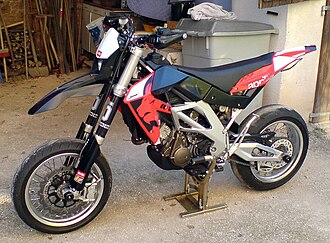
Aprilia SXV 450: The Italian Supermoto Legend That Changed the Game
The Aprilia SXV 450 and Its Place in Supermoto History
The Aprilia SXV 450 is one of the most distinctive and ambitious motorcycles ever produced in the supermoto category. Developed by the Italian manufacturer Aprilia, this remarkable machine was designed to bring racing technology, lightweight construction, and exceptional performance to riders who wanted something far more exciting than an ordinary road-going motorcycle. Even years after its introduction, the SXV 450 continues to attract attention from supermoto enthusiasts, collectors, experienced riders, and motorsport fans who appreciate unusual engineering and uncompromising performance. Its combination of a compact V-twin engine, aggressive styling, lightweight chassis, and competition-oriented suspension made it stand out in a market traditionally dominated by single-cylinder motorcycles.
What makes the Aprilia SXV 450 particularly interesting is that it was never intended to be just another motorcycle with a sporty appearance. It was developed around a genuine racing philosophy, with an emphasis on acceleration, agility, precise handling, and the ability to perform confidently on demanding supermoto circuits. Aprilia took a different approach from many of its competitors by introducing a sophisticated 450 cc V-twin engine instead of following the conventional single-cylinder formula. This decision gave the motorcycle a unique personality and established its reputation as one of the most technologically interesting supermoto machines of its generation.
The SXV 450 also represents an important period in Aprilia’s history, when the company was particularly interested in combining its experience in road racing, off-road competition, and advanced motorcycle engineering. The result was a machine that blurred the boundaries between a racing motorcycle and a road-legal supermoto. Although its maintenance requirements and specialized mechanical construction mean that it is not necessarily suitable for every rider, the SXV 450 remains a fascinating example of what can happen when a manufacturer prioritizes performance and innovation over simplicity.
The History and Development of the Aprilia SXV 450
Aprilia’s Ambitious Entry into the Supermoto World
Aprilia has a long history of developing motorcycles for competitive motorsport, and its experience in racing played an important role in the creation of the SXV range. The company had already established a strong reputation through its involvement in road racing and off-road disciplines, where engineering precision, chassis development, and engine performance were essential to success. With the SXV project, Aprilia wanted to apply this experience to the rapidly developing supermoto category, a discipline that combines asphalt racing with sections of dirt and technical obstacles.
The supermoto market had traditionally been dominated by lightweight motorcycles equipped with powerful single-cylinder engines. These machines offered excellent torque, relatively simple mechanical construction, and the agility needed for tight circuits. Aprilia recognized an opportunity to differentiate itself by developing a more sophisticated engine configuration that could provide competitive power while delivering a different riding character. The SXV 450 was therefore conceived as a serious sporting machine rather than a conventional dual-purpose motorcycle.
The development of the SXV family was particularly significant because it demonstrated Aprilia’s willingness to experiment with unconventional technical solutions. Instead of simply modifying an existing enduro motorcycle, the manufacturer developed a dedicated platform with a compact V-twin engine and a chassis designed around the requirements of supermoto riding. This approach gave the motorcycle a distinctive identity and helped establish it as one of the most recognizable models in the segment.
The Introduction of the V-Twin Concept
One of the most important features of the Aprilia SXV 450 is its 77-degree V-twin engine. At a time when most motorcycles in the 450 cc supermoto class relied on traditional single-cylinder powerplants, Aprilia introduced a compact twin-cylinder configuration that was unusual for this category. The engine was designed to deliver strong performance while maintaining dimensions suitable for a lightweight competition-oriented motorcycle.
The V-twin arrangement gave the SXV 450 a completely different mechanical character from many of its rivals. Its two cylinders allowed the engine to develop power through a different combustion and operating configuration, while its compact construction helped engineers package the powerplant within a relatively narrow chassis. This design was not simply an attempt to increase the number of cylinders; it was a deliberate engineering decision intended to create a high-performance motorcycle with its own identity.
The engine also contributed to the SXV’s distinctive sound and riding experience. Rather than producing the familiar rhythm associated with a large single-cylinder supermoto, the Aprilia delivered a sharper, more complex exhaust note. For enthusiasts, this characteristic became part of the motorcycle’s appeal and helped distinguish it from other machines in the category.
Engine and Performance: The Heart of the Aprilia SXV 450
A Compact 450 cc V-Twin Engine
The engine is undoubtedly the most fascinating component of the Aprilia SXV 450. It is a liquid-cooled, four-stroke V-twin with a displacement of approximately 449.6 cc and a cylinder-bank angle of 77 degrees. Each cylinder uses four valves, giving the engine a total of eight valves and allowing it to breathe efficiently at high engine speeds. The configuration combines a relatively small displacement with a sophisticated cylinder arrangement, producing an engine that feels more like a miniature racing powerplant than the conventional single-cylinder engines normally found in this class.
The compact design was essential because Aprilia wanted to retain the narrow proportions and manageable dimensions expected of a supermoto motorcycle. Packaging two cylinders into such a small engine presented significant engineering challenges, particularly in terms of cooling, lubrication, internal component layout, and overall weight distribution. The resulting powerplant became one of the defining characteristics of the entire SXV series.
Another important feature is the engine’s high-performance nature. The SXV 450 was developed to operate in a sporting environment, where responsive throttle behavior and strong acceleration are more important than relaxed low-speed cruising. Its relatively high-revving character encourages an active riding style, allowing experienced riders to make the most of the available power. The liquid-cooling system also plays an important role in maintaining operating temperatures during demanding riding conditions, although the cooling system and surrounding components require proper inspection and maintenance.
Power Delivery and Acceleration
The Aprilia SXV 450 delivers a riding experience that differs considerably from that of a typical 450 cc single-cylinder supermoto. Its twin-cylinder engine provides a distinctive combination of responsiveness and high-revving performance, making acceleration feel energetic and immediate. The motorcycle is designed to respond quickly to throttle inputs, which is especially useful when exiting tight corners, accelerating along short straights, or changing direction on technical circuits.
Exact power figures can vary according to model year, market specification, engine condition, and whether the motorcycle has been modified for competition use. Published specifications commonly place the standard SXV 450 in the region of the mid-50-horsepower range, although figures should not be treated as universal for every example. More important than a single peak-power number is the way the engine delivers its performance. The SXV 450 rewards a rider who understands throttle control, gear selection, and the importance of maintaining momentum.
The six-speed transmission complements the engine’s sporting character. Gear ratios allow the rider to keep the engine within its effective operating range, while the clutch provides the control needed during aggressive acceleration and technical riding. As with any specialized competition-oriented motorcycle, the condition of the gearbox, clutch, and internal engine components is particularly important when evaluating a used example.
Fuel Injection and Engine Management
The SXV 450 uses electronic fuel injection, an important technology for a motorcycle developed with modern performance expectations. Electronic fuel injection helps control the fuel mixture and provides the engine with the precise fuel delivery required under different operating conditions. Compared with older carbureted systems, injection offers the potential for more consistent operation and better adaptability to changing environmental conditions.
However, the sophisticated nature of the SXV’s engine management system also means that maintenance and diagnosis require suitable knowledge and equipment. A poorly maintained motorcycle, an incorrectly configured ECU, or modifications that have not been properly calibrated can lead to disappointing performance and reliability problems. Prospective owners should therefore pay attention not only to the engine itself but also to the electronic systems, wiring, sensors, and fuel-delivery components.
Design and Exterior Appearance
Aggressive Italian Supermoto Styling
The Aprilia SXV 450 has a design that reflects its competition-oriented purpose. Its bodywork is compact and angular, with sharp lines that emphasize the motorcycle’s lightweight construction and sporting intentions. The front section is narrow and functional, while the side panels and rear bodywork maintain a clean silhouette that allows the rider to move freely when changing position on the motorcycle.
Aprilia’s design philosophy is clearly visible in the SXV 450. Rather than creating a conventional street motorcycle with decorative supermoto elements, the company produced a machine that looks ready for the starting grid. The high front fender, compact seat, narrow fuel tank, and exposed mechanical components all contribute to its unmistakable appearance. Depending on the model year and market, graphics and color combinations may differ, but the motorcycle retains the same distinctive visual identity.
The design is also closely connected to functionality. Supermoto riders regularly move their bodies forward, backward, and sideways to control the motorcycle through tight corners and changes in surface conditions. The SXV’s narrow construction provides the freedom of movement necessary for this riding style, while the relatively flat seat allows the rider to reposition quickly.
Ergonomics and Rider Position
The riding position of the Aprilia SXV 450 is typical of a dedicated supermoto motorcycle. The handlebars are positioned to provide leverage and control, while the relatively high seat gives the rider room to move around the motorcycle. The footpegs are positioned to support an active riding posture, making it easier to control the machine when standing or shifting body weight during aggressive cornering.
For experienced riders, these ergonomics offer excellent control and confidence. The upright position provides a good view of the road or track, and the wide handlebars make rapid direction changes easier. However, riders accustomed to comfortable touring motorcycles may find the SXV 450 demanding, particularly during longer journeys. The seat, suspension, and overall riding position are designed primarily for performance rather than long-distance comfort.
Chassis, Suspension, and Handling
Lightweight Frame and Racing-Oriented Construction
A motorcycle with the performance characteristics of the SXV 450 requires a chassis capable of translating engine power into controlled movement. Aprilia developed the SXV platform with a strong focus on rigidity, weight distribution, and handling precision. The frame and associated structural components were designed to create a responsive motorcycle that could change direction quickly while remaining predictable under hard braking and acceleration.
The compact engine contributes to the overall packaging, allowing the designers to create a motorcycle with a relatively centralized mass distribution. This is particularly valuable in supermoto riding, where riders frequently transition between hard braking, aggressive corner entry, and rapid acceleration. A motorcycle that feels light and balanced can be easier to control during these transitions, especially on narrow circuits.
The chassis is one of the reasons the SXV 450 remains attractive to experienced riders. Rather than feeling like a modified road bike, it behaves like a machine developed specifically for sporty riding. Nevertheless, the condition of the frame, swingarm, steering bearings, wheel bearings, and suspension mounting points should always be checked carefully on older examples.
Front and Rear Suspension
The suspension system is another important part of the SXV 450’s sporting package. The front end uses an inverted telescopic fork, while the rear suspension features a linkage-operated monoshock. This arrangement provides the adjustment and control expected from a performance-oriented supermoto motorcycle.
The inverted fork is designed to offer precise steering feedback and maintain stability during braking and cornering. Its construction is suitable for the demanding forces encountered when riding aggressively on asphalt, where weight transfer and suspension compression can be substantial. The rear monoshock works with the linkage system to manage acceleration forces and maintain traction when exiting corners.
Suspension condition has a major influence on the way an older SXV 450 performs. Worn fork seals, contaminated oil, tired shock components, incorrect spring rates, or poor adjustment can significantly reduce handling confidence. A motorcycle that looks visually attractive may still require considerable suspension work before it can deliver the performance expected from the original design.
Braking Performance
Supermoto motorcycles need strong and predictable brakes because their riding environment involves frequent acceleration and deceleration over relatively short distances. The Aprilia SXV 450 uses a large front disc brake with a powerful caliper, supported by a rear disc brake for additional control.
The front brake is particularly important because it provides the majority of the stopping power. Its performance allows an experienced rider to brake hard before entering a corner and then release pressure progressively while leaning into the turn. The rear brake is useful for adjusting the motorcycle’s attitude, controlling speed, and maintaining stability during slower technical sections.
Brake performance on a used SXV 450 depends on the condition of the discs, pads, calipers, hoses, fluid, and master cylinders. Owners should also inspect the wheels and brake mounting components for damage, particularly if the motorcycle has been used regularly on racing circuits.
Riding Experience: What Is It Like to Ride the Aprilia SXV 450?
A Motorcycle Designed for Active Riding
The Aprilia SXV 450 is not a motorcycle that encourages passive riding. Its performance characteristics reward attention, precision, and an understanding of motorcycle dynamics. The engine responds enthusiastically to throttle inputs, the chassis reacts quickly to steering commands, and the suspension is designed to support an aggressive riding style. For someone who enjoys supermoto riding, this combination can create an extremely engaging experience.
The motorcycle feels particularly at home on technical circuits where frequent direction changes and short acceleration zones make agility essential. Its compact construction allows the rider to move the motorcycle from one side to the other with relatively little effort, while the responsive engine helps maintain momentum between corners. The result is a machine that can feel exceptionally entertaining even at speeds that would be less exciting on a larger road motorcycle.
On public roads, the SXV 450 can also provide an enjoyable experience, particularly on winding routes. However, its competition-oriented nature means that it is not as relaxed or practical as a conventional road motorcycle. The rider needs to consider its maintenance requirements, fuel range, seat comfort, and specialized operating characteristics before using it as a daily means of transport.
Performance on Supermoto Circuits
The SXV 450’s natural environment is the supermoto circuit. These tracks combine tight asphalt corners, short straights, rapid changes of direction, and sometimes dirt sections or other technical features. A motorcycle needs to be responsive, predictable, and easy to reposition to perform well in this environment.
The Aprilia’s V-twin engine gives it a distinctive character when accelerating out of corners, while the chassis and suspension provide the control needed for aggressive riding. The relatively light construction helps the rider make quick transitions, and the powerful front brake supports late braking and precise corner entry.
A skilled rider can exploit the SXV 450’s performance to its full potential, but the motorcycle is not necessarily the easiest machine for beginners. Its engine, gearing, suspension settings, and braking response require familiarity with high-performance supermoto motorcycles. Riders who are new to the discipline may find a simpler single-cylinder machine easier to understand and maintain.
Reliability and Common Maintenance Considerations
Why Maintenance Is So Important
The Aprilia SXV 450 has a reputation for being mechanically demanding, and this is one of the most important considerations for anyone interested in purchasing one. Its sophisticated V-twin engine offers a unique riding experience, but it also contains more components than a conventional single-cylinder engine of similar displacement. High-performance construction, close mechanical tolerances, and competition-oriented operating characteristics mean that regular maintenance is essential.
It is important to distinguish between an inherently poor motorcycle and a specialized motorcycle that requires the correct maintenance approach. The SXV 450 was developed with performance as a priority, and neglect can have serious consequences. Oil quality, oil level, cooling-system condition, valve clearances, timing components, air filtration, and fuel-system operation all deserve attention.
Potential owners should not assume that a low purchase price represents a bargain. An inexpensive SXV 450 with an unknown service history may require expensive work before it can be considered dependable. In contrast, a properly maintained example with documented servicing and a knowledgeable previous owner can be a much more attractive proposition.
Engine Oil and Lubrication
Oil maintenance is one of the most important aspects of ownership. High-performance engines depend on clean oil with the correct specification and viscosity to protect moving components, control friction, and remove heat. The SXV’s lubrication system should be maintained according to the factory service documentation for the relevant model year and configuration.
Owners should avoid extending service intervals simply because the motorcycle has not covered many kilometres. Track use, high engine speeds, frequent acceleration, and demanding operating conditions can place considerably more stress on the engine than ordinary road riding. Regular oil and filter changes, combined with careful inspection for leaks and abnormal contamination, help reduce the risk of premature wear.
It is also advisable to keep accurate service records. Documenting oil changes, valve checks, repairs, and replacement parts makes it easier to monitor the motorcycle’s condition and provides valuable information if it is eventually sold.
Valve Clearance and Internal Engine Inspection
Valve clearance is another important maintenance subject. As with other high-performance four-stroke engines, incorrect valve clearances can affect engine operation and, if ignored, potentially contribute to mechanical damage. The condition of the valve train should be assessed in accordance with the official service schedule.
When buying an SXV 450, it is worth asking whether valve inspections have been completed and whether the results were recorded. A seller who can provide invoices, service notes, and information about previous engine work offers a much stronger basis for evaluating the motorcycle than someone who can only describe it as being in good condition.
The same principle applies to other internal components. Unusual mechanical noises, difficult starting, inconsistent idle behavior, smoke, coolant contamination, or unexplained fluid loss should be investigated before purchasing the motorcycle.
Cooling System and Electrical Components
The liquid-cooling system must be maintained properly because overheating can create serious problems in a compact high-performance engine. Radiators, hoses, clamps, coolant condition, fans where fitted, and pressure-related components should all be inspected. Radiator damage is particularly worth checking on a supermoto motorcycle that may have experienced falls or off-road use.
The electrical system also deserves attention. The fuel injection, sensors, ignition, ECU, starter circuit, and charging system all need to function correctly. On an older motorcycle, damaged connectors, poorly repaired wiring, corrosion, and aftermarket electrical modifications can create difficult-to-diagnose faults.
A pre-purchase inspection by a specialist familiar with the SXV platform is therefore a sensible investment. Such an inspection can help identify problems that may not be visible during a short test ride.
Buying a Used Aprilia SXV 450
What to Check Before Purchasing
Finding a good used Aprilia SXV 450 requires more attention than purchasing an ordinary commuter motorcycle. The first step should be verifying the motorcycle’s identity, registration documents, ownership history, and compliance with the regulations applicable in the country where it will be used. Buyers should also establish whether the motorcycle is an original road-legal version, a competition machine, or a modified example.
The engine should be inspected carefully, ideally when completely cold. Starting behavior, idle stability, throttle response, exhaust smoke, fluid leaks, and unusual sounds can provide valuable clues about its condition. A test ride, when legally and mechanically appropriate, should reveal whether the gearbox shifts correctly, the clutch operates smoothly, and the engine delivers power consistently.
The chassis and suspension require equal attention. Look for damaged radiators, bent levers, cracked plastics, repaired frame areas, worn steering bearings, leaking fork seals, damaged rims, and signs of repeated crashes. Supermoto motorcycles can experience demanding use, so cosmetic damage and mechanical wear should be evaluated separately.
Originality, Modifications, and Service History
Many SXV 450 motorcycles have been modified during their lives. Some changes are intended to improve circuit performance, while others are related to reliability, convenience, or personal preference. Exhaust systems, ECU settings, suspension adjustments, gearing, wheels, and bodywork may all differ from the original specification.
Modifications are not automatically negative, but they should be properly documented. An aftermarket exhaust combined with unsuitable fuel-injection settings, for example, may affect engine behavior. Poorly installed electrical accessories or undocumented internal engine modifications can also make future maintenance more complicated.
A complete service history is particularly valuable. Receipts for engine work, regular servicing, replacement parts, and specialist inspections help establish how the motorcycle has been treated. When two examples are available at similar prices, the one with better documentation and a more transparent history is generally the safer choice.
Aprilia SXV 450 Compared with Other Supermoto Motorcycles
The Difference Between a V-Twin and a Single-Cylinder Supermoto
The biggest difference between the SXV 450 and many competing supermoto motorcycles is its engine configuration. Traditional 450 cc supermoto machines generally use a single-cylinder engine, which offers a simpler construction and a familiar torque-focused riding character. The Aprilia’s V-twin, by comparison, represents a more unusual engineering approach.
The twin-cylinder layout gives the SXV a distinctive identity, but it also introduces additional mechanical complexity. A single-cylinder motorcycle may be easier to maintain in certain respects, and replacement parts or specialist knowledge may be more readily available depending on the model and local market. The Aprilia appeals to riders who appreciate its unusual engineering and are prepared to invest time and money in maintaining it properly.
This difference also affects the ownership experience. A conventional single-cylinder supermoto may be the more practical choice for someone who wants frequent riding with relatively straightforward maintenance. The SXV 450 is more likely to attract enthusiasts who value its special character and are comfortable treating it as a specialized performance motorcycle.
The SXV 450 and the SXV 550
Aprilia also produced the larger SXV 550, which shares the general engineering philosophy of the 450 but offers greater displacement. Both motorcycles use the distinctive compact V-twin concept, yet they appeal to slightly different preferences. The SXV 450 is attractive to riders who want the character of the Aprilia V-twin in the smaller-displacement version, while the SXV 550 offers a more powerful alternative.
The choice between them should not be based exclusively on displacement or advertised power figures. Actual engine condition, service history, parts availability, intended use, and the rider’s experience are all important factors. A well-maintained SXV 450 can be a much better purchase than a neglected SXV 550, regardless of the theoretical performance advantage of the larger model.
Is the Aprilia SXV 450 Suitable for Everyday Riding?
The answer depends heavily on the rider’s expectations. The SXV 450 can be used on public roads where its particular version is legally registered and approved, but it was not designed primarily as a comfortable everyday commuter. Its high-performance engine, specialized maintenance requirements, compact seat, and sporting ergonomics make it better suited to enthusiastic recreational riding than long daily journeys.
For short trips and weekend rides, the motorcycle can be extremely enjoyable. Its agility makes urban streets and winding roads entertaining, while its unique engine configuration ensures that it feels different from the majority of motorcycles on the road. However, traffic congestion, frequent low-speed operation, long distances, and the need for regular servicing may make ownership less convenient than with a more conventional motorcycle.
Before using one as a daily motorcycle, prospective owners should also investigate fuel consumption, service costs, spare-parts availability, insurance, registration, and local road regulations. These factors can vary considerably depending on the country and the condition of the individual motorcycle.
The Legacy of the Aprilia SXV 450
An Unconventional Motorcycle That Refused to Follow the Crowd
The Aprilia SXV 450 deserves its place among the most memorable supermoto motorcycles because it represented a genuine attempt to do something different. Rather than simply competing with established single-cylinder designs using familiar engineering solutions, Aprilia created a compact V-twin motorcycle that challenged expectations about what a 450 cc supermoto could be.
This approach gave the SXV a distinctive personality that remains relevant to enthusiasts today. Its engine configuration, aggressive appearance, racing-inspired chassis, and demanding ownership characteristics make it a motorcycle that is difficult to confuse with anything else. It was not designed to be the simplest or most economical machine in its class, but it offered a unique combination of technology and performance that helped establish its reputation.
The SXV 450 also demonstrates the importance of engineering ambition in motorcycle development. Not every unusual technical solution becomes a long-term industry standard, but that does not make it unimportant. Some motorcycles are remembered precisely because their manufacturers were willing to experiment, take risks, and create something outside the conventional formula.
Why Enthusiasts Still Appreciate It
Today, the Aprilia SXV 450 remains interesting to collectors and riders who appreciate specialized motorcycles. Its relatively unusual engine design gives it a place in supermoto history, while the limited number of examples still found in good condition contributes to its appeal. A carefully maintained motorcycle can offer an ownership experience that is very different from modern mass-market alternatives.
However, enthusiasm should always be balanced with practical considerations. Older high-performance motorcycles need attention, and the availability of suitable parts and experienced technicians can influence the overall ownership experience. Anyone considering purchasing an SXV 450 should research the model thoroughly and seek advice from specialists before committing to a particular example.
Final Verdict: Is the Aprilia SXV 450 Worth Buying?
The Aprilia SXV 450 is a remarkable motorcycle for riders who value originality, performance, and unusual engineering. Its compact 77-degree V-twin engine, lightweight supermoto-oriented construction, responsive handling, and unmistakable Italian design make it one of the most distinctive machines in its category. It offers a riding experience that cannot easily be replicated by a conventional 450 cc single-cylinder motorcycle.
Nevertheless, it is not an ideal choice for everyone. Its specialized mechanical construction and demanding maintenance requirements mean that prospective owners need to approach the purchase with realistic expectations. A neglected example can become expensive, while a well-maintained motorcycle with documented servicing can provide an extremely rewarding experience. The quality of the individual machine matters far more than its appearance or advertised mileage.
For experienced supermoto enthusiasts, collectors, and riders who appreciate unconventional engineering, the SXV 450 remains a fascinating choice. It combines Italian design, competition-inspired performance, and a distinctive engine configuration in a package that stands apart from the crowd. More than just an older supermoto motorcycle, the Aprilia SXV 450 is a reminder that innovation and character can sometimes be more memorable than conventional practicality.
Aprilia SXV 450 Technical Specifications
The following table summarizes the commonly published specifications of the Aprilia SXV 450. Exact details may differ according to model year, market, homologation version, and previous modifications. Power, weight, and other figures should therefore be treated as reference values rather than guaranteed specifications for every individual motorcycle.
| Technical specification | Aprilia SXV 450 |
|---|---|
| Manufacturer | Aprilia |
| Motorcycle category | Supermoto |
| Engine type | Four-stroke, liquid-cooled V-twin |
| Engine configuration | 77-degree V-twin |
| Displacement | Approximately 449.6 cc |
| Bore | 76 mm |
| Stroke | 49.5 mm |
| Valve configuration | DOHC, 4 valves per cylinder |
| Total number of valves | 8 |
| Fuel system | Electronic fuel injection |
| Cooling system | Liquid cooling |
| Ignition | Electronic |
| Starting system | Electric starter |
| Transmission | 6-speed manual |
| Clutch | Wet multi-plate |
| Final drive | Chain |
| Maximum power | Approximately 55 hp (market and specification dependent) |
| Front suspension | Inverted telescopic fork |
| Rear suspension | Linkage-operated monoshock |
| Front brake | Hydraulic disc brake |
| Rear brake | Hydraulic disc brake |
| Front wheel | 17-inch supermoto configuration |
| Rear wheel | 17-inch supermoto configuration |
| Frame | Lightweight competition-oriented frame |
| Fuel capacity | Approximately 7.8 litres |
| Seat height | Approximately 920 mm |
| Dry weight | Approximately 119 kg (published reference figure; specification dependent) |
| Intended use | Supermoto, sporting road use where homologated, and competition |
| Specification | SXV 450 (2006–2007) |
|---|---|
| Engine | 77° V-twin, four-stroke |
| Displacement | 449 cc |
| Bore × stroke | 76 × 49.5 mm |
| Valve system | SOHC, 4 valves per cylinder |
| Compression ratio | 12.5:1 |
| Maximum power | 60 hp at 13,000 rpm |
| Fuel system | Electronic fuel injection |
| Cooling | Liquid-cooled |
| Lubrication | Dry sump |
| Gearbox | 5-speed |
| Clutch | Wet multi-plate |
| Front suspension | 48 mm adjustable USD fork |
| Rear suspension | Adjustable monoshock |
| Front brake | 320 mm disc, four-piston caliper |
| Rear brake | 240 mm disc |
| Front tyre | 120/70-17 |
| Rear tyre | 180/55-17 |
| Seat height | Approximately 915 mm |
| Wheelbase | 1,495 mm |
| Dry weight | Approximately 97.1 kg (published reference figure) |
| Fuel capacity | Approximately 8.4 litres |
