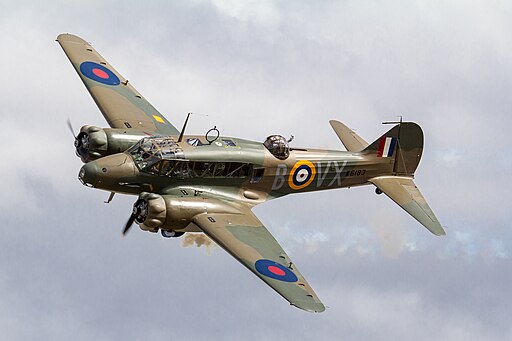
The Avro Anson is a British twin-engine, multi-role aircraft that first took to the skies in the mid-1930s. Initially developed as a maritime reconnaissance aircraft for the Royal Air Force (RAF), it quickly evolved into one of the most versatile aircraft of its era. Its extensive use throughout World War II and beyond, both as a trainer and transport, marks it as an iconic aircraft in aviation history. The Anson was named after George Anson, an 18th-century British admiral, reflecting its original naval reconnaissance purpose.
Design and Development
The Avro Anson was designed by the Avro company, spearheaded by chief designer Roy Chadwick. The design emphasized ruggedness, ease of maintenance, and versatility. The aircraft features a low-wing monoplane design with twin engines mounted on the wings, a retractable landing gear system, and a relatively spacious fuselage. The early models were powered by two Armstrong Siddeley Cheetah radial engines, which contributed to its reliability and performance in maritime patrol roles.
The cockpit accommodated a crew of three to four, including a pilot, navigator, radio operator, and gunner, depending on the mission. The fuselage was designed to carry a variety of equipment, such as bomb racks, reconnaissance cameras, and radio gear, adapting to different operational requirements. The aircraft’s construction employed a mix of metal and fabric, typical of the era, ensuring a balance between durability and weight-saving.
Technical Specifications
The Avro Anson’s performance and capabilities were notable for its time. The early Mk I variant had a wingspan of approximately 56 feet 4 inches (17.17 meters) and an overall length of 42 feet 3 inches (12.88 meters). The height stood at 11 feet 7 inches (3.53 meters), making it a relatively compact yet substantial aircraft.
Its twin Armstrong Siddeley Cheetah IX engines each produced around 350 horsepower, allowing the aircraft a maximum speed of about 188 mph (303 km/h) at sea level. The operational range was roughly 660 miles (1,060 kilometers), which was adequate for coastal reconnaissance missions and short transport duties. The service ceiling was near 19,000 feet (5,800 meters), and the rate of climb was moderate, enabling it to reach operational altitude efficiently.
The aircraft’s maximum takeoff weight was around 8,500 pounds (3,855 kilograms), which included crew, fuel, and mission-specific payload. Fuel capacity was approximately 210 gallons (950 liters), stored in wing tanks to maintain balance and stability. The Anson’s landing gear was fully retractable, reducing drag and enhancing speed and fuel efficiency during flight.
Armament and Equipment
While primarily a reconnaissance aircraft, the Avro Anson was equipped with defensive armament to protect against enemy fighters. Early versions carried a single .303 inch (7.7 mm) machine gun mounted in a dorsal turret, providing coverage from above and behind. Some variants included ventral gun positions or side windows fitted with machine guns, depending on the mission profile.
Bomb racks allowed the Anson to carry light bomb loads, typically up to 360 pounds (160 kilograms) of bombs, depth charges, or mines for anti-submarine warfare. The aircraft was also outfitted with sophisticated radio and navigation equipment for its time, such as wireless transmitters, receivers, and early radar technology in later models, enhancing its effectiveness in maritime patrol and training roles.
Operational History
The Avro Anson entered service with the RAF in 1936, initially serving with Coastal Command on maritime reconnaissance missions, anti-submarine patrols, and convoy escort duties. Despite its relatively modest speed and armament, the Anson’s ruggedness and endurance made it invaluable for coastal defense. Its role expanded significantly during World War II, where it became one of the RAF’s primary multi-engine trainers, helping prepare thousands of pilots for operational aircraft like the Wellington and Halifax bombers.
Beyond Britain, the Anson was operated by various Allied air forces, including Canada, Australia, and New Zealand. The Royal Canadian Air Force produced large numbers under license, modifying the design to suit training and transport roles. The aircraft’s adaptability ensured it remained in service well into the post-war period, performing tasks such as liaison, communications, and light transport.
Variants and Modifications
The Avro Anson saw numerous variants, each tailored to specific roles and technological advancements. The Mk I was the original reconnaissance and patrol version, while the Mk II featured American-made Pratt & Whitney engines in Canadian production, providing greater power and reliability. The Mk V variant was adapted for training with improved cockpit instrumentation and dual controls.
Later versions incorporated metal-skinned fuselages replacing the original fabric coverings, improving durability and ease of maintenance. Some Ansons were modified as target tugs, navigation trainers, or ambulance aircraft. The versatility of the airframe allowed Avro to continuously update and refine the design throughout its service life, maintaining operational relevance.
Legacy and Impact
The Avro Anson’s contribution to aviation and military history is significant. It was the RAF’s first twin-engine monoplane and a pioneer in multi-engine pilot training. Its role in preparing aircrew for the vast bomber fleets of World War II directly influenced the effectiveness of Allied air operations. Furthermore, its adaptability set a precedent for multi-role military aircraft, combining reconnaissance, training, and transport capabilities in one platform.
Many Ansons continued to fly in civilian roles after military retirement, used for passenger flights, cargo transport, and aerial surveying. Today, surviving Avro Ansons are preserved in museums and by historic flight organizations worldwide, celebrated for their rugged design and pivotal wartime service.
Conclusion
The Avro Anson remains an enduring symbol of British aviation ingenuity and versatility. Its design, while rooted in the 1930s, anticipated many features that would become standard in military aircraft design. The balance between performance, durability, and adaptability ensured the Anson’s relevance through a turbulent period of history, making it a fascinating subject for aviation enthusiasts and historians alike. Its technical specifications and operational history provide insight into the challenges and innovations of early multi-engine military aircraft development.
