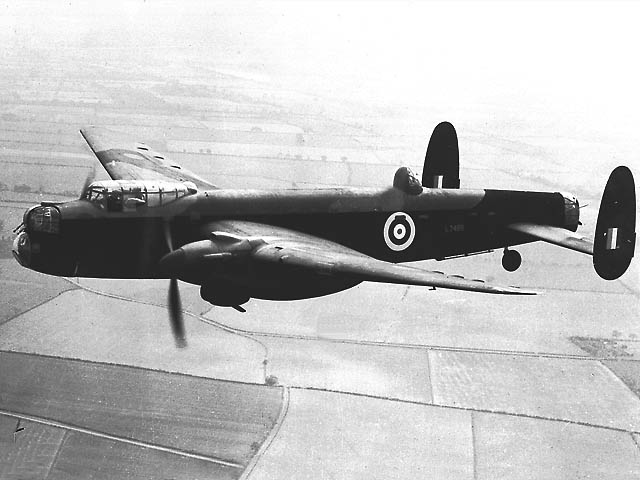
The Avro Manchester was a British twin-engine heavy bomber developed in the late 1930s as part of the Royal Air Force’s efforts to enhance its strategic bombing capabilities ahead of World War II. It was designed by Avro Aircraft Limited as a medium-range bomber and served as the immediate predecessor to the highly successful Avro Lancaster. Despite its limited production and operational issues, the Manchester played a crucial role in shaping British bomber design during the early years of the war and contributed significantly to the evolution of multi-engine heavy bombers.
Design and Development
The Avro Manchester’s development began in response to Air Ministry Specification P.13/36, which called for a twin-engine heavy bomber capable of carrying a substantial bomb load over medium ranges. The design was led by Roy Chadwick, Avro’s chief designer, who envisioned an aircraft that balanced size, speed, and firepower with the limitations of engine technology at the time. The Manchester was a high-wing monoplane with a robust and aerodynamically clean design, intended to maximize speed and operational range.
One of the most critical design choices for the Manchester was its propulsion system. Avro opted to use the new Rolls-Royce Vulture engine, a liquid-cooled 24-cylinder X-type powerplant intended to deliver high power output. However, the Vulture was plagued by developmental and reliability issues, which severely impacted the aircraft’s operational effectiveness. The Manchester’s airframe was sturdy, featuring a spacious fuselage capable of housing a crew of seven and an internal bomb bay designed to accommodate up to 10,000 pounds of ordnance.
The bomber incorporated defensive armament concentrated in multiple turrets to protect against enemy fighters from various angles. A nose turret, tail turret, dorsal turret, and ventral turret combined to provide a comprehensive defensive shield. The Manchester also featured retractable landing gear and a mid-wing design that enhanced aerodynamic performance and stability during long-range missions.
Technical Specifications and Performance
The Avro Manchester had an overall length of approximately 63 feet 10 inches (19.46 meters), with a wingspan of 66 feet 0 inches (20.12 meters). The height of the aircraft measured around 15 feet 8 inches (4.78 meters). Its wings were equipped with large flaps and ailerons designed to provide good low-speed handling, essential for takeoffs and landings when fully loaded.
Powered by two Rolls-Royce Vulture V12 engines, each producing around 1,760 horsepower, the Manchester was theoretically capable of reaching a maximum speed of approximately 265 miles per hour (426 kilometers per hour) at 15,000 feet (4,572 meters). The operational range was around 1,080 miles (1,740 kilometers) when carrying a full bomb load, although engine reliability issues often compromised performance in practice. The service ceiling was near 23,000 feet (7,010 meters), sufficient for penetrating many enemy defenses at the time.
The aircraft’s maximum takeoff weight was roughly 38,500 pounds (17,470 kilograms), with an empty weight close to 26,000 pounds (11,790 kilograms). Its fuel capacity allowed for extended missions but was limited by the engines’ fuel consumption, particularly due to the Vulture’s inefficiency.
Armament and Defensive Systems
The Avro Manchester was designed with a comprehensive defensive armament suite to protect it during daylight bombing raids. It featured four power-operated turrets: one in the nose, one dorsal turret mounted above the fuselage, one tail turret, and a ventral turret located underneath the fuselage. These turrets were equipped with .303 inch (7.7 mm) Browning machine guns, with the tail turret typically housing four guns for maximum defensive firepower from the rear.
In addition to turret-mounted weapons, the aircraft had several manually operated gun positions to cover blind spots and enhance protection against enemy fighters. The bomb bay was configured to carry a variety of bomb loads, from high-explosive general-purpose bombs to incendiaries and specialized munitions. The maximum internal bomb load was approximately 10,000 pounds (4,536 kilograms), spread across a spacious bomb bay that allowed for flexible payload arrangements.
Operational History
The Avro Manchester entered operational service with the Royal Air Force in early 1940, but its service life was plagued by the unreliability of the Rolls-Royce Vulture engines. Frequent engine failures and mechanical difficulties limited its availability and effectiveness in combat operations. Despite these challenges, the Manchester participated in several early bombing raids over Germany and occupied Europe, contributing to the nascent strategic bombing campaign.
Due to the ongoing issues with its engines, production of the Manchester was curtailed after fewer than 200 units were built. However, Avro engineers recognized the potential of the airframe and redesigned it to accommodate four smaller and more reliable Rolls-Royce Merlin engines, resulting in the development of the Avro Lancaster. The Lancaster would go on to become one of the most iconic and effective heavy bombers of World War II, underscoring the importance of the Manchester as a critical stepping stone in bomber development.
Variants and Modifications
The main variant of the Manchester was the Mk I, which formed the bulk of production. A small number of Mk IA aircraft featured minor improvements, primarily focused on reliability and systems upgrades. There were also plans for a bomber reconnaissance version and a maritime patrol derivative, but these never advanced beyond the prototype stage due to the aircraft’s limitations.
Throughout its service, several modifications were made to address engine cooling problems, improve defensive armament, and enhance structural integrity. Nonetheless, the persistent issues with the Vulture engines could not be fully resolved, prompting the shift to the Lancaster design.
Legacy and Impact
Though the Avro Manchester had a relatively short and troubled operational history, its legacy is significant in the context of British bomber development. The aircraft’s innovative airframe design laid the foundation for the Avro Lancaster, which would dominate RAF heavy bombing efforts throughout the war. The Manchester’s trials and tribulations with engine technology underscored the importance of reliable powerplants in multi-engine bombers, influencing future design choices across the industry.
The Manchester also contributed valuable lessons in crew ergonomics, defensive turret layout, and payload capacity that directly influenced subsequent bomber designs. Its service, while limited, demonstrated the RAF’s transition into modern strategic bombing and helped establish tactics and doctrines that would evolve during World War II.
Conclusion
The Avro Manchester occupies a unique place in aviation history as a pioneering but ultimately transitional heavy bomber. Its design reflected ambitious engineering goals, constrained by the technological limitations of its engines. Despite operational challenges, the Manchester’s airframe served as the foundation for the legendary Avro Lancaster, making it an essential link in the chain of British bomber evolution. The aircraft’s technical specifications illustrate an advanced design for its time, blending substantial payload capacity, multi-turret defense, and respectable speed. As a result, the Manchester remains an important chapter in the story of military aviation and the development of strategic bombing capabilities during the Second World War.
