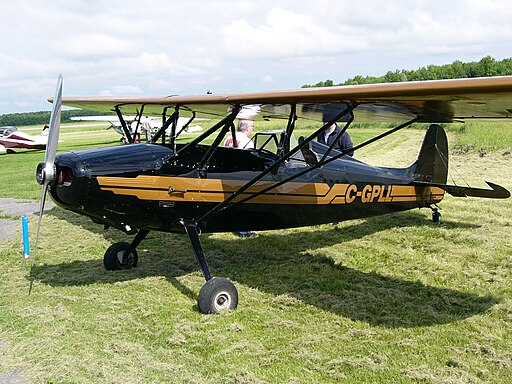
The Bakeng Deuce is an American homebuilt light aircraft conceived in the late 1960s and first flown in April 1970. It was designed by aeronautical engineer Jerry Bakeng with the intent of creating a classic-style, two-seat parasol wing aircraft that could be built by amateur builders while offering enjoyable performance and handling reminiscent of vintage sport aircraft. The design captured immediate attention in the experimental aviation community, earning the prestigious Outstanding New Design award at the EAA Fly-In shortly after its debut. Over the ensuing decades, more than one hundred sets of plans have been sold, and numerous examples have been constructed by enthusiasts around the world. In 1999 the rights to the design were acquired by the Bakeng Deuce Airplane Factory, prompting a rebranding from the original “Duce” to “Deuce” and incorporating a series of improvements based on builder and pilot feedback.
Airframe and Structural Design
The Bakeng Deuce’s airframe reflects a blend of traditional and practical construction techniques targeted at homebuilders. The fuselage is a welded steel tube structure that provides a sturdy internal framework; up front it is faired with metal skins and aft of that covered in aircraft fabric to keep weight down while maintaining structural integrity. The wings are built with wooden spars and ribs, also fabric-covered, supporting a classic parasol configuration held above the fuselage by cabane and V-struts. This arrangement affords excellent visibility for both pilot and passenger, as well as ease of construction and repair. The design includes a conventional tailwheel undercarriage with a tail-dragger attitude that appeals to pilots seeking a more analog flight experience. The wing panels are typically removable to facilitate transport and storage, a valuable feature for private owners with limited hangar space. (pilotspost.com)
Cockpit and Ergonomics
The cockpit of the Deuce seats two occupants in tandem, with the pilot usually positioned in the rear seat for optimal control and visibility. Early models featured open cockpits that reinforced the classic sport flying experience, but later revisions include options for enclosed canopies offering protection from the elements and improved aerodynamic cleanliness. The instrument panel and controls in Deuce builds vary widely according to builder preferences and mission profile; some fit modern avionics typical of light aircraft, while others retain minimalistic, analog instruments. The tandem seating and relatively narrow fuselage promote a focused, pilot-centric environment that suits recreational flying and basic cross-country trips alike.
Powerplant and Propulsion
The Bakeng Deuce is typically powered by a single piston engine mounted on the nose. The most commonly used powerplant is the Lycoming O-290 series four-cylinder, horizontally opposed, air-cooled engine producing around 125 horsepower, though many builders opt for larger Lycoming units such as the O-320 providing up to 160 hp to enhance climb and cruise performance. The design can accommodate a range of engines in the 125–160 hp class, giving builders flexibility based on performance goals and budget. The propeller is generally a fixed-pitch design, with wooden propellers often chosen for their light weight and classic appearance. Engine choices and installation details are determined by the builder, and many Deuce examples feature engine cowlings and inlets of composite materials to refine airflow and aesthetics.
Dimensions and Weight Characteristics
In its typical configuration, the Bakeng Deuce has a wingspan of approximately 9.25 meters (30 feet 4 inches), a length of about 6.32 meters (20 feet 9 inches), and a height of roughly 2.1 to 2.4 meters (7 to 8 feet), reflecting its compact but substantial parasol layout. The wing area spans around 12.8 square meters (138 square feet), delivering a wing loading that supports stable handling at lower speeds ideal for sport flying. Empty weight figures cluster around 407 kg to over 475 kg (898–1,050 pounds) depending on builder choices, with a maximum gross weight in the range of 680 kg to 748 kg (1,500–1,650 pounds). Fuel capacity is often in the vicinity of 34 US gallons, enough to support moderate cross-country flights without significantly compromising useful load.
Performance Profile
Performance parameters of the Bakeng Deuce are influenced by engine selection and build quality, but general figures provide a picture of its capabilities. With a typical engine in the 125–160 hp range, the aircraft can achieve a top speed around 225 km/h (140 mph) and a cruise speed close to 180–225 km/h (110–140 mph). The rate of climb is brisk for a homebuilt design, often reaching about 1,000–1,500 feet per minute, and service ceiling figures can ascend to approximately 12,000–17,000 feet under favorable conditions. Takeoff and landing distances are short due to the light weight and wing design, allowing operation from unimproved fields and small airstrips. Despite its open-cockpit or lightly enclosed design, the Deuce offers respectable range—commonly about 350–480 kilometers (220–300 miles) with full fuel—making it suitable for recreational cross-country flights within regional boundaries.
Construction, Variants, and Builder Community
The Bakeng Deuce remains popular among the homebuilt aircraft community for its straightforward construction, classic aesthetics, and engaging flight characteristics. Builders acquire plans and, in some cases, material kits such as wooden spar kits to simplify construction. The design’s steel-tube fuselage and wood-and-fabric wings allow traditional aircraft construction techniques accessible to experienced amateur builders. Over the years, improvements have been introduced, including refined control systems, larger fuel tanks, improved seating, and options for enclosed cockpits. While primarily built as a parasol wing monoplane, there was at least one derivative biplane version known as the Double Deuce, highlighting the adaptability of Bakeng’s basic design ethos. The community of Deuce builders and flyers continues to share modifications, performance data, and build experiences, keeping the design relevant in the experimental aviation sphere decades after its introduction.
Legacy and Flying Experience
The Bakeng Deuce stands as a testament to the enduring appeal of classic light aircraft designs reimagined for the homebuilt era. Its combination of nostalgic styling, solid engineering, and engaging flight performance offers a unique flying experience that bridges the gap between vintage aircraft charm and modern pilot expectations. Whether flown from grass strips on sunny weekends, participating in local fly-ins, or traversing scenic routes at moderate speeds, the Deuce delivers a hands-on connection to the fundamentals of flight that continues to captivate builders and pilots alike.
