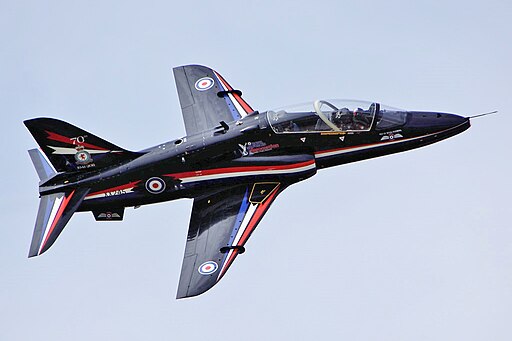
The BAE Systems Hawk is a British-designed advanced jet trainer that has formed the backbone of fast-jet pilot training for air forces worldwide since the late 1970s. Conceived as a cost-effective, highly maneuverable platform capable of bridging the gap between basic flight training and front-line fighter operations, the Hawk excels at both fundamental handling instruction and preparation for complex tactical scenarios in modern combat aircraft. Its airframe, avionics, and propulsion systems were engineered to provide pilots with a combination of agility, reliability, and performance that simulate many aspects of high-performance fighter jets without the cost and complexity of those frontline aircraft. Produced in multiple variants with continual upgrades over decades, the Hawk has been exported to numerous countries and adapted for roles beyond training, including light attack and adversary support.
Airframe Design and Aerodynamics
At the core of the Hawk’s design philosophy is a low-wing, single-engine configuration that supports predictable, agile handling across the flight envelope. Its semi-monocoque fuselage is constructed primarily from aluminum alloys, providing a structural balance between strength and manufacturability, while composite components are used in selected areas to reduce weight. The low-mounted wings have a moderate leading-edge sweep that fosters stable subsonic and transonic flight characteristics, enabling trainees to experience high-performance handling without exceeding safe operating limits. The airframe is stressed to withstand significant positive and negative g-loads necessary for realistic training, permitting advanced aerobatic maneuvers and tactical flight profiles. The Hawk’s aerodynamic features include an airbrake mounted on the underside of the fuselage to support energy management during simulated combat and training approaches.
Cockpit and Avionics Suite
The Hawk’s tandem cockpit configuration seats the student pilot in front with the instructor directly behind, optimizing visibility for both crew members. Ejection seats are fitted for each occupant, ensuring safety during all phases of training. In its earlier variants the cockpit featured conventional analog instrumentation suitable for fundamental training tasks, but later models such as the Hawk T2 (also designated Hawk 128) transitioned to a fully digital glass cockpit. Advanced avionics in these modern versions include multifunction displays (MFDs), a head-up display (HUD), hands-on-throttle-and-stick (HOTAS) controls, and integrated navigation systems capable of supporting instrument flight rules (IFR) operations. These systems are designed to mirror the functionality of front-line combat aircraft, providing trainees with realistic mission planning, situational awareness, and tactical familiarization before transitioning to fighter jets. In select upgrades, the Hawk can also simulate radar contacts and include datalink capability to support synthetic intercept training.
Propulsion System
Power for the Hawk family is delivered by a single Rolls-Royce/Turbomeca Adour turbofan engine, a non-afterburning powerplant chosen for its reliability, efficiency, and responsive throttle performance. Later production engines incorporate a Full Authority Digital Engine Control (FADEC) system for more precise and automated management of engine parameters, reducing pilot workload and improving fuel efficiency. The thrust class typically ranges around 29 kN (6,500 lbf), enabling the aircraft to reach maximum speeds in excess of 1,000 km/h and to perform rapid throttle transitions required during advanced training tasks. The engine’s design also supports sustained high-altitude operations, allowing the Hawk to achieve service ceilings above 13,000 meters.
Dimensions and Weight
The Hawk features a sleek profile optimized for speed and agility. The aircraft’s typical dimensions include a length of approximately 12.43 meters and a wingspan near 9.94 meters, with an overall height near 3.98 meters. The wing area, around 16.7 square meters, supports stable lift generation across training regimens. Empty weight for standard two-seat trainer variants is in the region of 4,480 kg, while maximum takeoff weight can reach around 9,100 kg when fully loaded. These weight characteristics reflect the balance between structural strength and the payload capacity necessary for both training equipment and optional external stores used in weapons training.
Performance Capabilities
Performance is a key reason the Hawk remains relevant decades after its introduction. In level flight, the aircraft can exceed 1,000 km/h, and in a dive it is capable of reaching speeds approaching Mach 1.2, exposing trainees to transonic regimes essential for high-performance flight preparation. The Hawk’s rate of climb, often exceeding 9,000 feet per minute, supports rapid altitude changes, while the service ceiling permits realistic high-altitude training scenarios. Ferry range—when equipped with additional external fuel tanks—extends beyond 2,500 kilometers, enabling long-distance deployments during international training exercises. Structural g-limits and responsive controls facilitate aerobatic and tactical maneuvers, reinforcing pilot proficiency in complex mission profiles.
Armament and Hardpoints
Although fundamentally a trainer, the Hawk’s design accommodates external stores and light armament configurations to support weapons instruction and secondary operational roles. Hardpoints under the wings and fuselage allow trainees to practice weapon carrying procedures and simulate light attack missions. Optional equipment includes a 30 mm cannon pod mounted on the centerline, as well as short-range air-to-air missiles such as the AIM-9 Sidewinder for introductory air combat training. For ground attack scenarios, the Hawk can carry practice bombs, rockets, and laser-guided munitions on its external pylons. This versatility broadens the training scope, ensuring pilots understand stores management and delivery techniques before transitioning to dedicated combat aircraft. (assets.publishing.service.gov.uk)
Variants and Operational Use
Over its service life, the Hawk has been produced in numerous variants to meet specific training and operational requirements. The Royal Air Force deployed the Hawk T1 and its advanced Hawk T2 versions as the cornerstone of their fast-jet training pipeline, with the latter incorporating modernized avionics and simulation capabilities. Export versions such as the Hawk 100 and Hawk 127 introduced enhanced powerplants and mission systems, while specialized derivatives like the Hawk 200 serve as single-seat light attack platforms. Additionally, the basic design was adapted into the T-45 Goshawk for carrier-based operations by other nations’ navies. The Hawk’s adaptability and enduring performance have led to its adoption by over twenty air forces around the globe in both training and secondary combat support roles.
Conclusion
The BAE Systems Hawk remains an iconic and technically sophisticated advanced jet trainer that has stood the test of time. Its blend of aerodynamic efficiency, robust performance, adaptable avionics, and optional weapons integration ensures it continues to provide realistic and cost-effective pilot training for modern air forces. With upgrades that keep pace with evolving combat aircraft requirements, the Hawk set the standard for lead-in fighter training and remains a benchmark in the design of advanced military trainer aircraft.
.jpg)