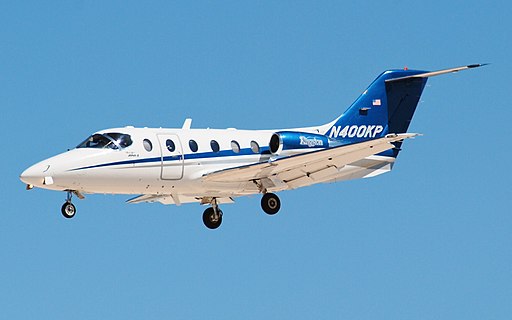
Hawker 400 – Technical Analysis of a Classic Light Business Jet
The Hawker 400 is one of the most recognizable light corporate jets developed during the late twentieth century. Known for its efficient aerodynamics, compact cabin, and reliable turbofan engines, the aircraft established itself as a versatile platform for corporate transport, air-taxi services, and even military training missions. Originally designed in Japan and later refined in the United States, the aircraft represents a rare example of international cooperation in business aviation engineering.
This light jet has served hundreds of operators worldwide and has undergone several improvements throughout its production life. Over the decades, the aircraft has proven its value through dependable performance, efficient fuel consumption, and a balanced combination of range and speed suitable for regional business travel.
The following article provides an extensive technical and historical overview of the Hawker 400, including its development history, aerodynamic design, powerplant characteristics, avionics architecture, operational capabilities, and variants. At the end, a comprehensive table summarizes the aircraft’s technical specifications.
Origins and Development of the Hawker 400
The origins of the Hawker 400 date back to the late 1970s when Mitsubishi Heavy Industries initiated the development of a modern business jet designed to complement its turboprop aircraft portfolio. The project was originally designated Mitsubishi MU‑300 Diamond, representing the company’s first dedicated entry into the pure jet-powered corporate aircraft market.
The MU-300 was engineered as a clean-sheet design rather than an adaptation of an existing airframe. The aircraft completed its first flight on August 29, 1978, marking the beginning of a long development process aimed at certification under stringent aviation regulations.
Although the Japanese manufacturer produced the first examples, the program eventually changed ownership. In 1985, the production rights and unfinished airframes were sold to Beech Aircraft Corporation, an American aerospace company well known for its business aircraft line. After acquiring the program, Beechcraft refined the aircraft and reintroduced it under the name Beechjet 400, which subsequently received certification from the Federal Aviation Administration in 1986.
Later corporate restructuring within the aerospace industry led to additional rebranding. When Raytheon Aircraft Company acquired the Hawker business jet brand from British Aerospace, the Beechjet 400 family was renamed Hawker 400, integrating it into the broader Hawker lineup of executive aircraft.
Between its original Japanese production and later American manufacturing, more than 900 aircraft were delivered worldwide. The aircraft remained in production until 2009, after which upgraded retrofit packages continued to extend the lifespan of the existing fleet.
Aircraft Classification and Market Role
Within the business aviation industry, the Hawker 400 belongs to the light business jet category. Aircraft in this class are optimized for short-to-medium range missions, typically carrying between six and eight passengers while maintaining high cruise speeds and relatively low operational costs.
The Hawker 400 was designed to fill a specific niche: transporting small groups of passengers efficiently over regional distances while offering comfort comparable to larger corporate jets. Typical missions include:
- Executive corporate transportation
- On-demand air taxi operations
- Charter flights
- Government transport missions
- Military pilot training
Its relatively compact size and performance capabilities allow the aircraft to operate from smaller airports while still achieving high cruise altitudes and speeds.
Aerodynamic Design and Structural Characteristics
One of the defining technical aspects of the Hawker 400 is its aerodynamic efficiency. The aircraft features a low-wing monoplane configuration, with wings mounted at the lower portion of the fuselage to improve aerodynamic stability and simplify landing gear integration.
Supercritical Wing Design
The wing structure incorporates a supercritical airfoil, which was a relatively advanced design feature for a business jet of its era. Supercritical wings reduce aerodynamic drag in transonic flight regimes, allowing the aircraft to cruise efficiently at higher speeds and altitudes.
Key aerodynamic advantages include:
- Reduced shockwave formation near Mach 0.75
- Improved lift-to-drag ratio
- Enhanced fuel efficiency at cruise speeds
This design allows the Hawker 400 to cruise comfortably between Mach 0.71 and Mach 0.73 during normal operations.
Wing Structure
The wing is constructed using high-strength aluminum alloys and features two primary structural spars running through the fuselage. This configuration enhances structural rigidity and distributes aerodynamic loads efficiently.
Additional wing features include:
- Trailing-edge flaps for improved low-speed lift
- Spoilerons combining spoiler and aileron functions
- Wingtip design optimized for drag reduction
T-Tail Configuration
The aircraft employs a T-tail configuration, in which the horizontal stabilizer is mounted at the top of the vertical stabilizer. This design offers several aerodynamic benefits:
- Reduced aerodynamic interference between wing wake and tail surfaces
- Improved pitch authority during high-angle-of-attack maneuvers
- Better stability at high speeds
Fuselage and Cabin Design
The fuselage of the Hawker 400 is built from conventional aluminum alloy structures with an oval cross-section designed to maximize cabin volume while maintaining aerodynamic efficiency.
Pressurized Cabin
The aircraft features a fully pressurized passenger cabin, allowing comfortable operation at high altitudes up to approximately 45,000 feet.
Typical seating arrangements accommodate seven to nine passengers, depending on interior configuration.
Cabin Layout
The standard interior layout includes:
- Club seating arrangement
- Fold-out executive tables
- Lavatory compartment
- Baggage storage area
The cabin dimensions provide adequate comfort for short- and medium-range missions. While not as spacious as midsize jets, the Hawker 400 delivers a comfortable environment for business travel.
Typical cabin dimensions include:
- Cabin length: approximately 4.75 m
- Cabin width: about 1.5 m
- Cabin height: approximately 1.47 m
These measurements create a cabin volume of roughly 8.6 cubic meters, suitable for small executive teams.
Powerplant and Engine Performance
The Hawker 400 is powered by two Pratt & Whitney Canada JT15D‑5 turbofan engines mounted on the rear fuselage.
Engine Architecture
The JT15D engine family is a small turbofan widely used in business aviation due to its reliability and efficient thrust-to-weight ratio.
Each engine produces approximately 2,900 pounds of thrust, allowing the aircraft to achieve high cruise speeds while maintaining relatively low fuel consumption.
Rear Fuselage Engine Placement
Mounting the engines at the rear fuselage offers several advantages:
- Reduced cabin noise levels
- Cleaner wing aerodynamics
- Lower risk of foreign object ingestion from runways
This configuration also simplifies wing design and improves aerodynamic efficiency.
Fuel Efficiency
Typical fuel consumption decreases after the first hour of flight, making the aircraft efficient on medium-range missions. Operators often report optimal mission lengths between 1.5 and 2 hours, which aligns well with corporate regional travel patterns.
Avionics and Flight Deck Systems
The Hawker 400 introduced advanced avionics for its time, especially in later variants such as the 400A and 400XP.
The aircraft commonly uses the Collins Pro Line 4 avionics system, a digital flight deck architecture widely used in business aviation.
Cockpit Configuration
The cockpit is designed for two pilots, reflecting certification standards for business jets of this size.
The avionics suite includes:
- Electronic Flight Instrument System (EFIS)
- Primary Flight Displays (PFDs)
- Multifunction Display (MFD)
- Digital autopilot system
- Flight management system (FMS)
Weather and Navigation Systems
Additional avionics components include:
- Weather radar systems
- Radio altimeters
- Advanced navigation and communication radios
Together, these systems provide pilots with a highly integrated situational awareness platform.
Performance Capabilities
The Hawker 400 delivers strong performance for a light business jet. Its combination of high thrust, efficient wings, and advanced aerodynamics allows the aircraft to operate effectively in demanding flight environments.
Cruise Speed
The aircraft can reach maximum speeds of approximately 468 knots (866 km/h), placing it among the faster aircraft in the light jet category.
Typical cruise speeds are slightly lower but still impressive for its class.
Range
The Hawker 400 has a maximum range of approximately 1,693 nautical miles (3,135 km) when flying at optimal altitude with reserve fuel.
This range enables non-stop flights between many major business destinations.
Service Ceiling
One of the aircraft’s key operational advantages is its service ceiling of 45,000 feet, allowing it to fly above most commercial air traffic and weather disturbances.
Climb Performance
The aircraft has an impressive rate of climb of approximately 3,770 ft/min, enabling it to reach cruise altitude quickly and efficiently. (liquisearch.com)
Operational Use and Global Operators
Since its introduction, the Hawker 400 has been widely used by corporate operators, charter companies, and government agencies.
The aircraft’s reliability and moderate operating costs have made it attractive to:
- Corporate flight departments
- Charter and air taxi operators
- Government aviation units
- Training organizations
A notable military version of the aircraft is the T‑1A Jayhawk, used by the United States Air Force as a training platform for pilots transitioning to larger transport and tanker aircraft.
Approximately 180 T-1A aircraft were delivered to the USAF for this purpose.
Major Variants of the Hawker 400
Over time, several variants of the aircraft were introduced to improve performance, avionics, and cabin comfort.
Mitsubishi MU-300 Diamond I
The original prototype and early production model built in Japan. It established the fundamental aerodynamic configuration of the aircraft.
Mitsubishi MU-300 Diamond II
An improved version with refinements in avionics and systems.
Beechjet 400
The first version produced in the United States after Beechcraft acquired the program.
Beechjet 400A
A significantly improved model featuring:
- Higher maximum takeoff weight
- Extended range
- Updated avionics
- Enhanced cabin comfort
Hawker 400XP
One of the most advanced versions in the series, incorporating:
- Increased thrust capability
- Thrust reversers
- Advanced avionics
- Expanded passenger capacity
Hawker 400XPR
A modernization upgrade package designed to improve efficiency and extend the operational life of existing aircraft.
Modern Upgrades and Remanufacturing Programs
Although production of the Hawker 400 family ended in 2009, several companies continue to support and modernize the aircraft.
Upgrade programs include:
- Engine replacement with newer turbofans
- Glass cockpit modernization
- Aerodynamic improvements such as winglets
- Interior refurbishment
These upgrades help operators maintain competitiveness and reduce operational costs.
Economic Considerations
The Hawker 400 remains popular on the used aircraft market due to its relatively low acquisition cost and solid performance characteristics.
Typical advantages include:
- Lower purchase price compared to newer light jets
- Proven engine reliability
- Strong performance for short-range missions
However, some operators report increasing maintenance costs as the aircraft ages and parts availability becomes more limited.
Technical Specifications – Hawker 400
| Parameter | Specification |
|---|---|
| Aircraft Type | Light Business Jet |
| Crew | 2 pilots |
| Passenger Capacity | 7–9 passengers |
| Length | 14.76 m |
| Wingspan | 13.26 m |
| Height | 4.24 m |
| Wing Area | 22.43 m² |
| Empty Weight | ~4,558 kg |
| Maximum Takeoff Weight | 7,303 kg |
| Engines | 2 × Pratt & Whitney Canada JT15D-5 turbofans |
| Thrust | 2,900 lbf each |
| Maximum Speed | 468 knots (866 km/h) |
| Cruise Speed | ~443 knots (820 km/h) |
| Maximum Range | 1,693 nautical miles (3,135 km) |
| Service Ceiling | 45,000 ft (13,700 m) |
| Rate of Climb | 3,770 ft/min |
| Baggage Capacity | ~53 cubic feet |
_(cropped).jpg)