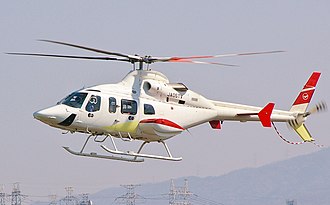
Bell 430 – The Elegant Twin-Engine Helicopter That Defined Premium Utility Aviation
The Bell 430 occupies a fascinating position in the history of modern helicopters. Elegant, powerful, sophisticated, and unmistakably refined, the aircraft represented Bell Helicopter’s ambition to create a premium twin-engine rotorcraft capable of combining executive comfort with serious operational capability. Although it never achieved the overwhelming commercial dominance of some rival helicopters, the Bell 430 nevertheless became one of the most respected and admired aircraft in its category. Pilots praised its handling characteristics, operators appreciated its reliability, and passengers often described it as one of the smoothest helicopters of its generation.
When the Bell 430 entered service during the mid-1990s, the global helicopter industry was undergoing major changes. Operators increasingly demanded aircraft that could provide greater safety, improved avionics, lower vibration levels, and enhanced passenger comfort while still maintaining the rugged utility characteristics expected from helicopters. Bell recognized that many customers no longer wanted purely utilitarian machines. Instead, they sought aircraft capable of fulfilling multiple roles, ranging from corporate transport and emergency medical services to offshore support and government operations.
The Bell 430 emerged as Bell’s answer to those changing expectations. Developed from the earlier Bell 230, the helicopter incorporated significant aerodynamic refinements, more powerful engines, a sophisticated four-blade rotor system, and an enlarged cabin designed for comfort and flexibility. The aircraft represented a substantial leap forward from older Bell twin-engine helicopters and became an important bridge between traditional utility rotorcraft and the more technologically advanced helicopters of the twenty-first century.
Even today, the Bell 430 remains highly respected within aviation circles. Although production ended in 2008, many aircraft continue operating worldwide in executive transport, police aviation, emergency medical missions, and government service. The helicopter’s enduring reputation reflects the quality of its engineering and the balanced philosophy behind its design.
Unlike helicopters created purely for military utility or industrial transportation, the Bell 430 possessed a distinct sense of refinement. Its sleek fuselage, spacious cabin, smooth rotor system, and advanced avionics gave it a premium identity that appealed strongly to corporate and VIP operators. Yet beneath this elegant appearance remained the practical Bell philosophy of reliability, accessibility, and operational flexibility.
The Bell 430 therefore represents more than simply another helicopter model. It symbolizes an important stage in the evolution of modern rotary-wing aviation. It reflects a moment when helicopter manufacturers began blending luxury, safety, technology, and utility into highly versatile aircraft capable of serving multiple professional roles.
This article explores the Bell 430 in depth, examining its origins, engineering philosophy, technical innovations, operational history, pilot impressions, commercial performance, and long-term legacy. By understanding the Bell 430 fully, it becomes clear why this aircraft still commands admiration decades after its introduction.
The Helicopter Industry in Transition
The Changing Market of the 1980s and 1990s
To understand the Bell 430 properly, it is necessary to examine the helicopter market environment in which it was developed. During the 1980s and early 1990s, the global rotorcraft industry experienced substantial transformation. Traditional utility helicopters still dominated many sectors, but operators increasingly demanded aircraft with higher safety standards, improved passenger comfort, and more advanced avionics.
Twin-engine helicopters became especially important because of growing regulatory requirements and increasing concern for operational safety. Offshore oil transport, urban emergency medical services, and executive transport missions all favored twin-engine designs because they offered redundancy in the event of engine failure.
At the same time, technological advancements in composite materials, rotor systems, avionics, and vibration reduction allowed manufacturers to create helicopters that were smoother, quieter, and more sophisticated than earlier generations.
European manufacturers such as Eurocopter and Agusta were introducing increasingly refined helicopters aimed at both utility and executive markets. Bell Helicopter therefore recognized the need to modernize its own twin-engine offerings.
Bell Helicopter’s Position in the Market
Bell Helicopter already possessed enormous global prestige because of legendary aircraft such as the Bell 206 JetRanger, Bell 212, Bell 412, and UH-1 Huey family. However, much of Bell’s reputation had been built on rugged utility helicopters rather than luxurious executive aircraft.
The company understood that modern customers expected more than reliability alone. They wanted smoother cabins, advanced avionics, reduced noise, elegant interiors, and sophisticated operational capability.
The Bell 430 was created specifically to address those expectations.
Origins of the Bell 430
Evolution from the Bell 230
The Bell 430 evolved directly from the earlier Bell 230 program. The Bell 230 itself had originated as a development of the Bell 222, a helicopter that gained widespread public recognition during the 1980s television series Airwolf.
The Bell 222 introduced sleek styling and executive transport capability to Bell’s product lineup, but Bell engineers believed further improvements were possible.
The Bell 230 therefore incorporated refinements in safety, avionics, and operational performance. Yet Bell still saw room for a more capable aircraft.
The Bell 430 became the next evolutionary step.
Major Improvements Over Earlier Models
Rather than producing only incremental changes, Bell significantly upgraded the helicopter in several important areas:
- More powerful engines
- Four-blade rotor system
- Increased cabin dimensions
- Improved payload capability
- Enhanced avionics
- Better aerodynamic efficiency
- Reduced vibration levels
- Greater operational flexibility
These improvements transformed the aircraft into a highly competitive modern twin-engine helicopter.
First Flight and Certification
The Bell 430 completed its maiden flight on October 25, 1994.
Certification followed in 1995, allowing Bell to begin deliveries to customers worldwide.
The helicopter entered service during a highly competitive era, but its combination of elegance and capability quickly attracted attention from operators seeking premium transport solutions.
Exterior Design and Aerodynamics
A Helicopter Designed to Impress
The Bell 430 possessed one of the most elegant appearances of any Bell helicopter.
Its streamlined nose, carefully sculpted fuselage, and balanced proportions created an aircraft that looked both modern and sophisticated.
Unlike purely functional utility helicopters with bulky shapes, the Bell 430 projected refinement and prestige.
This visual appeal mattered greatly in executive aviation markets where appearance influenced customer perception.
Even decades later, the Bell 430 still appears contemporary and attractive.
Four-Blade Composite Rotor System
One of the helicopter’s defining features was its advanced four-blade composite main rotor system.
This represented a significant technological improvement over older two-blade Bell rotor systems.
Four-blade configurations offer several important advantages:
- Reduced vibration
- Improved ride comfort
- Better aerodynamic efficiency
- Lower cabin noise
- Enhanced handling characteristics
- Greater rotor smoothness
Passengers and pilots immediately noticed the smoother flying experience compared with older helicopters.
Composite rotor blades also improved durability while reducing long-term maintenance demands.
Aerodynamic Refinements
Bell engineers carefully refined the Bell 430’s aerodynamic profile to improve efficiency and performance.
The aircraft featured:
- Streamlined engine housings
- Refined fuselage contours
- Improved airflow management
- Enhanced rotor aerodynamics
These changes contributed to better speed, lower vibration, and more stable flight characteristics.
Tail Rotor and Stability
The Bell 430 used a conventional tail rotor system optimized for strong directional control and operational reliability.
Bell prioritized predictable handling and straightforward maintenance accessibility.
The aircraft developed a strong reputation for stability across a wide range of operational conditions.
Engines and Performance
Rolls-Royce 250-C40B Engines
Power for the Bell 430 came from two Rolls-Royce 250-C40B turboshaft engines.
These engines delivered approximately 715 shaft horsepower each and provided excellent reliability and strong operational performance.
The Rolls-Royce 250 engine family had already established an outstanding reputation in helicopter aviation, and the Bell 430 benefited from this mature and dependable powerplant technology.
Twin-engine configuration significantly enhanced operational safety.
This redundancy proved especially important for:
- Urban transport
- Offshore operations
- Mountain flying
- Night missions
- Emergency medical services
Strong Cruise Performance
The Bell 430 offered impressive speed for its category.
The helicopter achieved cruising speeds of approximately 260 kilometers per hour and could reach maximum speeds exceeding 278 kilometers per hour.
These performance figures made the aircraft highly attractive for executive transport and rapid-response missions.
The Bell 430 balanced speed and comfort exceptionally well.
Range and Endurance
The aircraft’s range exceeded 600 kilometers under favorable conditions.
This allowed operators to perform regional transport missions efficiently without excessive refueling requirements.
Corporate operators especially appreciated the helicopter’s ability to connect cities, industrial facilities, and business centers quickly.
Hot and High Capability
Bell engineers designed the Bell 430 to maintain strong operational capability in demanding environments.
High-altitude and high-temperature operations challenge helicopters because reduced air density decreases lift and engine performance.
The Bell 430 performed well in such conditions, helping operators conduct missions in mountainous and hot-weather regions.
Cabin Design and Passenger Experience
Spacious Executive Cabin
One of the Bell 430’s greatest strengths was its cabin.
Bell designed the interior to provide executive-level comfort while maintaining mission flexibility.
Passengers enjoyed:
- Spacious seating
- Excellent visibility
- Smooth ride quality
- Reduced vibration
- Lower noise levels
- Refined interior finishes
The helicopter’s premium atmosphere distinguished it from many traditional utility rotorcraft.
Flexible Cabin Configurations
The Bell 430 could accommodate multiple interior layouts depending on operational requirements.
Configurations included:
- Executive VIP transport
- Corporate shuttle arrangements
- Medical evacuation setups
- Utility passenger transport
- Government transport interiors
This adaptability increased the helicopter’s commercial appeal.
Passenger Comfort and Ride Quality
The four-blade rotor system dramatically improved passenger comfort.
Compared with older helicopters, the Bell 430 felt remarkably smooth and stable.
Reduced vibration levels helped minimize fatigue during long flights while improving communication inside the cabin.
For executive passengers accustomed to business jets and luxury transportation, these qualities were especially important.
Large Windows and Visibility
Large cabin windows enhanced the passenger experience significantly.
Excellent visibility created a sense of openness while allowing passengers to enjoy panoramic views during flight.
This feature proved especially attractive in tourism, executive transport, and aerial observation roles.
Cockpit and Avionics
Modernized Flight Deck
The Bell 430 introduced a far more sophisticated cockpit environment than many earlier Bell helicopters.
The aircraft featured advanced avionics systems designed to improve situational awareness and reduce pilot workload.
Although early Bell 430 models still retained some analog instrumentation, many aircraft later received extensive avionics upgrades.
IFR Capability
Instrument Flight Rules capability represented a major strength of the Bell 430.
IFR-certified helicopters can operate safely in reduced visibility conditions by relying on instruments and navigation systems rather than purely visual references.
This capability proved critical for:
- Emergency medical operations
- Offshore transport
- Corporate transport
- Night operations
- Adverse weather missions
Pilot-Friendly Layout
Bell maintained its traditional emphasis on pilot-friendly cockpit design.
Pilots benefited from:
- Excellent external visibility
- Logical control placement
- Comfortable seating
- Intuitive systems organization
- Responsive handling
The Bell 430 became known as an aircraft that combined sophistication with operational accessibility.
Advanced Navigation Systems
Many Bell 430 operators installed modern navigation and communication systems including:
- GPS navigation
- Weather radar
- Terrain awareness systems
- Digital communication equipment
- Flight management systems
These upgrades helped extend the helicopter’s operational relevance well into the twenty-first century.
Pilot Impressions and Flying Characteristics
Smooth and Stable Handling
Pilots consistently praised the Bell 430 for its smooth handling characteristics.
The four-blade rotor system contributed heavily to this positive reputation.
Compared with older Bell helicopters, the Bell 430 felt significantly more refined and stable.
The helicopter responded predictably to pilot inputs while maintaining excellent overall control harmony.
Reduced Pilot Fatigue
Low vibration levels reduced pilot fatigue during extended operations.
This improvement mattered greatly for professional crews conducting long transport missions or multiple daily flights.
Fatigue reduction enhances not only comfort but also operational safety.
Strong Hover Performance
The Bell 430 performed well in hover operations, allowing effective use in:
- Rescue missions
- Urban landings
- Offshore approaches
- Medical evacuations
- Utility operations
Pilots appreciated the helicopter’s stable hover characteristics and responsive controls.
Confidence in Twin-Engine Safety
Twin-engine redundancy inspired confidence among crews and passengers alike.
This safety margin became especially valuable during operations over populated areas or difficult terrain.
Executive and Corporate Transport Operations
A Premium Business Helicopter
The Bell 430 quickly became popular in executive aviation.
Corporate operators valued its combination of speed, comfort, and prestige.
The helicopter provided business travelers with efficient transportation between cities, industrial facilities, airports, and remote locations.
VIP Configurations
Many Bell 430 helicopters received luxurious VIP interiors featuring:
- Leather seating
- Wood trim
- Noise insulation
- Premium lighting
- Communication systems
- Customized layouts
These interiors transformed the helicopter into a true executive transport platform.
Prestige and Appearance
Appearance matters greatly in corporate aviation.
The Bell 430’s sleek profile and refined cabin gave it a strong premium identity.
For many operators, the helicopter projected professionalism and technological sophistication.
Competition in the Executive Market
The Bell 430 competed against helicopters such as:
- Agusta A109
- Eurocopter Dauphin
- Sikorsky S-76
Although competition remained intense, the Bell 430 carved out a respected position within the executive transport market.
Emergency Medical Services Role
EMS Adaptability
The Bell 430 also proved highly capable in emergency medical services.
Its spacious cabin allowed efficient installation of stretchers, medical monitoring equipment, oxygen systems, and emergency supplies.
Medical crews appreciated the relatively roomy working environment.
Smooth Patient Transport
Reduced vibration significantly improved patient comfort during transport.
A smoother ride also helped medical personnel perform in-flight procedures more effectively.
These advantages made the Bell 430 attractive for advanced air ambulance operations.
Long-Distance Medical Missions
The helicopter’s range and speed supported regional medical transport missions effectively.
Patients could be transferred between hospitals or from accident scenes to trauma centers rapidly.
Operational Reliability
Reliability is essential in emergency medical aviation.
The Bell 430 developed a reputation as a dependable aircraft capable of supporting demanding mission schedules.
Offshore and Utility Operations
Offshore Transport Capability
Twin-engine helicopters play critical roles in offshore oil and gas transportation.
The Bell 430’s safety margins, speed, and passenger comfort made it suitable for transporting personnel to offshore platforms.
Utility Flexibility
Although often associated with executive transport, the Bell 430 retained genuine utility capability.
The helicopter could support:
- Personnel transport
- Aerial observation
- Infrastructure inspection
- Government operations
- Light utility missions
Reliability in Demanding Conditions
Offshore operations expose helicopters to harsh environmental conditions including saltwater corrosion and unpredictable weather.
The Bell 430 demonstrated strong reliability under such demanding operational circumstances.
Police and Government Service
Law Enforcement Applications
Several police agencies operated Bell 430 helicopters for surveillance, patrol, and tactical support missions.
The helicopter’s stability and cabin flexibility made it suitable for installation of:
- Cameras
- Searchlights
- Communication systems
- Observation equipment
Government Transport
Government organizations also used the Bell 430 for VIP transport and official travel.
Its refined appearance and smooth ride made it highly suitable for transporting political leaders and senior officials.
Public Safety Missions
The Bell 430’s speed and reliability supported rapid-response public safety missions effectively.
Bell 430 Versus Its Competitors
Bell 430 vs Agusta A109
The Agusta A109 represented one of the Bell 430’s most direct competitors.
The Italian helicopter offered exceptional speed and elegant styling, while the Bell 430 emphasized cabin comfort and smooth handling.
Both helicopters gained strong followings among executive operators.
Bell 430 vs Eurocopter Dauphin
The Eurocopter Dauphin competed heavily in offshore and public-service markets.
The Dauphin offered advanced systems and strong maritime capability, while the Bell 430 focused on refined comfort and operational flexibility.
Bell 430 vs Sikorsky S-76
The Sikorsky S-76 occupied a somewhat larger and more premium category.
However, the Bell 430 often appealed to operators seeking lower operating costs while still maintaining executive-level comfort.
Commercial Performance and Production
Production Numbers
Bell produced approximately 136 Bell 430 helicopters before ending production in 2008.
Although these numbers were modest compared with some mass-produced utility helicopters, the Bell 430 nevertheless achieved respectable global distribution.
Why Production Ended
Several factors contributed to the end of Bell 430 production.
The helicopter market continued evolving rapidly during the 2000s, with newer aircraft introducing increasingly advanced avionics, cabin concepts, and performance capabilities.
Bell eventually shifted focus toward newer designs including the Bell 429.
Reputation Despite Limited Production
Even though production numbers remained relatively modest, the Bell 430 earned a highly positive reputation.
Many aviation professionals regarded it as an exceptionally refined and enjoyable helicopter.
This respect continues today.
The Bell 430 as a Transitional Helicopter
Bridging Two Generations
The Bell 430 represented a bridge between older utility-focused helicopters and newer technologically advanced rotorcraft.
The aircraft combined traditional Bell reliability with modern expectations for comfort, avionics, and refinement.
Influence on Later Bell Designs
Lessons learned from the Bell 430 influenced later Bell helicopters.
Bell engineers gained valuable experience in:
- Vibration reduction
- Executive cabin design
- Advanced rotor systems
- Passenger comfort optimization
- Twin-engine operational philosophy
Preparing Bell for Modern Competition
The Bell 430 helped Bell remain competitive during a period when European manufacturers were rapidly expanding their global influence.
Without aircraft such as the Bell 430, Bell’s transition into the modern executive and professional helicopter market would have been far more difficult.
Noise, Vibration, and Passenger Experience
Quiet Operation
Helicopter noise became an increasingly important issue during the 1990s and 2000s.
Bell engineers worked carefully to reduce cabin and external noise levels in the Bell 430.
Passengers benefited from quieter flights and easier communication.
Vibration Reduction Technology
The four-blade rotor system dramatically improved vibration control.
Reduced vibration not only improved comfort but also enhanced long-term structural durability and avionics reliability.
A Refined Travel Experience
The Bell 430 offered an experience that felt significantly more sophisticated than traditional utility helicopters.
For many passengers, the helicopter resembled a luxury executive aircraft rather than a rugged industrial machine.
Continued Operation and Modern Relevance
Long Service Life
Many Bell 430 helicopters remain operational today.
Their continued use demonstrates the aircraft’s durability and practical value.
Avionics Modernization
Some operators have upgraded Bell 430 helicopters with modern digital avionics and glass cockpit systems.
These upgrades extend operational relevance and improve safety.
Respected in the Secondary Market
The Bell 430 continues attracting interest in the pre-owned helicopter market.
Its balance of comfort, speed, and operational capability remains appealing.
Why Pilots and Enthusiasts Still Admire the Bell 430
Elegant Engineering
The Bell 430 represents an era when helicopter manufacturers increasingly prioritized refinement and passenger experience.
Its engineering reflected careful attention to balance rather than extreme specialization.
Smooth Flying Characteristics
Many pilots still describe the Bell 430 as one of the smoothest helicopters Bell ever produced.
Its handling qualities remain highly respected.
A Distinctive Identity
The Bell 430 possessed a distinctive personality.
Unlike purely utilitarian helicopters, it combined operational practicality with executive elegance.
This balance gave the aircraft enduring appeal.
The Bell 430 in Aviation History
More Than Just a Successor
Although derived from earlier helicopters, the Bell 430 became far more than simply another incremental development.
It represented Bell’s effort to redefine expectations for twin-engine helicopters.
A Reflection of Industry Evolution
The helicopter reflected broader changes within aviation during the late twentieth century:
- Greater emphasis on passenger comfort
- Advanced avionics integration
- Improved safety standards
- Lower vibration expectations
- Executive transport growth
- Globalized helicopter markets
An Underrated Helicopter
In many ways, the Bell 430 remains underrated.
Its production numbers may not rival aviation legends, but its engineering quality and operational refinement earned deep respect from those who flew and maintained it.
Conclusion
The Bell 430 stands as one of the most elegant and refined helicopters Bell Helicopter ever produced. Combining twin-engine safety, smooth performance, advanced rotor technology, and executive-level comfort, the aircraft represented a major step forward in Bell’s evolution from traditional utility helicopters toward modern premium rotorcraft.
Developed from the Bell 230 yet transformed through substantial engineering improvements, the Bell 430 succeeded in creating a highly balanced aircraft capable of fulfilling multiple professional roles. Whether transporting corporate executives, supporting emergency medical operations, conducting police patrols, or carrying government officials, the helicopter demonstrated exceptional versatility.
Its four-blade composite rotor system dramatically improved smoothness and passenger comfort, while its Rolls-Royce engines delivered dependable performance across diverse operational environments. The spacious cabin, elegant design, and refined flying characteristics helped the Bell 430 establish a respected position in the international helicopter market.
Although production numbers remained relatively limited and newer aircraft eventually replaced it in Bell’s lineup, the Bell 430 achieved something more enduring than simple sales success. It earned admiration from pilots, operators, engineers, and aviation enthusiasts who recognized the aircraft’s remarkable balance of sophistication and practicality.
The Bell 430 also played an important historical role. It helped Bell adapt to a changing aviation landscape increasingly shaped by executive transport demands, modern avionics expectations, and advanced passenger comfort standards. In many ways, the helicopter served as a technological and philosophical bridge between Bell’s classic utility era and the highly refined rotorcraft of the twenty-first century.
Even today, the Bell 430 continues flying in multiple countries around the world. Its continued operation reflects the strength of its engineering and the lasting value of its design philosophy.
The Bell 430 was not merely a helicopter built for transportation. It was a helicopter built to deliver confidence, refinement, capability, and elegance simultaneously.
That combination remains rare even in modern aviation.
Technical Parameters of the Bell 430
| Parameter | Bell 430 Specification |
|---|---|
| Manufacturer | Bell Helicopter Textron |
| Helicopter Type | Light-medium twin-engine helicopter |
| First Flight | October 25, 1994 |
| Introduction Into Service | 1995 |
| Production Period | 1995–2008 |
| Crew | 1–2 pilots |
| Passenger Capacity | Up to 8 passengers |
| Length | Approx. 15.4 m |
| Height | Approx. 4.1 m |
| Main Rotor Diameter | Approx. 13.28 m |
| Main Rotor Type | Four-blade composite rotor |
| Tail Rotor Type | Conventional tail rotor |
| Empty Weight | Approx. 2,530 kg |
| Maximum Takeoff Weight | Approx. 4,219 kg |
| Engines | 2 × Rolls-Royce 250-C40B |
| Engine Power | Approx. 715 shp each |
| Maximum Speed | Approx. 278 km/h |
| Cruising Speed | Approx. 260 km/h |
| Range | Approx. 648 km |
| Service Ceiling | Approx. 5,945 m |
| Climb Rate | Approx. 8.9 m/s |
| Avionics | IFR-capable avionics suite |
| Typical Roles | Executive transport, EMS, police, offshore, government |
| Cabin Features | Executive interior options, reduced vibration, spacious cabin |
| Predecessor | Bell 230 |
| Successor Philosophy | Influenced later Bell twin-engine development |
.jpg)