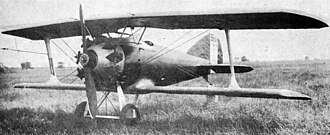
Blériot-SPAD S.51 – A Forgotten Fighter Between Two Eras
The history of military aviation is often dominated by legendary aircraft whose names have become synonymous with innovation, combat excellence, or technological revolution. Aircraft such as the Sopwith Camel, the SPAD XIII, the Supermarine Spitfire, and the Messerschmitt Bf 109 are permanently etched into aviation history because they participated in decisive conflicts and became symbols of their respective generations. Yet between these famous machines existed an entire class of transitional aircraft that quietly carried aviation from one technological age into another. Among these overlooked designs was the Blériot-SPAD S.51, a French fighter aircraft developed during the early 1920s. Although it never achieved worldwide fame, the S.51 represents an important chapter in aviation history because it reflected the challenges faced by engineers attempting to modernize military aircraft in the years following the First World War.
The Blériot-SPAD S.51 emerged during a period when aviation technology was advancing at an extraordinary pace while military doctrine struggled to keep up. Nations had learned enormous lessons from aerial warfare between 1914 and 1918, yet no one could fully predict what the next generation of fighters should look like. Engineers experimented with new structures, improved engines, stronger materials, better armament, and enhanced pilot visibility, all while trying to retain the agility that had characterized successful World War I fighters. The S.51 therefore became a fascinating blend of tradition and innovation. It retained the familiar biplane configuration that had proven successful during wartime while incorporating more refined engineering, aerodynamic improvements, and increased performance suitable for peacetime military forces seeking modernization.
Although only a limited number of these aircraft were produced, and although they were soon surpassed by newer designs, the Blériot-SPAD S.51 deserves recognition for illustrating the rapid evolution of fighter aviation during the interwar years. Understanding its development provides insight into the industrial ambitions of French aviation companies, the strategic priorities of European air forces, and the technological stepping stones that ultimately led to the high-performance fighters of the late 1930s.
The Historical Background of the Early 1920s
The conclusion of the First World War did not slow aviation progress. Instead, it accelerated innovation as aircraft manufacturers redirected wartime experience toward peacetime development. During the conflict, thousands of aircraft had been built under urgent conditions, and engineers accumulated an unprecedented understanding of aerodynamics, engine performance, structural design, and aerial combat tactics. When peace arrived in 1918, manufacturers suddenly found themselves competing in a commercial environment where governments wanted improved aircraft but had significantly reduced military budgets.
France occupied a particularly significant position in this evolving landscape. During the First World War, French companies such as SPAD, Nieuport, and Breguet had established international reputations by producing some of the conflict’s most successful combat aircraft. Pilots from several Allied nations flew French fighters with distinction, and companies hoped to continue their success by developing advanced aircraft suitable for the next generation of military aviation. However, technological uncertainty meant that no consensus existed regarding the ideal fighter configuration. Some designers favored monoplanes, while others remained committed to biplanes due to their structural strength and exceptional maneuverability.
The Blériot-SPAD S.51 emerged directly from this atmosphere of experimentation. It reflected an era in which aviation remained heavily influenced by wartime practices while simultaneously embracing innovations that hinted at future developments. Every design decision represented a compromise between proven reliability and ambitious modernization.
The Legacy of SPAD and Blériot
To fully appreciate the S.51, it is important to understand the companies behind its creation. SPAD had become one of France’s most respected aircraft manufacturers during World War I. Its fighters earned a reputation for speed, ruggedness, and excellent diving characteristics. Legendary pilots relied on SPAD aircraft throughout the conflict, and the company’s engineering philosophy emphasized strength and performance rather than extreme maneuverability alone.
After the war, corporate restructuring led to closer integration between SPAD and Blériot Aéronautique, another influential French aviation company founded by Louis Blériot, whose historic 1909 crossing of the English Channel had transformed him into one of aviation’s greatest pioneers. The combined expertise of these organizations created a strong foundation for developing advanced military aircraft during the 1920s.
The Blériot-SPAD designation symbolized more than a corporate merger. It represented the blending of pioneering aviation spirit with practical wartime engineering experience. The S.51 embodied both traditions by incorporating proven structural principles while striving for greater efficiency, reliability, and combat effectiveness.
Design Philosophy
The designers of the Blériot-SPAD S.51 faced an exceptionally difficult challenge. They needed to create an aircraft that surpassed wartime fighters without relying upon technologies that were not yet mature enough for widespread military adoption. Consequently, the S.51 retained the familiar biplane arrangement while introducing numerous refinements intended to maximize performance.
The aircraft featured a conventional staggered biplane wing configuration that balanced lift, maneuverability, and structural rigidity. Engineers carefully optimized wing geometry to improve aerodynamic efficiency while maintaining predictable handling characteristics. The open cockpit reflected standard aviation practice during the period, offering pilots excellent situational awareness despite exposing them to weather and engine noise throughout every flight.
Wood remained the primary structural material, complemented by fabric covering stretched over carefully constructed frames. Although all-metal aircraft would eventually dominate military aviation, wooden structures remained well understood, economical, and relatively easy to repair in field conditions. This practical approach ensured that the S.51 could be maintained using existing infrastructure while still benefiting from incremental improvements in manufacturing quality.
Powerplant and Performance
At the heart of every successful fighter lies its engine, and the Blériot-SPAD S.51 relied upon one of the increasingly sophisticated liquid-cooled V-12 engines available during the early 1920s. These engines represented a major advance over many wartime powerplants by delivering greater horsepower with improved reliability and smoother operation.
The increased power enabled the S.51 to achieve higher maximum speeds, better climb performance, and improved operational flexibility compared with earlier fighters. Pilots appreciated the stronger acceleration during takeoff as well as the aircraft’s ability to reach combat altitude more rapidly. These advantages became increasingly important as military strategists recognized that altitude frequently determined tactical superiority during aerial engagements.
The carefully streamlined nose reduced aerodynamic drag while efficiently housing the large liquid-cooled engine. Radiator placement represented another area of refinement, balancing cooling efficiency against aerodynamic penalties. Every improvement, however small, contributed to measurable gains in overall performance.
Flight Characteristics
Reports concerning the S.51 consistently emphasized its balanced handling qualities. Unlike some experimental aircraft that sacrificed stability for speed, the S.51 aimed to provide pilots with predictable responses throughout the flight envelope. This philosophy reflected the realities of military service, where operational reliability often proved more valuable than exceptional performance under limited conditions.
Pilots found the aircraft responsive during turns while maintaining satisfactory stability during level flight and dives. Control forces remained moderate, allowing extended patrol missions without excessive pilot fatigue. The generous wing area contributed to forgiving stall characteristics, an important safety consideration given the relatively primitive navigation equipment and weather forecasting available during the era.
Takeoff and landing demanded skill, particularly on uneven grass airfields common throughout Europe, yet experienced military aviators generally considered the aircraft manageable. Like most tailwheel aircraft of the period, forward visibility during taxiing remained limited, requiring careful ground handling techniques.
Armament
The Blériot-SPAD S.51 continued the fighter tradition established during World War I by employing synchronized machine guns mounted directly in front of the pilot. Synchronization gear allowed the weapons to fire safely through the rotating propeller arc, a technological breakthrough that had revolutionized aerial combat only a decade earlier.
Typically armed with two synchronized machine guns, the S.51 offered concentrated forward firepower suitable for engaging both enemy aircraft and lightly protected ground targets. Ammunition capacity allowed sustained bursts during combat, while the fixed mounting simplified aiming because pilots merely pointed the entire aircraft toward their target.
Although the armament would eventually become inadequate against faster and more heavily armored aircraft introduced during the 1930s, it represented a perfectly reasonable balance between weight, reliability, and combat effectiveness during the early interwar years.
Operational Service
The operational career of the Blériot-SPAD S.51 reflected the realities of peacetime military procurement. Rather than participating in major wars, the aircraft primarily served within training units and front-line squadrons responsible for maintaining readiness during a period characterized by relative European stability. Military budgets remained constrained, encouraging air forces to modernize gradually instead of replacing entire fleets simultaneously.
Several examples entered French military service, while export opportunities introduced the aircraft to foreign operators interested in acquiring modern fighter technology without undertaking expensive domestic development programs. The aircraft therefore fulfilled an important diplomatic as well as military role, strengthening industrial relationships between France and other nations.
Its service life demonstrated that successful military aircraft need not achieve legendary combat records to make meaningful contributions. By training pilots, refining maintenance procedures, and providing operational experience with more advanced technology, the S.51 helped prepare military organizations for subsequent generations of aircraft.
International Interest
French aircraft manufacturers actively pursued export markets throughout the 1920s. Many smaller nations lacked the industrial capacity to design sophisticated fighters independently but desired modern equipment to establish credible air forces. The Blériot-SPAD S.51 therefore attracted attention from several governments seeking capable yet proven aircraft.
Export success depended upon numerous factors extending far beyond pure technical performance. Political relationships, industrial partnerships, financing arrangements, maintenance support, and pilot training all influenced purchasing decisions. Although the S.51 never achieved the widespread international distribution enjoyed by certain contemporaries, it nonetheless contributed to France’s continuing reputation as a leading exporter of advanced aviation technology.
Engineering Significance
Perhaps the greatest historical importance of the Blériot-SPAD S.51 lies not in its operational achievements but in its engineering philosophy. It represented one of many transitional designs that gradually transformed fighter aviation from relatively simple wooden biplanes into increasingly sophisticated high-performance aircraft. Engineers learned valuable lessons concerning structural loads, aerodynamic refinement, engine integration, cooling efficiency, pilot ergonomics, and maintenance accessibility through aircraft such as the S.51.
These lessons directly influenced subsequent designs. Every successful aircraft builds upon accumulated experience from earlier projects, including those that achieved only modest commercial success. In this sense, the S.51 formed an essential link within aviation’s evolutionary chain rather than an isolated technological dead end.
The Transition Toward Modern Fighters
During the second half of the 1920s and throughout the 1930s, fighter aircraft evolved at an astonishing rate. More powerful engines, stressed-skin metal construction, retractable landing gear, enclosed cockpits, variable-pitch propellers, and monoplane wings transformed aviation performance. Compared with these revolutionary developments, the Blériot-SPAD S.51 inevitably appeared increasingly outdated.
Yet judging the aircraft solely against later standards overlooks its historical context. The S.51 belonged to an era when engineers worked with limited computational tools, relatively modest engine outputs, and manufacturing techniques inherited largely from wartime production. Within those constraints, it represented thoughtful engineering rather than technological conservatism.
Many of the design principles refined through aircraft like the S.51—careful weight distribution, structural efficiency, streamlined engine installation, and balanced control harmony—continued to influence fighter development long after the biplane itself disappeared from military service.
Preservation and Historical Memory
Unlike famous wartime fighters that benefited from extensive preservation efforts, relatively few examples of transitional interwar aircraft survived into the modern era. Wooden structures deteriorated rapidly without meticulous maintenance, and obsolete military equipment was frequently scrapped once newer aircraft entered service. Consequently, surviving documentation, photographs, and museum collections have become essential resources for historians seeking to reconstruct the story of the Blériot-SPAD S.51.
Despite its comparative obscurity, aviation historians increasingly recognize the importance of studying aircraft that occupied transitional periods. Such machines reveal how technological evolution actually occurs—not through isolated breakthroughs alone, but through countless incremental improvements introduced by dedicated engineers responding to practical operational requirements.
Conclusion
The Blériot-SPAD S.51 occupies a fascinating place within aviation history precisely because it stands between two distinct eras. It inherited the proven concepts of First World War fighter design while anticipating many of the refinements that would define military aviation during the following decade. Though overshadowed by more famous predecessors and successors, the aircraft embodied the determination of French engineers to push aviation steadily forward during a period of rapid technological change.
Its balanced handling, respectable performance, reliable construction, and thoughtful engineering reflected a mature understanding of military aviation gained through years of wartime experience. Even if the S.51 never achieved legendary status, it fulfilled an essential role by helping air forces transition toward increasingly capable aircraft and by providing valuable engineering knowledge that influenced future generations of fighter design.
Today, the Blériot-SPAD S.51 serves as a reminder that aviation history is shaped not only by revolutionary aircraft but also by transitional designs whose contributions are less dramatic yet equally significant. Every celebrated fighter owes part of its success to earlier machines that quietly refined technologies, validated engineering concepts, and prepared the path toward future innovation. The S.51 deserves recognition as one of those indispensable stepping stones that connected the heroic age of early military aviation with the sophisticated fighters that would soon dominate the skies.
Technical Specifications
| Specification | Details |
|---|---|
| Aircraft Name | Blériot-SPAD S.51 |
| Role | Single-seat fighter aircraft |
| Manufacturer | Blériot-SPAD (France) |
| First Flight | Early 1920s |
| Configuration | Single-engine biplane |
| Crew | 1 pilot |
| Construction | Wooden frame with fabric covering |
| Cockpit | Open |
| Engine | Lorraine-Dietrich 12Db liquid-cooled V-12 |
| Power Output | Approximately 500 hp (373 kW) |
| Propeller | Two-bladed wooden propeller |
| Maximum Speed | Approximately 310 km/h (193 mph) |
| Service Ceiling | Approximately 8,000 m (26,250 ft) |
| Range | Approximately 600 km (373 miles) |
| Armament | 2 synchronized machine guns |
| Landing Gear | Fixed conventional tailwheel |
| Primary Operators | French military and limited export customers |
| Historical Importance | Representative transitional fighter of the interwar period |
