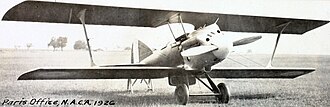
Blériot-SPAD S.61 – The Evolution of the French Interwar Fighter
The decade following the First World War was one of the most dynamic periods in the history of aviation. Nations that had rapidly expanded their air services during the conflict suddenly found themselves in possession of thousands of experienced pilots, countless engineers, and an aviation industry eager to continue innovating despite the absence of large-scale warfare. While public attention often focuses on the famous fighters of the Great War or the sleek monoplanes that appeared before the Second World War, the aircraft developed during the 1920s deserve equal recognition because they formed the technological bridge between these two remarkable eras. Among these transitional machines was the Blériot-SPAD S.61, a fighter that embodied the steady refinement of French aircraft engineering while demonstrating how military aviation gradually matured during the interwar period.
Although the Blériot-SPAD S.61 never achieved the legendary reputation enjoyed by aircraft such as the SPAD XIII or later icons like the Dewoitine D.520, its contribution to French aviation history remains considerable. It represented a carefully balanced combination of proven wartime concepts and forward-looking engineering improvements. Designed for reliability as much as performance, the aircraft became an important stepping stone in France’s continuing effort to maintain one of Europe’s strongest aviation industries. Every aspect of the S.61 reflected the lessons learned from years of aerial combat while acknowledging that the future would require fighters capable of greater speed, higher altitude, stronger construction, and improved operational efficiency.
Today the Blériot-SPAD S.61 is remembered primarily by aviation historians and enthusiasts, yet its story illustrates how technological evolution rarely occurs through sudden revolutionary breakthroughs alone. Instead, meaningful progress usually results from countless incremental improvements, each building upon earlier experience. The S.61 exemplifies this gradual evolution, making it one of the more interesting, though frequently overlooked, aircraft of the 1920s.
The Aviation Landscape After the First World War
When the guns finally fell silent in November 1918, aviation had already undergone an astonishing transformation. At the beginning of the war aircraft were largely fragile reconnaissance machines with limited offensive capability. Four years later they had become specialized bombers, reconnaissance platforms, naval aircraft, and highly sophisticated fighter airplanes capable of engaging enemy aircraft at impressive speeds and altitudes. Engineers who had once experimented cautiously with aircraft structures were now experienced professionals who understood aerodynamics, structural loading, engine cooling, synchronized armament, and mass production techniques to a degree unimaginable before the conflict.
Despite these advances, the immediate postwar years presented significant uncertainty. Governments dramatically reduced military expenditures, forcing manufacturers to compete aggressively for limited contracts. At the same time, military planners realized that technological progress had not slowed simply because peace had arrived. Instead, improvements in engine power, metallurgy, aerodynamic theory, and manufacturing techniques continued almost without interruption. Air forces therefore sought aircraft that could remain competitive for years rather than merely satisfying current operational requirements. This environment created both tremendous opportunities and considerable risks for manufacturers like Blériot-SPAD.
The Heritage of Blériot-SPAD
The Blériot-SPAD name carried enormous prestige within French aviation. SPAD had earned worldwide recognition during the First World War thanks to aircraft that emphasized structural strength, excellent diving ability, and impressive speed. Legendary Allied pilots achieved many of their victories while flying SPAD fighters, reinforcing the company’s reputation for producing dependable combat aircraft capable of surviving the harsh conditions of aerial warfare.
Louis Blériot himself had become one of aviation’s greatest pioneers years before the outbreak of war. His successful crossing of the English Channel in 1909 symbolized the practical potential of powered flight and established him as one of the industry’s most influential figures. By combining Blériot’s entrepreneurial leadership with SPAD’s engineering expertise, the resulting organization possessed both technical capability and international prestige. The S.61 therefore emerged from a company uniquely positioned to influence the future direction of French military aviation.
The Need for a New Generation of Fighters
By the mid-1920s it had become increasingly apparent that wartime fighters, despite their remarkable achievements, were gradually becoming obsolete. Engines were producing substantially more horsepower than those installed only a few years earlier, while improvements in aerodynamics allowed aircraft designers to reduce drag without sacrificing structural integrity. Pilots expected better climb rates, greater maximum speed, longer operational range, and more comfortable cockpits for extended patrol missions. Military authorities likewise demanded improved reliability, simplified maintenance procedures, and aircraft capable of serving effectively in a variety of climates and operating conditions.
The Blériot-SPAD S.61 was conceived specifically to answer these evolving requirements. Rather than pursuing radical experimentation, its designers focused on refining every aspect of an already successful fighter formula. They understood that military customers valued dependable performance just as highly as spectacular innovation. Consequently, the S.61 represented careful engineering evolution instead of revolutionary redesign, an approach that appealed to air forces seeking modern aircraft without introducing excessive technical risk.
Design Philosophy
At first glance the Blériot-SPAD S.61 retained the familiar appearance of earlier French fighters. It remained a single-seat biplane powered by a liquid-cooled engine and equipped with fixed landing gear, yet beneath this conventional exterior lay numerous refinements that distinguished it from its predecessors. Engineers devoted considerable attention to reducing unnecessary weight while simultaneously strengthening key structural components. The resulting aircraft achieved a more favorable balance between durability and performance than many earlier designs.
The staggered biplane wing arrangement continued to offer excellent lift characteristics while maintaining relatively compact overall dimensions. Interplane struts and bracing wires were carefully arranged to minimize aerodynamic interference without compromising structural rigidity. The fuselage exhibited cleaner lines than many wartime aircraft, reflecting increasing awareness of drag reduction and airflow management. Although these changes appeared subtle individually, together they produced measurable improvements in speed, climb performance, and fuel efficiency.
Structural Construction
Like most fighters of its era, the Blériot-SPAD S.61 relied primarily upon a wooden airframe covered with tightly stretched fabric. This construction method remained widely accepted because it combined relatively low weight with straightforward manufacturing techniques that were already well understood by both factory workers and military maintenance personnel. Carefully selected hardwoods formed the aircraft’s principal load-bearing members, while plywood reinforced critical areas subjected to higher stresses.
The fuselage employed a robust framework designed to absorb the loads generated during aerobatic maneuvers, combat dives, and occasionally rough landings on grass airfields. Fabric covering not only reduced weight but also simplified repairs, allowing damaged sections to be replaced relatively quickly without requiring specialized industrial equipment. Although all-metal construction would soon revolutionize aircraft manufacturing, the mixed wood-and-fabric approach remained entirely practical throughout much of the 1920s.
Wing Configuration
The wings of the S.61 reflected considerable aerodynamic refinement compared with earlier wartime fighters. Designers sought to maximize lift while reducing drag, resulting in carefully proportioned airfoil sections that delivered predictable handling throughout a wide range of flight conditions. The upper and lower wings were connected by streamlined interplane struts whose shapes themselves reflected growing appreciation for aerodynamic efficiency. Control surfaces responded smoothly to pilot inputs, contributing to the aircraft’s reputation for balanced handling characteristics.
Large ailerons provided responsive roll control, an essential quality for fighter aircraft expected to engage in close maneuvering combat. At the same time, the generous wing area contributed to relatively forgiving low-speed behavior, improving safety during takeoff and landing. This combination of agility and stability made the aircraft suitable not only for experienced combat pilots but also for younger aviators transitioning from training aircraft to operational fighters.
The Powerplant
Perhaps the most important factor distinguishing postwar fighters from their wartime predecessors was the dramatic improvement in engine technology. The Blériot-SPAD S.61 benefited from one of the increasingly capable liquid-cooled V-12 engines available during the mid-1920s, delivering substantially more horsepower than many engines installed only a few years earlier. This additional power transformed every aspect of the aircraft’s performance, enabling higher speeds, faster climbs, and improved operational flexibility without requiring an entirely new airframe concept.
Liquid cooling offered several advantages over rotary engines that had dominated earlier fighter development. It permitted higher sustained power output, improved fuel efficiency, and reduced gyroscopic effects that sometimes complicated aircraft handling. Engineers carefully integrated the cooling system into the aircraft’s streamlined nose, ensuring adequate heat dissipation while minimizing aerodynamic penalties. The radiator installation reflected increasing sophistication in balancing engine requirements with aerodynamic performance, a challenge that would remain central to fighter design for decades.
The engine drove a two-bladed wooden propeller optimized for the aircraft’s expected operating envelope. Although variable-pitch propellers had not yet become standard equipment, careful propeller design allowed the S.61 to achieve respectable performance across a broad range of flight conditions. Pilots appreciated the smooth power delivery and comparatively reliable operation, particularly during extended patrols where engine dependability remained just as important as outright speed.
Cockpit Layout and Pilot Experience
The cockpit of the Blériot-SPAD S.61 reflected both the practical realities and the limitations of aviation during the 1920s. It remained an open cockpit, exposing pilots directly to wind, engine noise, vibration, and weather throughout every flight. Nevertheless, designers made noticeable improvements in ergonomics, instrument placement, and visibility compared with many earlier fighters. Flight controls were positioned to reduce fatigue during long sorties, while the instrument panel grouped essential gauges in a logical arrangement that allowed pilots to monitor engine performance without excessive distraction from flying duties.
Visibility represented an especially important consideration. The relatively narrow fuselage, carefully positioned wings, and compact engine installation provided pilots with a better forward and downward view than many contemporary aircraft. Good visibility significantly improved both aerial combat effectiveness and operational safety during takeoff, landing, and formation flying. Combined with balanced control responses, these ergonomic improvements helped establish the S.61 as a pleasant aircraft to fly despite the demanding conditions inherent in open-cockpit military aviation.
Flight Characteristics and Handling Qualities
One of the defining characteristics of the Blériot-SPAD S.61 was its harmonious balance between maneuverability and stability. During the 1920s, fighter pilots expected an aircraft to respond quickly to control inputs while remaining sufficiently stable to permit accurate gunnery and comfortable long-distance navigation. The S.61 succeeded in striking this balance through careful aerodynamic refinement rather than radical innovation. Engineers paid close attention to the distribution of weight throughout the airframe, ensuring that the aircraft possessed predictable handling characteristics during all phases of flight. This approach reflected the growing maturity of aircraft design, as manufacturers increasingly relied upon scientific understanding instead of simple trial-and-error experimentation.
Pilots who transitioned from wartime fighters generally found the S.61 easier to fly. The aircraft exhibited smoother responses in turns, steadier behavior during climbs, and greater confidence-inspiring stability while cruising at altitude. These improvements reduced pilot workload, enabling aviators to devote more attention to navigation, formation keeping, and tactical awareness rather than constantly correcting the aircraft’s attitude. Although it retained the lively responsiveness expected of a fighter, the S.61 avoided the excessively sensitive handling that sometimes characterized earlier designs. This combination proved particularly valuable during peacetime operations, where training efficiency and operational safety were becoming increasingly important considerations.
The aircraft’s climb performance benefited directly from its more powerful engine and refined aerodynamic profile. Reaching operational altitude more quickly provided tactical advantages while reducing the time spent in the most fuel-intensive phase of flight. Likewise, the improved maximum speed gave pilots greater flexibility during interceptions, reconnaissance escort missions, and training exercises. While these performance figures would eventually be surpassed by the rapidly advancing technology of the late 1920s and early 1930s, they represented a significant improvement over the aircraft that had dominated European skies only a few years earlier.
Takeoff and Landing Characteristics
Operating military aircraft from grass airfields demanded a combination of pilot skill and forgiving aircraft behavior. The Blériot-SPAD S.61 incorporated several design features that improved ground handling compared with some earlier fighters, although it naturally retained the inherent limitations of conventional tailwheel aircraft. During takeoff, the powerful V-12 engine accelerated the aircraft briskly, allowing it to leave the ground after a relatively short run under favorable conditions. As speed increased, pilots carefully managed directional control using the rudder while gradually lifting the tail before climbing away at the recommended angle.
Landing required patience and precision. The fixed landing gear, narrow track, and limited forward visibility while taxiing demanded constant attention from the pilot. Nevertheless, the generous wing area produced relatively gentle stall characteristics, giving experienced aviators a useful margin of safety during the landing flare. Maintenance crews also appreciated the robust landing gear structure, which could withstand the uneven surfaces typical of military airfields during the interwar period. These practical qualities contributed significantly to the aircraft’s reputation as a dependable service fighter rather than merely a high-performance experimental machine.
Armament and Combat Capability
Although the Blériot-SPAD S.61 entered service during peacetime, its design naturally reflected the combat lessons learned during the First World War. Air combat experience had demonstrated beyond doubt that concentrated forward-firing armament offered the most effective means of engaging enemy aircraft. Consequently, the S.61 was equipped with two synchronized machine guns mounted directly ahead of the cockpit. Synchronization gear ensured that bullets passed safely between the rotating propeller blades, a remarkable technological achievement that had become standard equipment on fighter aircraft by the early 1920s.
The placement of the weapons allowed pilots to aim simply by pointing the aircraft itself at the intended target. This arrangement eliminated the need for complicated flexible gun mounts and significantly increased firing accuracy during maneuvering combat. Ammunition boxes were positioned within easy reach of maintenance personnel, simplifying reloading procedures between sorties. The synchronized installation also protected the weapons from much of the airflow that affected externally mounted guns, helping maintain reliability under operational conditions.
In theoretical combat scenarios, the S.61 would have possessed capabilities broadly comparable to other contemporary fighters. Its respectable speed, responsive controls, and concentrated firepower made it suitable for interception, escort duties, and defensive patrols. However, military aviation was evolving at an extraordinary pace. By the end of the decade, aircraft speeds had increased substantially, metal airframes were becoming increasingly common, and more powerful engines were transforming fighter performance. Consequently, while the S.61 represented an excellent fighter for its own time, it inevitably became part of a rapidly changing technological landscape.
Maintenance and Reliability
Military authorities valued reliability every bit as highly as performance. An aircraft capable of extraordinary speed served little purpose if it required excessive maintenance or suffered frequent mechanical failures. The Blériot-SPAD S.61 therefore emphasized accessibility and serviceability throughout its design. Engine panels could be removed relatively quickly, allowing mechanics to inspect ignition systems, cooling components, and fuel lines without extensive disassembly. Wooden structural members could likewise be repaired using established techniques familiar to maintenance personnel throughout the French aviation industry.
The liquid-cooled engine required careful monitoring, particularly regarding coolant levels and radiator integrity, but it generally provided dependable operation when maintained according to prescribed procedures. Routine servicing involved inspection of control cables, tension adjustment for the bracing wires, examination of fabric covering for tears or deterioration, and lubrication of numerous moving components. While these maintenance tasks demanded skilled technicians, they reflected standard practice for military aviation during the 1920s rather than exceptional complexity.
Because spare parts remained relatively straightforward to manufacture, operators could often repair minor damage without waiting for specialized factory components. This characteristic enhanced operational readiness while reducing long-term operating costs. Such considerations played an increasingly important role as governments sought to balance limited defense budgets with the desire to maintain credible air forces.
Operational Service in France
The principal operator of the Blériot-SPAD S.61 was the French military, which introduced the aircraft during a period of cautious modernization. Rather than preparing for imminent conflict, France focused on preserving the considerable aviation expertise developed during the Great War while gradually introducing more capable equipment into operational squadrons. The S.61 therefore served not only as a front-line fighter but also as an important training platform for pilots who would later transition to even more advanced aircraft.
Within French service, the aircraft participated extensively in peacetime exercises, formation flying demonstrations, navigation training, aerial gunnery practice, and tactical experimentation. These activities provided invaluable operational experience concerning fighter employment under peacetime conditions. Military planners increasingly recognized that future air warfare would involve larger formations, improved communications, and more sophisticated operational planning than had been possible during the First World War. Aircraft such as the S.61 allowed these concepts to be explored in a practical environment while maintaining a capable defensive force.
The aircraft also demonstrated the continued vitality of the French aviation industry. Each successful operational deployment reinforced confidence in domestic aircraft manufacturing, encouraging further investment in research, engineering education, and industrial production capabilities. Even when later fighters replaced the S.61 in front-line service, the experience gained through its operation continued to influence both pilots and engineers.
International Interest and Export Opportunities
France remained one of the world’s leading exporters of military aircraft throughout the 1920s. Numerous smaller nations lacked the industrial infrastructure necessary to develop advanced fighter aircraft independently and therefore looked toward established aviation powers for modern equipment. The Blériot-SPAD S.61 attracted attention because it represented a mature, reliable design produced by a manufacturer with an internationally respected reputation. Purchasing such an aircraft offered governments access to proven technology while avoiding the financial burden associated with domestic aircraft development programs.
Export negotiations, however, rarely depended upon technical performance alone. Political alliances, economic considerations, financing arrangements, pilot training packages, maintenance support, and industrial cooperation all influenced procurement decisions. Consequently, although the S.61 generated international interest, its export success remained relatively limited compared with certain other French aircraft. Nevertheless, every overseas evaluation and demonstration contributed to France’s broader reputation as a center of aviation excellence, strengthening relationships that would benefit future aircraft manufacturers.
The S.61 Within the Evolution of Fighter Design
Viewed through the perspective of modern aviation history, the Blériot-SPAD S.61 occupies an especially interesting position. It neither represented the beginning of military fighter development nor the culmination of biplane technology. Instead, it served as an evolutionary link connecting two dramatically different generations of aircraft. Designers retained the fundamental configuration that had proven successful during the Great War while steadily incorporating aerodynamic refinements, stronger engines, improved ergonomics, and more efficient structural layouts.
The pace of aviation progress during the interwar period was so rapid that even successful aircraft often enjoyed relatively short front-line careers. Yet this rapid turnover should not be interpreted as failure. On the contrary, every new design expanded engineering knowledge, validated innovative manufacturing techniques, and revealed opportunities for further improvement. Lessons learned through the S.61 influenced subsequent French fighters, contributing indirectly to the development of more advanced aircraft that would appear throughout the remainder of the decade.
Perhaps most importantly, the aircraft demonstrated that effective fighter design required careful integration of numerous engineering disciplines rather than isolated improvements in any single area. Speed alone proved insufficient without reliable engines; maneuverability required structural strength; powerful armament demanded stable gun platforms; and operational effectiveness depended upon maintainability as much as outright performance. The S.61 successfully balanced these competing requirements, illustrating the increasingly sophisticated nature of aircraft engineering during the 1920s.
The Decline of the Biplane Fighter Era
By the late 1920s, the aviation world was beginning to move beyond the design philosophy represented by the Blériot-SPAD S.61. Although biplanes remained popular because of their excellent maneuverability, compact dimensions, and proven structural strength, a new generation of engineers increasingly believed that the future belonged to monoplanes. Advances in engine power, lightweight metal construction, and aerodynamic research suggested that aircraft with cleaner configurations could achieve significantly higher speeds without sacrificing operational capability.
The S.61 therefore became part of the final generation of refined biplane fighters rather than the beginning of an entirely new design movement. This transition was not sudden, and many military organizations continued operating biplanes throughout the 1930s because they were affordable, reliable, and familiar to pilots and mechanics. However, experimental aircraft demonstrated that low-drag monoplane designs could eventually provide overwhelming advantages. The emergence of aircraft such as the French Dewoitine fighters and foreign designs like the German Messerschmitt Bf 109 and British Hawker Hurricane confirmed that the era of the high-performance monoplane fighter had arrived.
The importance of aircraft like the Blériot-SPAD S.61 lies precisely in this transitional role. They represented the highest level of refinement achievable within an established design philosophy before aviation entered a period of revolutionary change. Studying these aircraft reveals the gradual nature of technological development and highlights how engineers often improve existing concepts until new technologies make a completely different approach possible.
Comparison With Contemporary Fighters
During its operational period, the Blériot-SPAD S.61 competed with several other European fighters that reflected similar design priorities. Many nations continued to rely on single-seat biplanes equipped with liquid-cooled engines and synchronized machine guns. Aircraft from Britain, Italy, and other European countries followed comparable principles, emphasizing maneuverability, reliability, and relatively simple construction.
Compared with many immediate postwar designs, the S.61 benefited from the considerable experience accumulated by SPAD engineers during the First World War. Its structure was more refined, its aerodynamic profile cleaner, and its engine installation more advanced than many earlier fighters. However, by the end of the 1920s, competing aircraft increasingly incorporated features that would eventually define modern fighters, including metal structures, enclosed cockpits, improved propulsion systems, and more efficient aerodynamic layouts.
The aircraft’s greatest strength was not necessarily possessing a single outstanding performance advantage but rather achieving an excellent overall balance. It offered predictable handling, respectable speed, reliable construction, and practical maintenance requirements. In military aviation, these qualities frequently determined whether an aircraft succeeded operationally, especially during periods when budgets were limited and technological change was occurring rapidly.
Influence on French Aviation Development
Although the Blériot-SPAD S.61 was eventually surpassed by newer aircraft, its influence extended beyond its direct service life. Aircraft development is a cumulative process, with every project providing engineers with information that shapes future designs. The experience gained from producing and operating the S.61 contributed to broader French understanding of fighter requirements during the interwar period.
Manufacturers learned valuable lessons regarding aerodynamic refinement, engine integration, pilot ergonomics, structural durability, and production efficiency. Military authorities likewise gained operational experience concerning training requirements, maintenance procedures, and tactical employment. These lessons became increasingly important as Europe moved toward another period of military competition during the 1930s.
The S.61 also represented the continued importance of French aviation manufacturing during an era when international competition was becoming increasingly intense. France had been one of the world’s leading aircraft-producing nations during the First World War, and maintaining that position required constant innovation. Projects such as the S.61 demonstrated that French companies remained capable of producing sophisticated military aircraft even during the economically challenging years following the conflict.
Historical Assessment of the Blériot-SPAD S.61
Modern evaluations of military aircraft often focus heavily on combat achievements, production numbers, or technological breakthroughs. By these measures, the Blériot-SPAD S.61 may appear less significant than more famous aircraft. It did not participate in a major war, did not achieve legendary victories, and did not introduce a revolutionary configuration that transformed aviation overnight. However, such measurements overlook the essential role played by transitional aircraft in technological development.
The S.61 should instead be understood as a representative example of a specific historical moment. It captured the confidence of postwar aviation engineers who believed that careful refinement could continue improving the successful concepts of the previous decade. It demonstrated the effectiveness of incremental innovation and showed how manufacturers adapted wartime knowledge to peacetime requirements.
Its historical value also comes from what it reveals about aviation culture during the 1920s. The period was characterized by experimentation, international competition, and optimism about the future of flight. Aircraft designers were not merely building machines; they were exploring the possibilities of a rapidly developing technology. The S.61 was one expression of that broader movement, embodying the ambition and technical skill of the engineers who created it.
Preservation and Modern Recognition
Unfortunately, few examples of the Blériot-SPAD S.61 survive today. Many aircraft from the interwar period disappeared because they were considered obsolete once newer models entered service. Wooden airframes covered with fabric were particularly vulnerable to deterioration, and many surviving examples were eventually dismantled for spare parts or discarded. As a result, historians must often rely on archival photographs, technical documents, military records, and period publications to reconstruct the aircraft’s story.
The limited survival of the S.61 reflects a broader challenge in preserving aviation heritage. Famous aircraft associated with major conflicts often receive significant preservation attention, while less celebrated machines frequently disappear despite their historical importance. Yet these overlooked aircraft provide some of the most valuable insights into technological evolution because they reveal the developmental steps between major milestones.
A restored example of the Blériot-SPAD S.61 would represent far more than an individual aircraft. It would symbolize the engineering achievements of an entire generation of designers, factory workers, pilots, and mechanics who helped maintain aviation progress during a difficult transitional period. Preserving such aircraft allows future generations to understand that aviation history consists not only of famous victories but also of years of experimentation, adaptation, and gradual improvement.
Legacy of the Blériot-SPAD S.61
The ultimate legacy of the Blériot-SPAD S.61 is found in its role as a bridge between generations. It connected the rugged fighters of the First World War with the advanced aircraft that would dominate the skies during the Second World War. Its designers worked within the limitations of their time but achieved a machine that represented the highest standards of contemporary French fighter engineering.
The aircraft demonstrated that successful aviation design depends upon balance. An effective fighter required more than speed or firepower alone. It needed a reliable engine, strong structure, responsive controls, practical maintenance requirements, and a design philosophy suited to the operational environment. The S.61 successfully combined these elements, creating an aircraft that served its purpose effectively during a crucial period of aviation development.
Although later aircraft would quickly surpass it, the S.61 remains an important historical artifact because it illustrates the process through which aviation technology evolves. Revolutionary aircraft do not appear from nowhere; they are built upon decades of accumulated knowledge and countless intermediate designs. The Blériot-SPAD S.61 represents one of those important intermediate steps, deserving recognition for the role it played in the continuing advancement of military aviation.
Conclusion
The Blériot-SPAD S.61 may not be among the most famous fighters in aviation history, but it remains a fascinating example of interwar engineering achievement. Developed during a period of uncertainty and rapid technological change, the aircraft reflected the experience gained during the First World War while anticipating the demands of future military aviation. Its refined biplane design, reliable powerplant, balanced handling, and practical construction demonstrated the strengths of French aircraft engineering during the 1920s.
The aircraft’s significance extends beyond its operational career. It represents an era when aviation was transitioning from the experimental achievements of the early twentieth century toward the highly advanced machines that would define later decades. The S.61 reminds historians that progress is rarely created by a single revolutionary invention. Instead, it emerges from a long chain of improvements, experiments, successes, and lessons learned.
Today, the Blériot-SPAD S.61 deserves recognition as an important chapter in the history of French military aviation. It was a capable fighter built during a challenging period, a machine that embodied both the traditions of the past and the possibilities of the future. While it eventually disappeared from frontline service, its contribution remains part of the broader story of aviation’s remarkable transformation during the twentieth century.
Technical Specifications of the Blériot-SPAD S.61
| Specification | Details |
|---|---|
| Aircraft Name | Blériot-SPAD S.61 |
| Country of Origin | France |
| Manufacturer | Blériot-SPAD |
| Aircraft Type | Single-seat fighter aircraft |
| First Flight | Mid-1920s |
| Operational Period | 1920s |
| Configuration | Single-engine biplane |
| Crew | One pilot |
| Construction | Wooden structure with fabric covering |
| Powerplant | Liquid-cooled V-12 piston engine |
| Engine Power | Approximately 400–500 horsepower class |
| Propeller | Two-bladed fixed-pitch propeller |
| Maximum Speed | Approximately 250–300 km/h depending on configuration |
| Operational Ceiling | Approximately 8,000 meters |
| Range | Approximately 500–600 kilometers |
| Armament | Two synchronized machine guns mounted forward of the cockpit |
| Landing Gear | Fixed conventional tailwheel arrangement |
| Cockpit Type | Open cockpit |
| Primary Role | Air defense, interception, pilot training, and fighter operations |
| Historical Significance | Representative French transitional fighter linking World War I designs with modern interwar aircraft |
