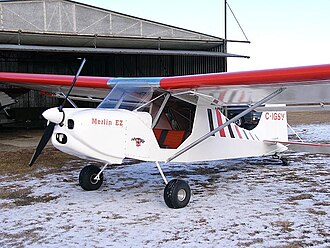
Blue Yonder Merlin – A Modern Ultralight Inspired by Aviation’s Golden Age
Few aircraft manage to combine the nostalgic charm of early twentieth-century aviation with the practical advantages of modern engineering as successfully as the Blue Yonder Merlin. Designed for recreational pilots who appreciate classic styling but expect contemporary reliability, the Merlin occupies a unique position within the world of amateur-built and ultralight aviation. It is an airplane that immediately captures attention with its graceful parasol wing, open-air flying experience, and unmistakable vintage appearance. Yet beneath its retro-inspired exterior lies a carefully engineered aircraft that benefits from decades of progress in materials, aerodynamics, engines, and aircraft construction techniques. For many enthusiasts, the Merlin represents an ideal balance between history and innovation, offering a flying experience reminiscent of aviation’s pioneering years without sacrificing the safety, efficiency, and dependability expected by modern pilots.
Unlike many factory-produced aircraft designed for commercial flight schools or business transportation, the Blue Yonder Merlin was created with personal aviation in mind. Every aspect of its design emphasizes enjoyment rather than speed, simplicity rather than complexity, and accessibility rather than exclusivity. Owners frequently describe the aircraft not merely as transportation but as an extension of aviation’s romantic heritage, allowing them to experience low-and-slow flying over countryside, lakes, mountains, and rural landscapes in a way that few enclosed aircraft can replicate. The relatively modest operating costs, straightforward maintenance requirements, and availability in kit form have made the Merlin particularly attractive among homebuilders seeking a rewarding long-term project that culminates in a capable recreational aircraft.
Although the Blue Yonder Merlin may not possess the performance figures of modern composite sport airplanes or the technological sophistication of glass-cockpit touring aircraft, it succeeds precisely because it pursues different priorities. It celebrates the joy of uncomplicated flight, encourages hands-on involvement in aircraft construction, and reminds pilots that aviation can be as much about the journey itself as the destination. This article explores the complete story of the Blue Yonder Merlin, examining its origins, engineering philosophy, construction methods, performance characteristics, operational experience, and enduring popularity among recreational aviators throughout North America and beyond.
The Origins of Blue Yonder Aviation
The Blue Yonder Merlin owes its existence to Blue Yonder Aviation, a Canadian company established with the goal of producing affordable, lightweight aircraft that combined traditional aesthetics with practical modern engineering. During the late twentieth century, recreational aviation experienced remarkable growth as improvements in lightweight engines, aluminum construction techniques, and aviation regulations opened the skies to an increasing number of private pilots. At the same time, many enthusiasts expressed growing appreciation for aircraft inspired by the golden age of aviation, particularly those featuring parasol wings, exposed cockpits, and simple mechanical systems reminiscent of airplanes from the 1920s and 1930s.
Recognizing this demand, Blue Yonder Aviation pursued a design philosophy that intentionally departed from the sleek composite aircraft becoming increasingly common within the light sport market. Rather than emphasizing maximum cruise speed or futuristic styling, the company sought to create an aircraft that evoked classic aviation while remaining economical to build, operate, and maintain. The resulting Merlin quickly established itself as one of the company’s most recognizable designs, appealing equally to experienced aviators seeking leisurely weekend flying and first-time builders interested in constructing their own aircraft.
The company’s Canadian heritage also influenced aspects of the design. Recreational flying throughout Canada’s vast landscapes often involves operations from relatively small airfields surrounded by forests, farmland, lakes, and open countryside. Consequently, the Merlin emphasized excellent short-field performance, predictable handling, and dependable operation under varied environmental conditions rather than simply maximizing top speed or altitude capability.
Design Philosophy
Returning to the Joy of Simple Flying
The Blue Yonder Merlin embodies an aviation philosophy centered upon simplicity. Modern aircraft increasingly rely upon sophisticated avionics, integrated electronic systems, autopilots, digital engine monitoring, and advanced composite structures. While these technologies undoubtedly improve capability, they also increase complexity, acquisition costs, maintenance requirements, and pilot workload. The Merlin deliberately takes a different approach by encouraging pilots to reconnect with the basic pleasures of flight. Visibility, low-speed maneuverability, responsive controls, and uncomplicated systems all contribute toward an experience that many owners describe as authentic and deeply satisfying.
Rather than measuring success solely through numerical performance figures, the Merlin invites pilots to appreciate scenery, weather, and the physical sensations of open-air flight. Flying at moderate speeds and relatively low altitudes allows occupants to experience landscapes in greater detail than would be possible aboard faster aircraft cruising thousands of feet above the ground. This emphasis upon experience rather than transportation defines much of the aircraft’s enduring appeal.
Classic Appearance with Modern Reliability
One of the Merlin’s greatest achievements lies in successfully blending vintage aesthetics with contemporary engineering practices. Its parasol wing, exposed landing gear, wire-braced structure, and open cockpit immediately recall famous sport aircraft from aviation’s formative decades. However, beneath this nostalgic appearance, modern aluminum alloys, reliable engines, improved manufacturing tolerances, and updated construction methods provide performance and durability unavailable to designers during the early twentieth century.
Airframe Construction
Lightweight Aluminum Structure
The Merlin employs a lightweight aluminum framework that balances structural strength with low empty weight. Aluminum remains one of the most widely used materials in recreational aviation because it combines favorable strength-to-weight characteristics with corrosion resistance, relatively straightforward fabrication, and widespread availability. Builders assembling the aircraft from kits benefit from clearly engineered components that simplify construction without sacrificing structural integrity.
The modular nature of the airframe also facilitates maintenance and repair. Individual components may often be inspected or replaced without requiring extensive disassembly, reducing long-term ownership costs while encouraging regular preventive maintenance. Such accessibility remains particularly valuable within the amateur-built community, where owners frequently perform much of their own routine servicing.
Fabric Covering
Like many classic aircraft, the Merlin utilizes fabric covering over portions of its structure. Modern synthetic fabrics offer vastly superior durability compared with traditional cotton materials used during aviation’s early years. They resist ultraviolet degradation, moisture, and environmental wear while providing a smooth aerodynamic surface after proper application and finishing. The resulting appearance preserves the authentic character of vintage aircraft while benefiting from significant improvements in longevity and maintenance intervals.
The Distinctive Parasol Wing
Perhaps no single feature defines the Blue Yonder Merlin more clearly than its parasol wing. Mounted above the fuselage upon supporting struts, this configuration offers several practical advantages beyond its unmistakable visual identity. Elevated wing placement provides outstanding downward visibility, particularly during sightseeing flights or while maneuvering near the ground. Pilots enjoy unobstructed views of surrounding landscapes, making the aircraft especially popular among photographers and recreational flyers exploring scenic regions.
The parasol arrangement also contributes to stable low-speed handling by positioning the wing above the aircraft’s center of gravity. Combined with generous wing area, this configuration enhances lift production at modest airspeeds, allowing relatively short takeoff and landing distances while promoting forgiving stall characteristics. Such qualities make the Merlin approachable for pilots transitioning into ultralight or light recreational aviation.
Structurally, external struts supporting the wing simplify construction while reducing overall airframe weight. Although strut-braced designs generate somewhat greater aerodynamic drag than fully cantilevered wings, this compromise aligns perfectly with the Merlin’s intended role as a leisurely recreational aircraft rather than a high-speed cross-country machine.
Powerplant Options
Throughout its production history, the Blue Yonder Merlin has been compatible with several lightweight aircraft engines, allowing builders considerable flexibility based upon budget, local availability, and desired performance. Among the most common installations are engines produced by Rotax, whose reputation for reliability and efficiency has made them industry standards within recreational aviation. Four-stroke Rotax engines offer smooth operation, excellent fuel economy, and widespread maintenance support, making them attractive choices for pilots seeking dependable long-term ownership.
Some examples have also been equipped with alternative powerplants depending upon regional preferences and evolving engine availability. Regardless of engine selection, the aircraft’s lightweight structure enables respectable climb performance while maintaining economical fuel consumption. Owners frequently report exceptionally low hourly operating costs compared with certified general aviation aircraft, reinforcing the Merlin’s reputation as an accessible recreational platform.
Flying Characteristics
Takeoff Performance
The combination of low empty weight, generous wing area, and efficient lift characteristics enables the Merlin to become airborne within relatively short distances under favorable conditions. Pilots operating from grass strips particularly appreciate this capability, as many recreational airfields feature shorter runways than larger commercial airports. Gentle acceleration and predictable control response contribute toward relaxed departures that suit the aircraft’s overall personality.
Handling in Flight
Once airborne, the Merlin demonstrates balanced handling intended to inspire confidence rather than challenge pilot skill. Control forces remain light without becoming overly sensitive, allowing precise maneuvering during sightseeing flights while reducing fatigue during longer excursions. The aircraft responds smoothly to control inputs and exhibits stable behavior throughout much of its operating envelope, making it suitable for pilots possessing varying experience levels.
Open cockpit versions particularly enhance the sensation of flight by allowing occupants to hear engine sounds, feel airflow, and experience direct connection with the surrounding environment. Many pilots describe this as one of the Merlin’s defining characteristics, emphasizing emotional engagement rather than purely technical performance.
Landing Characteristics
Approach and landing procedures benefit from excellent visibility, forgiving low-speed handling, and straightforward energy management. The aircraft’s relatively modest landing speeds reduce kinetic energy during touchdown, contributing toward gentle arrivals when flown correctly. Wide-track landing gear provides reassuring ground stability while simplifying operations from grass, gravel, or other unimproved recreational airfields.
The Builder Experience
One of the Blue Yonder Merlin’s greatest strengths lies in its availability as a kit aircraft. Building an aircraft represents an immensely rewarding undertaking requiring patience, craftsmanship, and attention to detail. For many owners, construction becomes as enjoyable as flying itself. The Merlin’s relatively uncomplicated structure makes it approachable compared with more complex composite aircraft while still providing meaningful opportunities to develop practical aviation skills.
Builders frequently join aviation associations, online communities, and local experimental aircraft organizations where knowledge, advice, and encouragement are readily shared. This collaborative environment forms an important aspect of the amateur-built aviation culture, fostering friendships that often continue long after individual projects reach completion.
Maintenance and Ownership
Operating costs remain among the Merlin’s most attractive characteristics. Fuel consumption is comparatively low, inspection procedures are generally straightforward, and many maintenance tasks fall within the capabilities of knowledgeable owners operating under applicable aviation regulations. Modern engines require routine servicing similar to other recreational aircraft, while aluminum structures resist many forms of deterioration affecting older wooden designs.
Because replacement parts remain relatively accessible and the aircraft’s systems avoid unnecessary complexity, long-term ownership can prove considerably less expensive than maintaining certified legacy aircraft. These economic advantages encourage frequent flying, allowing owners to enjoy their aircraft regularly without excessive financial burden.
The Merlin in Recreational Aviation
The Blue Yonder Merlin occupies a distinctive niche within recreational aviation by emphasizing enjoyment over transportation efficiency. Owners commonly participate in local fly-ins, vintage aircraft gatherings, ultralight events, and experimental aviation exhibitions where the aircraft’s classic appearance consistently attracts attention. Conversations often begin with admiration for its nostalgic styling before turning toward practical discussions regarding construction techniques, engine choices, and flying experiences.
The aircraft also serves educational purposes by introducing newer generations to design concepts that shaped early aviation history. Features such as parasol wings, external bracing, conventional tailwheel configurations, and fabric covering illustrate engineering solutions employed long before the widespread adoption of composite materials and digital avionics.
Strengths and Limitations
Strengths
The Merlin offers numerous advantages that explain its continuing popularity. Its classic appearance distinguishes it from contemporary sport aircraft, while straightforward construction reduces barriers for first-time builders. Excellent visibility, economical operation, forgiving handling, and compatibility with reliable modern engines further enhance its appeal. The aircraft also encourages relaxed recreational flying rather than emphasizing performance competition, making it particularly suitable for scenic exploration and local flights.
Limitations
Like every aircraft, the Merlin reflects deliberate design compromises. Cruise speed remains modest compared with enclosed touring aircraft, limiting long-distance travel efficiency. Open cockpit versions expose occupants to weather and wind, reducing comfort during colder conditions. Payload capacity varies depending upon engine installation and regulatory category, requiring thoughtful planning before each flight. Nevertheless, these limitations align closely with the aircraft’s intended mission rather than representing significant shortcomings.
Legacy of the Blue Yonder Merlin
Although many newer light sport aircraft incorporate advanced composite structures, sophisticated avionics, and increasingly powerful engines, the Blue Yonder Merlin continues to attract enthusiasts precisely because it celebrates a different philosophy of aviation. It demonstrates that recreational flying need not revolve around technological complexity or maximum performance. Instead, it reminds pilots that the essential pleasures of aviation—open skies, responsive controls, scenic landscapes, and personal freedom—remain timeless regardless of technological progress.
Its influence extends beyond individual owners by encouraging participation in the amateur-built aircraft movement and preserving appreciation for vintage-inspired aircraft design. Each completed Merlin reflects countless hours of dedication, craftsmanship, and enthusiasm invested by builders who choose to become active participants in aviation rather than simply consumers of finished products. That spirit of personal involvement represents one of the aircraft’s greatest achievements.
As recreational aviation continues evolving through new materials, propulsion technologies, and regulatory frameworks, the Blue Yonder Merlin remains a compelling reminder that innovation and tradition can coexist successfully. By combining classic styling with modern engineering, the aircraft has secured an enduring place within the broader history of homebuilt aviation and continues inspiring pilots who value the simple joy of flight above all else.
Technical Specifications
| Specification | Blue Yonder Merlin |
|---|---|
| Manufacturer | Blue Yonder Aviation |
| Country of Origin | Canada |
| Aircraft Type | Ultralight / Amateur-built recreational aircraft |
| Configuration | Single-engine, parasol-wing monoplane |
| Crew | 1 (single-seat versions) or 2 (depending on variant) |
| Construction | Aluminum tube framework with fabric covering |
| Landing Gear | Fixed conventional (tailwheel) |
| Cockpit | Open cockpit (most configurations) |
| Engine Options | Various lightweight engines, commonly Rotax four-stroke models |
| Propeller | Two- or three-blade fixed-pitch propeller (engine dependent) |
| Primary Role | Recreational flying and sport aviation |
| Takeoff Performance | Excellent short-field capability |
| Cruise Characteristics | Moderate-speed, economical operation |
| Stall Characteristics | Gentle and predictable |
| Primary Materials | Aluminum alloys, synthetic aircraft fabric |
| Typical Builder Category | Experimental / Amateur-built |
| Operational Environment | Grass strips, small airfields, recreational airports |
| Key Strengths | Classic styling, low operating costs, excellent visibility, simple construction |
| Status | Available in kit form (subject to manufacturer availability) |
