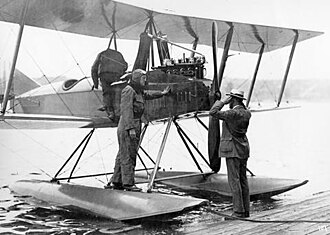
Boeing Model 2 – The Forgotten Pioneer of Early American Aviation
When discussing Boeing’s long and influential history, most aviation enthusiasts immediately think of iconic aircraft such as the B-17 Flying Fortress, the B-29 Superfortress, the legendary Boeing 707, or the modern 787 Dreamliner. These aircraft transformed military and commercial aviation while establishing Boeing as one of the world’s premier aerospace manufacturers. Long before these achievements, however, the company was taking its very first steps into aircraft design. During those formative years, every project represented an experiment, every flight served as a valuable lesson, and every success or setback shaped the company’s engineering philosophy. Among these early efforts was the Boeing Model 2, an aircraft that has largely disappeared from public memory despite occupying an important place in Boeing’s developmental history.
The Boeing Model 2 emerged during an extraordinary period when aviation itself was still in its infancy. The Wright brothers had demonstrated powered flight only a little more than a decade earlier, and aircraft designers around the world were still discovering the fundamental principles that would define aviation for generations to come. Concepts that modern engineers take for granted—including aerodynamic stability, structural efficiency, reliable powerplants, and standardized manufacturing techniques—were still evolving through trial and error. Every new airplane added another chapter to the rapidly expanding body of aeronautical knowledge, and even aircraft that never entered mass production frequently influenced later designs through the lessons they provided.
Although the Boeing Model 2 was produced in extremely limited numbers and never achieved the fame of the company’s later aircraft, it represented an important milestone in Boeing’s transition from a small regional manufacturer into a serious aircraft designer. It reflected the ambitions of William E. Boeing and his engineering team, demonstrated the company’s willingness to innovate during uncertain times, and contributed to the technical experience that would eventually enable Boeing to dominate numerous sectors of global aviation. Examining the Model 2 today offers valuable insight into the challenges facing early aircraft manufacturers and illustrates how modest experimental projects often become the foundation upon which aerospace empires are built.
The Aviation Industry in the Late 1910s
To understand the significance of the Boeing Model 2, it is essential to appreciate the environment in which it was conceived. Aviation during the late 1910s remained a young and rapidly evolving industry. Aircraft were almost entirely constructed from wood, fabric, steel wire, and relatively simple mechanical components. Engines were unreliable by modern standards, navigation relied almost entirely upon visual landmarks, and pilots often flew with little more than a compass, an airspeed indicator, and personal experience. Even basic concepts such as enclosed cockpits, retractable landing gear, and all-metal airframes remained years or even decades away from widespread adoption.
Manufacturers throughout Europe and North America competed vigorously to improve aircraft performance while simultaneously attempting to establish sustainable commercial businesses. Military requirements during the First World War accelerated technological progress dramatically, leading to rapid advances in engines, aerodynamics, structural engineering, and aircraft production methods. Nevertheless, aviation remained experimental in many respects, and every manufacturer sought opportunities to distinguish itself through innovative engineering.
For Boeing, entering this competitive environment required not only technical expertise but also significant financial commitment and entrepreneurial determination. William Boeing believed aviation possessed enormous long-term potential despite the uncertainties surrounding the young industry. His willingness to invest in aircraft development during these formative years ultimately shaped the future of both his company and American aviation.
The Birth of the Boeing Company
William Boeing’s Vision
William Edward Boeing originally achieved success through the timber industry, where he developed substantial business experience and financial resources. His fascination with aviation grew after witnessing early aircraft demonstrations and meeting pioneering aviators whose enthusiasm proved contagious. Rather than merely observing aviation from the sidelines, Boeing became convinced that aircraft manufacturing would eventually become a major industry capable of transforming transportation, commerce, and national defense.
In 1916, he established Pacific Aero Products Company, which soon adopted the name Boeing Airplane Company. The company’s earliest facilities were modest compared with the enormous manufacturing complexes that would later produce thousands of aircraft annually. Nevertheless, they provided an environment where engineers, craftsmen, mechanics, and pilots could collaborate closely while refining designs through direct experimentation and practical flight testing.
Learning Through Early Designs
The Boeing Model 1 had already provided valuable experience in aircraft construction, material selection, and aerodynamic behavior. Building upon these lessons, engineers sought to develop improved aircraft capable of demonstrating greater refinement and reliability. The Model 2 therefore represented more than simply another airplane; it embodied Boeing’s commitment to continuous improvement and systematic engineering development.
The Development of the Boeing Model 2
The Boeing Model 2 originated during a period when aircraft development proceeded remarkably quickly. Designers frequently moved from concept sketches to flying prototypes within relatively short periods because manufacturing methods remained comparatively straightforward and certification requirements were far less extensive than those governing modern aircraft. Engineers constantly incorporated lessons learned from previous flights, modifying structural arrangements, control systems, wing geometry, and engine installations as practical experience accumulated.
Rather than pursuing radical innovation, the Boeing Model 2 emphasized refinement of established biplane principles. Designers understood that reliability and predictable handling often proved more valuable than ambitious experimentation, particularly for aircraft intended to demonstrate practical operational capability. Consequently, the aircraft incorporated conventional aerodynamic arrangements while benefiting from incremental improvements based upon operational observations and engineering analysis.
Although documentation concerning the Model 2 remains relatively limited due to its age and extremely small production run, historians generally agree that it represented an important developmental step between Boeing’s earliest experimental aircraft and the increasingly sophisticated designs that followed during the early 1920s.
Airframe Design and Construction
Traditional Biplane Configuration
Like most aircraft of its era, the Boeing Model 2 employed a biplane layout featuring two vertically separated wings connected by interplane struts and bracing wires. This arrangement offered several practical advantages given the structural materials available during the period. By distributing aerodynamic loads across two wings and supporting them through external bracing, engineers could achieve sufficient structural strength without excessively increasing weight. Although later monoplane designs eventually surpassed biplanes in aerodynamic efficiency, the configuration represented an effective solution for early aviation.
The aircraft’s wings incorporated wooden spars and ribs covered with carefully stretched fabric that created smooth aerodynamic surfaces. Skilled craftsmen devoted considerable attention to maintaining proper fabric tension, as even relatively minor imperfections could influence flight performance. External wire bracing further strengthened the wing structure while contributing to the aircraft’s distinctive appearance.
Wood and Fabric Construction
Wood served as the primary structural material throughout much of the airframe. Carefully selected timber combined favorable strength-to-weight characteristics with widespread availability and ease of fabrication. Individual components could often be shaped using conventional woodworking techniques, allowing manufacturers to produce aircraft without requiring heavy industrial equipment. Fabric covering completed the aerodynamic surfaces while minimizing overall weight.
Although such construction methods required regular inspection and maintenance, they represented the most practical solution available before advances in aluminum alloys and metal manufacturing transformed aircraft design during subsequent decades.
Powerplant and Performance
Power for the Boeing Model 2 came from a piston engine typical of the late First World War period. Engines of this era generally emphasized mechanical simplicity over high output, reflecting the limitations of contemporary metallurgy, lubrication technology, and manufacturing precision. Even relatively modest increases in horsepower often required significant engineering compromises regarding weight, reliability, and fuel consumption.
Despite these constraints, the Model 2 provided performance suitable for its intended developmental and training purposes. Moderate cruising speeds, respectable climb capability, and predictable low-speed handling enabled engineers and pilots to evaluate structural behavior, control effectiveness, and aerodynamic characteristics under practical operating conditions. While performance inevitably appears modest compared with later aircraft, it represented meaningful progress within the technological context of its era.
Flying Characteristics
Stability and Control
One of the principal objectives underlying early aircraft development involved achieving stable, controllable flight that inspired pilot confidence. Many pioneering aircraft displayed unpredictable behavior resulting from incomplete understanding of aerodynamic principles. Through careful refinement of wing geometry, tail surfaces, and control systems, designers gradually improved handling qualities while reducing pilot workload.
The Boeing Model 2 contributed to this learning process by providing practical experience regarding stability under varying flight conditions. Pilots evaluated takeoff characteristics, climb performance, turning behavior, approach procedures, and landing qualities while documenting observations that informed subsequent design improvements.
Training Value
Aircraft like the Model 2 possessed significant educational value beyond their immediate operational capabilities. Pilots accumulated experience operating increasingly refined aircraft, while mechanics developed maintenance procedures supporting reliable flight operations. Engineers likewise benefited from observing real-world performance rather than relying exclusively upon theoretical calculations.
The Boeing Model 2 as a Development Platform
Although not intended for large-scale production, the Boeing Model 2 fulfilled an essential role as a developmental platform. Every flight generated valuable engineering data regarding structural loads, aerodynamic efficiency, engine performance, and maintenance requirements. Such information proved invaluable when designing future aircraft possessing greater capability and commercial potential.
Modern aerospace development continues employing prototypes and technology demonstrators for precisely this reason. Experimental aircraft frequently influence numerous subsequent programs despite remaining relatively unknown outside engineering circles. The Boeing Model 2 exemplifies this tradition, illustrating how apparently modest projects can produce lasting technical benefits extending far beyond their immediate operational significance.
The Challenges Facing Early Manufacturers
Building aircraft during the late 1910s involved overcoming obstacles that modern aerospace companies rarely encounter. Supply chains remained fragmented, standardized aviation materials were limited, engines frequently required modification, and skilled labor capable of producing precision aircraft components remained relatively scarce. Manufacturers also faced uncertain markets because commercial aviation had yet to develop fully while military procurement fluctuated following the First World War.
Companies therefore needed remarkable adaptability. Engineers often performed multiple roles simultaneously, participating in design, manufacturing, testing, and customer support. Pilots worked closely with mechanics to identify operational issues, while management continuously balanced technical ambition against financial realities. Within this demanding environment, every successful aircraft represented a significant achievement regardless of production quantity.
Influence on Later Boeing Aircraft
The true significance of the Boeing Model 2 becomes apparent when viewed within the broader evolution of Boeing’s product line. Experience gained through early aircraft directly influenced increasingly sophisticated designs that followed during the 1920s and beyond. Improvements in structural engineering, aerodynamic refinement, manufacturing organization, quality control, and operational testing gradually transformed Boeing from a small experimental manufacturer into one of the world’s foremost aerospace companies.
Aircraft introduced during subsequent decades—including mail planes, fighters, bombers, transports, and eventually commercial airliners—benefited from engineering knowledge accumulated through countless earlier projects. While later aircraft naturally incorporated far more advanced technologies, they nevertheless rested upon foundations established during Boeing’s earliest years of experimentation.
Historical Legacy
The Boeing Model 2 occupies a fascinating yet often overlooked position within aviation history. Unlike famous aircraft that entered combat or revolutionized commercial transportation, it achieved importance primarily through its contribution to engineering development. Such aircraft rarely receive widespread public recognition because their influence operates indirectly through subsequent technological progress rather than dramatic operational achievements.
Historians studying Boeing’s early history recognize the importance of preserving knowledge concerning projects like the Model 2 precisely because they illuminate the company’s formative years. They reveal how engineers approached design challenges, how manufacturing methods evolved, and how incremental improvements gradually produced increasingly capable aircraft. Understanding these developmental stages enriches appreciation for Boeing’s later accomplishments while emphasizing that technological progress rarely occurs through isolated breakthroughs alone.
The Model 2 also symbolizes the broader pioneering spirit characterizing early aviation. Designers willingly accepted uncertainty, pilots demonstrated extraordinary courage, and manufacturers invested substantial resources despite unpredictable commercial prospects. Their collective efforts transformed powered flight from an experimental curiosity into one of humanity’s most influential technological achievements.
Remembering an Overlooked Pioneer
Although surviving examples of the Boeing Model 2 no longer exist and relatively little documentation has survived compared with later Boeing aircraft, its historical importance remains secure within the company’s developmental narrative. Every great aerospace manufacturer possesses early projects that served primarily as stepping stones toward future success. The Model 2 belongs firmly within this category, representing an aircraft whose greatest achievement lay not in production numbers or operational fame but in expanding engineering knowledge during aviation’s formative years.
Today, aviation museums and historians increasingly emphasize the importance of preserving stories surrounding these lesser-known aircraft. Doing so reminds us that aviation history extends far beyond famous combat victories or groundbreaking airliners. It also encompasses countless experimental designs whose influence persists quietly through the lessons they provided to subsequent generations of engineers.
Technical Specifications
Note: Because the Boeing Model 2 was an early experimental aircraft produced in extremely limited numbers, surviving technical documentation is incomplete. The specifications below summarize the generally accepted characteristics documented by aviation historians.
| Specification | Boeing Model 2 |
|---|---|
| Manufacturer | Boeing Airplane Company |
| Country of Origin | United States |
| First Flight | Late 1910s |
| Aircraft Type | Experimental biplane |
| Role | Development and evaluation aircraft |
| Crew | 1–2 (depending on configuration) |
| Configuration | Single-engine biplane |
| Construction | Wooden frame with fabric covering |
| Wing Arrangement | Two-bay braced biplane |
| Landing Gear | Fixed conventional landing gear |
| Powerplant | Single piston engine (period-appropriate installation) |
| Propeller | Two-blade wooden propeller |
| Primary Materials | Wood, fabric, steel fittings, wire bracing |
| Cockpit | Open cockpit |
| Intended Purpose | Engineering development and flight evaluation |
| Production | Very limited |
| Operational Status | Retired |
| Historical Importance | One of Boeing’s earliest developmental aircraft |
