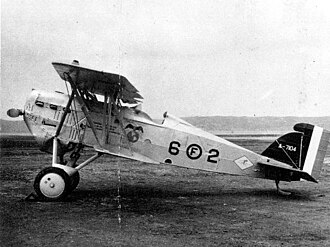
Boeing Model 15 – The Fighter That Helped Establish Boeing’s Reputation
Among the countless aircraft that have carried the Boeing name, only a select few truly altered the company’s future. While modern audiences often associate Boeing with giant commercial airliners like the 747, 777, or 787 Dreamliner, the company’s rise to prominence began decades earlier with military aircraft that proved Boeing’s engineering capabilities at a time when aviation itself remained a young and rapidly evolving industry. One of the most influential of these early aircraft was the Boeing Model 15, a rugged single-seat fighter developed during the early 1920s and later adopted by the United States Army Air Service under the designation PW-9. Although overshadowed today by later fighters of the Second World War, the Model 15 played an indispensable role in demonstrating Boeing’s ability to design high-performance combat aircraft while simultaneously introducing numerous engineering refinements that influenced subsequent generations of military airplanes.
The Boeing Model 15 emerged during an era when fighter aviation was undergoing profound transformation. Lessons learned during the First World War had permanently altered military thinking about air power, emphasizing the importance of specialized fighter aircraft capable of gaining air superiority, escorting bombers, intercepting enemy reconnaissance platforms, and protecting ground forces. At the same time, rapid improvements in aircraft engines, structural materials, aerodynamics, and armament created unprecedented opportunities for innovation. Every new fighter represented an attempt to balance speed, maneuverability, climb performance, reliability, structural strength, and pilot survivability, all while remaining practical to manufacture and maintain.
Although the Boeing Model 15 retained the familiar appearance of the classic biplane fighter, it incorporated numerous improvements that reflected the latest engineering knowledge of its time. Its robust welded steel-tube fuselage, efficient liquid-cooled Curtiss engine, carefully refined wing structure, and excellent flying characteristics earned praise from both military pilots and maintenance personnel. Over the course of its operational career, the aircraft not only strengthened Boeing’s reputation as a military aircraft manufacturer but also served as a valuable stepping stone toward increasingly sophisticated designs that would eventually establish the company as one of the world’s leading aerospace organizations.
The Aviation World After the First World War
The conclusion of the First World War in 1918 marked neither the end of military aviation nor the end of aircraft development. Instead, it initiated a period of rapid experimentation during which engineers sought to improve virtually every aspect of aircraft performance. Wartime experience had revealed the strengths and weaknesses of existing fighters, exposing shortcomings in speed, climb rate, structural durability, reliability, and pilot visibility. Nations that wished to maintain effective military air forces therefore invested heavily in research programs designed to create entirely new generations of combat aircraft rather than merely refining wartime designs.
For the United States Army Air Service, modernization became an urgent priority. Many wartime aircraft had already become obsolete by the early 1920s, while foreign manufacturers continued introducing increasingly capable fighters. American industry faced the challenge of producing competitive domestic aircraft capable of matching or surpassing overseas developments. This environment provided companies such as Boeing with valuable opportunities to demonstrate their engineering capabilities through military procurement competitions that rewarded innovation, reliability, and operational effectiveness.
Unlike the frantic wartime production environment, the post-war years allowed engineers more time to refine their designs carefully through extensive testing. Wind tunnel research became increasingly sophisticated, structural analysis improved, and manufacturing techniques gradually became more standardized. Although aviation remained relatively primitive compared with later decades, the foundations of modern aerospace engineering were beginning to emerge.
Boeing’s Growing Ambitions
From Small Manufacturer to Military Supplier
By the early 1920s, Boeing had already accumulated valuable experience through several earlier aircraft projects, but the company remained far from the industrial giant it would eventually become. William Edward Boeing recognized that military contracts represented one of the most effective paths toward long-term stability and technological advancement. Successfully supplying fighter aircraft to the United States Army Air Service would not only provide financial security but also establish Boeing as a serious competitor within the rapidly expanding American aviation industry.
Rather than pursuing radical experimentation for its own sake, Boeing’s engineering philosophy emphasized practical improvements supported by careful testing and manufacturing quality. Every new aircraft incorporated lessons learned from previous designs while introducing refinements intended to improve operational reliability. This systematic approach would become one of Boeing’s defining characteristics throughout its history.
The Search for a New Fighter
Military planners sought an aircraft capable of replacing earlier fighters while offering substantial improvements in speed, maneuverability, endurance, and structural durability. The resulting competition encouraged manufacturers to produce aircraft that balanced excellent flying qualities with practical maintenance requirements. Boeing responded with the Model 15, a design that combined proven aerodynamic concepts with several innovative engineering features.
Development of the Boeing Model 15
Development of the Model 15 began during the early 1920s, drawing upon Boeing’s accumulated experience in aircraft construction while incorporating technological advances achieved during the years immediately following the First World War. Engineers focused on creating a fighter that would remain competitive throughout the decade rather than merely satisfying immediate procurement requirements. This objective required careful attention to structural integrity, aerodynamic efficiency, engine installation, cooling performance, pilot ergonomics, and overall operational reliability.
Unlike some contemporary aircraft that relied heavily upon conservative design approaches, the Model 15 introduced several important improvements without abandoning the proven biplane configuration that still dominated fighter aviation. Designers recognized that although monoplanes possessed theoretical aerodynamic advantages, contemporary structural technology had not yet matured sufficiently to allow monoplanes to replace biplanes entirely within military service. Consequently, the Model 15 represented the pinnacle of conventional biplane fighter engineering rather than an attempt to revolutionize aircraft design overnight.
The prototype demonstrated promising performance during flight testing, leading military evaluators to recommend production. After further refinement, the aircraft entered service under the designation PW-9, becoming one of the United States Army Air Service’s principal fighters during the latter half of the 1920s.
Airframe Design and Construction
Welded Steel-Tube Fuselage
Perhaps the most significant structural innovation incorporated into the Boeing Model 15 involved its welded steel-tube fuselage. Earlier aircraft frequently relied upon wooden frameworks that, although lightweight, required careful maintenance and remained susceptible to environmental deterioration. Steel tubing offered substantially greater structural durability while simplifying repairs following operational damage. The resulting fuselage formed a strong internal framework capable of withstanding the demanding loads associated with military maneuvering.
Fabric covering stretched over the steel structure created smooth aerodynamic surfaces while maintaining relatively low weight. This combination of metal framework and fabric skin represented an ideal compromise given the materials and manufacturing technologies available during the early 1920s.
Traditional Biplane Wing Arrangement
The aircraft employed equal-span biplane wings connected through interplane struts and wire bracing. Although later generations of fighters abandoned external bracing in favor of cantilever monoplanes, the biplane arrangement remained highly effective within the technological limitations of the period. Two wings provided excellent lift, relatively low wing loading, and impressive maneuverability while allowing engineers to maintain acceptable structural strength without excessive weight penalties.
Wing construction relied primarily upon wooden spars and ribs covered with carefully doped fabric. Rigorous quality control during assembly ensured accurate alignment and structural consistency, factors essential for predictable handling characteristics and reliable combat performance.
Powerplant and Propulsion
The Boeing Model 15 derived its impressive performance largely from the Curtiss D-12 liquid-cooled V-12 engine, one of the most advanced American aircraft engines of its era. Delivering approximately 435 horsepower, the engine represented a significant improvement over many earlier powerplants through its combination of relatively low weight, compact dimensions, and dependable operation.
Liquid cooling offered important aerodynamic advantages because the engine required a smaller frontal area than comparable air-cooled radial engines. Reduced drag translated directly into higher maximum speed and improved climb performance, characteristics especially valuable for fighter aircraft. Engineers carefully integrated the cooling system into the aircraft’s overall design, balancing aerodynamic efficiency with reliable thermal management under varying operating conditions.
A two-bladed wooden propeller converted engine power into thrust with remarkable efficiency given contemporary technology. Propeller design remained a rapidly evolving science during the 1920s, and careful optimization contributed significantly to the aircraft’s overall performance.
Performance Characteristics
Speed and Climb
Compared with many earlier fighters, the Boeing Model 15 demonstrated notable improvements in maximum speed and climb rate. Military pilots appreciated the aircraft’s ability to gain altitude rapidly while maintaining responsive handling throughout much of its flight envelope. Such characteristics proved essential during fighter operations, where altitude often determined tactical advantage before combat even began.
Maneuverability
The relatively low wing loading associated with the biplane configuration contributed toward excellent maneuverability. Pilots found the aircraft responsive without becoming excessively sensitive, allowing precise control during aerobatic maneuvers, air combat training, and formation flying. Stable handling also reduced pilot fatigue during extended flights while facilitating accurate gunnery practice.
Operational Reliability
Reliability represented one of the aircraft’s greatest strengths. Well-engineered structural components, dependable engine performance, and accessible maintenance arrangements contributed toward high operational availability. Ground crews appreciated the straightforward layout, enabling routine inspections and repairs without unnecessary complexity.
Armament
The Boeing Model 15 reflected contemporary fighter doctrine through its installation of synchronized machine guns firing forward through the propeller arc. Synchronization mechanisms represented one of the most important technological achievements inherited from the First World War, allowing pilots to aim the entire aircraft toward their targets rather than relying upon flexible defensive weapons.
Typically armed with two .30-caliber machine guns mounted ahead of the cockpit, the aircraft provided firepower considered adequate during the mid-1920s. Ammunition capacity supported extended training exercises while allowing realistic evaluation of fighter tactics and aerial gunnery procedures. Although later aircraft introduced heavier armament, the Model 15 represented the state of the art during its introduction.
Pilot Experience
Flying the Boeing Model 15 demanded considerable skill, as was typical for military aircraft of the era. Open cockpits exposed pilots directly to wind, temperature changes, rain, and engine noise while requiring careful use of goggles, heavy clothing, and communication through hand signals whenever radio equipment remained unavailable. Despite these challenges, pilots generally praised the aircraft for its balanced handling, responsive controls, and excellent maneuverability.
Visibility from the cockpit remained reasonably good for a biplane fighter, although the upper wing inevitably restricted upward vision to some extent. During landing approaches, pilots relied heavily upon experience and careful energy management because instrumentation remained relatively limited compared with modern aircraft. Successful operation therefore depended as much upon pilot judgment as upon aircraft capability.
Military Service
United States Army Air Service
Following successful evaluation, the Boeing Model 15 entered service as the PW-9, becoming one of the Army Air Service’s principal fighter aircraft throughout the late 1920s. Units employed the aircraft for operational training, tactical development, formation flying, aerial gunnery, and fighter doctrine experimentation. During this period military aviation underwent rapid conceptual evolution, and aircraft like the PW-9 played important roles in refining future combat tactics.
Training Future Generations
Thousands of flight hours accumulated aboard PW-9 fighters provided valuable experience for pilots who would later contribute to the dramatic expansion of American military aviation during the 1930s and 1940s. Many aviators who eventually flew more advanced aircraft first developed fundamental fighter skills aboard Boeing’s early biplane.
Competition with Curtiss
Although the Boeing Model 15 achieved considerable success, it competed directly with fighters produced by Curtiss, another leading American aircraft manufacturer. Procurement competitions frequently alternated between the two companies as military authorities sought the most capable designs available. This rivalry encouraged continuous innovation, benefiting both manufacturers while advancing American fighter development as a whole.
Curtiss and Boeing often approached similar engineering challenges from different perspectives, leading to healthy technological competition that accelerated improvements in aircraft performance, reliability, and maintainability. The resulting advances strengthened the American aviation industry during an important period of growth.
Influence on Later Boeing Aircraft
The engineering experience accumulated during development and production of the Model 15 influenced numerous subsequent Boeing projects. Techniques involving welded steel construction, aerodynamic refinement, structural testing, manufacturing organization, and military collaboration became increasingly sophisticated as the company expanded its capabilities.
Although later Boeing fighters eventually abandoned biplane layouts in favor of all-metal monoplanes, many engineering principles first refined during the Model 15 program continued shaping future designs. The company’s growing reputation for quality and reliability likewise attracted additional military contracts that fueled continued technological progress.
The End of the Biplane Era
By the early 1930s aviation technology had advanced rapidly enough that the limitations of biplane fighters became increasingly apparent. More powerful engines, improved aluminum structures, retractable landing gear, enclosed cockpits, and cantilever wings enabled monoplane fighters to surpass biplanes in virtually every important performance category. Aircraft such as the Boeing P-26 Peashooter represented this new generation, signaling the gradual retirement of designs like the Model 15.
Nevertheless, the Boeing Model 15 should not be viewed merely as an obsolete aircraft replaced by superior technology. Instead, it represented the culmination of decades of biplane fighter development and demonstrated just how refined conventional designs had become before entirely new aerodynamic concepts transformed military aviation.
Historical Legacy
Today the Boeing Model 15 occupies an important place within both Boeing’s corporate history and the broader story of American military aviation. It proved that Boeing possessed the engineering expertise necessary to compete successfully for military fighter contracts while establishing manufacturing practices that would later support production of increasingly complex aircraft. Without successful programs like the Model 15, Boeing’s later achievements might have followed a very different trajectory.
The aircraft also serves as an excellent example of transitional aviation technology. It combined proven First World War concepts with emerging engineering innovations, bridging the gap between fragile early fighters and the sophisticated all-metal combat aircraft that would dominate the skies during the Second World War. In doing so, it helped prepare both engineers and pilots for the dramatic technological revolutions that lay ahead.
Technical Specifications
| Specification | Boeing Model 15 / PW-9 |
|---|---|
| Manufacturer | Boeing Airplane Company |
| Country of Origin | United States |
| Military Designation | PW-9 |
| Role | Single-seat fighter aircraft |
| First Flight | 1923 |
| Introduction into Service | 1925 |
| Crew | 1 |
| Length | 24 ft 10 in (7.57 m) |
| Wingspan | 32 ft (9.75 m) |
| Height | 10 ft 3 in (3.12 m) |
| Wing Area | Approximately 263 sq ft (24.4 m²) |
| Empty Weight | Approximately 2,230 lb (1,011 kg) |
| Maximum Takeoff Weight | Approximately 2,950 lb (1,338 kg) |
| Powerplant | 1 × Curtiss D-12 liquid-cooled V-12 engine |
| Engine Output | 435 hp (324 kW) |
| Maximum Speed | Approximately 167 mph (269 km/h) |
| Cruise Speed | Approximately 145 mph (233 km/h) |
| Range | Approximately 530 miles (853 km) |
| Service Ceiling | Approximately 27,300 ft (8,320 m) |
| Rate of Climb | Approximately 1,800 ft/min (9.1 m/s) |
| Armament | 2 × synchronized .30-caliber Browning machine guns |
| Construction | Welded steel-tube fuselage with fabric covering; wooden wings |
| Landing Gear | Fixed conventional tailwheel landing gear |
| Primary Operator | United States Army Air Service |
| Production | Approximately 158 aircraft (all PW-9 variants) |
| Status | Retired |
.jpg)