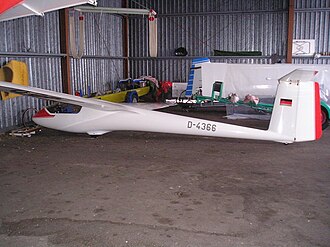
Bölkow Phoebus: The Experimental German Sailplane That Showcased the Future of High-Performance Gliding
A Visionary Glider Born in an Era of Innovation
The Bölkow Phoebus occupies a unique place in the history of sailplane development. Although it never achieved the widespread production or international recognition of some of its contemporaries, the Phoebus represented a bold step forward in aerodynamic design and composite construction during one of the most exciting periods in post-war aviation. Developed in West Germany by Bölkow GmbH during the 1960s, the aircraft was conceived as a high-performance competition sailplane capable of exploiting the latest advances in materials, aerodynamics, and structural engineering. At a time when glider designers across Europe were abandoning traditional wooden airframes in favor of fiberglass composites, the Phoebus embodied the belief that new technologies could dramatically improve soaring performance while reducing maintenance and increasing structural efficiency.
The sailplane emerged during an era when competitive gliding was evolving rapidly. Improvements in weather forecasting, flight instrumentation, and aerodynamics encouraged designers to pursue increasingly ambitious aircraft capable of flying farther, faster, and more efficiently than ever before. Within this environment, the Phoebus became an important experimental platform that demonstrated the remarkable potential of composite materials and modern wing design. While only a limited number of examples were built, its influence extended well beyond its production figures, helping shape the direction of European sailplane engineering for years to come.
The Origins of the Bölkow Phoebus
Germany’s Return to Advanced Sailplane Design
Germany has long been recognized as one of the world’s leading centers for gliding innovation. Even before the Second World War, German engineers and pilots had contributed enormously to the science of unpowered flight, developing aerodynamic principles that remain fundamental today. Following the post-war restrictions on aviation, gliding once again became one of the first branches of German aerospace to recover, providing engineers with opportunities to experiment with advanced designs while remaining within the regulatory environment of the time.
By the early 1960s, the country’s aviation industry had regained much of its technical confidence. Companies such as Bölkow were investing heavily in advanced materials and lightweight structures, recognizing that sailplanes offered an ideal platform for testing technologies that might later benefit powered aircraft. The Phoebus project emerged directly from this atmosphere of innovation, aiming to create a sailplane capable of competing at the highest international level while demonstrating the advantages of modern engineering techniques.
Designed for Competition
Unlike basic training gliders, the Phoebus was conceived specifically for experienced pilots participating in cross-country and international competition flying. Every aspect of the aircraft emphasized aerodynamic efficiency, including its slender fuselage, long high-aspect-ratio wings, carefully streamlined canopy, and exceptionally clean external finish.
Engineers sought to minimize drag while maximizing lift, creating an aircraft capable of exploiting even weak atmospheric lift conditions. The resulting design reflected the rapidly changing philosophy of competitive soaring, where every improvement in glide ratio or sink rate could determine success during long-distance contests.
Engineering Innovation
Composite Construction
Perhaps the Phoebus’ greatest contribution to sailplane development was its extensive use of fiberglass-reinforced composite materials. Earlier gliders had relied primarily on wood, fabric, or metal structures, each offering advantages but also significant limitations regarding strength, durability, and manufacturing precision.
Fiberglass composites allowed engineers to produce exceptionally smooth aerodynamic surfaces while maintaining excellent structural integrity. The material resisted corrosion, tolerated environmental exposure better than traditional wood, and permitted complex aerodynamic shapes that would have been difficult or impossible using conventional construction methods.
The use of composites also improved dimensional consistency during production, ensuring that aircraft closely matched their intended aerodynamic profiles. This precision translated directly into improved soaring performance and more predictable handling.
High-Aspect-Ratio Wings
The Phoebus featured long, slender wings designed to maximize lift while minimizing induced drag. High-aspect-ratio wings have long been associated with efficient gliding because they reduce the formation of wingtip vortices, allowing the aircraft to maintain altitude more effectively during unpowered flight.
Careful attention was paid to the wing’s airfoil selection, structural stiffness, and control surface integration. Engineers balanced aerodynamic efficiency with sufficient structural strength to withstand the significant loads encountered during thermalling, ridge soaring, and high-speed cross-country flight.
The resulting aircraft demonstrated impressive glide characteristics that placed it among the more advanced sailplanes of its generation.
Streamlined Fuselage
The fuselage reflected the same emphasis on aerodynamic refinement. Its narrow cross-section reduced parasitic drag while still providing sufficient space for the pilot, flight instruments, and essential control systems. The cockpit canopy blended smoothly into the fuselage contours, minimizing airflow disturbances and preserving laminar flow over as much of the aircraft as possible.
Landing gear design also reflected aerodynamic priorities. A retractable main wheel reduced drag during flight while allowing practical ground operations before takeoff and after landing.
Flight Performance
Exceptional Soaring Capability
The primary objective of the Phoebus was efficient soaring performance, and in this respect the aircraft proved highly successful. Its excellent glide ratio enabled pilots to travel considerable distances between sources of rising air while minimizing altitude loss. During cross-country flights, this capability translated directly into greater average speeds and improved competition performance.
The aircraft handled thermals efficiently, climbing smoothly within rising columns of warm air while maintaining excellent controllability. Strong directional stability and effective ailerons allowed pilots to center thermals accurately, maximizing climb rates even under challenging atmospheric conditions.
Efficient High-Speed Flight
Competition sailplanes must excel not only at slow thermalling speeds but also during high-speed cruising between lift sources. The Phoebus demonstrated excellent energy retention, allowing pilots to accelerate efficiently before transitioning into long glides across the countryside.
Its clean aerodynamic design minimized drag over a broad speed range, enabling effective performance under varying weather conditions. Whether flying slowly in weak lift or rapidly through strong weather systems, the sailplane maintained predictable handling and efficient performance.
Stable and Responsive Handling
Pilot reports praised the Phoebus for its balanced handling characteristics. Control forces remained light without becoming overly sensitive, making the aircraft enjoyable to fly during extended cross-country flights. Pitch stability contributed to reduced pilot workload, while precise roll response allowed accurate positioning during thermalling and final approaches.
These qualities made the sailplane suitable not only for elite competition pilots but also for experienced recreational soaring enthusiasts seeking advanced performance.
Role in Competitive Gliding
International Competition
Although produced in relatively small numbers, the Phoebus appeared in several international soaring competitions where its advanced design attracted considerable attention. Pilots appreciated the aircraft’s modern construction, impressive aerodynamic efficiency, and refined flying characteristics.
While competition success depended heavily on weather conditions and pilot skill, the Phoebus demonstrated that composite sailplanes represented the future of high-performance gliding. Its capabilities compared favorably with many contemporary aircraft and reinforced growing confidence in fiberglass construction.
A Technological Demonstrator
Beyond its direct competition role, the Phoebus served as an important technology demonstrator. Engineers gained valuable experience in composite manufacturing techniques, structural analysis, aerodynamic optimization, and quality control processes that would later benefit subsequent aircraft programs.
Many design concepts refined during the Phoebus project influenced later generations of German sailplanes, contributing to the country’s continuing leadership in high-performance glider development.
Variants and Development
Standard and Open-Class Concepts
During its development, several versions of the Phoebus were explored to meet evolving competition rules and pilot preferences. Variants differed primarily in wingspan and performance optimization, reflecting the changing landscape of international soaring competitions.
Longer-wing versions emphasized maximum glide performance, while shorter-span configurations offered improved maneuverability under certain competition conditions. These developments illustrated the flexibility made possible by composite construction techniques.
Limited Production
Despite its technical achievements, the Phoebus remained a relatively specialized aircraft. Production numbers were modest compared to mass-produced training gliders, reflecting its role as an advanced competition sailplane rather than a general-purpose aircraft.
Nevertheless, every example represented an important milestone in composite aircraft engineering and contributed valuable operational experience for designers and pilots alike.
Legacy of the Bölkow Phoebus
The historical importance of the Phoebus extends well beyond the number of aircraft built. It demonstrated that fiberglass composites could successfully replace traditional construction materials while delivering measurable improvements in performance, durability, and manufacturing precision.
The project also strengthened Germany’s position at the forefront of sailplane development during a period of rapid technological change. Knowledge gained through the Phoebus program influenced future designs produced by German manufacturers, many of which went on to dominate international soaring competitions throughout the following decades.
Today, surviving Phoebus sailplanes are highly valued by aviation museums, private collectors, and dedicated glider enthusiasts. They represent an important transitional period between traditional sailplane construction and the sophisticated carbon-fiber aircraft that dominate modern competition soaring.
For historians of aviation technology, the Phoebus illustrates how relatively small experimental programs can have lasting influence far beyond their immediate commercial success. Its innovations helped establish engineering principles that remain relevant in modern glider design and even in broader aerospace applications involving lightweight composite structures.
Conclusion
The Bölkow Phoebus stands as one of the most significant experimental sailplanes of the 1960s, embodying a period when advances in composite materials and aerodynamic science transformed the possibilities of unpowered flight. Although never produced in large numbers, it successfully demonstrated that fiberglass construction, carefully optimized aerodynamics, and precision engineering could dramatically improve soaring performance while laying the foundation for future generations of competition gliders.
Its influence reached beyond individual competitions, contributing valuable knowledge to the rapidly evolving field of composite aircraft design. As glider technology continued advancing through the following decades, many of the principles explored by the Phoebus became standard practice throughout the industry.
Today, the Phoebus remains a symbol of German engineering ambition and innovation. It reminds us that progress in aviation often begins with experimental aircraft designed not merely to satisfy current requirements but to explore entirely new possibilities for the future of flight.
Bölkow Phoebus Technical Specifications
| Specification | Details |
|---|---|
| Manufacturer | Bölkow GmbH |
| Aircraft Type | Single-seat high-performance sailplane |
| Primary Role | Competition and cross-country soaring |
| First Flight | 1964 |
| Crew | 1 |
| Construction | Fiberglass composite with metal components |
| Configuration | Mid-wing monoplane |
| Landing Gear | Retractable single main wheel with tail bumper/skid |
| Wingspan | Approximately 17–19 m (variant dependent) |
| Length | Approximately 7.2 m |
| Height | Approximately 1.3 m |
| Wing Aspect Ratio | High aspect ratio optimized for soaring |
| Empty Weight | Approximately 250 kg |
| Maximum Takeoff Weight | Approximately 400 kg |
| Glide Ratio | Approximately 40:1 (depending on configuration and conditions) |
| Minimum Sink Rate | Approximately 0.65 m/s |
| Never-Exceed Speed (VNE) | Approximately 220 km/h (137 mph) |
| Stall Speed | Approximately 65 km/h (40 mph) |
| Airbrakes | Upper-wing aerodynamic spoilers |
| Primary Materials | Fiberglass-reinforced composites |
| Primary Missions | Competition soaring, cross-country gliding, performance research |
