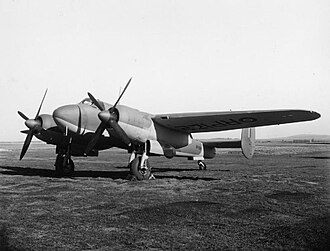
Bristol Buckmaster: The RAF’s Powerful High-Performance Trainer
The Bristol Buckmaster was one of the most impressive advanced training aircraft operated by the Royal Air Force in the years immediately following the Second World War. Although it was developed from the Bristol Buckingham, a medium bomber that never achieved the operational importance originally intended for it, the Buckmaster found a much more appropriate role as a high-performance trainer. Designed to bridge the considerable gap between conventional wartime trainers and increasingly powerful twin-engined combat aircraft, the Buckmaster gave RAF pilots an opportunity to develop their skills on a machine that closely approximated the performance and handling characteristics of the aircraft they would later fly operationally. Powered by two enormous Bristol Centaurus radial engines, the Buckmaster was fast, heavy and technologically sophisticated for a trainer. Its first flight took place on 27 October 1944, and production aircraft entered RAF service in 1945. Approximately 112 examples were built, and the type remained in RAF service into the mid-1950s. Aerospace Bristol describes the aircraft as an advanced trainer and notes that it was considered the RAF’s highest-performance trainer when introduced.
The Origins of the Bristol Buckmaster
A Trainer Born from a Bomber
The Buckmaster’s origins were closely connected with the Bristol Buckingham, and its development illustrates how an aircraft designed for one purpose can acquire a second life when circumstances change. The Buckingham had been conceived during the Second World War as a fast medium bomber, but changing strategic requirements, the increasing effectiveness of the de Havilland Mosquito and the availability of American aircraft meant that its intended bomber role largely disappeared before it could become important in RAF service. Bristol therefore found itself with an advanced airframe that could potentially be adapted for other purposes. At the same time, the RAF had identified a significant weakness in its training system: pilots graduating from aircraft such as the Avro Anson and Airspeed Oxford could face a very large jump in performance when moving to modern operational aircraft. The Buckmaster was designed to fill precisely this gap.
The Air Ministry’s requirement called for an advanced trainer capable of preparing pilots for the next generation of high-performance aircraft. Bristol responded with the Type 166 Buckmaster, retaining much of the Buckingham’s basic aerodynamic and structural design while making extensive modifications to the forward fuselage and cockpit. The most obvious change was the widening of the front fuselage to accommodate the instructor and trainee side by side. A radio operator or air signaller could occupy a position behind them, giving the aircraft a normal crew complement of three. The Buckmaster was therefore more than simply a Buckingham with its guns removed; it was a purpose-adapted training aircraft intended to make advanced instruction more practical and effective.
Why the RAF Needed Such a Powerful Trainer
During the war, aircraft performance had advanced at an extraordinary rate. Early-war trainers were often relatively slow and forgiving, while frontline aircraft were becoming progressively faster, heavier and more complex. This created an increasingly serious transition problem for pilots. Learning basic flying skills in a modest trainer was one thing; learning to manage high-powered twin-engined aircraft, retractable landing gear, constant-speed propellers, advanced navigation equipment and sophisticated engine systems was another.
The Buckmaster was intended to make that transition less abrupt. It retained the powerful twin-engine configuration and relatively high wing loading of a combat aircraft, while dual controls allowed the instructor to intervene during training. This meant that students could practice instrument flying, navigation, engine management and general handling in an aircraft that demanded considerably more skill than the trainers they had previously flown. Its introduction was therefore part of a broader evolution in RAF pilot training, in which advanced trainers became increasingly important as combat aircraft became more sophisticated.
Design and Construction
A Modified Buckingham Airframe
The Buckmaster was an all-metal, mid-wing monoplane with a retractable tailwheel undercarriage and two large radial engines mounted in the wings. Although its appearance was unmistakably related to the Buckingham, the cockpit arrangement gave the aircraft a noticeably different character. Instead of the bomber’s more specialized crew layout, the Buckmaster provided side-by-side seating for the instructor and student, an arrangement particularly useful for training because it allowed the instructor to demonstrate procedures directly and monitor the trainee’s actions.
The aircraft’s construction reflected Bristol’s experience with large wartime aircraft. Its semi-monocoque light-alloy structure combined strength with reasonable weight, while the wing was built around substantial spars and divided into major sections to simplify manufacture and maintenance. The aircraft also incorporated hydraulic and electrical systems suitable for a sophisticated twin-engined machine. Although the Buckmaster was not intended for combat, its underlying structure was derived from an aircraft originally designed to withstand the demands of military operations.
One of the clever aspects of the conversion was the removal of equipment that was unnecessary for training. The Buckmaster dispensed with the Buckingham’s armament, armor and bomb-carrying equipment, reducing the aircraft’s operational complexity while retaining its powerful engines and high-performance characteristics. The result was an aircraft that could deliver impressive speed and climb performance without carrying the additional weight associated with weapons and combat systems.
The Bristol Centaurus Powerplant
Two Enormous Radial Engines
The Buckmaster’s performance was dominated by its two Bristol Centaurus VII engines. Each was an 18-cylinder, air-cooled radial engine capable of producing roughly 2,500 horsepower. Aerospace Bristol lists the Buckmaster’s engines at approximately 2,585 horsepower each, while other historical references commonly give a figure around 2,520 horsepower. Whichever rating is used, the important point is that the aircraft possessed an extraordinary amount of power for a trainer.
The Centaurus was one of Bristol’s most advanced piston engines and used sleeve-valve technology. In the Buckmaster, the engines drove four-bladed propellers and provided the aircraft with the power necessary to reach speeds exceeding 350 mph. This made the trainer substantially faster than many aircraft that RAF pilots had previously used for instruction.
Such power also gave the Buckmaster an important training advantage. A pilot destined to fly a high-performance twin-engined aircraft needed experience managing considerable engine power, asymmetric thrust and complex aircraft systems. The Buckmaster could reproduce many of those challenges in a controlled training environment. Engine failures and other emergency procedures could be practiced without requiring the student to make the enormous leap directly into an operational aircraft.
Performance That Rivalled Combat Aircraft
The Buckmaster was remarkably fast for an aircraft whose principal purpose was instruction. Historical specifications give a maximum speed of approximately 352 mph at 12,000 feet, an initial rate of climb of around 2,245 feet per minute, and a service ceiling close to 30,000 feet. Its range was approximately 2,000 miles.
These figures help explain why the Buckmaster acquired its reputation as the RAF’s highest-performance trainer when introduced. It was not merely an aircraft in which students learned navigation and instrument procedures; it was a substantial, fast machine that demanded serious attention from its crew. Its performance also made it well suited to preparing pilots for the Bristol Brigand, another member of the same Bristol aircraft family.
The Buckmaster in RAF Training
Preparing Pilots for the Bristol Brigand
The Buckmaster’s principal training purpose was to prepare pilots for the Bristol Brigand, a postwar twin-engined aircraft used in roles including light bombing, maritime strike and torpedo operations. The two aircraft shared important characteristics, making the Buckmaster an effective bridge between conventional training aircraft and the Brigand. Production Buckmasters were intended for training roles associated with the Brigand, and operational conversion training became one of their most important functions.
This was particularly valuable because the Brigand represented a substantial step upward in aircraft performance and complexity. Rather than placing inexperienced pilots directly into an operational Brigand, the RAF could first give them experience in the Buckmaster. Students could practice takeoffs and landings, engine management, instrument flying, navigation and emergency procedures while accompanied by an experienced instructor.
The Buckmaster’s three-seat arrangement also allowed an air signaller or radio operator to participate in training. This reflected the multi-crew nature of many postwar RAF aircraft, where successful missions depended on coordination between pilots and other crew members rather than the pilot operating independently.
Instrument and Blind-Flying Training
One of the Buckmaster’s important functions was blind-flying and instrument training. By the end of the Second World War, military aviation increasingly depended on aircraft being able to operate safely in poor weather and under conditions in which the pilot could not rely on visual references. Advanced instrument training was therefore essential.
The Buckmaster’s sophisticated cockpit and high performance made it an appropriate platform for this instruction. Students could learn to interpret instruments, maintain aircraft control without external visual references and manage navigation tasks while flying a relatively complex twin-engined aircraft. The ability to perform this training in a high-performance machine made the transition to operational aircraft considerably smoother.
Production of the Bristol Buckmaster
Turning Unwanted Buckingham Components into Trainers
The Buckmaster’s production history was unusual. The original Buckingham bomber programme had been drastically reduced, leaving a considerable quantity of components and partially completed aircraft. Instead of allowing those resources to go to waste, Bristol used them as the basis for the new trainer.
The first Buckmaster prototype flew on 27 October 1944. Two partly completed Buckingham airframes were converted into prototypes, and further Buckmaster aircraft were produced using components that had originally been intended for the Buckingham programme. Contemporary and historical sources give slightly different descriptions of the exact production total, with 110 often cited for production aircraft and 112 when prototypes are included.
This approach was efficient in an era when aircraft manufacturing resources were still under enormous pressure. Rather than designing an entirely new advanced trainer, Bristol could exploit an existing airframe, existing production facilities and components already manufactured for the Buckingham. The result was a relatively quick route to a high-performance training aircraft.
Operational Service and Overseas Use
RAF Training Units
The Buckmaster served primarily with RAF training organizations. It was used for advanced training and operational conversion, particularly in connection with aircraft such as the Brigand. No. 238 Operational Conversion Unit became associated with the type, and No. 8 Squadron also operated Buckmasters in communications duties.
Although it never achieved the fame of aircraft such as the Spitfire or Lancaster, the Buckmaster performed an important supporting role. Training aircraft rarely receive the same attention as combat aircraft because their contribution is less visible. Yet the quality of pilot training can have a profound influence on operational effectiveness. A sophisticated trainer such as the Buckmaster helped ensure that crews reached operational units with experience appropriate to the aircraft they were expected to fly.
The aircraft’s usefulness extended into the early postwar period, when the RAF was adjusting to an entirely new technological environment. Piston-engine aircraft remained important, but jet propulsion was rapidly becoming the future of military aviation. The Buckmaster consequently belonged to a transitional generation, representing the peak of large piston-engined training aircraft just as jet trainers and combat aircraft were beginning to reshape military aviation.
Retirement and Legacy
Service into the Mid-1950s
The Buckmaster continued to serve with RAF Training Command into the mid-1950s. The final examples were associated with No. 238 Operational Conversion Unit at RAF Colerne, while one or two aircraft were also used for experimental work at Bristol’s Filton facilities. By this point, newer aircraft and changing training requirements were making the large piston-engined trainer increasingly obsolete.
The aircraft’s retirement was not a reflection of poor performance. Quite the opposite: its high performance had been one of the principal reasons for its existence. But aviation was changing rapidly. Jet aircraft were becoming increasingly common, and the training system had to evolve accordingly. A trainer designed around the characteristics of powerful piston-engined aircraft could not remain the ideal solution indefinitely.
Connection with the Bristol Aircraft Family
The Buckmaster’s historical significance becomes clearer when viewed as part of Bristol’s broader family of aircraft. It descended from the Buckingham, shared important characteristics with the Brigand and used the company’s Centaurus engine technology. It was therefore part of a fascinating lineage of Bristol aircraft that emerged from wartime design work and continued into the postwar era.
The Buckmaster also demonstrates the value of adapting existing technology. The Buckingham had failed to become the bomber originally envisioned, but its airframe provided the foundation for an effective trainer. In this respect, the Buckmaster turned a problematic wartime programme into something genuinely useful.
Bristol Buckmaster Technical Specifications
The following figures represent the Bristol Type 166 Buckmaster T.Mk.I. Some historical references differ slightly in engine ratings and dimensions, so values should be regarded as representative rather than universally identical.
| Specification | Bristol Buckmaster T.Mk.I |
|---|---|
| Manufacturer | Bristol Aeroplane Company |
| Type | Advanced twin-engine trainer |
| First flight | 27 October 1944 |
| Introduction | 1945 |
| Crew | 3 |
| Length | 46 ft 5 in (14.15 m) |
| Wingspan | 71 ft 10 in (21.89 m) |
| Height | Approximately 17 ft 6–7 in (5.33–5.36 m) |
| Wing area | 708 sq ft (65.78 m²) |
| Empty weight | Approximately 23,000 lb (10,433 kg) |
| Maximum loaded weight | Approximately 33,700 lb (15,286 kg) |
| Engines | 2 × Bristol Centaurus VII 18-cylinder radial engines |
| Engine power | Approximately 2,520–2,585 hp each |
| Propellers | Four-bladed, fully feathering propellers |
| Maximum speed | Approximately 352 mph (566 km/h) at 12,000 ft |
| Cruising speed | Approximately 325 mph (523 km/h) at high-speed cruise |
| Initial rate of climb | Approximately 2,245 ft/min (684 m/min) |
| Service ceiling | Approximately 30,000 ft (9,144 m) |
| Range | Approximately 2,000 miles (3,219 km) |
| Armament | None; dedicated training aircraft |
| Primary role | Advanced pilot, instrument and operational conversion training |
| Principal associated aircraft | Bristol Brigand |
| Production | Approximately 110 production aircraft; 112 including prototypes in some references |
| Main operator | Royal Air Force |
Conclusion
The Bristol Buckmaster was an aircraft created by circumstance but given a worthwhile purpose through intelligent adaptation. Its origins lay in the Buckingham bomber programme, yet the Buckmaster proved considerably more successful in its role as an advanced trainer. By retaining the powerful Centaurus engines and much of the Buckingham’s high-performance character while removing unnecessary combat equipment and introducing a practical dual-control cockpit, Bristol produced a machine capable of preparing pilots for the demanding aircraft of the early postwar RAF.
Its importance should not be judged by the number of aircraft built or by the absence of a combat record. The Buckmaster performed a crucial supporting function at a time when military aircraft were becoming faster, heavier and more technically complicated. Its approximately 350-mph performance, powerful engines and ability to conduct instrument and advanced flying training made it an important stepping stone between conventional wartime trainers and sophisticated operational aircraft such as the Brigand.
The aircraft also represents an interesting chapter in the history of British piston-engine aviation. The Centaurus-powered Buckmaster appeared near the end of an era in which increasingly powerful radial engines were pushing propeller-driven aircraft to extraordinary levels of performance. Yet even as the Buckmaster entered service, the jet age was already beginning. Within only a few years, the training environment would be transformed by jet aircraft, and the Buckmaster would become a machine of the past.
Nevertheless, the Bristol Buckmaster deserves recognition as one of Britain’s most capable advanced trainers. It took an airframe originally intended for a bomber that had been overtaken by changing wartime requirements and turned it into a fast, sophisticated and practical training platform. In doing so, the Buckmaster ensured that the Buckingham’s engineering legacy would live on—not on the battlefield, but in the hands of the RAF pilots learning to fly some of Britain’s most demanding aircraft.
