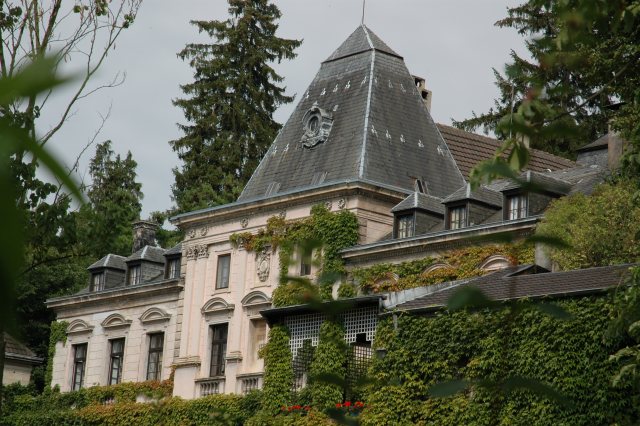
The Enduring Legacy of Burg Kommern: A Medieval Stronghold in the Eifel
Burg Kommern, located in the picturesque village of Kommern in North Rhine-Westphalia, Germany, stands as a quiet testament to the medieval past of the Eifel region. Though less famous than some of the Rhine’s grand fortresses, Burg Kommern embodies the essence of regional feudal architecture, local power dynamics, and the gradual transformation of castle life through the centuries. Surrounded by rolling hills and forested slopes, it occupies a place of both historical and symbolic importance—representing the evolution of local governance, defense, and settlement in the western German landscape.
Origins and Early Development
The origins of Burg Kommern can be traced back to the High Middle Ages, around the 12th or 13th century, when the Eifel area was part of a network of fortified sites built to control trade routes and protect agrarian lands. The village of Kommern lay along paths that connected Cologne, the Rhineland, and the Ardennes—making it a strategic location for both commerce and defense.
The castle’s early builders were likely local noble families with feudal ties to the Counts of Jülich or the Archbishops of Cologne. Such families established fortified residences to demonstrate authority and safeguard their estates. Burg Kommern would have begun as a simple stone tower or fortified manor house, later expanded into a small castle complex with defensive walls, outbuildings, and a moat or ditch typical of the region’s hilltop fortifications.
The Feudal Age and the Lords of Kommern
During the late medieval period, Burg Kommern served as both a defensive bastion and an administrative center. The lords who inhabited it oversaw local justice, collected taxes, and maintained control over agricultural production in the surrounding fields and forests.
The structure reflected the hierarchy of the time—its fortified core represented noble authority, while nearby villages and farms depended on the castle’s protection. The presence of chapels, stables, and grain stores within the complex illustrates the blend of military and domestic functions that defined the medieval castle. Burg Kommern’s design likely included a central keep, inner courtyard, and living quarters integrated into the curtain wall, a pattern common in smaller Rhineland castles.
Architectural Features and Building Materials
Burg Kommern was built primarily from local volcanic stone and slate, abundant in the Eifel region. Its walls, though not towering like those of great imperial castles, were thick enough to withstand small-scale attacks and provide shelter in times of unrest.
The main entrance would have been guarded by a gatehouse, possibly reinforced with a drawbridge or portcullis. Arrow slits and parapets offered defensive capabilities, while the courtyard served as a hub of daily life—housing workshops, kitchens, and storerooms. The great hall (Palas) functioned as the social and administrative heart of the complex, where the lord received guests and conducted official duties.
Over time, as warfare evolved and political stability increased, Burg Kommern transitioned from a purely defensive stronghold to a more comfortable noble residence. Architectural additions in the Gothic and later Renaissance styles reflected this shift, incorporating larger windows, decorative masonry, and expanded living spaces.
Decline and Changing Ownership
As the Middle Ages gave way to the early modern period, Burg Kommern—like many smaller castles in the Rhineland—saw its military importance wane. Centralized princely authority and the advent of gunpowder weapons made localized fortresses less relevant. By the 16th and 17th centuries, the castle’s defensive value had diminished, and it became primarily a manor house or administrative estate.
Ownership likely passed through several noble families, as inheritance, marriage alliances, and shifting political allegiances were common in the region. During periods of war, particularly the Thirty Years’ War and the French Revolutionary campaigns, Burg Kommern and its surrounding lands suffered damage, requisition, and neglect.
By the 18th century, many of its fortifications had fallen into disrepair. Some sections were repurposed for agricultural use, serving as barns or storage facilities—a common fate for rural castles that lost their aristocratic residents.
The Village of Kommern and Regional Context
The village of Kommern itself evolved in the shadow of the castle, benefiting from its protection and prestige. Situated near the modern town of Mechernich, it became a center for trade and craftsmanship in the Eifel region. Timber-framed houses, narrow lanes, and small chapels reflected centuries of continuity in settlement patterns.
Burg Kommern stood at the edge of this community, symbolizing both authority and heritage. Even as the castle declined, the memory of its lords and their role in shaping the region’s development endured. The landscape surrounding Kommern—marked by fields, forests, and streams—still bears traces of medieval land division and roadways that once connected the castle to neighboring estates.
Rediscovery and Historical Interest
The 19th century brought renewed attention to Burg Kommern, as Romanticism and the rise of German nationalism fostered an appreciation for medieval ruins and heritage. Artists and historians visited the Eifel in search of inspiration, documenting castles, churches, and folk traditions. Burg Kommern, though modest compared to larger fortresses, gained recognition as a local historical landmark.
Preservation efforts in the 20th century aimed to stabilize the remaining structures and prevent further decay. Archaeological surveys uncovered foundations and fragments of defensive walls, offering insights into the castle’s original form and layout. These studies confirmed that Burg Kommern exemplified the transition between early medieval fortifications and later manorial architecture.
The Open-Air Museum Connection
One of the most significant developments in Kommern’s modern history was the establishment of the Rheinisches Freilichtmuseum Kommern (Rhineland Open-Air Museum) in the mid-20th century. While not part of the castle itself, the museum’s proximity underscores the region’s commitment to preserving and showcasing its historical heritage.
The open-air museum reconstructs rural buildings and crafts from across the Rhineland, presenting a vivid picture of pre-industrial life. Visitors often explore Burg Kommern’s ruins as part of their broader engagement with the region’s cultural landscape, making the castle an integral piece of Kommern’s historical identity.
Cultural Significance and Symbolism
Burg Kommern may not possess the grandeur of the Rhine’s great castles, yet it holds profound local significance. It symbolizes the layered history of the Eifel region—a story of adaptation, endurance, and continuity. The castle’s ruins remind residents and visitors alike that history is not solely found in monumental architecture but also in the quiet persistence of smaller sites that shaped everyday life.
Its stones, weathered by centuries of wind and rain, speak to cycles of prosperity and decline. The site embodies a connection between the medieval and modern worlds, linking the feudal past to contemporary efforts in conservation and cultural education.
Preservation and the Future
Today, Burg Kommern stands under protection as a historical monument, recognized for its contribution to regional history and architecture. Ongoing preservation aims to maintain the visible remains while making the site accessible to visitors interested in medieval heritage.
Local initiatives emphasize sustainable tourism, historical interpretation, and integration with educational programs offered by the nearby open-air museum. The goal is not to restore the castle to its former glory, but to preserve its authenticity—allowing future generations to experience the tangible presence of the past.
Conclusion
Burg Kommern represents more than a ruined fortress—it embodies the evolution of a community and its enduring relationship with history. From its medieval origins as a seat of feudal power to its modern role as a site of reflection and learning, the castle continues to shape the identity of Kommern and the Eifel region.
Its modest ruins remind us that every stone carries a story, and that even the smallest stronghold can hold great significance in the grand tapestry of European heritage. In Burg Kommern, the past lives quietly but powerfully—etched into the landscape, preserved in memory, and celebrated through the ongoing effort to keep history alive.
