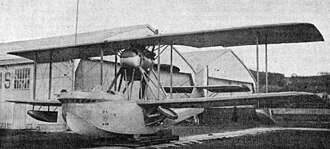
CAMS 37: The French Flying Boat That Connected Naval Aviation, Long-Distance Exploration, and Military Service
The CAMS 37 was a French flying boat developed during the 1920s, a period when aviation was rapidly expanding beyond the boundaries of conventional land-based aircraft. Designed for reconnaissance and maritime operations, the aircraft reflected the growing importance of aviation to naval forces that needed to observe coastlines, patrol coastal waters, communicate with ships, and reach locations that were difficult to access using conventional aircraft. Manufactured by Chantiers Aéro-Maritimes de la Seine, commonly known by the abbreviation CAMS, the aircraft combined a traditional biplane layout with a hull designed for operation on water. Its development represented an important chapter in the evolution of French naval aviation, particularly during the years between the two world wars, when military planners were exploring the potential of aircraft for reconnaissance, transport, training, and long-distance missions.
The CAMS 37 first flew in 1926 and entered service in 1927. It was designed by Maurice Hurel, who became an important figure in the company’s aircraft development program. The aircraft was not conceived as a specialized machine for a single narrowly defined task. Instead, its basic design was adaptable enough to support a variety of configurations, including amphibious versions equipped with retractable wheels, reconnaissance aircraft, liaison machines, trainers, transport variants, and experimental aircraft intended for shipboard catapult trials. This versatility helped make the CAMS 37 family one of the more significant French flying-boat programs of its generation. Historical references commonly report approximately 332 aircraft built, although totals differ between sources according to the variants and production records included in the count.
What makes the CAMS 37 particularly interesting is the way it illustrates the relationship between aircraft design and the practical demands of maritime operations. During the 1920s and 1930s, the ability to land on water could be more valuable than the ability to operate from a conventional runway, especially in coastal regions and overseas territories where suitable airfields were limited. A flying boat could use sheltered bays, harbors, lakes, and other appropriate bodies of water as operating areas, while an amphibious version could also use land when necessary. These capabilities offered naval organizations considerable flexibility at a time when aviation infrastructure was still developing. The CAMS 37 therefore represents more than an individual aircraft type; it is an example of how engineers and military planners adapted aviation technology to the geographical realities of the period.
The Historical Background of the CAMS 37
French naval aviation in the 1920s
The years following the First World War were a period of intense experimentation in military aviation. Aircraft had already demonstrated their value in reconnaissance, artillery observation, and combat, but their role in maritime operations was still evolving. Naval forces needed to understand how aircraft could extend the reach of ships, improve awareness of coastal activity, and provide rapid communications between naval bases and vessels operating at sea. Flying boats were especially attractive because they could operate without depending entirely on land-based runways, making them useful in regions with extensive coastlines, islands, and limited transportation infrastructure.
France had a long-standing interest in maritime aviation, and manufacturers developed a range of seaplanes and flying boats to serve naval requirements. These aircraft had to reconcile several competing design priorities. A hull needed to provide sufficient buoyancy and suitable water-handling characteristics, while the wings and supporting structure had to generate adequate lift without making the aircraft excessively heavy. The engine installation needed to remain clear of water spray, and the aircraft’s structure had to withstand the additional loads associated with water operations. These requirements meant that a flying boat could not simply be treated as a conventional landplane with its wheels removed; it required a design that took water-based operation into account from the beginning.
The CAMS 37 emerged in this environment as a practical military flying boat with the potential to perform several roles. Its biplane configuration provided substantial wing area within a manageable span, while its hull allowed it to rest on water without requiring a separate float arrangement like that used by many floatplanes. The aircraft’s design also reflected the manufacturing traditions of the era, when wood construction, fabric-covered flying surfaces, and relatively conventional mechanical systems remained common among smaller aviation manufacturers. These characteristics made the CAMS 37 representative of the transitional period in which aviation was moving from the experimental and wartime designs of the 1910s toward more specialized military aircraft.
The role of Chantiers Aéro-Maritimes de la Seine
Chantiers Aéro-Maritimes de la Seine developed the CAMS 37 as part of its broader involvement in French maritime aviation. The company’s name reflected its close association with aircraft designed for operation over water, and its earlier work provided a foundation for the new aircraft. The CAMS 37 was the first design undertaken by Maurice Hurel after he became the company’s chief designer, making the project significant within the manufacturer’s own history as well as within the wider development of French flying boats.
Hurel’s design followed a recognizable flying-boat arrangement, with a hull-shaped fuselage, biplane wings, and an engine mounted above the hull between the wings. The engine drove a pusher propeller, meaning that the propeller was positioned behind the engine rather than in front of it. This arrangement helped keep the powerplant and propeller clear of the water during normal operations and reflected an established solution to the challenges of powering a flying boat. The resulting aircraft was not especially streamlined by modern standards, but its configuration addressed the practical requirements of the period.
The prototype was displayed at the 1926 Salon de l’Aéronautique in Paris and flew during the same year. Its rapid progression toward military use reflected the French Navy’s interest in expanding and modernizing its aviation capabilities. Rather than remaining an experimental design, the CAMS 37 developed into a family of aircraft that served operational and support roles for many years. This transition from prototype to production family illustrates the value of a design that could be adapted to different requirements without losing its underlying identity.
Design and Construction of the CAMS 37
A biplane designed for water operations
The CAMS 37 used a biplane configuration, with two sets of wings arranged one above the other. During the 1920s, biplanes remained common because their structure could provide considerable lifting area without requiring the long, heavy wings that might otherwise have been necessary. The upper and lower wings were connected by supporting struts and bracing wires, creating a framework designed to withstand the loads generated during flight. Although this arrangement introduced additional drag compared with later monoplane designs, it was a practical solution given the materials and engineering methods available at the time.
The aircraft’s overall proportions reflected the demands of maritime aviation. Its wingspan was approximately 14.5 metres, while its length was a little over 11.4 metres in the commonly cited reconnaissance configuration. These dimensions gave the aircraft a substantial presence on the water while keeping it within the general scale of a medium-sized interwar flying boat. The large wing area was important because the aircraft needed to generate enough lift to become airborne at relatively modest speeds despite the structural weight of its hull, engine, and operational equipment.
The wings were designed to fold for storage aboard ships or in confined facilities. Folding wings were particularly valuable in naval aviation because hangar space aboard a ship was limited, and aircraft needed to be stored without occupying an unnecessarily large area. The folding arrangement also illustrates how operational requirements influenced structural design. A feature that might have seemed secondary on a land-based aircraft could become extremely important when an aircraft was expected to operate from ships or naval facilities with limited storage space.
The hull and mixed-material construction
The CAMS 37 was primarily constructed from wood, with the hull and supporting structures designed to combine strength with manageable weight. Wooden aircraft construction remained widespread during the interwar period because suitable timber could be shaped into structural components without requiring the large-scale metal-forming equipment associated with more advanced all-metal aircraft. The wooden structure was reinforced with metal fittings where necessary, while plywood covering provided an exterior surface for parts of the fuselage and hull.
A flying boat’s hull performs a function that has no direct equivalent in an ordinary landplane. It must provide buoyancy when the aircraft is stationary, withstand the impacts and pressures associated with movement across water, and transition from displacement through the water to a planing condition during takeoff. The shape of the lower hull is therefore critical. Its geometry influences how the aircraft behaves while taxiing, how water flows beneath it as speed increases, and how effectively it can rise onto the water’s surface before becoming airborne.
The CAMS 37’s hull-based configuration distinguished it from floatplanes, which normally use one or more separate floats mounted beneath a conventional fuselage. Both arrangements allow aircraft to operate on water, but a flying boat incorporates the main buoyant structure into the fuselage itself. This can provide a coherent hull design for maritime operations, although it also creates specific engineering and maintenance demands. The hull must remain watertight, its structure must be inspected carefully, and its condition can directly influence the aircraft’s safety and operational suitability.
Later CAMS 37 variants incorporated metal hull construction, replacing the earlier plywood-covered arrangement in particular versions. This change was associated with developments such as the A/9 and 37/13, which were designed for specialized naval requirements. The existence of wooden and metal-hulled aircraft within the same family demonstrates how the manufacturer continued to refine the design in response to different operational demands.
The engine and pusher-propeller arrangement
The CAMS 37’s engine was mounted between the wings in a nacelle supported by struts, with the propeller positioned behind the engine in a pusher configuration. This layout helped place the powerplant above the water and provided a practical way to drive the aircraft without positioning a large tractor propeller at the front of the hull. The installation was a defining visual feature of the aircraft, giving it a distinctive silhouette that differed from many conventional landplanes and from flying boats using tractor engines.
The reconnaissance CAMS 37/2 is commonly associated with a Lorraine 12Ed Courlis engine rated at approximately 450 horsepower in the technical references used for its standard specification. This was a water-cooled, twelve-cylinder piston engine arranged in a W configuration. Its cooling system differed from that of air-cooled engines, relying on coolant circulation and radiators to manage engine temperature. The installation had to be arranged carefully because the engine was positioned high above the hull and operated in an environment where water spray and exposure to the elements were unavoidable considerations.
Engine ratings and installations varied across the CAMS 37 family, so the power figure associated with the 37/2 should not be applied to every variant. Some aircraft used different engines or engine ratings, while special-purpose derivatives had distinct performance requirements. The same caution applies to speed, range, weight, and ceiling figures: the CAMS 37 was a family of related aircraft rather than a single configuration produced without changes over its entire service life.
The pusher arrangement also influenced the aircraft’s layout and crew positions. The engine and propeller occupied the area between the wings, while the crew stations were arranged along the hull according to the aircraft’s mission. Reconnaissance versions needed positions for the pilot and observers or gunners, whereas transport and liaison versions could use more enclosed arrangements. The combination of a central engine installation and an adaptable hull helped make the CAMS 37 suitable for several distinct roles.
The Development of the CAMS 37 Family
The original CAMS 37 and the amphibious 37A
The original CAMS 37 served as the foundation for a series of related aircraft. The first production development included the CAMS 37A, an amphibious version that could operate from water and from suitable prepared land surfaces. It incorporated retractable wheeled landing gear, allowing the aircraft to use conventional runways without giving up its primary flying-boat configuration. The addition of wheels expanded its practical usefulness because an amphibious aircraft could move between water-based and land-based operating environments.
The amphibious landing gear introduced additional mechanical complexity. Unlike a simple flying boat that rests on its hull, an amphibian needs a wheel system that can be extended for land operations and retracted for water operations. The mechanism must be strong enough to support the aircraft on land while remaining sufficiently compact to avoid interfering with water handling. It also adds weight and maintenance requirements, illustrating the trade-off between operational flexibility and mechanical simplicity.
The CAMS 37A became one of the most important members of the family. Historical variant summaries commonly report 185 examples, although production totals differ among published accounts. The amphibious aircraft was used by the French Navy and also attracted foreign interest, including from Portugal. Its combination of water and land capability made it useful in environments where an aircraft might need to operate from a harbor or coastal base while retaining access to airfields and other prepared surfaces.
The 37A demonstrated the broader philosophy behind the CAMS 37 program: build a recognizable basic aircraft, then adapt it to meet distinct operational needs. The changes involved more than a simple model designation, since landing gear, hull configuration, cabin layout, and engine installation could vary across the family. Understanding these differences is essential when studying the aircraft’s history or comparing published specifications.
The reconnaissance-focused CAMS 37/2
The CAMS 37/2 was a pure flying-boat version that incorporated refinements developed from the amphibious 37A. It was designed primarily for observation and reconnaissance, roles that required the aircraft to patrol maritime areas, identify activity along coastlines, and report information to naval commanders. The absence of retractable wheeled landing gear distinguished it from the amphibious version and allowed the aircraft’s configuration to be tailored more directly to water-based operations.
The 37/2 is one of the best-documented versions of the CAMS 37 family and is often used as the reference model for technical summaries. It typically carried a crew of three, comprising a pilot and other crew members responsible for observation, communication, and defensive duties according to the configuration. The open crew positions allowed personnel to observe the surrounding environment, although they exposed the occupants to weather and wind. Such arrangements were common during the period, before enclosed cabins became more widespread across many categories of military aircraft.
Some reconnaissance configurations carried flexible machine guns and could be equipped with light bombs beneath the lower wings. The armament arrangement varied according to the aircraft and source, but published descriptions commonly associate the 37/2 with 7.7 mm Lewis machine guns in forward and rear positions and a bomb load of approximately 300 kilograms. These weapons provided a limited defensive and offensive capability, but the aircraft’s main value remained reconnaissance rather than air combat. Its mission was to observe and report, with weapons serving as supplementary equipment rather than transforming it into a dedicated fighter or attack aircraft.
The 37/2 illustrates the way interwar naval aircraft combined several tasks within a single airframe. A reconnaissance mission could involve searching a wide area, observing vessels or coastal activity, communicating findings, and returning to a naval base or water landing site. The aircraft’s speed was modest by later standards, but its water-based operating capability and endurance were useful in the environment for which it had been designed.
Specialized transport, liaison, and training variants
As the CAMS 37 family developed, additional versions were produced for roles that differed from frontline reconnaissance. The CAMS 37A/6 was associated with an enclosed cabin intended for use as an admiral’s transport, providing a more protected and comfortable arrangement for senior naval personnel. The CAMS 37A/7, also known as the 37 Lia, served liaison duties and retained amphibious capability. Other specialized versions included the metal-hulled A/9, intended for naval officer transport, and the 37/12, a civil version with an enclosed four-seat cabin.
These aircraft demonstrate that flying boats were not limited to military patrols or armed reconnaissance. Their ability to land on water made them suitable for transporting personnel between naval bases, ships, coastal settlements, and isolated locations. Liaison aircraft could carry messages or personnel, while enclosed-cabin aircraft offered better protection from the weather than open-cockpit configurations. Although the basic shape of the aircraft remained recognizable, the internal arrangement and equipment could be tailored to the task.
The CAMS 37/11 was another important variant, developed as a four-seat liaison and training aircraft. Historical summaries commonly list approximately 110 examples, making it one of the more numerous versions of the family. Training aircraft needed to provide a suitable environment for developing flying skills, while liaison machines required enough cabin capacity to transport personnel. A common airframe that could serve both purposes helped extend the usefulness of the original design beyond frontline reconnaissance.
The family also included the 37/10, built for experiments involving catapult launches from ships, and the 37/13, a metal-hulled version associated with shipboard catapult operations. These developments reflected a broader naval aviation question: how could aircraft be carried by ships and launched at sea without requiring a conventional runway or a large aircraft carrier? Catapult systems offered one answer, allowing suitably equipped aircraft to be launched from naval vessels and then recover to water when conditions and mission requirements permitted.
The CAMS 37GR and the challenge of long-distance flight
One of the most remarkable developments associated with the CAMS 37 was the 37GR, with the letters GR referring to Grand Raid, or long-distance flight. This specialized aircraft was prepared for an ambitious journey that would test the endurance of both the airplane and its crew. The expedition was led by French naval aviator Lieutenant de Vaisseau René Guilbaud, who set out from Étang de Berre in southern France on 12 October 1926, accompanied by a Lioré-et-Olivier LeO H-194. The intended journey extended across the Mediterranean and Africa toward Madagascar, providing an opportunity to demonstrate the potential of long-range flying boats in regions where airports, repair facilities, and reliable logistical support were limited.
The CAMS 37GR differed from the standard reconnaissance aircraft because the expedition required a different balance of performance characteristics. Long-distance flying placed particular demands on fuel capacity, engine reliability, navigation, crew endurance, and the ability to make intermediate stops in unfamiliar locations. A machine intended for coastal observation could not simply be expected to undertake a major international journey without modification. The 37GR therefore represented a specialized development of the existing design, rather than an ordinary production CAMS 37 operating in a different role.
The expedition encountered difficulties along the way. On 3 January 1927, while in Nigeria, engine trouble prevented Guilbaud from continuing with the accompanying aircraft. After an engine change, he resumed the journey through Sudan, Egypt, Lebanon, Turkey, Greece, Malta, and Tunisia before returning to Marseille on 9 March 1927. The journey covered numerous stages and demonstrated both the promise and the practical difficulties of long-distance aviation during the interwar period. Although it was not a nonstop flight, the expedition was significant because it showed how an amphibious aircraft could travel across a succession of regions with widely differing geographical and logistical conditions.
The 37GR’s historical importance lies partly in its demonstration of aviation’s growing international reach. During the 1920s, long-distance flights attracted public attention because they tested the limits of aircraft design and offered a glimpse of a future in which remote locations could be connected by air. Such expeditions were not merely publicity exercises: they also revealed problems involving engines, maintenance, fuel availability, navigation, and operational planning. The CAMS 37GR therefore provides an instructive example of how specialized aircraft development and ambitious flying projects helped advance the practical understanding of long-range aviation.
Operational History of the CAMS 37
Service with the French Navy
The French Navy was the principal operator of the CAMS 37 family, using the aircraft in a variety of maritime roles. The ability to take off and land on water made it useful at naval air stations and other locations where a conventional runway was not always necessary. Flying boats could support coastal reconnaissance, liaison flights, training, and transport, allowing naval aviation units to carry out a broader range of tasks than would have been possible with a single-purpose aircraft.
The aircraft operated from French naval aviation bases and was associated with operations from major naval vessels and maritime facilities. Its usefulness depended on the environment and the specific version in service. A reconnaissance model required appropriate observation positions and equipment, while an amphibious liaison aircraft needed functioning landing gear and a suitable cabin arrangement. The existence of numerous variants allowed the Navy to adapt the broader CAMS 37 platform to different requirements without having to introduce an entirely unrelated aircraft for every task.
The operational value of the CAMS 37 also reflected the geography of French naval responsibilities. France maintained interests in mainland Europe, overseas territories, and maritime regions where coastal access was important. Flying boats could be useful in these settings because they were not entirely dependent on the availability of established airfields. However, water operations still required suitable conditions, including appropriate sheltered landing areas, manageable waves, and adequate support facilities. The aircraft’s amphibious capabilities increased flexibility but did not eliminate the practical limitations of operating from water.
Service beyond France
The CAMS 37 also attracted international interest, most notably from Portugal, whose naval aviation service acquired aircraft for its own requirements. Portuguese aircraft were associated with the Hispano-Suiza engine in a configuration commonly reported at approximately 450 horsepower. Their use demonstrates that the CAMS 37’s appeal was not restricted to the French Navy. Other maritime operators could see value in an aircraft that combined reconnaissance capabilities with the ability to operate from water and, in amphibious versions, from land.
For Portugal, flying boats offered practical advantages in a country with a long Atlantic coastline and overseas maritime interests. Naval aircraft could support observation, communication, and the movement of personnel, while their water-based operating capability provided options that were not always available to landplanes. The Portuguese acquisition also illustrates the way aircraft manufacturers could extend their influence through exports, allowing designs developed for one country’s military requirements to find a place in another country’s naval organization.
International service is an important part of the CAMS 37’s story because it demonstrates the wider relevance of interwar flying-boat technology. Although the aircraft was designed in France, its underlying characteristics addressed challenges faced by maritime aviation services elsewhere. The ability to operate over water, carry a small crew, and perform a range of support and reconnaissance tasks was useful across different national settings, even when the exact operational demands differed.
Continued service during the Second World War
By the late 1930s, the CAMS 37 was becoming obsolete in comparison with newer aircraft. Advances in engine performance, aerodynamics, metal construction, enclosed cockpits, and specialized military equipment were changing the expectations placed on reconnaissance aircraft. The CAMS 37 had been developed during a period when wooden structures, open crew positions, and relatively modest speeds were common, but these characteristics became increasingly limiting as military aviation advanced.
The aircraft was gradually withdrawn from frontline duties during the mid-to-late 1930s. Nevertheless, the outbreak of the Second World War in September 1939 did not immediately end its operational life. Older aircraft often continued to provide value in secondary roles after newer types had replaced them in the most demanding missions. Training, communications, and local patrol duties could still be performed by aircraft that no longer met the standards required for modern frontline combat.
Some CAMS 37/11 training and liaison aircraft were used for coastal patrol following mobilization. One French unit, Escadrille 2S2, continued operating the type until August 1940. Outside mainland France, examples remained in service with a Free French unit in Tahiti until 15 January 1941 and with a Vichy French unit in Indochina until 1942. These later deployments underline how aircraft obsolescence is not always an immediate process: machines can remain useful in isolated locations where replacement aircraft and logistical support are difficult to obtain.
The CAMS 37’s continued service during the early years of the Second World War was therefore a consequence of both practical necessity and its adaptable design. Although it could not compete with newer military aircraft in every respect, it remained capable of performing certain duties for which its limitations were acceptable. Its history reflects the broader experience of interwar aircraft that survived into a new technological era by moving from frontline operations to training, liaison, and local support.
Flight Performance and Operational Characteristics
Speed, endurance, and range
The CAMS 37/2 is commonly reported to have had a maximum speed of approximately 175 kilometres per hour, equivalent to about 109 miles per hour. This performance was modest even by the standards of some contemporary landplanes, but maximum speed alone does not adequately describe the value of a maritime reconnaissance aircraft. Such an airplane needed to remain airborne long enough to cover a useful area, carry its crew and equipment, and return to a suitable landing location. Its ability to operate on water was an important part of its utility, even though it introduced structural and aerodynamic compromises.
Published specifications for the 37/2 frequently list a range of approximately 1,200 kilometres, or about 750 miles. This figure provides a useful indication of the aircraft’s intended operational reach, although actual range depended on the particular engine installation, fuel load, flight profile, wind, payload, and weather conditions. The performance of a century-old aircraft should not be understood through a single number alone, especially when historical sources may use different configurations or measurement conventions.
Endurance was especially important for reconnaissance work because an aircraft needed to spend enough time over its assigned area to collect useful information. A relatively slow aircraft could still be effective if it could remain airborne for an extended period and operate from a convenient water base. This was particularly relevant before modern radar, satellite imagery, and electronic surveillance systems transformed maritime observation. The CAMS 37 relied on its crew’s ability to see, interpret, record, and communicate what they observed.
Climb performance and service ceiling
The CAMS 37/2’s service ceiling is commonly listed at approximately 4,500 metres, or around 14,800 feet, although figures differ between sources and variants. The service ceiling represents an altitude-related performance limit under specified conditions, rather than a promise that the aircraft could operate comfortably at that height during every mission. Engine power, aircraft weight, atmospheric conditions, and the condition of the individual aircraft could all affect its ability to climb and maintain altitude.
Some published specifications report that the aircraft required approximately 35 minutes to climb to 3,000 metres. This figure illustrates the limitations of an interwar flying boat with a heavy hull, substantial wing structure, and a single piston engine. Climb performance was not its defining strength, and its operational value depended more heavily on its capacity to conduct maritime tasks than on rapid ascent or high-altitude flight.
The difference between a service ceiling and a practical operating altitude is important when interpreting historical aircraft data. A nominal ceiling does not mean that an aircraft would normally perform reconnaissance at that height, nor does it indicate how quickly the aircraft could climb with a particular load. Operational profiles depended on the mission, the visibility required for observation, the weather, and the need to maintain contact with naval units or coastal facilities.
Water handling and amphibious operations
Water handling was one of the defining characteristics of the CAMS 37. A flying boat had to move across the water, accelerate until its hull generated sufficient hydrodynamic lift, and transition into flight. On landing, it had to return to the water and decelerate without losing directional control or suffering damage from waves and water impact. The shape of the hull, the distribution of weight, the condition of the water, and the pilot’s technique all influenced these operations.
The amphibious 37A added the ability to operate from land using retractable wheels. This increased flexibility but also required the crew to manage the landing-gear configuration carefully. A water landing with the wheels incorrectly extended could have serious consequences, while an attempted runway landing with the wheels retracted would also be hazardous. Such operational considerations were intrinsic to amphibious aircraft and required appropriate procedures and training.
The aircraft’s ability to use both land and water was particularly valuable in regions where infrastructure was unevenly developed. A naval unit might operate from a coastal base with access to a harbor, while another mission could require the aircraft to use a runway or move between different types of facilities. The amphibious configuration helped bridge these environments, although the added equipment inevitably affected weight, complexity, and maintenance demands.
The Significance of the CAMS 37 in Naval Aviation History
A flexible platform for multiple missions
The CAMS 37’s strongest historical characteristic was its versatility. The aircraft family included reconnaissance machines, amphibians, liaison aircraft, trainers, enclosed-cabin transports, and experimental variants. This diversity reflected the realities of naval aviation during the interwar years, when specialized aircraft were expensive to develop and operators often sought to extract as much value as possible from an established design.
A reconnaissance aircraft could provide information about coastal activity, while a liaison version could transport personnel or messages. Training aircraft helped prepare pilots for water-based flying, and transport derivatives could support the movement of naval officers. Experimental versions offered opportunities to investigate new ways of operating aircraft from ships. Although each role required different equipment and sometimes different structural arrangements, the common design lineage made the family recognizable and helped connect its many developments.
This adaptability also explains why the CAMS 37 should not be judged solely by the performance of its reconnaissance version. A trainer did not need precisely the same equipment as an armed patrol aircraft, and an enclosed transport did not need the same crew positions as a machine intended for observation. The aircraft’s value emerged from the relationship between its basic design and the particular mission it was configured to perform.
The transition from wooden flying boats to newer aircraft
The CAMS 37 belonged to a period when wooden flying boats were still a major part of naval aviation. Wood provided a practical construction material, but it required careful protection against moisture and deterioration. The development of improved metal structures, more powerful engines, and more advanced aerodynamic designs gradually changed the standards expected of military aircraft. Newer machines could offer higher speeds, improved payload capacity, and better protection for their crews.
The introduction of metal-hulled variants within the CAMS 37 family indicates that manufacturers were already exploring ways to modify established designs to meet changing needs. However, incremental improvements could not indefinitely overcome the limitations of an older basic configuration. As military aviation became more demanding, the CAMS 37’s open crew stations, modest speed, and interwar structural design made it less suitable for frontline service.
Its eventual replacement should not be interpreted as a failure. Aircraft are designed for particular technological and operational environments, and the requirements of naval aviation changed significantly between the mid-1920s and the Second World War. The CAMS 37 had served during a period when flying boats were essential tools for many maritime aviation organizations. Its retirement from frontline duties was part of the natural progression toward newer aircraft rather than evidence that the original concept had lacked value.
Historical importance beyond its production numbers
Production figures alone do not fully capture the significance of an aircraft. The CAMS 37’s importance also lies in its ability to illustrate the technological, geographical, and organizational challenges of interwar naval aviation. It demonstrates how a manufacturer could develop a common aircraft family for several purposes, how amphibious capability could expand the operating options available to a naval service, and how long-distance expeditions could test the limits of contemporary aircraft design.
The aircraft also offers a connection between military and civil aviation. While its main identity was associated with naval use, the family included a civil cabin version and variants suitable for transport and liaison. The same basic concept of a water-operating aircraft could support military reconnaissance, official transportation, training, and exploratory flying. This overlap between military and civil applications was common in an era when flying boats were seen as promising solutions for travel across coastal regions and areas with limited airport infrastructure.
The CAMS 37’s story therefore forms part of a broader history of aviation innovation. It reflects the movement from relatively simple interwar aircraft toward the more specialized and technologically advanced machines that emerged during the 1930s and 1940s. Its lasting interest comes from the combination of practical design, multiple operational roles, and a service life that extended beyond its original technological generation.
The CAMS 37 Compared with Other Interwar Flying Boats
How it fit into its technological era
The CAMS 37 was one member of a wider international group of flying boats developed during the 1920s and 1930s. Different countries pursued water-based aircraft because they offered an alternative to the limitations of land-based aviation infrastructure. Britain, Italy, Germany, the United States, and other nations developed flying boats for military reconnaissance, maritime patrol, transport, and long-distance exploration. Although these aircraft varied considerably in size and capability, they shared the basic requirement of combining flight performance with reliable water operations.
The CAMS 37 occupied a relatively practical middle ground within this environment. It was not a giant long-range flying boat designed to carry large passenger loads, nor was it an extremely small single-seat seaplane intended for a narrowly defined task. Its three-person reconnaissance configuration, approximately 450-horsepower engine, and ability to support multiple mission types made it suitable for a naval service that needed a flexible aircraft rather than an exceptionally specialized machine.
Its biplane structure and wooden construction also reflected the technical choices of its period. Later flying boats increasingly used metal structures and more powerful engines, while some designs adopted monoplane wings to reduce drag. The CAMS 37’s configuration therefore provides a useful snapshot of aviation technology during a transitional era, when established structural methods were still practical but new engineering approaches were beginning to reshape aircraft design.
The advantages and limitations of flying-boat operations
Flying boats offered major advantages where runways were scarce, but water-based operation also created unique challenges. A suitable body of water could serve as an operating surface, potentially allowing aircraft to reach areas without conventional airports. This was particularly attractive to naval forces, which could use harbors, coastal stations, and some shipboard arrangements to support aircraft. Amphibious variants added the ability to operate from land, further increasing their flexibility.
However, water is not a uniform operating surface. Waves, swell, wind, currents, and floating debris could complicate takeoff and landing. Salt water could accelerate corrosion in metal components, while moisture could damage wooden structures if protection and maintenance were inadequate. Flying boats also needed suitable mooring arrangements, access to maintenance facilities, and support equipment for operations on water. These demands meant that the apparent simplicity of landing on a harbor did not eliminate the need for a substantial operating organization.
The CAMS 37’s design reflected this balance between opportunity and limitation. Its hull allowed water operations, while its amphibious derivatives expanded the number of locations from which it could operate. Yet the aircraft still depended on suitable weather, proper maintenance, and a trained crew. Its historical contribution was not that it eliminated the difficulties of maritime aviation, but that it offered a practical means of working within them.
<WritingBlock id=”62482″ variant=”document”>## Technical Specifications of the CAMS 37
The following table summarizes the commonly published specifications of the CAMS 37/2 reconnaissance flying boat, one of the principal variants used to describe the aircraft family. The figures should be treated as historical reference data because the CAMS 37 underwent numerous changes in engine installation, hull construction, equipment, and intended role throughout its production history.
| Technical specification | CAMS 37/2 |
|---|---|
| Aircraft designation | CAMS 37/2 |
| Aircraft category | Military reconnaissance flying boat |
| Manufacturer | Chantiers Aéro-Maritimes de la Seine (CAMS) |
| Country of origin | France |
| Designer | Maurice Hurel |
| First flight of the original CAMS 37 | 1926 |
| Introduction into service | 1927 |
| Crew | 3 |
| Length | Approximately 11.43 m (37 ft 6 in) |
| Wingspan | Approximately 14.50 m (47 ft 7 in) |
| Height | Approximately 4.04–4.20 m (13 ft 3 in–13 ft 9 in), depending on reference |
| Wing area | Approximately 58–59.9 m² |
| Empty weight | Approximately 1,950–2,170 kg |
| Gross weight | Approximately 2,850–3,000 kg |
| Primary structure | Predominantly wooden construction |
| Hull configuration | Integrated flying-boat hull |
| Wing arrangement | Biplane |
| Engine | Lorraine 12Ed Courlis |
| Engine configuration | Twelve-cylinder, water-cooled piston engine |
| Engine power | Approximately 450 hp (336 kW) in the commonly cited 37/2 specification |
| Propeller arrangement | Two-bladed pusher propeller |
| Maximum speed | Approximately 175 km/h (109 mph) |
| Published range | Approximately 1,200 km (746 miles) |
| Service ceiling | Approximately 4,500 m (14,764 ft), depending on the source |
| Time to climb to 3,000 m | Approximately 35 minutes, according to published reference data |
| Armament | Commonly reported as up to four 7.7 mm Lewis machine guns |
| Bomb capacity | Approximately 300 kg in the reported armed configuration |
| Primary operators | French naval aviation; related variants also served other operators, including Portugal |
| Total production | Commonly reported as approximately 332 aircraft across the family |
Specification note: Published references differ in some dimensions, weights, engine ratings, and performance figures. The empty-weight and gross-weight ranges above reflect differing published descriptions rather than a single certified configuration. Armament also varied by version. The table is intended for historical and educational purposes, not as a definitive specification for every CAMS 37 variant.
Conclusion: The Enduring Legacy of the CAMS 37
The CAMS 37 remains a fascinating example of French aviation engineering during the interwar period. Developed at a time when military organizations were still discovering the most effective ways to employ aircraft in maritime environments, it combined a biplane wing arrangement, a purpose-built flying-boat hull, a pusher engine installation, and an adaptable internal layout. Its design reflected the practical realities of operating over water, where aircraft needed to combine flight capability with buoyancy, water handling, and the ability to function in locations without conventional runways.
Its development into numerous variants demonstrated that a successful aircraft could remain useful by adapting to changing operational requirements. The amphibious 37A expanded the range of possible operating locations, the 37/2 served reconnaissance duties, the 37/11 supported training and liaison work, and the 37GR demonstrated the ambitions of long-distance aviation. Other variants explored enclosed-cabin transport, metal-hull construction, and shipboard catapult operations. Together, these aircraft illustrate the diversity of tasks assigned to flying boats before more modern aircraft and infrastructure transformed maritime aviation.
The CAMS 37’s service history also reflects the rapid pace of technological change during the first half of the twentieth century. An aircraft introduced in 1927 could still serve in secondary roles during the early years of the Second World War, even as newer aircraft increasingly surpassed it in speed, equipment, and overall military capability. Its continued use in training, communications, and local patrol duties shows how older machines could retain practical value after their frontline careers had ended.
Ultimately, the CAMS 37 deserves recognition not only because hundreds of examples were reportedly built, but because its history connects several important themes in aviation: naval reconnaissance, amphibious engineering, long-distance exploration, international aircraft procurement, and the transition from interwar flying boats to more advanced military aircraft. For aviation historians and enthusiasts, it offers a compelling illustration of a period when the ability to take off from and land on water opened new possibilities for military operations, transportation, and exploration.
