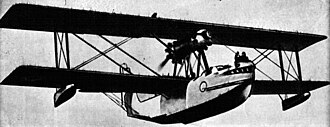
CAMS 55: The French Naval Flying Boat That Patrolled the Seas Between Two World Wars
The CAMS 55 was a French military flying boat developed during the late 1920s to meet the growing demand for effective maritime reconnaissance and coastal patrol aircraft. Designed by Maurice Hurel and manufactured by Chantiers Aéro-Maritimes de la Seine, commonly known as CAMS, the aircraft became an important component of French naval aviation throughout much of the 1930s. Its distinctive biplane configuration, twin-engine installation, central hull, and open crew positions reflected the practical requirements of an era when flying boats played a major role in naval observation, communications, and maritime security. Unlike conventional land-based aircraft, the CAMS 55 could take off from and land on suitable bodies of water, allowing it to operate from coastal stations and naval facilities without depending entirely on conventional runways. This capability made it particularly valuable to a navy responsible for protecting extensive coastlines and maintaining aviation facilities in overseas territories.
The aircraft first flew in 1928 and developed from earlier CAMS designs, including the unsuccessful CAMS 51. Although the original prototype was followed by experimental aircraft with different engine installations, the design eventually entered production in several distinct versions. Some aircraft used liquid-cooled Hispano-Suiza engines, while others employed air-cooled Gnome et Rhône radial engines. Later developments incorporated increased fuel capacity, different structural arrangements, and experimental metal hulls intended to improve performance or reduce weight. These modifications reflected the continuing efforts of French aircraft designers to improve reliability, operational range, and suitability for the demanding environment of maritime aviation. Across its various configurations, the CAMS 55 became a recognizable example of the French flying-boat tradition that developed between the First and Second World Wars.
The CAMS 55 was not an especially fast aircraft by later standards, nor was it intended to compete with specialized fighters or high-performance landplanes. Its importance came from its ability to perform sustained reconnaissance, observe coastal activity, and support naval operations over water. It also illustrates how aviation technology evolved during a period of rapid experimentation, when manufacturers were balancing established construction techniques against emerging requirements for greater endurance, improved engines, and more capable military equipment. By examining its design, development, variants, operational history, and technical characteristics, it is possible to understand why the CAMS 55 remained useful for more than a decade and why it occupies an interesting place in the history of French naval aviation.
Historical Background and Development
The growth of French maritime aviation
The years following the First World War brought substantial changes to military aviation. Aircraft had demonstrated their usefulness in reconnaissance and observation, but military organizations were still determining how best to employ them in support of naval operations. Ships could travel considerable distances across the sea, yet their crews had limited visibility beyond the immediate horizon. Aircraft offered a way to extend that horizon, locate vessels, observe coastal activity, and relay information to naval commanders more quickly than many conventional methods allowed. Flying boats were especially attractive because they could use water as an operating surface, making them suitable for coastal bases, sheltered harbors, and overseas locations where established airfields were scarce.
France possessed a substantial maritime tradition and maintained interests across the Mediterranean, the Atlantic, and overseas territories. These responsibilities created a need for aircraft capable of operating in different geographical environments while providing dependable reconnaissance and communication services. Flying boats could support these requirements without depending exclusively on prepared land runways, although they still required appropriate water conditions, maintenance facilities, and trained personnel. Their ability to operate from water made them a practical complement to land-based naval aircraft rather than a universal replacement for them.
During the 1920s, French manufacturers developed a number of flying boats for military and civilian use. These designs varied in size, engine configuration, construction, and intended role, but many shared the same fundamental objective: create a stable, useful aircraft capable of operating over water with reasonable endurance. The CAMS 55 emerged from this environment as a reconnaissance aircraft designed to combine a familiar biplane structure with a twin-engine arrangement and a hull suited to maritime operations. Its eventual adoption reflected the French Navy’s continuing interest in expanding the capabilities of its aviation service.
The influence of earlier CAMS aircraft
The CAMS 55 was developed from the experience gained with earlier designs, particularly the CAMS 51. The earlier aircraft had not achieved the success needed for widespread production, but its development formed part of the company’s broader effort to create a capable military flying boat. Aircraft design rarely progresses through entirely isolated projects; engineers commonly carry forward lessons about hull shape, structural strength, engine placement, crew visibility, and water handling from one design to the next. The CAMS 55 represented a further attempt to satisfy the French Navy’s need for a practical reconnaissance aircraft.
Maurice Hurel was responsible for the design, continuing the company’s established approach to maritime aircraft. The resulting flying boat featured a conventional biplane arrangement and tandem engines positioned between the wings. One engine drove a tractor propeller at the front of its installation, while the other drove a pusher propeller behind the engine. This combination created a distinctive configuration that placed both engines within the interplane gap and helped provide the power required for a relatively large aircraft operating over water.
The prototype, designated CAMS 55.001, was fitted with Hispano-Suiza 12Lbr engines. Following its initial development, two experimental aircraft were built to compare different engine installations, one using air-cooled radial engines and another using liquid-cooled V-type engines. The results led to the production of aircraft with both types of powerplant. This approach provided a useful opportunity to evaluate how different engines affected performance, maintenance, and operational suitability before the design matured into a broader production family.
The first flight and entry into service
The CAMS 55 first flew in 1928, marking the beginning of a development program that would continue through several variants. The aircraft was evaluated for its flying qualities, water-handling characteristics, and suitability for the French Navy’s reconnaissance requirements. As with many interwar aircraft, testing involved balancing several considerations rather than maximizing a single performance figure. A maritime reconnaissance flying boat needed adequate speed and range, but it also needed stable handling, sufficient crew space, practical maintenance arrangements, and the ability to operate safely on water.
The French Navy adopted the aircraft, and production versions began entering service around the end of the 1920s. The CAMS 55 subsequently equipped multiple naval aviation squadrons, commonly described in historical accounts as 15 escadrilles over the type’s service life. It replaced older aircraft in some units, including the Latham 47, and helped provide the French Navy with a more modern reconnaissance platform during the early 1930s.
The adoption of the CAMS 55 demonstrated that the design met an important operational need, even though its performance would eventually be overtaken by newer aircraft. Its development also shows how military aviation programs often proceeded incrementally. An aircraft could enter service with an established construction method and a particular engine arrangement, then receive modifications as operational experience revealed opportunities for improvement. The CAMS 55’s numerous variants were the result of this continuing process.
Airframe Design and Construction
The biplane configuration
One of the most recognizable features of the CAMS 55 was its biplane wing arrangement. Two wings, one above the other, provided a large lifting surface within a relatively compact overall span. During the 1920s, this configuration remained common in military aviation because it offered practical structural advantages using materials and engineering methods that manufacturers already understood. Supporting struts and bracing connected the wings, distributing aerodynamic loads through the structure and providing the stiffness required for flight.
The biplane arrangement did introduce additional aerodynamic drag compared with later streamlined monoplane designs, but it remained a useful solution for aircraft whose priorities included lifting capacity, manageable dimensions, and established manufacturing methods. For a flying boat, these considerations were especially relevant because the aircraft also needed to carry a substantial hull, engines, fuel, crew members, and military equipment. A large wing area helped provide the lift necessary to get the aircraft airborne despite its considerable structural weight.
The CAMS 55 had a wingspan of approximately 20.4 metres, making it a substantial aircraft for its period. Its wing structure was designed to support the weight of the aircraft while allowing it to operate at relatively modest speeds. The overall arrangement also accommodated the tandem engine installation, with the engines positioned between the upper and lower wings. This combination of biplane wings and twin engines gave the aircraft a distinctive appearance that reflected the design priorities of interwar flying boats.
The hull and water-based operation
Unlike a floatplane, which typically uses separate floats attached beneath a conventional fuselage, the CAMS 55 was a true flying boat with its main buoyant structure incorporated into the hull. The hull supported the aircraft while it rested on water and was shaped to help it move through the water during taxiing and takeoff. As the aircraft accelerated, the hull needed to transition from displacement through the water toward a planing condition, reducing resistance sufficiently for the wings to generate the lift required for flight.
The design of a flying-boat hull involves a number of competing engineering requirements. It must provide enough buoyancy to support the aircraft when stationary, withstand the forces generated during takeoff and landing, and maintain adequate directional stability on water. The hull must also be strong enough to support the airframe and withstand repeated operational loads without becoming excessively heavy. These requirements influence the aircraft’s weight, internal arrangement, and overall performance, making the hull one of the most important components of a flying boat.
Early CAMS 55 production versions used traditional construction methods, while later experimental derivatives explored metal hulls. The all-metal CAMS 55/3 and CAMS 55/6 were attempts to improve the aircraft’s structure and reduce weight, although these developments did not become the basis for large-scale production. Metal construction offered potential advantages in durability and structural efficiency, but cost, manufacturing complexity, and the demands of the existing design influenced the decision to retain other arrangements for production aircraft.
Crew positions and observation facilities
The CAMS 55’s crew layout was closely connected to its reconnaissance mission. The aircraft featured open cockpit positions and observation stations that allowed crew members to monitor the surrounding sea and coastline. A distinctive observation area at the bow incorporated windows angled to provide a useful downward view. This arrangement was valuable because reconnaissance often required the crew to identify vessels, inspect coastal features, and observe activity close to the water’s surface.
The open positions reflected the technology and operating practices of the period. Enclosed cockpits were becoming increasingly common in some categories of aircraft, but open crew stations remained practical for certain maritime duties because they offered direct visibility and relatively simple access to observation positions. The disadvantage was exposure to wind, cold, rain, and spray, which could make long missions uncomfortable and increase the physical demands placed on the crew.
Crew members performed different functions according to the particular aircraft and mission. The pilot was responsible for flying and navigating the aircraft, while other crew members could assist with observation, communications, and defensive duties. This division of work was particularly important on extended reconnaissance flights, where the aircraft might need to cover a wide area while maintaining awareness of weather, fuel, navigation, and potential hazards.
Engines and Propulsion
The Hispano-Suiza-powered CAMS 55/1
The CAMS 55/1 was one of the principal production versions and used two Hispano-Suiza 12Lbr liquid-cooled V-type engines. Historical references commonly associate these engines with a rating of approximately 600 horsepower each, although published ratings and conversions vary according to the reference and engine designation. The installation provided substantial power for an aircraft of the CAMS 55’s size and allowed the French Navy to use the type for maritime reconnaissance and coastal patrol.
Liquid-cooled engines use a cooling system in which coolant circulates through the engine and transfers heat to radiators. This differs from air-cooled radial engines, which rely on airflow across the cylinders to dissipate heat. The liquid-cooled arrangement required additional cooling equipment and plumbing, but it was a familiar technology in French aviation and was used in a number of military aircraft during the interwar period.
The twin-engine layout offered a practical way to generate the power needed for the aircraft’s mission. It also introduced the maintenance requirements associated with operating two engines rather than one, including additional fuel systems, controls, and mechanical components. The installation had to be carefully integrated with the airframe so that the propellers remained clear of the water and the engines received adequate cooling airflow.
The radial-engine CAMS 55/2
The CAMS 55/2 used two Gnome et Rhône Jupiter radial engines, representing an alternative approach to propulsion within the same aircraft family. These air-cooled engines were derived from the Bristol Jupiter design and offered a different balance of weight, cooling requirements, and maintenance characteristics from the Hispano-Suiza V-type engines. The use of radial engines also illustrates the importance of comparing powerplants in the context of an aircraft’s complete installation rather than simply comparing their rated horsepower.
Air-cooled radial engines use cylinders arranged around a central crankcase, with airflow helping remove heat from the engine. Their construction can be mechanically robust, but the engine’s frontal area and installation affect aerodynamic drag. On a flying boat, the designer must also consider engine placement, spray exposure, propeller clearance, and the effect of the powerplant on the aircraft’s center of gravity. These factors can influence performance as much as the engine rating alone.
The CAMS 55/2 demonstrated that the basic airframe could accommodate a different engine family without requiring a complete redesign. This flexibility was valuable for a manufacturer seeking to meet naval requirements while evaluating different powerplants. It also created distinctions between variants, meaning that the speed, weight, range, and climb figures published for one version should not automatically be applied to another.
Increased power and the CAMS 55/10
The CAMS 55/10 was a later production development powered by two Gnome et Rhône 9Kbr radial engines, commonly listed at approximately 500 horsepower each. The variant also featured increased fuel capacity, reflecting the importance of endurance in maritime reconnaissance and patrol operations. Additional fuel could help extend mission range, although it also increased weight and required careful consideration of takeoff performance, payload, and fuel consumption.
The 55/10 became one of the important later versions of the family, with historical references commonly reporting 32 examples, including four aircraft adapted for tropical service. The tropicalized aircraft were intended to operate under demanding environmental conditions, where high temperatures and local operating circumstances could affect engines, structures, and equipment. Such adaptations demonstrate that the development of military aircraft did not end when a basic production design was established; operational experience continued to shape the configuration of aircraft serving in different regions.
The increased fuel capacity and revised engine installation made the 55/10 particularly relevant when discussing the CAMS 55’s mature design. Its specifications are often used as the basis for technical summaries because it represents a developed production version rather than the original prototype. Nevertheless, it should still be distinguished from earlier aircraft, especially when comparing engine power, dimensions, and performance.
Operational Roles and Mission Capabilities
Maritime reconnaissance and coastal patrol
The CAMS 55’s primary role was maritime reconnaissance. The aircraft could patrol coastal waters, observe shipping activity, and provide information to naval commanders. At a time when radar and modern electronic surveillance systems were unavailable, visual observation from an aircraft could significantly extend the area that a naval force was able to monitor. A flying boat could cover a stretch of coastline or search an area of sea, then return to a suitable water base to report its findings.
Reconnaissance missions required more than simply flying over the sea. Crew members needed to identify vessels, distinguish relevant activity from ordinary maritime traffic, record observations, and communicate useful information. Weather and visibility influenced the effectiveness of these tasks, while the aircraft’s range and endurance determined how much territory could be covered during a sortie. The CAMS 55’s relatively modest speed was therefore only one element of its overall usefulness.
Coastal patrol also involved operating in an environment where water conditions and weather could change rapidly. The aircraft needed to be able to take off and land on suitable water surfaces, and the crew had to account for wind, waves, visibility, and navigation. The ability to use water as an operating surface was a major advantage, but it also required specific procedures and experience. The CAMS 55 was consequently part of a wider naval system involving air stations, maintenance personnel, communications, and trained crews.
Defensive armament and military equipment
Although reconnaissance was its principal mission, the CAMS 55 could carry defensive armament. Published descriptions commonly identify flexible 7.7 mm Lewis machine guns in the bow and amidships or rear crew positions, although exact arrangements varied between aircraft and references. Some versions could also carry light bombs beneath the wings, allowing the aircraft to perform limited offensive tasks against appropriate targets.
The armament should be understood in the context of the period. The CAMS 55 was not a dedicated fighter and was not designed to engage modern combat aircraft in the manner of a specialized air-superiority machine. Its weapons provided a degree of self-defense and could support secondary military tasks, but the aircraft’s most important contribution remained observation and patrol. Its performance and structural configuration were optimized around the practical demands of maritime reconnaissance rather than high-speed combat.
The presence of weapons also affected the aircraft’s operational loading. Ammunition, bombs, fuel, crew members, and equipment all contributed to the total weight carried. Designers and operators had to consider these factors when planning missions, because additional equipment could influence takeoff performance, climb rate, endurance, and the aircraft’s handling characteristics. This balance between mission capability and weight was a common concern for military aircraft of the era.
Liaison and secondary duties
As the CAMS 55 became older and newer aircraft entered service, its role gradually shifted away from frontline reconnaissance. Older aircraft often remained useful for training, communications, liaison, and local patrol duties, even when they no longer met the performance requirements of the most demanding missions. The CAMS 55’s continued service illustrates this pattern of gradual obsolescence rather than sudden disappearance.
Liaison work involved moving personnel or messages between naval facilities and other locations. Training duties helped prepare aircrew for the practical challenges of maritime flying, including navigation, water operations, and the management of aircraft systems. These secondary roles did not require every capability demanded of a frontline reconnaissance aircraft, allowing older machines to remain in use for a time.
The CAMS 55’s long service history was therefore connected not only to its initial design but also to the ability of naval organizations to assign older aircraft to less demanding tasks. Such decisions helped preserve operational value while newer aircraft were introduced. They also provide historians with a more complete understanding of how military aviation fleets evolved, since aircraft rarely moved directly from frontline service to retirement without an intermediate period of secondary use.
The Different Variants of the CAMS 55
Prototype and experimental aircraft
The original CAMS 55.001 served as the prototype for the family and used Hispano-Suiza 12Lbr engines. It was followed by experimental aircraft designated 55J and 55H, which allowed the manufacturer and naval authorities to evaluate different engine installations. The 55J used Gnome et Rhône Jupiter radial engines, while the 55H used Hispano-Suiza engines. These aircraft were part of the process through which the basic design was refined and the preferred production arrangements were established.
Experimental variants were particularly important during the interwar period because aircraft manufacturers were still comparing different construction methods, engine types, and operational configurations. An aircraft that performed adequately in one arrangement might reveal different strengths or weaknesses when fitted with another powerplant. Testing could identify differences in maintenance demands, handling, and performance, helping military authorities decide which version best met their requirements.
The CAMS 55’s experimental phase also demonstrates the relationship between aircraft design and industrial capability. Manufacturers needed to select engines that could be obtained in sufficient quantities, maintained by available personnel, and supported by existing supply arrangements. The best engine on paper was not necessarily the most practical choice for every operator, particularly when aircraft were expected to serve in multiple locations.
The principal production variants
The CAMS 55/1 was powered by Hispano-Suiza 12Lbr engines, while the CAMS 55/2 used Gnome et Rhône Jupiter radial engines. These two versions formed the core of the early production family. The CAMS 55/10 later introduced geared Jupiter engines and increased fuel capacity, providing a further development of the aircraft’s endurance and propulsion arrangements.
The CAMS 55/3 was an experimental long-range version with an all-metal hull. It was intended to meet a French Navy requirement for a longer-range flying boat, but the prototype was destroyed early in its test program. The CAMS 55/6 explored a different all-metal arrangement incorporating floats and was reported to reduce structural weight by approximately 400 kilograms. Despite the potential benefit, the version was considered too expensive for large-scale production.
The CAMS 55/11 was a long-range patrol development, while the CAMS 55/14 was another all-metal-hull version. These aircraft demonstrate the continuing effort to extend the original design’s usefulness. Not every development became a production success, but experimental variants provided opportunities to evaluate new materials, longer-range configurations, and alternative structural solutions.
Why the variants matter
The variety of CAMS 55 versions makes it important to identify the exact model when researching the aircraft. A specification for the 55/1 cannot be assumed to describe the 55/2 or 55/10, because their engines and operational configurations differed. Similarly, experimental aircraft with metal hulls were not necessarily representative of the aircraft used in routine naval service.
The differences also show that the CAMS 55 was more than a single aircraft design frozen at the moment of its first flight. It was a developing family shaped by naval requirements, industrial considerations, and operational experience. Some modifications aimed to improve performance, others explored ways to reduce weight, and still others focused on endurance or environmental adaptation.
This development history is especially valuable for aviation enthusiasts because it reveals how aircraft evolved through a combination of practical testing and incremental engineering. The CAMS 55’s variants were responses to particular problems rather than arbitrary changes in designation. Their success varied, but together they provide a useful record of the challenges involved in designing an effective maritime reconnaissance aircraft during the late 1920s and 1930s.
Operational History with the French Navy
Expansion during the 1930s
During the 1930s, the CAMS 55 became an established part of French naval aviation. Different variants equipped numerous squadrons and replaced older flying boats in some units. Its service reflected the French Navy’s need for aircraft that could conduct reconnaissance and patrol operations across coastal regions and maritime areas. The aircraft’s water-based operating capability made it particularly suitable for naval aviation stations where access to suitable waterways could reduce dependence on conventional runways.
The CAMS 55 operated during a period of continuing development in naval aviation. Improvements in engines, structures, navigation equipment, and aircraft design gradually changed the performance expected of reconnaissance flying boats. The CAMS 55 was useful within the technological environment for which it had been designed, but its limitations became more apparent as newer aircraft entered service. Even so, the aircraft remained part of the French naval aviation inventory throughout much of the decade.
Its deployment across multiple squadrons also illustrates the importance of production volume and support arrangements. A military aircraft becomes useful not simply because a prototype performs successfully, but because enough examples can be manufactured, maintained, supplied, and operated by trained crews. The reported production total of approximately 108–112 aircraft indicates that the CAMS 55 achieved a meaningful level of adoption, although exact totals differ among historical references.
Replacement by the Breguet Bizerte
By 1936, the more modern Breguet Bizerte flying boat began to relegate the CAMS 55 to secondary duties. The Bizerte represented a later generation of maritime aircraft, designed in an environment where greater range, improved performance, and more advanced construction were increasingly important. As new aircraft became available, older types such as the CAMS 55 could be moved away from the most demanding reconnaissance missions.
This transition was part of a wider technological change rather than an isolated event. During the 1930s, military aviation advanced rapidly, and aircraft designed only a decade earlier could become outdated as new engines, structures, and aerodynamic arrangements appeared. Flying boats were also becoming larger and more specialized, particularly for long-range patrol and maritime surveillance.
The replacement process was gradual. An aircraft that no longer offered the best performance for frontline service could still be valuable for training, communications, and local operations. The CAMS 55’s continuing use in secondary roles demonstrates how a military fleet could adapt older aircraft to less demanding tasks while introducing newer designs where improved capability was most necessary.
The outbreak of the Second World War
Despite its growing age, the CAMS 55 had not completely disappeared from French naval aviation by the outbreak of the Second World War in September 1939. Historical accounts commonly report that approximately 29 examples remained in service at that time, although the exact figure depends on the source and how operational status is defined. Their presence demonstrates that older flying boats could remain useful even after more modern aircraft had entered the fleet.
The aircraft’s role during this period was limited by its modest performance and the rapid changes taking place in military aviation. Newer aircraft offered better capabilities for demanding operations, while the CAMS 55 was increasingly associated with secondary missions. Nevertheless, the aircraft could still perform certain patrol, training, and communications tasks, particularly in locations where replacing older machines was not immediately practical.
Some aircraft survived in overseas service after the situation in mainland France changed in 1940. The last examples associated with Escadrille 20S in Tahiti reportedly remained in service until January 1941. Their continued use in the Pacific illustrates the importance of geography and logistics in determining how long an aircraft remained operational. In isolated regions, older aircraft could retain practical value because replacement equipment and support resources were not always readily available.
The CAMS 55 and the Evolution of Flying Boats
Advantages of maritime aircraft
Flying boats provided important advantages during an era when airport infrastructure was far less extensive than it is today. A suitable harbor, lagoon, or sheltered coastal area could serve as an operating location, allowing aircraft to reach regions that lacked conventional runways. For naval forces, this was particularly useful because aviation could be integrated with coastal stations and maritime operations without requiring every location to have a prepared land airfield.
The CAMS 55 illustrates how these advantages were translated into a practical military aircraft. Its hull enabled it to operate on water, while the twin-engine arrangement and large biplane wings supported reconnaissance missions. The aircraft could carry a crew and equipment over maritime areas, then return to a suitable water base for maintenance and refueling. These characteristics made flying boats valuable tools for coastal observation and naval communications.
However, water operations also imposed limitations. Waves, swell, wind, and visibility could affect takeoff and landing, while exposure to salt water created maintenance challenges. The aircraft needed a suitable hull, appropriate handling characteristics, and trained personnel familiar with maritime operations. Flying boats therefore offered a different set of advantages and constraints from land-based aircraft rather than a universally superior solution.
The move toward all-metal aircraft
The experimental CAMS 55/3, 55/6, and 55/14 reflected efforts to explore metal hulls and alternative structures. Metal construction was increasingly attractive because it offered opportunities for greater structural consistency, durability, and improved integration of aircraft systems. It could also reduce weight in particular configurations, although the result depended on the design and materials used.
The CAMS 55/6’s reported structural weight saving illustrates why designers investigated these alternatives. Reducing structural weight could create more room for fuel, equipment, or payload, or potentially improve performance. However, a promising engineering result did not automatically justify production. Manufacturing costs, tooling, maintenance practices, and the availability of suitable materials all affected whether a new design could be adopted economically.
The experience of the CAMS 55 family therefore shows how technological progress involved compromises. Wooden and metal structures each had advantages and disadvantages, and the most advanced solution was not necessarily the most practical for every aircraft program. The decision to continue with established construction for many production examples reflected the realities of military procurement as much as engineering preferences.
The CAMS 55 in the broader history of naval reconnaissance
The CAMS 55 belongs to a generation of aircraft that helped establish maritime reconnaissance as a routine element of naval operations. Before modern radar and satellite systems, aircraft crews relied heavily on direct observation, navigation skills, and communications to gather information over the sea. Flying boats made this work possible across broad coastal regions, especially where access to conventional airfields was limited.
The aircraft’s service history also highlights the relationship between reconnaissance and technology. As aircraft became faster, carried more equipment, and offered better range, older machines gradually lost their advantage. The CAMS 55 was eventually superseded by more capable flying boats, but it had contributed to the development of the operational practices and infrastructure that supported later naval aviation.
Its importance is therefore historical as well as technical. It illustrates the design priorities of its era, the evolution of aircraft construction, and the challenges faced by naval aviation organizations seeking to monitor large maritime areas. The CAMS 55 remains a useful example of how an aircraft could be successful within its original operating environment while eventually giving way to newer designs.
Technical Specifications of the CAMS 55/10
The following table summarizes the commonly published specifications of the CAMS 55/10. It should be read as a description of this particular variant rather than a universal specification for every aircraft in the CAMS 55 family.
| Specification | CAMS 55/10 |
|---|---|
| Aircraft type | Military reconnaissance flying boat |
| Manufacturer | Chantiers Aéro-Maritimes de la Seine (CAMS) |
| Designer | Maurice Hurel |
| Country of origin | France |
| First flight of the original CAMS 55 | 1928 |
| Primary operator | French Navy |
| Total production of the family | Approximately 108–112 aircraft, depending on source |
| Crew | 4 |
| Length | 15.03 m (49 ft 4 in) |
| Wingspan | 20.4 m (66 ft 11 in) |
| Height | 5.41 m (17 ft 9 in) |
| Wing area | 113.45 m² (1,221.2 sq ft) |
| Empty weight | 4,590 kg (10,119 lb) |
| Maximum gross weight | 6,900 kg (15,212 lb) |
| Powerplant | 2 × Gnome et Rhône 9Kbr radial piston engines |
| Engine type | Nine-cylinder, air-cooled radial |
| Power output | Approximately 500 hp (373 kW) per engine |
| Total rated power | Approximately 1,000 hp (746 kW) |
| Propeller arrangement | Tandem tractor-pusher configuration |
| Maximum speed | Approximately 195 km/h (121 mph) |
| Published range | Approximately 1,300 km (808 miles) |
| Primary mission | Maritime reconnaissance and coastal patrol |
| Other duties | Naval support, liaison, and secondary patrol tasks |
| Armament | Varied by configuration; flexible machine guns and light bombs are reported for armed variants |
Technical note: The figures above are historical reference values associated with the CAMS 55/10. Sources differ on some weights, performance figures, and production totals. Armament depended on the aircraft’s specific configuration, and the data should not be assumed to describe every CAMS 55 variant.
Conclusion
The CAMS 55 was an important French flying boat that reflected the practical requirements and engineering priorities of naval aviation during the interwar period. Designed by Maurice Hurel and introduced in 1928, it combined a biplane wing structure, twin engines, a central hull, and open observation positions in an aircraft intended primarily for maritime reconnaissance and coastal patrol. Its ability to operate from water made it useful to the French Navy, particularly in regions where conventional airfields were limited or where aviation needed to be closely integrated with maritime facilities.
The aircraft’s development through the CAMS 55/1, 55/2, 55/3, 55/6, 55/10, 55/11, and 55/14 variants demonstrates the importance of incremental improvement in aviation engineering. Changes in engine type, fuel capacity, hull construction, and operational configuration reflected attempts to improve performance and adapt the aircraft to different requirements. Not every experimental development reached production, but the range of variants provides valuable insight into the technical challenges faced by flying-boat designers during the 1920s and 1930s.
Although the CAMS 55 was eventually replaced in frontline service by more advanced aircraft, it continued to serve in secondary roles and remained in use in some locations into the early years of the Second World War. This extended operational life demonstrates that aircraft could retain value after becoming technologically outdated, particularly when used for training, liaison, or local patrol duties.
Ultimately, the CAMS 55 deserves recognition as a representative example of French naval aviation during a period of rapid change. Its history connects aircraft design, maritime reconnaissance, engine development, experimental construction, and the gradual transition toward more advanced flying boats. For aviation enthusiasts and historians, it provides a detailed look at how military aircraft were developed to meet the geographical and operational demands of a navy that needed to observe, communicate, and operate across extensive maritime regions.
