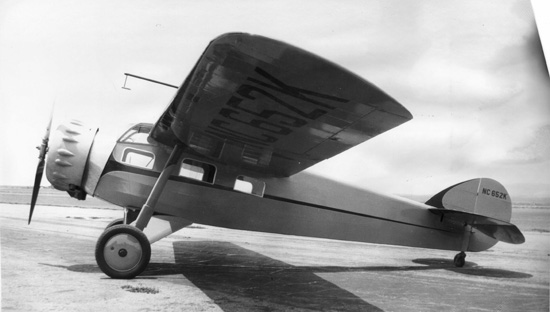
Cessna DC-6
The Cessna DC-6, although sharing its name with the more widely known Douglas DC-6 airliner, was actually a military designation for the Cessna UC-77, which itself was derived from the Cessna T-50 light transport aircraft. Serving primarily as a military utility transport during World War II, the Cessna DC-6 played a crucial role in various logistical operations, including personnel transport, cargo hauling, and liaison duties. With its robust construction and dependable performance, the DC-6 earned a reputation for reliability and versatility, making it a valuable asset in the arsenal of the United States military.
Powered by two Jacobs R-755-9 radial engines producing 245 horsepower each, the Cessna DC-6 exhibited respectable performance metrics for its era. With a maximum speed of 170 mph and a cruising speed of 145 mph, the DC-6 could efficiently traverse moderate distances, carrying personnel and supplies to the front lines or conducting reconnaissance missions. Its rugged airframe and short takeoff and landing capabilities enabled it to operate from unimproved airstrips and makeshift airfields, providing vital support in remote and challenging environments.
Despite its military origins and relatively limited production compared to other aircraft of its time, the Cessna DC-6 left an indelible mark on aviation history. Its contributions to wartime efforts, coupled with its adaptability and reliability, underscored Cessna’s commitment to producing high-quality aircraft tailored to meet the demands of military operations. Today, restored examples of the Cessna DC-6 serve as cherished artifacts, paying homage to the aircraft’s role in shaping the course of aviation during a pivotal period in history.
Cessna DC-6 parameters
The Cessna DC-6 was a designation given to a military version of the Cessna UC-77, which itself was a military version of the popular Cessna T-50 light transport aircraft, also known as the “Bamboo Bomber.” Here are the parameters for the Cessna DC-6:
- General Characteristics:
- Crew: 1-2 pilots
- Capacity: Up to 5 passengers
- Length: 32 ft 9 in (9.98 m)
- Wingspan: 41 ft 11 in (12.78 m)
- Height: 9 ft 11 in (3.02 m)
- Wing area: 262.5 sq ft (24.4 m²)
- Empty weight: 3,650 lb (1,655 kg)
- Gross weight: 5,400 lb (2,449 kg)
- Maximum takeoff weight: 5,500 lb (2,495 kg)
- Performance:
- Maximum speed: 170 mph (270 km/h)
- Cruise speed: 145 mph (233 km/h)
- Range: 750 miles (1,207 km)
- Service ceiling: 17,000 ft (5,182 m)
- Rate of climb: 1,020 ft/min (5.2 m/s)
- Powerplant:
- Engine: 2 × Jacobs R-755-9 radial engines
- Power output: 245 hp (183 kW) each
- Fuel Capacity:
- The Cessna DC-6 typically had a fuel capacity of approximately 100 US gallons (379 liters).
These parameters provide an overview of the Cessna DC-6’s specifications, showcasing its dimensions, performance capabilities, powerplant specifications, and fuel capacity.
