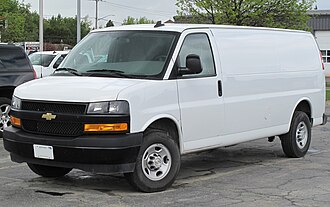
In the rapidly evolving automotive industry, where crossover SUVs, electric vehicles, and advanced driver-assistance systems dominate headlines, few vehicles have demonstrated the staying power of the Chevrolet Express. Introduced during the mid-1990s, the Express has remained in continuous production for decades, becoming one of the longest-serving full-size vans in North America. While many manufacturers have redesigned or discontinued their traditional vans in favor of modern unibody alternatives, Chevrolet has continued refining the Express because it fulfills a role that newer vehicles often cannot match. Rugged construction, exceptional cargo capacity, powerful engine options, straightforward engineering, and remarkable versatility have made it a trusted companion for businesses, government agencies, shuttle operators, contractors, emergency services, and families requiring substantial passenger space.
The Chevrolet Express is more than simply a commercial van. It represents a philosophy of durability and practicality that has become increasingly rare in modern automotive design. Built on a body-on-frame platform rather than a car-based unibody structure, it offers impressive towing capability, high payload ratings, and the ability to withstand years of demanding use. Whether configured as a cargo van transporting tools and equipment, a passenger van carrying up to fifteen occupants, an ambulance serving local communities, or a cutaway chassis supporting specialized commercial bodies, the Express has consistently demonstrated its adaptability.
One of the reasons for the model’s remarkable longevity is Chevrolet’s commitment to continuous improvement without abandoning the core characteristics that customers value most. Instead of introducing radical redesigns every few years, the company has steadily updated powertrains, safety systems, interior technology, and emissions performance while retaining the proven platform that fleet operators know and trust. This approach has earned the Express a reputation for dependability, predictable operating costs, and long service life.
In this comprehensive article, we will explore the history of the Chevrolet Express, its development, engineering, exterior and interior design, engine lineup, driving characteristics, commercial applications, maintenance requirements, safety evolution, ownership experience, market position, and lasting legacy. We will also conclude with a detailed table summarizing the vehicle’s technical specifications.
The Origins of the Chevrolet Express
The Chevrolet Express first appeared for the 1996 model year, replacing the long-running Chevrolet G-Series vans that had served North American customers since the 1960s. The G-Series had built a strong reputation for reliability, but changing safety regulations, evolving customer expectations, and advancements in engineering required an entirely new platform.
General Motors approached the development of the Express with several key objectives. The new van needed to offer improved crash protection, greater structural rigidity, higher payload capacity, more powerful engine options, enhanced ride quality, and increased flexibility for commercial and passenger applications. Engineers also sought to create a platform capable of supporting a wide variety of body styles and specialized conversions.
The result was a modern full-size van featuring body-on-frame construction, a longer wheelbase, improved aerodynamics compared with its predecessor, and a more spacious interior. From the beginning, the Express was offered in both cargo and passenger configurations, allowing customers to select a model tailored to their specific needs.
The van quickly gained popularity among businesses and fleet operators. Its combination of durability, strong towing capabilities, and extensive customization options made it suitable for industries ranging from construction and telecommunications to healthcare and public transportation.
Exterior Design Focused on Functionality
Unlike many passenger vehicles that emphasize styling trends, the Chevrolet Express has always prioritized function over fashion. Although its appearance has evolved modestly over the years, the overall design philosophy has remained remarkably consistent.
The front end features a broad grille flanked by large headlights that provide excellent visibility during nighttime driving. The substantial front bumper is designed to withstand the minor impacts and daily wear associated with commercial use. Smooth body panels reduce manufacturing complexity while making repairs more straightforward and affordable.
The high roofline and nearly vertical side walls maximize interior cargo volume, allowing operators to transport bulky equipment efficiently. Large side mirrors improve visibility, particularly when towing trailers or navigating urban traffic. Wide-opening rear cargo doors simplify loading and unloading, while optional sliding side doors provide convenient access in confined parking areas.
Although the Express may not possess the sleek appearance of modern European-style vans, its purposeful design reflects decades of practical experience serving commercial customers.
Body Configurations for Every Requirement
One of the Chevrolet Express’s greatest strengths is the wide variety of configurations available to buyers. Rather than serving a single market segment, the platform supports numerous body styles and specialized applications.
Cargo Van
The cargo version is designed primarily for businesses transporting tools, equipment, inventory, or supplies. Depending on wheelbase and roof configuration, the cargo area provides substantial storage capacity while maintaining a manageable exterior footprint.
Interior tie-down points, reinforced flooring, and optional shelving systems allow owners to organize their equipment efficiently. Contractors, electricians, plumbers, HVAC technicians, delivery companies, and telecommunications providers frequently choose the cargo model because of its practicality and durability.
Passenger Van
The passenger version transforms the Express into a people mover capable of accommodating up to fifteen occupants, depending on seating configuration and regulatory requirements.
Comfortable seating, rear climate controls, generous legroom, and large windows make the passenger van suitable for shuttle services, schools, churches, hotels, airports, and recreational organizations.
Cutaway Chassis
Perhaps the most versatile configuration is the cutaway chassis, which serves as the foundation for numerous specialized vehicles.
Manufacturers commonly build the following on Express cutaway platforms:
- Ambulances
- Small buses
- Mobile medical clinics
- Recreational vehicles
- Utility service trucks
- Delivery box trucks
- Food trucks
- Mobile workshops
- Commercial towing vehicles
This flexibility has contributed significantly to the Express’s enduring popularity.
Engineering Philosophy
The Chevrolet Express follows an engineering philosophy centered on reliability, durability, and ease of maintenance rather than pursuing the latest design trends.
Unlike unibody vans that integrate the body and chassis into a single structure, the Express employs body-on-frame construction. This approach offers several advantages for commercial users.
The separate frame provides exceptional strength for towing and hauling heavy loads. It also simplifies repairs following collisions or years of demanding service. Fleet operators appreciate the ability to replace body components without affecting the structural frame.
Additionally, the robust suspension system is designed to handle varying payloads without compromising stability or durability. This makes the Express particularly well suited for businesses that regularly transport heavy cargo or specialized equipment.
Engine Options Through the Years
One of the defining characteristics of the Chevrolet Express has been its broad selection of powertrains. Over nearly three decades of production, Chevrolet has offered a variety of gasoline and diesel engines to meet diverse customer needs.
V6 Gasoline Engines
Entry-level models have often been powered by V6 gasoline engines that provide an effective balance of performance, fuel economy, and affordability. These engines are particularly well suited for lighter commercial duties and urban driving.
Small-Block V8 Engines
Chevrolet’s legendary small-block V8 engines have long been associated with the Express. Available in several displacements over the years, these engines deliver smooth power, impressive reliability, and strong towing capability.
Their widespread use across numerous General Motors vehicles has also resulted in excellent parts availability and extensive service knowledge throughout North America.
Heavy-Duty V8 Engines
For operators requiring maximum towing capacity and payload performance, Chevrolet has offered larger V8 engines capable of producing substantial horsepower and torque. These engines are commonly selected for shuttle buses, towing applications, and fully loaded commercial vehicles.
Duramax Diesel
Certain Express models have been available with Duramax turbo-diesel engines, providing exceptional torque and improved fuel efficiency under heavy loads.
Diesel variants have been especially popular among operators covering long distances or carrying substantial cargo.
Transmission Evolution
The Chevrolet Express has benefited from continuous improvements in transmission technology throughout its production life.
Earlier models employed reliable four-speed automatic transmissions known for durability and straightforward maintenance.
Later generations introduced six-speed and eventually eight-speed automatic transmissions that improved acceleration, fuel economy, and highway refinement.
Modern electronically controlled transmissions optimize gear selection based on load, terrain, and driving conditions, reducing driver fatigue while improving overall efficiency.
Driving Experience
Although the Express is fundamentally a commercial vehicle, its driving characteristics are surprisingly refined considering its size and capabilities.
The elevated seating position provides excellent visibility in all directions, allowing drivers to navigate traffic confidently. Steering is predictable and appropriately weighted, while the suspension strikes a practical balance between ride comfort and load-carrying capability.
On the highway, the Express remains stable even when fully loaded or towing substantial trailers. Wind and road noise are naturally more pronounced than in modern crossover SUVs, but the cabin remains comfortable for extended journeys.
The powerful V8 engines provide confident acceleration, particularly when merging onto highways or climbing steep grades with heavy cargo.
Interior Designed for Practical Use
Inside the cabin, the Chevrolet Express emphasizes durability and ergonomic simplicity.
The dashboard features large, easy-to-read gauges and logically arranged controls that minimize driver distraction. Climate controls remain straightforward, allowing operators to make adjustments quickly while wearing work gloves if necessary.
Storage compartments are plentiful, providing convenient locations for documents, tools, electronic devices, and personal belongings.
Seat materials are selected primarily for durability, with vinyl upholstery available for commercial environments where frequent cleaning is essential.
Passenger models incorporate additional comfort features, including rear air conditioning, multiple seating configurations, and improved interior trim.
Technology and Connectivity
While early Express models focused almost exclusively on practicality, more recent versions have incorporated modern technology without sacrificing simplicity.
Available features include:
- Touchscreen infotainment systems
- Bluetooth connectivity
- USB charging ports
- Navigation
- Rearview cameras
- Remote keyless entry
- Power windows and locks
- Smartphone integration
These enhancements improve convenience while preserving the straightforward character appreciated by commercial operators.
Safety Improvements Over Time
Safety has evolved considerably during the Express’s long production history.
Modern models benefit from numerous safety enhancements, including:
- Anti-lock braking systems
- Electronic stability control
- Traction control
- Tire pressure monitoring
- Multiple airbags
- Rearview cameras
- Forward collision alert (on selected configurations)
- Lane departure warning (availability depending on model year)
The body structure has also undergone continual refinement to improve occupant protection in frontal and side impacts.
Towing and Payload Capability
One of the primary reasons businesses continue choosing the Express is its impressive towing and hauling performance.
Depending on engine, wheelbase, and configuration, the van is capable of towing trailers carrying construction equipment, recreational vehicles, landscaping machinery, or commercial cargo.
Equally important is its payload capacity, which enables operators to transport substantial amounts of equipment inside the cargo area while maintaining predictable handling characteristics.
The combination of body-on-frame construction, robust suspension, and powerful engines allows the Express to perform tasks that many lighter unibody vans cannot accomplish.
Maintenance and Reliability
The Chevrolet Express has earned widespread recognition for mechanical reliability and relatively low operating costs.
Routine maintenance generally includes:
- Engine oil and filter changes
- Transmission servicing
- Brake inspections
- Suspension component checks
- Cooling system maintenance
- Tire rotation
- Differential fluid replacement
- Drive belt inspection
Many fleet operators report exceptionally long service lives when preventive maintenance schedules are followed consistently.
The widespread availability of replacement parts and the familiarity of technicians with General Motors powertrains contribute to reasonable repair costs throughout the vehicle’s lifespan.
Commercial Applications
Few vehicles have served as many different commercial platforms as the Chevrolet Express.
Common uses include:
Construction and Contracting
Contractors appreciate the cargo capacity, towing capability, and durable construction that allow them to transport tools, materials, and equipment efficiently.
Delivery Services
Parcel companies, local delivery businesses, and distributors rely on the Express for dependable urban transportation.
Medical Services
Numerous ambulances and patient transport vehicles utilize Express cutaway chassis due to their reliability and ease of maintenance.
Airport Shuttle Operations
Passenger versions frequently serve hotels, airports, and tourism companies transporting groups of travelers.
Recreational Vehicle Conversions
Motorhome manufacturers often select the Express chassis for compact Class C recreational vehicles.
Government and Municipal Fleets
Police departments, public utilities, maintenance crews, and emergency management agencies employ Express vans for specialized duties across North America.
Ownership Experience
Owners consistently praise the Chevrolet Express for qualities that matter most in commercial environments.
The van offers predictable reliability, excellent parts availability, familiar mechanical systems, and impressive versatility. Many examples remain in active service after accumulating hundreds of thousands of miles.
Businesses particularly appreciate the model’s ability to adapt to changing operational requirements. Shelving systems, partitions, refrigeration units, wheelchair lifts, communication equipment, and specialized workstations can all be installed with relative ease.
Private owners who require exceptional towing capability or large passenger capacity also find the Express appealing despite its commercial origins.
The Future of the Chevrolet Express
As the automotive industry moves toward electrification, autonomous driving technologies, and increasingly sophisticated safety systems, the future of traditional full-size vans remains uncertain. Nevertheless, the Chevrolet Express continues to occupy a unique position within the marketplace.
Its body-on-frame architecture, proven mechanical components, and remarkable adaptability ensure ongoing demand from customers whose priorities differ from those of typical passenger vehicle buyers. While newer unibody vans may offer improved fuel economy and urban maneuverability, few can match the Express’s towing capability, structural durability, and suitability for specialized commercial conversions.
General Motors has gradually introduced more advanced technologies while preserving the characteristics that have defined the Express for decades. This careful balance between modernization and continuity has allowed the model to remain competitive long after many contemporaries disappeared from production.
Legacy of the Chevrolet Express
The Chevrolet Express stands as one of the most successful and enduring full-size vans ever produced. Its longevity is not the result of nostalgia but of genuine utility. For nearly three decades, it has provided dependable transportation for businesses, public agencies, families, and specialized industries requiring a vehicle capable of handling demanding workloads without unnecessary complexity.
Its reputation for durability, versatility, and mechanical reliability has made it a trusted partner across countless professions. From construction sites and delivery routes to airports, hospitals, schools, and recreational vehicle campgrounds, the Express has quietly become an indispensable part of everyday life.
While automotive trends continue to evolve, the Chevrolet Express demonstrates that practical engineering and dependable performance never go out of style. Its ability to adapt to changing customer needs while remaining true to its original mission ensures that it will be remembered as one of the defining commercial vehicles of its era.
Technical Specifications
| Parameter | Specification |
|---|---|
| Manufacturer | Chevrolet (General Motors) |
| Model | Chevrolet Express |
| Production period | 1995–present (1996 model year onward) |
| Vehicle class | Full-size van |
| Body styles | Cargo van, passenger van, cutaway chassis |
| Construction | Body-on-frame |
| Drive layout | Rear-wheel drive (AWD available on selected earlier models) |
| Engine options | V6 gasoline, V8 gasoline, Duramax turbo-diesel (varies by model year) |
| Transmission | 4-, 6-, or 8-speed automatic (depending on model year) |
| Fuel type | Gasoline or diesel |
| Seating capacity | 2–15 passengers, depending on configuration |
| Wheelbase options | Standard and extended wheelbase |
| Cargo capacity | Varies by body style and wheelbase |
| Maximum towing capacity | Up to approximately 10,000 lb (configuration dependent) |
| Maximum payload | Up to approximately 4,300 lb (configuration dependent) |
| Front suspension | Independent coil spring |
| Rear suspension | Multi-leaf solid axle |
| Steering | Hydraulic power steering (electric assist on later variants where applicable) |
| Brake system | Four-wheel disc brakes with ABS (modern models) |
| Safety features | Airbags, ABS, stability control, traction control, rearview camera, available driver-assistance features |
| Common applications | Cargo transport, passenger shuttle, ambulance, RV chassis, delivery, contractor vehicle, municipal fleet |
| Notable strengths | Exceptional durability, towing capability, versatile body configurations, long production life, widespread parts availability |
| Current status | Still in production for commercial and fleet applications in selected markets |
