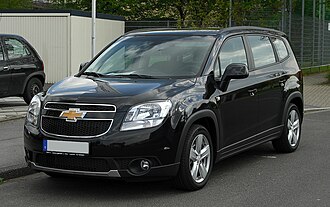
Chevrolet Orlando as a Used Car: Is This Practical MPV Still Worth Buying?
The Chevrolet Orlando is an unusual proposition on the European used-car market. It was never one of the most fashionable family cars, and today it is even easier to overlook because Chevrolet withdrew from the mainstream European passenger-car market years ago. Yet the Orlando has several qualities that remain attractive to used-car buyers: a spacious seven-seat interior, a large and flexible cabin, useful luggage capacity, comfortable long-distance manners and a relatively low purchase price. For families who want practical transportation without paying the premium commanded by better-known European MPVs and SUVs, a well-maintained Orlando can still make considerable sense.
Introduced in Europe around 2011, the Orlando was based on the Cruze platform and was positioned as a compact MPV. Its tall body and three rows of seats gave it a very different purpose from the Cruze, despite sharing some mechanical components. The model was sold with petrol and diesel engines, with the 1.8-litre petrol and 2.0-litre diesel being particularly important in European markets. Later in its life, the diesel range was updated with a 1.6-litre unit, giving buyers a more economical alternative to the older 2.0-litre engines.
The Orlando is now an older vehicle, so the condition of a particular example matters considerably more than its original specification. A low-priced Orlando with neglected suspension, a worn diesel system or a failing clutch can quickly become an expensive purchase. On the other hand, a carefully maintained example can provide a great deal of interior space for relatively little money. The key is to understand what the Orlando does well, which engines suit your driving pattern and what needs to be checked before buying.
What Is the Chevrolet Orlando?
The Chevrolet Orlando is a seven-seat compact MPV designed primarily for families. Unlike a conventional five-seat hatchback, it uses a tall body and three rows of seating to maximize passenger capacity. The rear seats fold into the floor when they are not required, allowing the vehicle to change from a people carrier into a more practical cargo vehicle.
Its design is somewhat more SUV-like than many traditional MPVs. The high bonnet, broad grille and relatively muscular bodywork give it a substantial appearance, while the interior remains focused on flexibility rather than sportiness. This makes the Orlando particularly interesting today because it provides some of the practical advantages that buyers often seek in a crossover without the price or fashion premium of a modern SUV.
The cabin is one of its strongest points. The first two rows offer reasonable space for adults, while the third row is best regarded as occasional seating for children or shorter passengers. With all seven seats occupied, luggage capacity is naturally limited, but folding the rear seats creates a much more useful load area.
For families, this flexibility can be more valuable than the image or driving dynamics of a conventional compact SUV.
Which Engine Is Best?
1.8-Litre Petrol
The 1.8-litre petrol engine is one of the simplest Orlando choices and can be particularly appealing to drivers who cover relatively low annual mileage. It is a naturally aspirated four-cylinder engine producing roughly 140 PS, depending on market and specification.
Its performance is adequate rather than impressive. The Orlando is a fairly large and heavy vehicle, so the 1.8 petrol does not make it feel particularly quick, especially with seven occupants or a full load of luggage. The engine needs to be worked harder when overtaking or climbing steep roads, and fuel consumption can rise significantly in urban driving.
Nevertheless, simplicity has advantages in an older used car. A petrol Orlando avoids many of the expensive components associated with an older diesel, including some of the emissions-control and high-pressure fuel-system equipment. For someone who mainly drives short urban and suburban journeys, the 1.8 petrol can therefore be a rational choice.
2.0-Litre Diesel
The 2.0-litre diesel is arguably the engine that suits the Orlando’s character best. Depending on version and model year, it was offered with outputs of approximately 130 PS, 163 PS and other market-specific ratings. The important feature is its strong torque, which makes the heavy seven-seat vehicle much easier to drive when fully loaded.
The stronger version is particularly comfortable on motorways. It has enough torque to accelerate without constantly changing gear and feels considerably more relaxed than the 1.8 petrol when carrying several passengers.
However, the diesel must be inspected carefully. Older examples can have problems associated with the turbocharger, exhaust after-treatment, particulate filter, injectors, clutch and dual-mass flywheel. A diesel Orlando that has spent most of its life making short trips is not necessarily a bargain simply because its fuel consumption is low.
For high-mileage drivers who regularly travel longer distances, however, a well-maintained 2.0 diesel can be the best overall engine.
1.6-Litre Diesel
Later Orlando models were offered with a 1.6-litre diesel in some European markets. This engine brought improved efficiency and a more modern approach to emissions management compared with the older 2.0-litre diesel.
The smaller diesel can provide a useful balance between economy and performance, particularly for families that spend a lot of time on motorways. It does not have quite the same effortless character as the larger engine, but fuel consumption can be more attractive.
As with any modern diesel, the driving pattern matters. Regular longer journeys are preferable to a life of repeated short trips. Buyers should also check the vehicle’s emissions equipment and service documentation carefully.
How Does the Orlando Drive?
The Orlando is designed primarily for comfort and practicality, and that is immediately apparent behind the wheel. It does not feel like a sporty car, nor is it intended to. The driving position is relatively high, visibility is generally good and the suspension is tuned to absorb ordinary road imperfections.
The vehicle’s substantial dimensions give it a stable feeling at motorway speeds. This is one of its strengths as a family car: it feels more comfortable on a long journey than its low used-car price might suggest. The diesel engines are particularly well suited to this role because their torque allows the driver to maintain speed without constantly working the engine.
Around town, the Orlando’s size is more noticeable. It is not enormous by modern SUV standards, but its width and length can make tight parking spaces less convenient than they would be in a conventional hatchback. Parking sensors and a reversing camera, where fitted, are therefore valuable.
The steering is relatively light and predictable, making the car easy enough to drive despite its size. Body roll is noticeable when cornering quickly, but that is hardly a criticism for a family-oriented MPV. The Orlando rewards smooth driving rather than aggressive inputs.
Seven Seats: The Orlando’s Biggest Advantage
How Useful Are the Third-Row Seats?
The main reason to buy an Orlando rather than a Cruze or conventional hatchback is its seven-seat configuration. The third row can be folded into the floor when not needed, allowing the car to switch between passenger and cargo duties.
The rearmost seats are not as spacious as the first two rows. Adults can use them for shorter journeys, but children will generally find them more comfortable. This is typical of compact seven-seat vehicles and should not be considered a major weakness.
When the third row is folded, the Orlando becomes considerably more practical. The second row can also be folded to create a large loading area, making it possible to carry bicycles, furniture, camping equipment or other bulky items that would be difficult to fit into a conventional sedan.
Family-Friendly Interior
The Orlando’s cabin is designed around storage and flexibility. There are multiple compartments and useful places for smaller items, while the high roof provides a sense of space.
The dashboard design is relatively simple by modern standards. That can actually be an advantage for buyers who prefer physical controls instead of having every function hidden inside a touchscreen. Naturally, infotainment systems in an older Orlando will not match those of a modern car, but the basic functions are straightforward.
The quality of materials is acceptable rather than premium. Some plastics feel hard, and age-related wear can be visible on frequently touched surfaces. Nevertheless, the cabin is functional and generally durable when properly cared for.
What Should You Check Before Buying?
Inspect the Diesel System
If you are considering a diesel Orlando, the engine should be one of the main areas of investigation. Start the engine from cold and listen for unusual noises. Check for excessive smoke, unstable idling and warning lights.
During the test drive, the turbocharger should deliver power smoothly. Sudden loss of power can indicate problems with the turbocharger or emissions system. A specialist diagnostic scan is worthwhile before purchase.
On higher-mileage cars, pay particular attention to the clutch and dual-mass flywheel. Rattling at idle, juddering when pulling away or unusual vibration when switching the engine off can indicate wear.
Check the Cooling System
The cooling system should also be inspected carefully. Look for coolant leaks, signs of overheating and unusual temperature fluctuations.
The engine should reach normal operating temperature and remain there during the test drive. An overheating problem on an older family car can lead to expensive repairs, so it should never be dismissed as a minor issue.
Inspect the Suspension
The Orlando’s weight means its suspension works relatively hard. Listen for knocking noises over uneven roads and check whether the vehicle feels stable during braking.
Inspect the tyres for uneven wear, which can indicate alignment or suspension problems. Shock absorbers should not show significant oil leakage, and the vehicle should sit level when parked.
Examine the Bodywork
Check the doors, wheel arches, sills, boot lid and underside for corrosion. Also look carefully for signs of previous accident repairs.
Because the Orlando was often used as a family vehicle, doors and interior trim can show considerable wear. This is not necessarily a problem, but it should be reflected in the price.
Is the Chevrolet Orlando Reliable?
The Orlando can be reliable when properly maintained, but buyers should remember that the youngest examples are now several years old. Age-related maintenance is therefore just as important as the underlying design.
Petrol models are generally attractive for simplicity, while diesel models can deliver excellent long-distance economy but have more components that can become expensive with age. Suspension, brakes, wheel bearings, exhaust components and air-conditioning systems can all require attention on an older vehicle.
The most important factor is maintenance history. An Orlando with regular oil changes, documented repairs and evidence of preventative maintenance is considerably more attractive than a low-priced car with no history.
Mileage should also be interpreted in context. A high-mileage diesel that has spent its life on motorways may be healthier than a low-mileage example that has completed thousands of short urban journeys.
What About Parts and Servicing in Europe?
Chevrolet’s withdrawal from mainstream European passenger-car sales understandably makes some buyers nervous about parts availability. The situation is not as dramatic as it might first appear, because the Orlando shared technology with other General Motors products and many mechanical and service parts remain available through independent suppliers.
The bigger concern can be model-specific bodywork, interior trim and certain electronic components. Before buying an unusual version, it is sensible to check whether replacement parts are readily available in your country.
A garage familiar with Chevrolet, Opel/Vauxhall or other General Motors vehicles can also be useful. The Orlando is not mechanically exotic, and routine servicing should not require a highly specialized workshop.
Fuel Economy and Running Costs
The Orlando’s fuel consumption depends heavily on engine choice and usage. The 1.8 petrol is straightforward but can be relatively thirsty because it has to move a substantial seven-seat vehicle. Real-world urban fuel consumption can be considerably higher than period laboratory figures.
The diesel engines are more attractive for long-distance drivers. Their torque suits the vehicle well, and fuel consumption can be significantly lower during motorway driving. However, fuel savings should always be weighed against potential repair costs.
Tyres, brakes and suspension components can also be more expensive than those of a small hatchback simply because the Orlando is heavier. Families should therefore budget for normal wear and tear rather than assuming that a low purchase price means negligible ownership costs.
Is the Chevrolet Orlando Safe?
The Orlando was developed as a family vehicle and was equipped with modern safety systems for its era, including airbags, ABS and electronic stability control depending on market and specification. Its substantial body and high seating position also give occupants a reassuring sense of security.
However, safety standards have moved forward since the Orlando was launched. A newer family car may offer automatic emergency braking, lane-keeping assistance, blind-spot monitoring and more advanced driver-assistance systems that are absent from an older Orlando.
When buying a used example, the condition of the safety equipment is more important than the equipment list on paper. Make sure there are no persistent warning lights, inspect the tyres and brakes, and check that the vehicle has not been poorly repaired after an accident.
Is the Orlando Better Than a Used SUV?
For buyers who specifically need seven seats, the Orlando can still make an interesting alternative to an SUV. Its tall body provides useful passenger space without requiring the ground clearance and heavy styling associated with many modern crossovers.
An MPV also tends to make better use of its interior volume. The Orlando’s folding seats can transform the cabin into a large cargo area, while many compact seven-seat SUVs offer only very small third-row seats and limited luggage capacity when all seats are occupied.
The SUV’s advantages are mainly image, ground clearance and the availability of newer technology. If those factors are not priorities, a used Orlando can deliver considerably more practical family space for the money.
Which Chevrolet Orlando Is the Best Used Buy?
For low-mileage drivers, the 1.8 petrol is worth considering because its naturally aspirated engine is relatively straightforward. It will not be particularly quick or exceptionally economical, but simplicity can be valuable in an older used vehicle.
For long-distance drivers, a well-maintained diesel is generally the better choice. The 2.0-litre diesel has the torque and performance needed to move a fully loaded Orlando comfortably, while later 1.6-litre diesel models can provide a more efficient alternative.
Regardless of engine, the best Orlando is the one with the strongest history. Do not buy a diesel simply because it consumes less fuel on paper, and do not buy a petrol model simply because it is cheaper. Consider your annual mileage, typical journey length and ability to absorb unexpected repair costs.
Final Verdict: Is the Chevrolet Orlando Worth Buying?
The Chevrolet Orlando is one of those used cars that makes more sense when judged by practical requirements than by fashion. It is not particularly prestigious, it is not especially sporty and its technology is now dated. Yet it offers something that many modern vehicles have made increasingly expensive: a genuinely useful seven-seat interior at a relatively low purchase price.
Its strongest qualities are space, flexibility and comfortable long-distance driving. The diesel engines suit the vehicle particularly well, while the 1.8 petrol can be a sensible choice for drivers who cover fewer kilometres and want a simpler powertrain.
The biggest risks are age, diesel-system wear, suspension deterioration and the availability of certain model-specific parts. Chevrolet’s departure from the European market means buyers need to be a little more proactive about sourcing parts and finding a competent independent garage, but routine maintenance remains manageable.
For a family that needs seven seats occasionally rather than permanently, the Orlando can be particularly attractive. Fold the third row away and it becomes a practical five-seat family vehicle with plenty of cargo space. That versatility is difficult to match at the Orlando’s typical used-car price.
Ultimately, the Chevrolet Orlando is best bought as a value-oriented family workhorse. Find a clean example with a documented service history, inspect the diesel system and suspension carefully, check the folding seats and electrical equipment, and make sure replacement parts are available before committing. Do that, and the Orlando can still provide a remarkable amount of family practicality for relatively little money.
Chevrolet Orlando Technical Specifications
Specifications vary according to model year, market and engine. The table below summarizes representative European versions of the first-generation Chevrolet Orlando, which is the generation most commonly encountered as a used car in Europe.
| Specification | 1.8 Petrol | 2.0 Diesel 130 | 2.0 Diesel 163 | 1.6 Diesel |
|---|---|---|---|---|
| Engine type | 4-cylinder petrol | 4-cylinder turbo diesel | 4-cylinder turbo diesel | 4-cylinder turbo diesel |
| Displacement | 1,796 cc | 1,998 cc | 1,998 cc | 1,598 cc |
| Approx. power | 140 PS | 130 PS | 163 PS | 110–136 PS, depending on version |
| Approx. torque | 176 Nm | 315 Nm | 360 Nm | up to approx. 320 Nm |
| Transmission | 5/6-speed manual or automatic depending on market | 6-speed manual | 6-speed manual/automatic depending on market | 6-speed manual |
| Drive | Front-wheel drive | Front-wheel drive | Front-wheel drive | Front-wheel drive |
| Seats | 7 | 7 | 7 | 7 |
| Body style | 5-door MPV | 5-door MPV | 5-door MPV | 5-door MPV |
| Length | approx. 4.65 m | approx. 4.65 m | approx. 4.65 m | approx. 4.65 m |
| Width | approx. 1.84 m | approx. 1.84 m | approx. 1.84 m | approx. 1.84 m |
| Wheelbase | approx. 2.76 m | approx. 2.76 m | approx. 2.76 m | approx. 2.76 m |
| Character | Simple petrol | Economical diesel | Strong all-round diesel | Efficient later diesel |
| Best suited to | Shorter annual mileage | Long-distance use | Family/towing use | Economy-focused drivers |
| Main advantage | Mechanical simplicity | Low fuel consumption | Strong torque | Efficiency |
| Main concern | Fuel consumption | Diesel-system age | Higher repair costs | Diesel complexity |
Bottom line: the Chevrolet Orlando remains an appealing used car for buyers who value practicality above fashion. Its seven seats, flexible interior and comfortable road manners make it a useful family vehicle, while its relatively low used price can make it considerably more affordable than many modern seven-seat SUVs. The 1.8 petrol is the simpler low-mileage option, while the diesel versions make more sense for drivers who regularly travel longer distances. As with any older MPV, condition and service history should take priority over mileage or equipment level.
